

Both 12V DC and 24V DC options are commonly seen when shopping for or setting up low voltage lighting systems. You might be asking, "what's the difference?" because the quoted price and performance specs are often identical. "Which one would you recommend?"
As an example, 12V DC and 24V DC versions of LED strips are both available.
When it comes to accessories, such power supply, the difference between 12V DC and 24V DC is usually not that big of a deal.
The shorter distance between cut-line intervals (1 inch for 12V vs. 2 inches for 24V) makes 12V DC the better choice for newcomers to LED strip lights. Because of this, you may trim the LED strips to any length you like.
Because of its reduced possibility for voltage drop, 24V DC is the way to go if you're want maximum efficiency.
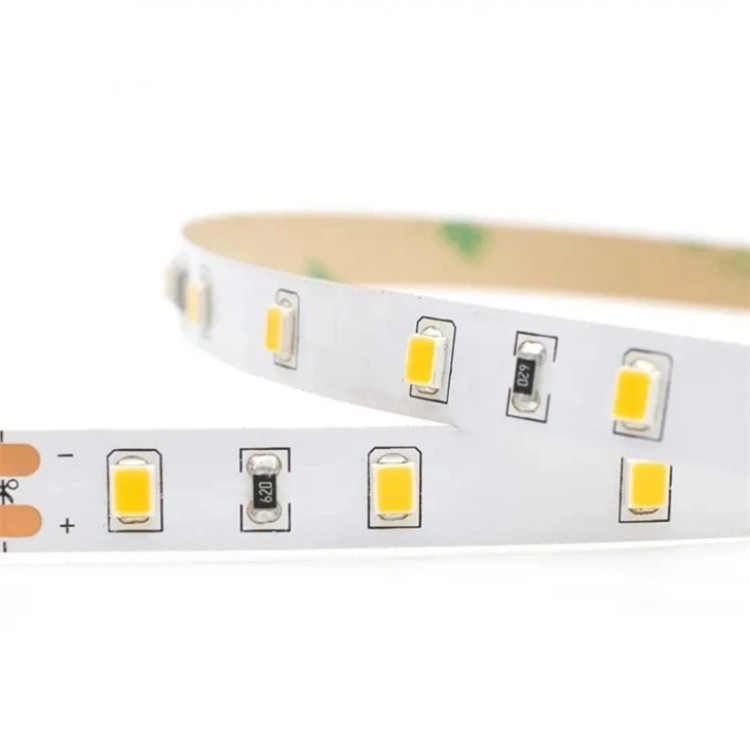
Light-emitting diodes work better at 24V.
Keep in mind that 3V DC is the actual voltage of the majority of individual LEDs, even if 12V and 24V DC are among the most common choices for power supplies. The voltage of an LED system can be adjusted to match a specific power supply voltage by setting the LEDs in a specific series vs. parallel combination.
Normally, three LEDs are strung in series on a 12V LED strip. The total voltage applied to the LEDs, at 3V each, is barely 9V-roughly 75% of the total voltage. A resistor that limits the current drains the residual voltage. Given that the resistor isn't generating any light, it follows that about a quarter of the power used by a 12V LED strip goes into heat dissipation.
Seven LEDs can usually be strung in series in a 24V LED system since there is usually enough voltage overhead. The sum of the LED voltages, which are 3V apiece, is 21V, or approximately 88% of the 24V input. There is less than a thirteen percent loss of voltage energy as heat in this case.
To sum up, the inherent electrical design inefficiencies can be cut by more than half with a 24V LED system.
For instance, you can make use of this fact and create a 24V, 35 LED PCB layout by connecting 5 parallel strings of 7 LEDs in series with each other.
It takes less conductor gauge to achieve 24V.
The formula P = V x I describes electrical power. To keep the power (P) constant, a corresponding decrease in current (I) is required for every increase in voltage (V).
The difference between the two voltages is illustrated by the fact that a 24V system only needs 2 Amps (24V x 2A= 48W) compared to a 12V system which requires 4 Amps (12V x 4A= 48W).
To put it plainly, in order to provide the same amount of electricity, a 24V LED system will consume half as much current as a 12V LED system.
Just how crucial is this?
Copper conductors must be of a certain width and thickness in order to transfer electricity safely; voltage has no bearing on this.
Voltage loss and heat production can result from internal resistance in a short or thin copper conductor when large amounts of current are driven through it. Electrical fires can potentially occur in the most severe instances.
Using half as many electrical conductors is possible with a 24V LED system, everything else being equal. Make sure you're still using enough conductor gauge for your LED strip projects with our voltage drop calculator.
Power supplies that are smaller.
Just as current, not voltage, is the primary determinant of conductor size, so too is the size of the power supply. Since copper wire makes up the majority of a power supply unit's internal wiring, the physical relationship between electrical current and conductor size requirements also plays a role.
When dealing with projects like installing LED strip lights under cabinets, where there may be space limitations, the size of the power supply can be a significant consideration.
Linear runs that are longer overall.
The maximum allowable continuous length of an LED strip in a use like LED strip lighting is usually determined by the maximum allowable electrical current that the copper traces of the LED strip can take. Thus, in most cases, 24V LED strips can manage twice as much length as 12V LED strips, presuming that the two products' power ratings are same.
This also applies to other items with daisy chaining capabilities, not just LED strips.

In Conclusion
Usually, the difference between 12V and 24V isn't much, but if you're not particularly picky about one, I hope this article has persuaded you that a 24V system is better!
Shenzhen Benwei Lighting Technology Co., Ltd was established in 2010. It is a national high-tech enterprise integrating design, R&D, production and sales of indoor and outdoor lighting products and also can do OEM ,ODM .For more details about our offerings, please contact us at bwzm18@ledbenweilighting.com





