

Introduction: The Hidden Failure Risk of Ordinary LED Panel Diffusers
The Common Misunderstanding in LED Panel Procurement
In commercial lighting procurement, most buyers evaluate LED panel quality based on surface parameters including initial brightness, color rendering index, power efficiency, and shell structure. Few pay attention to the long-term aging resistance of the diffuser sheet, which is the most vulnerable optical component in the entire lamp structure. Many low-cost LED panels on the market adopt recycled PS (Polystyrene) diffusers or ordinary modified plastic diffusers to reduce production costs. These low-grade materials have poor UV resistance, weak thermal stability, and unstable molecular structure. Although they can deliver qualified lighting effects in the initial stage of use, they will gradually age and yellow within 6–18 months of continuous operation, triggering a series of performance degradation problems for the entire lamp.
Most end-users mistake panel yellowing for normal aging of LED chips, but industry professional test data shows that more than 92% of LED panel light attenuation, color distortion, and luminous uniformity decline in medium and long-term use are caused by diffuser material degradation, rather than chip failure. This hidden failure mechanism leads to premature scrapping of high-cost lighting equipment, frequent replacement, and increased secondary investment, becoming a major hidden cost of commercial lighting project operation.
Once the diffuser ages and yellows, it will break the original optical balance of the panel light. Yellowed molecular structures will selectively absorb blue light bands, reduce overall light output efficiency, cause color temperature deviation, and form local dark areas and uneven luminous phenomena. This means that even if the LED chip and heat dissipation system remain intact, the entire lighting system will still fail prematurely due to diffuser aging, which fully reflects the decisive position of anti-yellow diffusers in long-term LED panel performance maintenance.
The Scientific Principle of Diffuser Yellowing and Performance Degradation
Chemical Mechanism of Ordinary Diffuser Aging and Yellowing
The yellowing of traditional diffuser sheets is an irreversible chemical degradation process, not a superficial physical discoloration. Most low-cost diffusers are made of recycled PS materials or ordinary polycarbonate materials. Their molecular chains contain unstable aromatic structures and vulnerable carbon-carbon bonds. Under the dual effects of long-term high-energy blue light irradiation from LED chips and continuous operating thermal radiation, the molecular chains will undergo photo-oxidation and thermal oxidation reactions, generating chromophore groups that absorb blue and violet light waves.
These newly produced chromophores cannot be eliminated or repaired. They will continuously accumulate on the diffuser surface and internal structure, making the transparent or milky white diffuser gradually turn yellow and dark. With the extension of service time, the oxidation reaction will further intensify, triggering a vicious cycle: yellowed diffusers reduce light transmittance, leading to reduced heat dissipation efficiency of the lamp body, increased internal operating temperature, and further accelerated material oxidation and yellowing speed. This irreversible chemical aging is the fundamental reason for the rapid performance decline of ordinary LED panels.
Physical Performance Loss Caused by Diffuser Yellowing
Diffuser yellowing triggers three core physical performance losses of LED panel lights, which seriously damage long-term lighting effects. First, continuous decline in light transmittance. After the diffuser yellows, the internal molecular structure becomes dense and opaque, blocking effective light transmission. Test data shows that ordinary PS diffusers will lose 15%–30% of light transmittance after 20,000 hours of use, resulting in insufficient space illumination and failure to meet commercial lighting standard luminance requirements.
Second, severe color temperature drift and reduced color fidelity. Yellowed diffusers will filter and absorb high-color-temperature blue light, making the overall light color warm and yellow, destroying the original standard color temperature of the lamp. At the same time, the uneven aging of the diffuser leads to inconsistent light filtering effect in different areas of the panel, resulting in local color difference and greatly reduced CRI performance, which cannot restore the true color of objects in the space.
Third, decreased luminous uniformity and increased glare risk. The aging degree of ordinary diffusers is uneven, with local fogging and yellowing spots, resulting in inconsistent light diffusion efficiency. The panel surface will appear bright in the middle and dark around, or local dark spots, completely destroying the uniform soft light effect of LED panels. In severe cases, local light aggregation will form harsh glare, reducing visual comfort and failing eye-protection lighting standards.
Core Technical Advantages of Professional Anti-Yellow Diffusers
High-Purity Virgin PMMA Raw Material Formula
Different from recycled PS and ordinary polycarbonate diffusers, our premium LED panel lights adopt upgraded anti-yellow modified PMMA diffuser sheets made of 100% virgin raw materials, without any recycled materials or impure additives. PMMA material itself has excellent UV resistance, anti-oxidation performance, and stable molecular structure, with far stronger resistance to photo-oxidation and thermal aging than PS materials. The stable carbon-oxygen molecular bond of high-purity PMMA effectively avoids chain scission and chromophore generation under long-term blue light irradiation and high-temperature operation.
On the basis of pure PMMA substrates, the diffuser is added with imported anti-UV additives and antioxidant stabilizers through nano-modification technology. These functional additives can capture free radicals generated by photo-oxidation reactions, inhibit the formation of yellowing chromophores, and fundamentally block the aging and yellowing process of the diffuser. After professional laboratory accelerated aging tests, the yellowing index (YI) of our anti-yellow diffuser is less than 3.0 after 6000 hours of high-temperature continuous operation, which is far lower than the industry standard of ordinary diffusers, achieving long-term colorless and transparent stability.
Optimized Optical Diffusion Structure and Stable Transmittance Performance
The anti-yellow diffuser adopts a double-layer micro-prism optical diffusion structure, which uniformly disperses LED point light sources while ensuring ultra-high light transmittance of 88%–90%. Different from ordinary diffusers that rely on simple particle diffusion and are prone to light attenuation, the micro-prism structure realizes physical uniform light output through optical refraction and reflection, without consuming light energy. More importantly, this precise optical structure will not deform or fail due to long-term thermal expansion and contraction, maintaining consistent light diffusion efficiency throughout the product life cycle.
Benefiting from stable material characteristics and optical structure, the anti-yellow diffuser can maintain more than 95% of the initial light transmittance after 50,000 hours of long-term use. There is no obvious light loss or brightness attenuation, completely solving the problem of rapid dimming of ordinary panel lights in the later stage. The long-term stable high transmittance ensures that the LED panel always maintains high luminous efficiency, gives full play to the performance of high-quality LED chips, and avoids energy waste caused by optical component attenuation.
High and Low Temperature Resistance and Environmental Adaptability
Commercial lighting scenarios are affected by air conditioning temperature difference, seasonal temperature changes, and indoor humidity, putting forward high requirements on the environmental adaptability of diffuser materials. Ordinary diffusers are prone to aging acceleration in high-temperature and high-humidity environments, with yellowing speed increased by more than twice. In low-temperature environments, recycled material diffusers are easy to become brittle and crack, affecting structural stability.
Our modified anti-yellow PMMA diffuser has passed strict environmental adaptability tests, with stable performance in the temperature range of -20℃ to 55℃. It resists thermal expansion and contraction deformation caused by temperature changes, does not absorb moisture and fog in humid environments, and maintains excellent optical stability in long-term variable temperature operation. Whether it is a high-temperature air-conditioned office, humid indoor space, or low-temperature public area, the diffuser can always maintain no yellowing, no fogging, and no deformation, ensuring consistent lighting quality all year round.
Anti-Yellow Diffuser's Long-Term Value for LED Panel Overall Performance
Extend Lamp Service Life and Reduce Lumen Attenuation
The service life of LED panel lights is not determined by the LED chip alone, but restricted by the shortest-lived component in the optical system. Ordinary diffusers fail in advance due to yellowing aging, making the actual service life of the lamp far lower than the chip's rated life. The application of anti-yellow diffusers completely eliminates the short-board of optical component aging, matching the 50,000-hour ultra-long life of high-quality LED chips.
Cooperating with the product's 6063 aluminum alloy heat dissipation system and fully sealed heat dissipation backplate, the anti-yellow diffuser maintains low attenuation operation for a long time. The product meets the international L70 lumen maintenance standard, with the lumen retention rate still higher than 70% after 50,000 hours of use. Compared with ordinary panels whose brightness drops by more than 40% in 20,000 hours, our product realizes ultra-stable long-term luminous performance, effectively extending the overall service life of the lamp by 2–3 times.
Maintain Consistent Lighting Quality and Visual Comfort
High-quality commercial lighting requires long-term consistent color temperature, color rendering, and uniformity, which is the core of improving space grade and user experience. The anti-yellow diffuser effectively avoids color temperature drift and color distortion caused by material aging, keeping the lamp's original standard color temperature and high CRI output for a long time. The light is soft and uniform, UGR<19 ultra-low glare, no stroboscopic, no dark spots, continuously meeting the eye-protection lighting needs of long-hour office, study, and work scenarios.
For high-standard scenarios such as hospital clean rooms, school classrooms, and high-end office buildings, stable and high-quality lighting is not only a functional demand but also a professional grade embodiment. The anti-yellow diffuser ensures that the lighting effect of the space remains brand-new for many years after installation, avoiding the aging and dull lighting environment caused by lamp aging, and continuously improving space comfort and grade.
Reduce Project Operation and Maintenance Comprehensive Costs
For commercial engineering projects and facility management departments, the biggest hidden cost of lighting system operation is frequent lamp replacement and maintenance. Low-cost LED panels with ordinary diffusers need batch replacement within 2–3 years due to yellowing and dimming, which consumes a lot of labor costs, material costs, and time costs, and also affects the normal operation of commercial spaces during replacement.
LED panels equipped with anti-yellow diffusers realize long-term zero-maintenance operation. The ultra-stable optical performance avoids performance degradation failure, and there is no need for frequent inspection and replacement in the whole life cycle. Although the initial procurement cost is slightly higher than that of low-cost products, the comprehensive use cost is reduced by more than 60% in 10 years, with extremely high cost performance and investment return rate, which is the most cost-effective choice for long-term commercial lighting projects.
Comparative Test: Anti-Yellow Diffuser VS Ordinary Diffuser
Short-Term Aging Test Data Comparison
Through 6000 hours of laboratory high-temperature accelerated aging test (ambient temperature 55℃, continuous lighting operation), the performance gap between anti-yellow diffusers and ordinary recycled PS diffusers is fully verified. The test results show that ordinary diffusers have obvious yellowing after 3000 hours of operation, with a yellowing index of 8.6, light transmittance reduced by 22%, and obvious color temperature drift. After 6000 hours, the yellowing is serious, the transmittance attenuation reaches 31%, and local fogging and dark spots appear, basically losing commercial lighting value.
In contrast, our anti-yellow modified PMMA diffuser has a yellowing index of only 2.8 after 6000 hours of accelerated aging, with no visible yellowing to the naked eye. The light transmittance attenuation is less than 5%, and the luminous uniformity and color temperature remain stable, with no performance degradation. The short-term aging test fully proves that the anti-yellow diffuser has excellent anti-aging ability and can resist rapid performance deterioration in high-load operation environments.
Long-Term Practical Application Effect Comparison
In the actual commercial scene tracking test, ordinary diffuser LED panels will begin to appear subtle yellowing and brightness decline within 1 year of installation, and the lighting effect deteriorates significantly within 2 years, requiring overall replacement. After 5 years of actual use, LED panels equipped with anti-yellow diffusers still maintain brand-new optical performance, uniform and bright light, no color difference, no yellowing, and fully meet the original design lighting standards.
In terms of structural matching, the anti-yellow diffuser has excellent dimensional stability, no thermal expansion and contraction deformation, and fits closely with the light guide plate and aluminum frame for a long time, avoiding light leakage and shadow problems caused by component displacement. Ordinary diffusers are prone to thermal deformation and warping after long-term use, resulting in structural gaps, light leakage, and dust ingress, further aggravating performance failure. The long-term application effect fully confirms the irreplaceable core value of anti-yellow diffusers.
Conclusion: Anti-Yellow Diffuser Is The Core Guarantee of Long-Term LED Lighting Value
To sum up, the diffuser sheet is not a trivial auxiliary accessory of LED panel lights, but the core optical component that determines the long-term performance, service life, and comprehensive cost of the lamp. The yellowing aging of ordinary diffusers is the primary cause of premature failure, brightness attenuation, color distortion, and reduced service life of most commercial LED panels, bringing high maintenance costs and poor lighting experience to end-users.
Professional anti-yellow modified PMMA diffusers fundamentally solve the industry pain point of optical component aging through high-purity raw material formula, nano anti-oxidation modification technology, and optimized optical structure. It maintains ultra-stable light transmittance, luminous uniformity, and color consistency in long-term high-load operation, extends the overall service life of LED panels to 50,000 hours, and greatly reduces the comprehensive operation and maintenance cost of lighting projects.
For commercial lighting procurement, engineering design, and facility management, choosing LED panel lights equipped with high-quality anti-yellow diffusers is equivalent to choosing long-term stable lighting quality, ultra-low maintenance cost, and high return on investment. It is the most professional and reliable solution for modern high-standard commercial, medical, educational, and clean space long-term lighting systems, and also the core standard to distinguish high-quality LED panel lights from low-cost inferior products.
How To Cooperate With Us?
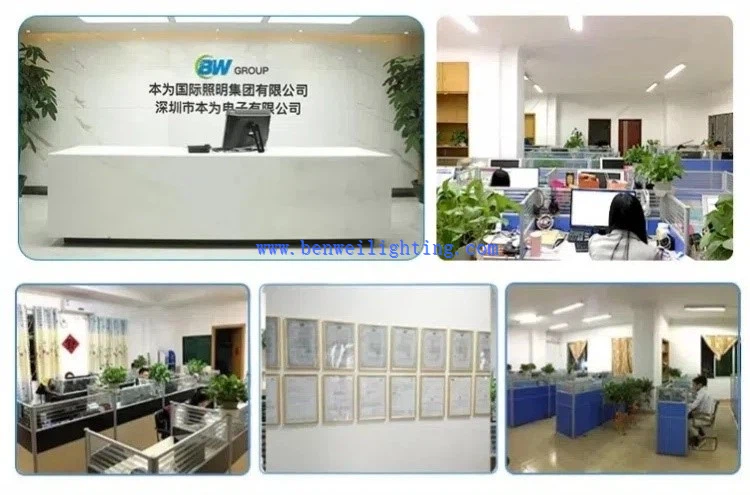
We are happy to have total control over the manufacturing process and the calibre of our products since we have our own facilities. Since we are producers rather than just brokers, we are dedicated to providing our customers with the best pricing. Since we are certain that the price and quality of our products are clear, we invite customers to see our samples first. Our commitment to quality and customer satisfaction drives us to continuously provide top-notch goods.
Our address
3rd Floor, 5th Building, Hebei Industrial Park, Hualian Community, Longhua District, Shenzhen, China





