If you've ever had an outdoor fixture fog up, short out, or simply die after one rainy season, you already know why waterproofing isn't optional for exterior lighting - it's the whole point. Outdoor wall lights live a harder life than almost any other fixture in a building: they take on rain, humidity, dust, UV exposure, and temperature swings, often for years without a second thought from anyone until they stop working. A waterproof LED wall light is built specifically to survive that environment while still delivering the clean, energy-efficient light that modern outdoor spaces need.
In this article, we'll break down what actually makes an LED wall light "waterproof," where these fixtures make the biggest difference, how to judge protection levels correctly, and what to keep in mind for installation and upkeep - so you can specify or select the right product with confidence.
What Does "Waterproof" Actually Mean for an LED Wall Light?
"Waterproof" is a bit of a catch-all term in the lighting industry. In practice, protection against water and dust is measured by an IP (Ingress Protection) rating, written as two digits - for example, IP65 or IP66. The first digit refers to protection against solid particles like dust; the second refers to protection against moisture, from light splashing to full submersion.
A genuinely outdoor-rated LED wall light usually starts at IP65, with sealed housings, gasketed lens covers, and potted or conformal-coated internal drivers to keep condensation away from the electronics. This is different from a standard indoor fixture with an "outdoor-style" look but no real sealing - a distinction that matters more than most buyers realize until a fixture fails.
Core Benefits of Waterproof LED Wall Lights Outdoors
The obvious benefit is durability, but it's worth unpacking what that durability actually delivers:
Longer service life - sealed housings keep moisture off the LED chips and drivers, which are the two components most likely to fail from water damage.
Consistent performance in all weather - rain, snow, or coastal humidity won't cause flickering, dimming, or sudden failure.
Lower maintenance costs - fewer replacements and callbacks, which matters for hotels, restaurants, and property managers with dozens or hundreds of fixtures.
Safer operation - proper sealing reduces the risk of water reaching live components, an important factor for any fixture mounted where people walk or gather.
Better lumen stability over time - LEDs that stay dry and at stable temperatures degrade more slowly, so brightness holds up over years rather than months.
Together, these translate into a lower total cost of ownership, even when the upfront price of a well-sealed fixture is a bit higher than a basic indoor-style light.
Where Waterproof LED Wall Lights Are Typically Used
Because they're built to handle exposure, waterproof LED wall lights show up in a wide range of settings:
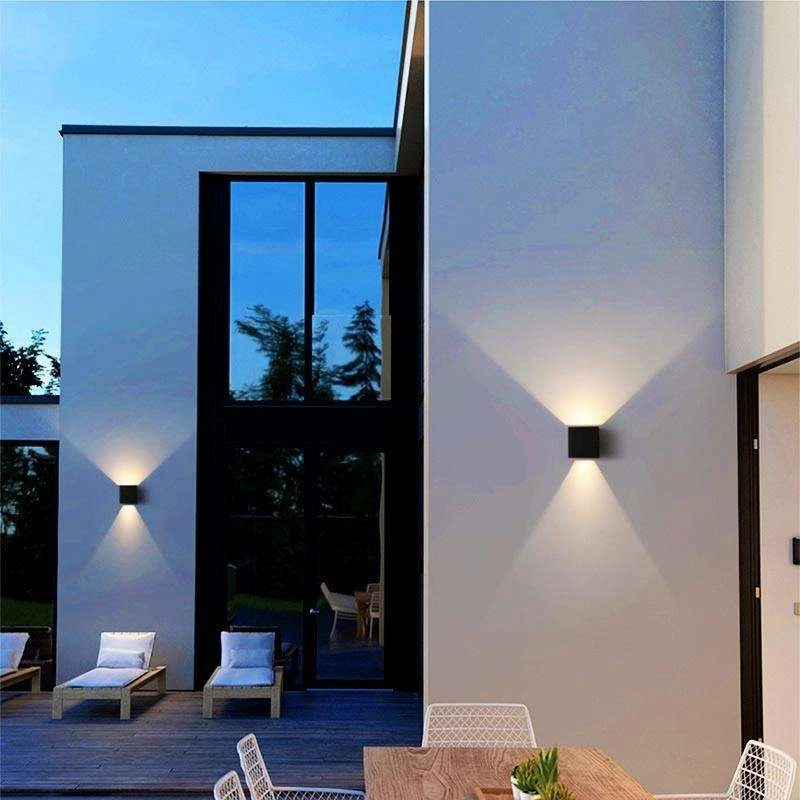
Residential exteriors - entryways, garage walls, patios, and pathways
Commercial facades - storefronts, office buildings, and signage lighting
Hospitality spaces - hotel exterior corridors, courtyard walls, and pool areas
Industrial and warehouse sites - loading docks and perimeter walls exposed to weather and dust
Public infrastructure - parking structures, stairwells, and underpasses
The common thread across all of these is exposure - to weather, to washdown cleaning, or simply to the outdoor environment over long periods. Any wall-mounted fixture in these settings benefits from a genuine waterproof build rather than a cosmetic outdoor finish.
How to Choose the Right IP Rating for Your Project
Not every outdoor location needs the same level of protection, so matching the rating to the environment avoids both underspecifying and overpaying:
IP65 works well for areas protected from direct, heavy rain - under eaves, in covered walkways, or on sheltered walls.
IP66 is a better fit for fully exposed walls that face driving rain or high-pressure washdown, common in commercial and coastal settings.
IP67 or higher becomes relevant for fixtures near ground level, water features, or locations at risk of temporary flooding.
Beyond the IP number, it's worth checking the housing material (die-cast aluminum resists corrosion better than plastic in most climates), the seal type, and whether the driver is separately potted for extra protection. A high IP rating on paper doesn't guarantee quality if the underlying components aren't built to match it.
Installation and Maintenance Considerations
Even a well-rated fixture depends on correct installation to perform as intended:
Mount with the gasket seated properly and cable entries sealed - a small gap defeats the rating.
Use weatherproof junction boxes and outdoor-rated wiring for all connections.
Angle or position fixtures to avoid direct water pooling on the lens where possible.
Periodically check and clean the lens and housing, especially in coastal or dusty environments where salt or grit can build up over time.
Inspect seals and gaskets during routine maintenance, since these are the parts most likely to degrade with age and UV exposure.
None of this is complicated, but skipping these basics is one of the most common reasons a "waterproof" fixture underperforms in the field.
Summary
A waterproof LED wall light isn't just a nice-to-have for outdoor spaces - it's the baseline requirement for a fixture that needs to keep working through years of rain, humidity, and temperature change. Understanding IP ratings, matching them to the actual exposure level of your site, and following proper installation practices are the three factors that determine whether an outdoor lighting investment pays off or turns into a recurring maintenance headache. Choosing a fixture with genuine sealing, quality housing materials, and a rating suited to its location is the simplest way to get lighting that performs reliably outdoors, year after year.
Looking for waterproof LED wall lights for a specific project or application? Get in touch with our team - we're happy to help you match the right IP rating, housing material, and specification to your outdoor space, and answer any technical questions along the way.
Our address
No. 5-3 Niujiao Road, Yanchuan Community, Yanluo Subdistrict, Bao'an District, Shenzhen
bwzm18@ledbenweilighting.com