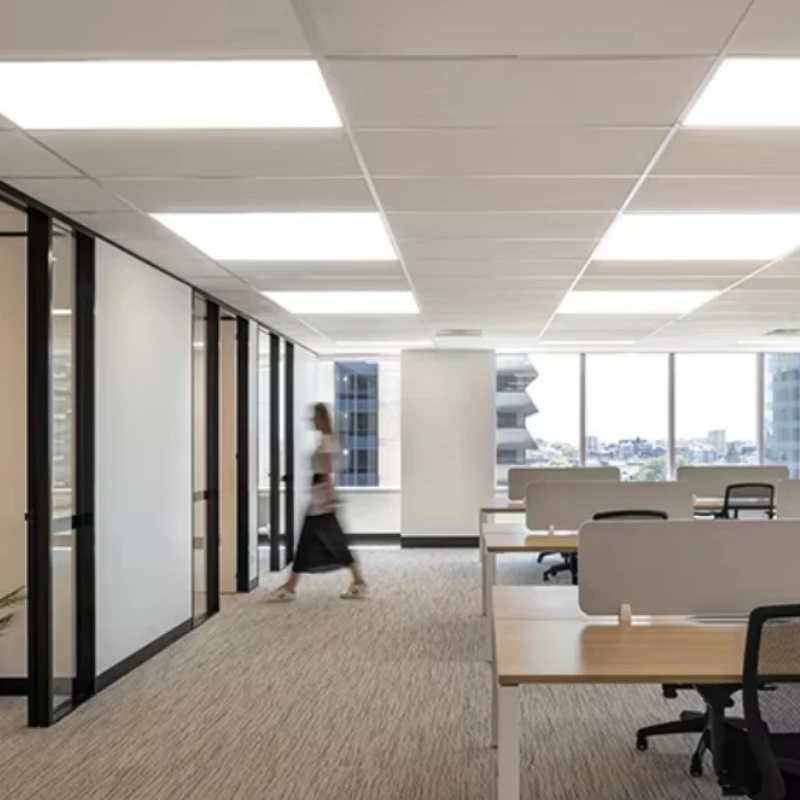
Walk into almost any modern office, hospital corridor, or retail store today and there's a good chance the ceiling is lined with flat, evenly glowing rectangles of light. That's the LED panel light - and it has quietly become one of the most requested lighting products for commercial and residential upgrades alike. But what actually makes it worth choosing over a fluorescent tube or a standard LED downlight? This article breaks down the practical reasons, so you can decide whether panel lights are the right fit for your next project.
Lower Energy Consumption, Lower Bills
This is usually the first thing buyers ask about, and for good reason. A standard 600x600mm LED panel typically draws somewhere between 36W and 45W while producing light output comparable to a pair of 36W fluorescent tubes running through a ballast - which together, with ballast losses, often pull closer to 80W or more. Over a building with hundreds of fixtures running 10+ hours a day, that difference adds up fast on the electricity bill.
Even, Glare-Free Light Distribution
Because panel lights use a diffuser sheet or a light guide plate (LGP) spread across the entire fixture surface, the light comes out soft and uniform rather than as a single bright point. This matters a lot in offices and classrooms, where people are looking at screens or reading for hours - harsh point-source glare causes eye strain, while a well-designed panel spreads the light so no single spot is uncomfortably bright.
Slim Profile, Flexible Installation
Most LED panels are under 15mm thick, sometimes closer to 10mm for edge-lit models. That thin profile opens up installation options that thicker fixtures simply can't offer - recessed into a suspended ceiling grid, surface-mounted with a mounting kit, or even suspended on wires for an exposed-ceiling look. For renovation projects where ceiling void space is limited, this is often the deciding factor.
Longer Lifespan Means Less Maintenance
A quality LED panel is generally rated for 30,000 to 50,000 hours of operation, compared to roughly 10,000–15,000 hours for a typical fluorescent tube. In a large facility, that translates directly into fewer maintenance callouts, less scaffolding or lift rental for high ceilings, and fewer bulk purchases of replacement tubes over the life of the building.
No Mercury, Easier Disposal
Fluorescent tubes contain mercury vapor, which means they need to be handled as hazardous waste at end of life - a real headache for facility managers dealing with disposal regulations. LED panels contain no mercury, so they're simpler and safer to dispose of, and they align better with buildings pursuing green certifications like LEED.
Works Across Many Types of Spaces
LED panels aren't limited to office ceilings. They're common in schools, hospitals, retail stores, warehouses, and even residential kitchens or hallways, largely because they come in multiple sizes (300x300mm, 300x1200mm, 600x600mm, 600x1200mm, and more) and color temperatures (from warm 3000K to cool daylight 6500K). That range makes it possible to match the fixture to the mood and function of almost any room without switching product lines.
Dimming and Smart Control Compatibility
Many panel lights on the market now support 0-10V dimming, DALI, or Triac dimming out of the box, and some are available with built-in sensors for daylight harvesting or occupancy detection. This makes it straightforward to integrate panels into a building management system or a simple smart lighting setup, giving end users control over brightness and energy use without needing to replace the fixture later.
Summary
LED panel lights bring together lower running costs, uniform and comfortable illumination, a thin form factor that suits modern ceilings, long service life, mercury-free construction, and broad compatibility with dimming systems. None of these are flashy selling points on their own, but combined, they explain why panel lights have become a default choice for offices, schools, hospitals, and retail spaces looking to upgrade their lighting.
Looking to source LED panel lights for a specific project - whether it's a single showroom or a large-scale facility rollout? Get in touch with our team and share your requirements (size, wattage, color temperature, dimming needs), and we'll help you find the right specification and a competitive quote.