

Introduction: Lighting Dilemmas in Industrial Hazardous Areas
Environmental Characteristics of Industrial Hazardous Working Scenarios
Industrial hazardous areas refer to special production and operation zones where flammable, explosive, corrosive, or high-dust substances exist, or where extreme environmental conditions may cause equipment failure and safety accidents. Typical scenarios cover chemical production workshops, oil and gas mining sites, coal mine tunnels, port cargo storage yards, metallurgical workshops, and outdoor industrial engineering construction sites. Different from ordinary commercial and civil lighting environments, industrial hazardous areas have multiple restrictive characteristics that put forward extremely high requirements for lighting equipment. First, most hazardous areas are filled with floating dust, metal particles, chemical fog, and corrosive gas molecules, which can easily penetrate the interior of unprotected lighting equipment, causing circuit short circuits, component aging, and lamp damage. Second, these areas often face unstable power grid operation, with instantaneous voltage surge, current fluctuation, and frequent power on-off impact, which is easy to burn out the driving system of ordinary lamps. Third, the working environment is humid and changeable, with long-term rain erosion, dew condensation, and salt spray corrosion in coastal industrial zones, accelerating the aging of lamp shell and sealing structure. Fourth, industrial hazardous areas have strict safety management specifications, and any open flame, high-temperature heat accumulation, or electrical spark generated by lighting equipment may trigger explosion, fire, and other major safety accidents. In addition, most industrial hazardous operations require 24-hour continuous lighting, which puts forward higher standards for the long-term stability, anti-fatigue performance, and low attenuation performance of lighting equipment.
Deficiencies of Traditional Industrial Lighting Solutions
For a long time, traditional lighting products such as HID lamps, halogen lamps, and fluorescent lamps have been widely used in industrial hazardous area lighting, but their inherent performance defects have become important bottlenecks restricting industrial safety production and energy-saving upgrading. In terms of safety performance, traditional gas-discharge lamps and halogen lamps will produce high surface temperature during operation, and the internal gas discharge and filament heating process have hidden dangers of open flame and spark generation, which cannot adapt to flammable and explosive hazardous environments. In terms of service life, the average service life of halogen lamps is only 2,000 to 5,000 hours, and that of HID lamps is 10,000 to 20,000 hours. Frequent lamp replacement not only increases equipment procurement and maintenance costs but also brings additional safety risks during high-altitude and on-site replacement operations. In terms of luminous loss control, traditional lamps have serious light attenuation. After a short period of use, the luminous flux drops sharply, resulting in insufficient on-site illumination, blurred operation vision, and reduced work efficiency. In terms of environmental adaptability, traditional lighting equipment has low protection grade, poor dustproof and waterproof performance, weak corrosion resistance, and is prone to failure in high-dust, humid, and corrosive environments. Moreover, traditional lamps have low electro-optical conversion efficiency, high energy consumption and heat loss, which greatly increases the long-term power operation cost of industrial enterprises. These inherent deficiencies make traditional lighting solutions unable to meet the high-standard lighting and safety requirements of modern industrial hazardous areas, creating an urgent market demand for high-performance, high-safety, and long-life industrial lighting equipment.
Evaluation Criteria for Qualified Hazardous Area Lighting Equipment
Combined with the environmental characteristics of industrial hazardous areas and industrial safety production specifications, qualified industrial hazardous area lighting equipment must meet five core evaluation criteria. The first is excellent safety performance, including low operating temperature, no spark generation, anti-surge circuit design, and explosion-proof and anti-leakage structural design, to eliminate potential safety hazards. The second is stable luminous performance, requiring high luminous efficiency, uniform light output, no stroboscopic flicker, and low light attenuation, to ensure long-term stable illumination of the working site. The third is ultra-long service life and low maintenance cost, adapting to 24-hour continuous industrial operation, reducing frequent replacement and maintenance. The fourth is high-level environmental protection and durability, with high dustproof, waterproof, anti-corrosion, and anti-aging capabilities, adapting to harsh working environments. The fifth is efficient energy-saving performance, with high power factor and low power loss, reducing enterprise energy consumption expenditure. Compared with traditional lighting products, LED COB flood lights fully cover and exceed the above evaluation criteria, becoming the most ideal lighting solution for industrial hazardous areas.
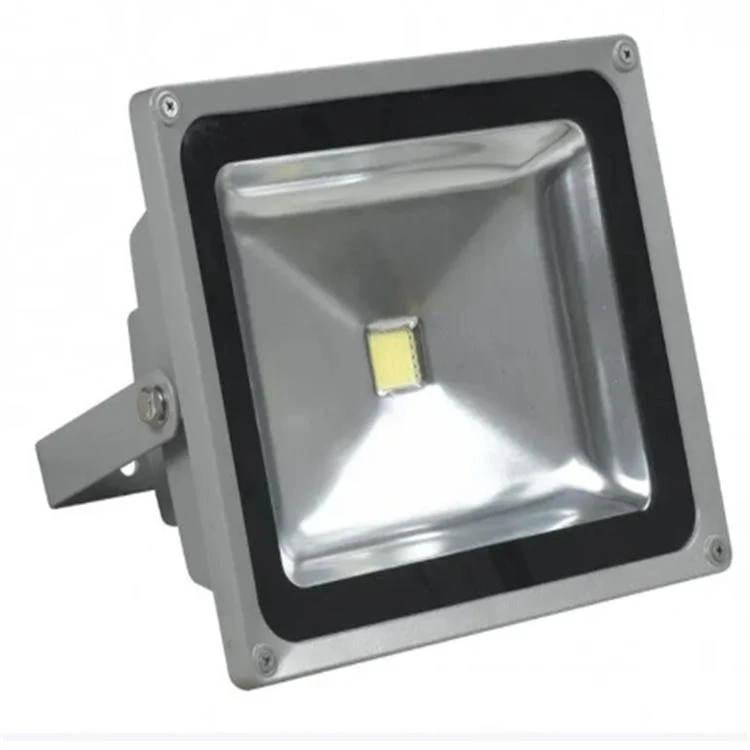
Core Structural and Working Principles of LED COB Flood Lights
Definition and Structural Advantages of COB LED Chip Technology
COB (Chip on Board) LED technology is a high-efficiency surface light source packaging technology, which directly pastes multiple LED bare chips on the metal substrate with high thermal conductivity, and forms a high-density integrated light source through integrated packaging and fluorescent glue coating. Different from the traditional SMD (Surface Mounted Device) LED point light source, COB LED chip realizes the transformation from point light source to surface light source, with unique structural advantages suitable for industrial high-power lighting. First, the integrated packaging structure of COB chips avoids the problem of uneven light emission and dark area of discrete point light sources, realizing ultra-uniform large-area light output, which effectively improves the overall illumination uniformity of industrial hazardous sites and eliminates visual dead angles. Second, the double gold wire welding process adopted by high-quality industrial-grade COB chips greatly improves the electrical conductivity and anti-electromigration ability of the chip. Gold wire has stable chemical properties and strong current bearing capacity, which can avoid chip open circuit, light failure, and damage caused by current impact and voltage fluctuation in unstable industrial power grid environments. Third, the COB chip integrates multiple light-emitting units on a single substrate, with higher power density and smaller unit volume, which reduces the internal space occupancy of the lamp, facilitates the optimization of the heat dissipation structure, and improves the overall compactness and durability of the lamp. In addition, the surface of the COB chip is covered with high-transmittance fluorescent glue, which has anti-oxidation and anti-aging effects, effectively protecting the internal chip from the erosion of external dust and humid gas.
Isolated Driver System for Industrial Anti-Interference Design
Industrial hazardous areas have complex power supply environments, and power grid fluctuation, instantaneous surge, and harmonic interference are common, which pose a serious threat to the stable operation of lighting equipment. LED COB flood lights for industrial hazardous areas are equipped with an independent isolated constant-current driving system, which is a core key to distinguish civilian ordinary LED lamps. The isolated driver realizes electrical isolation between the power supply end and the light source load end, which can effectively isolate the instantaneous voltage surge and current impact generated by the power grid, avoid chip burnout and circuit failure caused by power fluctuation, and greatly improve the anti-interference ability of the lamp. Different from the non-isolated driver adopted by ordinary LED lamps, the isolated driver has lower heat generation and more stable current output, which can ensure that the COB chip works in a constant and safe voltage and current state for a long time. At the same time, the driver is built with a multi-stage anti-surge protection circuit, which can withstand 2KV-4KV instantaneous surge impact, fully adapting to the unstable power supply environment of mining, chemical industry, and field engineering sites. In addition, the industrial-grade isolated driver has a high power factor of more than 0.95, which effectively reduces reactive power loss, improves energy utilization efficiency, and avoids invalid power consumption caused by power grid harmonic interference. The independent cavity design of the driver realizes physical separation between the driving circuit and the light source cavity, avoiding heat cross-conduction, preventing the aging of electronic components caused by high temperature, and further improving the overall operational stability and service life of the lamp.
Die-Cast Aluminum Heat Dissipation and Sealing Structure Design
Heat accumulation is the main cause of LED chip light attenuation and component aging, especially for industrial lamps that work continuously for 24 hours. LED COB flood lights adopt an integrated die-cast aluminum alloy heat dissipation structure, which is tailored for high-load industrial continuous working conditions. The high-purity aluminum alloy material has excellent thermal conductivity, and the fin-type integrated heat sink structure increases the heat dissipation area by 60% compared with ordinary flat heat dissipation structures, which can quickly export the heat generated by the COB chip and driving circuit to the external environment, effectively reducing the operating temperature of the lamp. The surface of the aluminum shell is treated with anodic oxidation and anti-corrosion spraying, which not only improves the heat dissipation efficiency but also enhances the anti-rust, anti-corrosion, and anti-aging ability of the shell, adapting to the long-term erosion of chemical gas, salt spray, and humid air in hazardous areas. In terms of sealing protection, the whole lamp adopts a fully closed integrated sealing design, equipped with multi-layer high-elasticity silicone rubber sealing rings at the splicing gaps of the shell, glass panel, and driver cavity. The silicone rubber material has excellent high-temperature resistance, low-temperature resistance, and aging resistance, which can maintain stable sealing performance for a long time and effectively block external dust, rainwater, and corrosive gas from entering the lamp interior. Matching with high-strength tempered glass panels, the lamp body has strong impact resistance, pressure resistance, and scratch resistance, avoiding structural damage caused by falling objects and external impact in industrial sites.
Superior Comprehensive Performance of LED COB Flood Lights in Hazardous Areas
Stable and Efficient Luminous Performance Adapted to Industrial Scenarios
Industrial hazardous area operations have high requirements for lighting clarity, uniformity, and stability, and the excellent luminous performance of LED COB flood lights fully meets the industrial standard. In terms of luminous efficiency, industrial-grade COB chips have a high luminous efficiency of 110-130lm/W, which is 3-5 times that of traditional halogen lamps and 2 times that of ordinary fluorescent lamps. Under the same power consumption, LED COB flood lights can provide higher luminous flux and larger irradiation coverage, effectively meeting the large-area centralized lighting demand of industrial yards, mining working surfaces, and chemical operation areas. In terms of light quality, the COB surface light source realizes uniform light output, no glare, no dark zones, and no stroboscopic flicker. The high color rendering index (CRI>80) can truly restore the color of equipment, materials, and environmental objects, effectively reducing visual fatigue of operators and improving the accuracy and safety of on-site operation. Different from traditional lamps that have unstable light brightness with power fluctuation, the constant-current isolated driving system of LED COB flood lights ensures stable luminous flux output, and the light brightness will not fluctuate with grid voltage changes, maintaining consistent lighting effects for a long time. In addition, the wide beam angle design of industrial COB flood lights can cover large-area working areas, reducing the number of lamps required for overall site lighting, simplifying engineering layout, and reducing installation and wiring costs.
Ultra-Long Service Life and Ultra-Low Light Attenuation Loss
Service life and light attenuation performance are the core indicators to measure the practicability of industrial lighting equipment, and also the key advantages of LED COB flood lights replacing traditional lamps. Under standard industrial continuous operating conditions, the theoretical service life of industrial-grade LED COB flood lights can reach 50,000 working hours, which is 10 times that of halogen lamps, 5 times that of HID lamps, and 3 times that of ordinary SMD LED lamps. Calculated according to 24-hour uninterrupted operation, the service life of the lamp can reach more than 5 years, which greatly reduces the frequency of equipment replacement. In terms of light attenuation control, relying on the excellent heat dissipation system and high-quality chip packaging technology, LED COB flood lights achieve ultra-low luminous decay. After 30,000 hours of continuous operation, the lumen depreciation is less than 30%, and after 50,000 hours of operation, the luminous flux can still maintain more than 60% of the initial brightness. The slow light attenuation curve ensures that the lamp can maintain effective and qualified illumination for a long time, avoiding the problem of insufficient on-site illumination caused by rapid light failure of traditional lamps. The optimized heat dissipation structure fundamentally solves the problem of chip aging and light decay caused by heat accumulation, and the isolated driver avoids the thermal aging of electronic components. The anti-aging sealing materials and shell structure also ensure that the lamp performance will not degrade rapidly under long-term harsh environmental exposure, realizing long-term stable operation and low maintenance loss.
Low Power Consumption and High Energy-Saving Economic Benefits
Industrial lighting is an important part of enterprise energy consumption, and long-term high-power operation makes energy-saving performance a key consideration for industrial lighting procurement. LED COB flood lights have extremely high electro-optical conversion efficiency, with almost no invalid heat loss in the energy conversion process. Compared with traditional halogen lamps, COB LED flood lights can save more than 75% of electricity; compared with HID industrial lamps, the energy-saving rate is as high as 50%. The high-power-factor isolated driver (PF≥0.95) effectively reduces reactive power loss and grid harmonic loss, improves the utilization rate of electric energy, and avoids the waste of electric energy caused by low power factor of traditional lighting equipment. In addition, the lamp has ultra-low standby power consumption, and no extra power loss is generated during stable operation. The low-current operating design reduces the load pressure and line loss of power supply cables, which is more suitable for large-scale centralized lighting projects in industrial parks and mining areas. From the perspective of full-life-cycle economic benefits, LED COB flood lights have higher initial procurement cost, but their ultra-long service life, zero frequent replacement cost, and ultra-low energy consumption can save a lot of operating costs for enterprises in the long term. Combined with maintenance labor costs, equipment replacement costs, and energy consumption costs, the comprehensive cost of LED COB flood lights is far lower than that of traditional lighting solutions, with significant economic benefits.
High-Level Protection Performance for Harsh Hazardous Environments
Industrial hazardous areas have harsh environmental conditions, and high-level protection performance is the basic guarantee for the stable operation of lighting equipment. All industrial-grade LED COB flood lights adopt standard IP65 dustproof and waterproof protection grade, which is the highest protection level for outdoor and industrial lighting equipment. The fully closed sealed structure completely isolates the internal light source and circuit system from the external environment, achieving 100% dust-proof effect, preventing industrial dust and metal particles from entering the lamp interior to cause short circuit and component failure. In terms of waterproof performance, the multi-layer sealing structure can resist heavy rain splash, water immersion, and dew condensation penetration, adapting to outdoor open-air industrial sites and humid underground mining environments. In terms of corrosion resistance, the die-cast aluminum alloy shell with anodic oxidation treatment has strong resistance to chemical corrosion, salt spray erosion, and atmospheric oxidation, and can operate stably for a long time in chemical workshops, coastal industrial zones, and metallurgical workshops with corrosive gases. The high-strength tempered glass panel has excellent impact resistance, which can resist the impact of falling industrial materials and external mechanical force, avoiding lamp damage and light source damage. At the same time, the whole lamp operates at low temperature, with no high-temperature heat accumulation and no spark generation during operation, which fundamentally avoids the risk of fire and explosion caused by lighting equipment in flammable and explosive hazardous areas, meeting the intrinsic safety standards of industrial hazardous area lighting.
Comparative Advantage Analysis with Traditional Industrial Lighting Products
Safety Performance Comparison
Safety is the primary indicator of hazardous area lighting. Traditional halogen lamps rely on filament heating to emit light, and the surface temperature can reach more than 300 degrees Celsius during operation, which is extremely easy to ignite flammable gas and dust in hazardous areas, with serious explosion and fire hazards. HID lamps generate high-pressure gas discharge during operation, which may produce electric sparks and burst risks after long-term use, with poor safety. In contrast, LED COB flood lights belong to low-temperature solid-state light sources, with the whole lamp operating temperature controlled below 60 degrees Celsius, no open flame, no spark, and no high-pressure dangerous structure. The isolated anti-surge circuit avoids electric leakage and short circuit risks, and the fully closed explosion-proof and dust-proof structure eliminates all potential safety hazards, fully complying with the safety operation specifications of flammable, explosive, and high-dust industrial hazardous areas.
Lifespan and Maintenance Cost Comparison
The short service life of traditional lamps leads to frequent replacement and high maintenance costs. The average service life of halogen lamps is 3,000 hours, requiring replacement every 3-4 months in 24-hour continuous working scenarios; HID lamps have a service life of 15,000 hours, with obvious light attenuation after one year of use, needing regular maintenance and replacement. LED COB flood lights have a service life of up to 50,000 hours, with stable performance for more than 5 years of continuous operation, basically realizing maintenance-free operation in the whole life cycle. Traditional lamps need professional personnel to carry out high-altitude and on-site replacement frequently, which not only consumes a lot of labor and time costs but also brings additional safety risks. LED COB flood lights greatly reduce the maintenance frequency and labor cost, and the modular split structure of the light source cavity and driver cavity is convenient for rapid inspection and partial maintenance, further reducing the later operation cost of enterprises.
Energy Consumption and Environmental Protection Comparison
Traditional industrial lighting equipment has low energy conversion efficiency and high energy consumption. A 1000W halogen lamp can only provide about 10,000 lumens of brightness, while a 200W LED COB flood light can reach 26,000 lumens, realizing higher brightness with lower power consumption. Long-term operation can save a huge amount of electricity costs for industrial enterprises. In terms of environmental protection, traditional gas-discharge lamps contain harmful substances such as mercury, which will cause environmental pollution after being scrapped, and do not meet industrial green production standards. LED COB flood lights are mercury-free, lead-free, and pollution-free, meeting CE and RoHS international environmental protection certifications. At the same time, their low heat generation reduces the ambient temperature rise of industrial workshops, reducing the operating load of workshop cooling equipment, and realizing dual energy saving of lighting and environmental temperature control.
Typical Application Scenarios and Practical Value
Mining and Underground Industrial Sites
Mining sites and underground tunnels are typical high-dust, high-humidity, and explosion-proof hazardous areas, which put forward extremely strict requirements for lighting safety and stability. LED COB flood lights with IP65 high protection grade, low-temperature safety operation, and anti-surge performance can adapt to the dark, humid, and dusty underground environment. The uniform and high-bright light output eliminates underground lighting dead angles, improves the clarity of mining operation vision, and reduces the occurrence of operational safety accidents. The ultra-long service life avoids frequent replacement of underground lamps, reducing the difficulty and risk of underground maintenance operations.
Chemical and Petroleum Processing Zones
Chemical workshops and petroleum processing sites are filled with flammable, explosive, and corrosive gases, which are the most dangerous industrial scenarios for lighting equipment. The low-temperature spark-free operation design of LED COB flood lights fundamentally eliminates the risk of explosion caused by lighting equipment. The anti-corrosion shell and fully sealed structure resist the erosion of chemical corrosive gases, ensuring long-term stable operation of equipment. The stable anti-interference driving system adapts to the complex power supply environment of chemical plants, avoiding lighting failure caused by power grid fluctuation and ensuring the continuity and safety of chemical production operations.
Outdoor Industrial Yards and Engineering Construction Sites
Outdoor industrial storage yards, port terminals, and large engineering construction sites are exposed to wind, rain, dust, and sunlight for a long time, with harsh environmental conditions. LED COB flood lights have excellent waterproof, dustproof, anti-aging, and anti-ultraviolet performance, which can maintain stable lighting effects in all weather. The large-angle irradiation range meets the lighting demand of large-area outdoor sites, and the high energy-saving performance reduces the long-term lighting energy consumption of outdoor engineering projects. The adjustable metal bracket structure is flexible in installation angle and stable in fixation, adapting to various outdoor installation environments and working conditions.
Conclusion and Industry Prospect
Industrial hazardous area lighting is related to the safety of industrial production, operational efficiency, and enterprise operating costs, and high-performance lighting equipment is an important basic guarantee for modern industrial safe production and green upgrading. Facing the multiple defects of traditional lighting solutions in safety, stability, service life, energy saving, and environmental adaptability, LED COB flood lights rely on advanced COB chip packaging technology, isolated anti-interference driving system, high-efficiency heat dissipation structure, and high-level protection design to achieve comprehensive breakthroughs in various core performance indicators. Its intrinsic safety performance eliminates the potential safety hazards of hazardous area lighting, ultra-low light attenuation and ultra-long service life realize long-term stable maintenance-free operation, high energy-saving efficiency greatly reduces enterprise energy consumption costs, and high-level environmental adaptability meets the lighting needs of various harsh industrial hazardous scenarios.
With the continuous upgrading of industrial intelligent production and safety supervision standards, the market demand for high-safety, high-efficiency, and long-life industrial lighting equipment will continue to grow. LED COB flood lights, as the optimal solution for industrial hazardous area lighting, will gradually fully replace traditional lighting products and become the mainstream choice for industrial lighting engineering construction and equipment upgrading. In the future, with the continuous innovation of LED chip technology, intelligent control technology, and new material technology, LED COB flood lights will develop in the direction of intelligence, integration, and higher efficiency, bringing more safe, energy-saving, and intelligent lighting solutions for modern industrial hazardous area production.
How To Cooperate With Us?
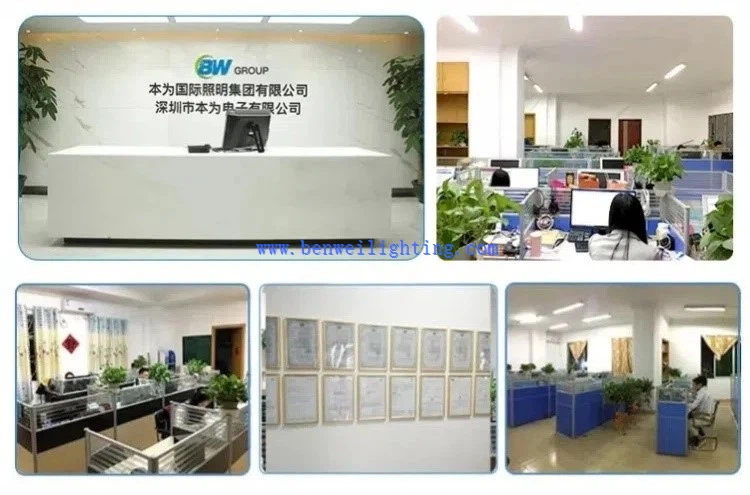
We are happy that we have total control over the manufacturing process and the quality of our products since we have our own facilities. Since we are producers rather than just brokers, we are dedicated to providing our customers with the best pricing. Since we are certain that the price and quality of our products are transparent, we advise customers to examine our samples first. Our commitment to quality and customer satisfaction drives us to continuously provide top-notch goods.
Our address
3rd Floor, 5th Building, Hebei Industrial Park, Hualian Community, Longhua District, Shenzhen, China





