

For both residential and commercial locations, outdoor floodlights are essential lighting solutions that play vital roles in improving security, illuminating huge areas, and boosting the visual attractiveness of outdoor surroundings. Floodlights are used on anything from private patios and driveways to construction sites, parking lots and commercial building facades to provide brilliant, reliable lighting around-the-clock in challenging outdoor environments including high temperatures, rain, dust and humidity. Modern LED floodlights have outperformed conventional halogen and metal halide alternatives in terms of brightness and energy efficiency, but heat dissipation-a feature that is sometimes disregarded-determines how long they last and how well they work. Inadequate heat management causes many companies and households who purchase floodlights to have premature failure-dimming, flickering, or burning out within months. In actuality, adequate heat dissipation is the key to floodlights' long-lasting performance, dependability, and affordability. This blog examines the vital role that heat dissipation plays in prolonging the life of floodlights, explores the fundamental heat dissipation technologies that distinguish premium floodlights, emphasises the special benefits of our IP65 Waterproof Outdoor Projector Floodlight, and offers thorough instructions on proper use and application scenarios. By the end, you will see why selecting an outdoor lighting that prioritises heat dissipation is the best investment you can make-saving you money, time, and the aggravation of regular replacements.
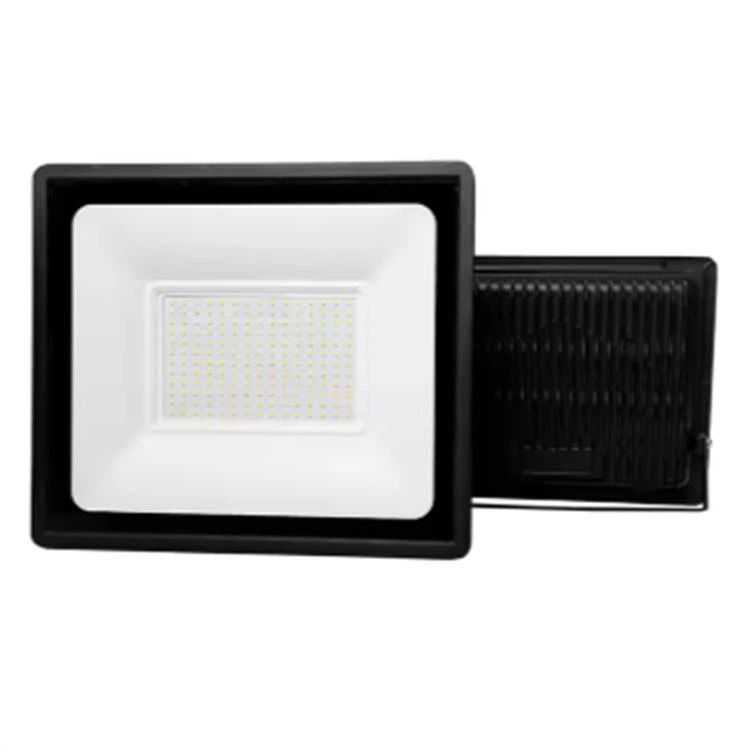
Why Proper Heat Dissipation Is the Secret to Long-Lasting Floodlights
LED Chip Degradation: The Hidden Cost of Poor Heat Dissipation
Although the idea of LED floodlights is to transform electrical energy into light energy, this process is far from perfect. Actually, only 10–20% of electrical energy is converted into visible light by high-power LED floodlights (50–500W), with the other 80–90% being emitted as heat. This heat mostly builds up in the LED chip, which is the main part that emits light, increasing its junction temperature (Tj), a crucial indicator that has an immediate effect on longevity. The maximum safe junction temperature for standard LED chips is 125°C; going over this limit sets off a series of detrimental consequences. The LED's lifetime is halved and its light degradation rate increases by 1.5–2 times for every 10°C rise in junction temperature over 65°C. An LED floodlight with inadequate heat dissipation, for instance, would see a junction temperature increase of 100°C, which would shorten its potential lifetime from 50,000 hours to only 20,000 hours. The semiconductor materials in the LED chip deteriorate over time due to this extreme heat, which eventually results in dimming, colour temperature drift (such as warm white light becoming yellow), and chip failure. Heat dissipation, on the other hand, is the most crucial element in maintaining LED chip integrity and prolonging floodlight lifetime since it keeps the junction temperature below 85°C, guaranteeing that the LED chip retains 90% of its original brilliance for more than 50,000 hours.
Driver Failure: A Common Consequence of Unmanaged Heat
Another heat-sensitive component that is severely impacted by inadequate heat dissipation is the LED driver, which controls the voltage and current to the LED chips. Heat from switch tube conduction losses, sampling resistor losses, and chip static losses makes about 20–30% of the total heat produced by a floodlight. The majority of low-quality floodlights employ drivers with electrolytic capacitors, which are very sensitive to temperature. When the temperature rises by 10°C, the electrolyte within the capacitor evaporates, halving its lifetime. Inadequate heat dissipation causes the internal parts of the driver to overheat, which may result in voltage instability, short circuits, and total driver failure. Even if the LED chips themselves are still working, this failure often shows up as the floodlight flickering, not turning on, or abruptly burning out. Driver failure results in expensive downtime, labour costs for repairs, and decreased security for commercial customers that depend on floodlights for round-the-clock operation (such as construction sites and parking lots). By maintaining a steady operating temperature, proper heat dissipation safeguards the driver and guarantees dependable operation for the duration of the floodlight's life.
Physical Damage and Material Aging from Thermal Stress
The floodlight's lifetime is further shortened by thermal stress from excessive heat, which harms the floodlight's physical structure and packing materials. A variety of materials with varying thermal expansion coefficients are used in the construction of floodlights, including LED chips, substrates, housing, and sealing components. These materials expand and contract at various rates as heat builds up, causing solder joints to fracture, gold wire to break, and component interfaces to separate. Electrical connections are disrupted by this physical damage, resulting in sporadic performance or total failure. High temperatures also hasten the deterioration of packing materials: silicone or epoxy resin encapsulants harden and become yellow, which decreases light transmission and further traps heat. Heat-induced material ageing may also weaken the waterproof seals of IP65 waterproof floodlights, enabling dust and moisture to enter the fixture and exacerbating damage and short circuits. By maintaining a steady temperature and protecting the fixture's materials and physical structure throughout years of dependable usage, proper heat dissipation reduces thermal stress.
The Vicious Cycle of Overheating and Energy Waste
Inadequate heat dissipation starts a vicious circle that raises energy expenses and speeds up lighting failure. The LED chip's photoelectric conversion efficiency falls as heat builds up, which means that more electrical energy is transformed into heat rather than light. Because the floodlight needs more power to maintain the specified light output, this not only decreases brightness but also increases energy consumption. Increased heat causes components to deteriorate even more, increasing energy consumption and decreasing efficiency. This cycle eventually leads to early failure. This results in increased power costs and more frequent replacements for business customers, which reduces profit margins. By maintaining the LED chips and driver at ideal temperatures, proper heat dissipation breaks this cycle and guarantees maximum energy efficiency and reliable performance. When compared to low-quality floodlights with inadequate thermal management, a well-designed heat dissipation system may save energy usage by up to 70%, making it an investment that will save money over time.
Core Heat Dissipation Technologies
Thermal Conduction: Aluminum Substrate and Heat Transfer Materials
Efficient thermal conduction-moving heat as fast as feasible from the heat sources (LED chips and driver) to the heat dissipation medium (housing)-is the cornerstone of efficient heat dissipation. Because of its exceptional thermal conductivity (8–12 W/m·K), our floodlight employs a premium aluminum-based PCB (MCPCB) as the substrate for LED chips. The aluminium substrate functions as a heat conductor, quickly moving heat from the LED chips to the housing, in contrast to ordinary FR4 PCBs (thermal conductivity of 0.3-0.5 W/(m·K)). We use high-performance thermal interface materials (TIMs)-a layer of silicone paste that is thermally conductive-between the aluminium substrate and the LED chips to further improve heat conduction. This paste reduces thermal resistance to ≤2℃/W-a standard for high-power LED floodlights-by eliminating air gaps, which are poor heat conductors, and ensuring maximum heat transmission. We use a potted design for the driver, enclosing it in thermally conductive resin that both transmits heat to the housing and offers waterproof protection.
Heat Dissipation Area Expansion: Finned Aluminum Housing Design
Once heat is conducted to the housing, it must be efficiently dissipated into the surrounding air-a process that depends on the housing's surface area and material. Our floodlight features an extruded aluminum housing with a finned design, a critical technology for expanding the heat dissipation area . The fins are precision-engineered to maximize surface area without increasing the fixture's overall size, allowing for greater heat exchange with the surrounding air through convection. Aluminum is chosen for the housing due to its high thermal conductivity (205 W/(m·K)) and lightweight properties, making it ideal for outdoor use . The finned design increases the heat dissipation area by 300% compared to a smooth housing, ensuring heat is rapidly released and the fixture's temperature remains stable even during 24/7 operation. Additionally, the housing is powder-coated with a heat-dissipating finish that enhances thermal radiation, further accelerating heat loss to the environment.
Thermal Resistance Minimization: Seamless Integration and Design Optimization
Every contact in the floodlight's thermal route is made to minimise thermal resistance, or the barrier to heat flow between components, in order to accomplish optimum heat dissipation. In order to provide direct, smooth contact for optimal heat transmission, we remove superfluous layers between the LED chips, substrate, and housing. Heat trapping is decreased by the aluminium housing's integration with the LED substrate, which creates a single thermal route. To ensure that the driver's heat is effectively transported to the fins without interfering with the LED chips, we place it in a specific thermal compartment within the housing. In order to reduce heat accumulation, we additionally optimise the interior arrangement of the fixture with ventilation channels that encourage circulation and prevent hotspots. Heat can easily go from the LED chips and driver to the surrounding environment thanks to this meticulous attention to detail, which guarantees that thermal resistance is reduced at every stage.
Intelligent Temperature Monitoring and Protection
Our floodlight uses clever temperature monitoring and protection technologies to avoid overheating, even in severe weather. In order to continually monitor the junction temperature, we place an NTC (Negative Temperature Coefficient) thermistor next to the LED chips. The driver automatically lowers the current provided to the LED chips, reducing heat production and enabling the fixture to cool down, after receiving a signal from the thermistor when the temperature rises over 85°C. The driver completely cuts the power if the temperature hits 100°C in order to protect the components from irreversible damage. Furthermore, the driver has built-in over-temperature protection (OTP), which causes a shutdown if the driver's temperature rises beyond 120°C. Even in very hot weather or when the fixture is operated continually for long periods of time, this dual protection mechanism guarantees that the floodlight always functions within safe temperature limits.
Advantages of Our IP65 Waterproof Outdoor Projector Floodlight
Ultra-Long Lifespan: 50,000+ Hours of Reliable Operation
Our IP65 Waterproof Outdoor Projector Floodlight has an industry-leading lifetime of 50,000+ hours, or 5.7 years of continuous 24/7 operation, thanks to our cutting-edge heat dissipation technology. Compared to low-quality floodlights with inadequate heat dissipation, which usually fail after 10,000–15,000 hours, this is three to five times longer. The LED chips and driver are kept cool and stable, preventing early deterioration, thanks to the finned aluminium housing, premium aluminium substrate, thermal interface materials, and intelligent temperature protection. This results in much lower maintenance costs for business users-fewer replacements, less labour, and less downtime. For homeowners, it means a one-time investment that offers dependable illumination for many years without the inconvenience of changing bulbs or fixtures on a regular basis. Our floodlight is made to endure, providing long-term value and peace of mind, in contrast to inexpensive floodlights that need to be replaced every one to two years.
Stable Brightness and Consistent Lighting Performance
Throughout its lifetime, our floodlight will have steady brightness and a constant colour temperature thanks to proper heat dissipation. Our floodlight maintains 90% of its original brightness after 50,000 hours of usage, in contrast to low-quality floodlights that decrease by 30% or more within two years owing to heat-induced light decay. For commercial applications (such as store displays and building facades) where illumination quality directly affects consumer perception, the high CRI (Colour Rendering Index 80) guarantees accurate colour reproduction. Additionally, the floodlight operates without flickering since the LED chips get steady voltage and current from the stable driver, which is shielded by efficient heat dissipation. Whether utilised for security, outdoor events, or landscape illumination, this removes eye strain and guarantees a pleasant lighting experience. For homes, continuous brightness means a well-lit outdoor area that is both secure and welcoming; for companies, it means dependable security lighting and improved brand exposure.
IP65 Waterproof and Dustproof: Durable for Harsh Outdoor Environments
With an IP65 waterproof and dustproof certification, this floodlight is made to endure the most severe outdoor circumstances. The IP65 certification indicates that the fixture is impervious to rain, snow, and even high-pressure cleaning since it is totally dust-tight (all dust particles cannot enter) and shielded from low-pressure water jets coming from any direction. Our floodlight's capacity to retain waterproof performance without sacrificing heat dissipation is what makes it unique. at order to create an airtight seal around the fixture while enabling heat to escape via the finned housing, we use platinum-cured silicone gaskets that maintain their flexibility at very high temperatures (-30°C to 100°C). In addition to preventing moisture penetration, the sealed cable entrances and waterproof connections shield the interior components against corrosion and short circuits. Because of its longevity, our floodlight may be used in places that often experience dust, wetness, and harsh weather, such as building sites, coastal areas, and rainy regions.
Energy Efficiency and Cost Savings
In addition to increasing longevity, efficient heat dissipation also improves energy efficiency. Our floodlight uses 30% less energy than cheap LED floodlights and 70–80% less energy than conventional halogen floodlights. This is due to the fact that effective heat management guarantees that the LED chips function at maximum efficiency, transforming more electrical energy into light and less into heat. For instance, a 100W LED floodlight with our heat dissipation technology produces brighter, more reliable lighting while using the same amount of energy as a 300W halogen floodlight. This results in considerable power bill savings for business customers with vast outside expanses (such parking lots or construction sites) that need illumination around-the-clock-up to $500 per fixture annually. Our floodlight is an affordable investment that pays for itself in one to two years due to its extended lifetime, which also lowers replacement expenses.
Versatility and Easy Installation
Because of its adaptable design, our IP65 Waterproof Outdoor Projector Floodlight may be used in a variety of settings. It has a 180° angle adjustable mount that lets users focus light precisely where it's required, whether it's lighting a business sign, a construction site, or a garden. Users may choose the ideal illumination for their requirements since the floodlight comes in a variety of colour temperatures (3000K warm white to 6500K cool white) and wattages (30W to 300W). With mounting gear provided and a user-friendly design, installation is easy and quick and doesn't need specialised skills or a professional electrician (for basic installation). Its waterproof construction guarantees that it may be mounted in any outdoor area, and its lightweight aluminium shell makes mounting on walls, poles, or ceilings simple. Our floodlight provides the adaptability and user-friendliness you want, whether you are a homeowner seeking to improve the security of your garden or a company owner in need of dependable illumination for a commercial environment.
Correct Usage Methods and Application Scenarios
Step-by-Step Usage and Installation Guidelines
Proper installation and usage are critical to maximizing the lifespan and performance of our IP65 Waterproof Outdoor Projector Floodlight. Follow these step-by-step guidelines:
1. Prepare the installation area: Choose a stable, flat surface (wall, pole, or ceiling) that can support the floodlight's weight. Ensure the area is free of debris, dust, and obstacles that could block the floodlight's beam or obstruct heat dissipation.
2. Mount the fixture: Use the included mounting bracket and screws to attach the floodlight to the installation surface. Adjust the angle using the adjustable bracket to direct the light to the desired area-avoid pointing the light directly at windows or residential areas to prevent light pollution .
3. Wire the floodlight: Turn off the power to the electrical circuit before wiring. Connect the floodlight's wires to the power supply, following the manufacturer's wiring diagram. For commercial installations or if you are not a qualified electrician, hire a professional to ensure compliance with electrical codes and safety standards.
4. Test the fixture: Turn on the power and test the floodlight to ensure it illuminates properly, with no flickering or unusual noises. Check the temperature of the housing after 30 minutes of operation-it should feel warm but not hot to the touch.
5. Routine usage tips: Avoid turning the floodlight on and off unnecessarily (though the driver is designed to handle frequent cycling). Do not cover the fixture or block the fins, as this will trap heat and reduce heat dissipation efficiency. In extreme heat, the floodlight's temperature protection may activate-this is normal and ensures the fixture's safety.
Ideal Application Scenarios
Our IP65 Waterproof Outdoor Projector Floodlight is designed to excel in a wide range of residential, commercial, and industrial scenarios, thanks to its durable construction, advanced heat dissipation, and versatile design:
1. Residential Use: Perfect for illuminating backyards, driveways, patios, and gardens. The warm white (3000K) option creates a cozy atmosphere for outdoor gatherings, while the cool white (6500K) option enhances security by eliminating dark spots . The IP65 rating ensures it withstands rain, snow, and dust, making it ideal for year-round use.
2. Commercial Use: Ideal for parking lots, retail storefronts, commercial building facades, and billboards. The high brightness and consistent performance ensure maximum visibility, attracting customers and enhancing security . The energy efficiency and long lifespan reduce operational costs for businesses.
3. Industrial Use: Suitable for construction sites, warehouses, and manufacturing facilities. The durable aluminum housing and IP65 rating withstand dust, debris, and harsh working conditions, while the 24/7 operation capability ensures reliable lighting for night shifts .
4. Public Spaces: Perfect for parks, plazas, sports courts, and municipal areas. The wide beam angle (90°-120°) covers large areas, providing uniform illumination for public safety and events .
5. Special Events: Ideal for outdoor weddings, concerts, and festivals. The adjustable angle and bright illumination create the perfect atmosphere, while the waterproof design ensures it can be used in any weather condition.
Safety Precautions and Maintenance Tips
To ensure the safe and long-lasting operation of our floodlight, follow these safety precautions and maintenance tips: - Always turn off the power before installing, cleaning, or inspecting the floodlight to avoid electrical shock. - Do not install the floodlight in areas with flammable materials or near heat sources, as this can increase the risk of fire. - Avoid touching the LED chips or internal components, as they can become hot during operation and cause burns. - Do not use the floodlight in environments outside its operating temperature range (-30℃ to +50℃), as this can damage the driver and LED chips. - For maintenance: Clean the fixture's surface and fins monthly with a soft, damp cloth to remove dust, dirt, and debris-this ensures optimal heat dissipation and brightness . Inspect the waterproof seals and connectors every 3 months for signs of damage or wear; replace any damaged seals immediately to maintain IP65 protection. Check the wiring periodically for signs of aging or damage, and replace the cable every 3 years to prevent electrical issues . If the floodlight flickers, dims, or fails to turn on, check the wiring and connectors first-loose connections are a common issue. If the problem persists, contact the manufacturer for support. By following these precautions and maintenance tips, you can ensure that your floodlight operates safely and reliably for its full 50,000+ hour lifespan.

How To Cooperate With Us?
Our firm prides itself on owning its own factory, guaranteeing complete control over the production process and the quality of our goods. We are not only agents; we are manufacturers committed to offering our clients the most competitive rates available. We invite consumers to evaluate our samples first, as we are assured that the quality and pricing of our items are self-evident. Our dedication to excellence and client satisfaction compels us to consistently perform at our best and provide superior quality products.
Our address
3rd Floor, 5th Building, Hebei Industrial Park, Hualian Community, Longhua District, Shenzhen, China





