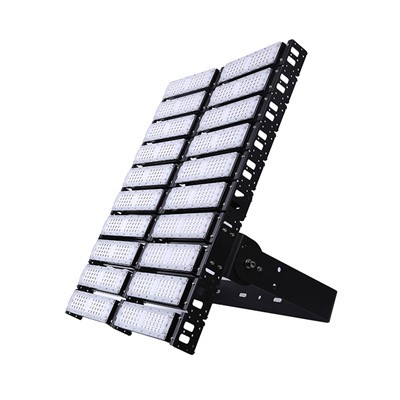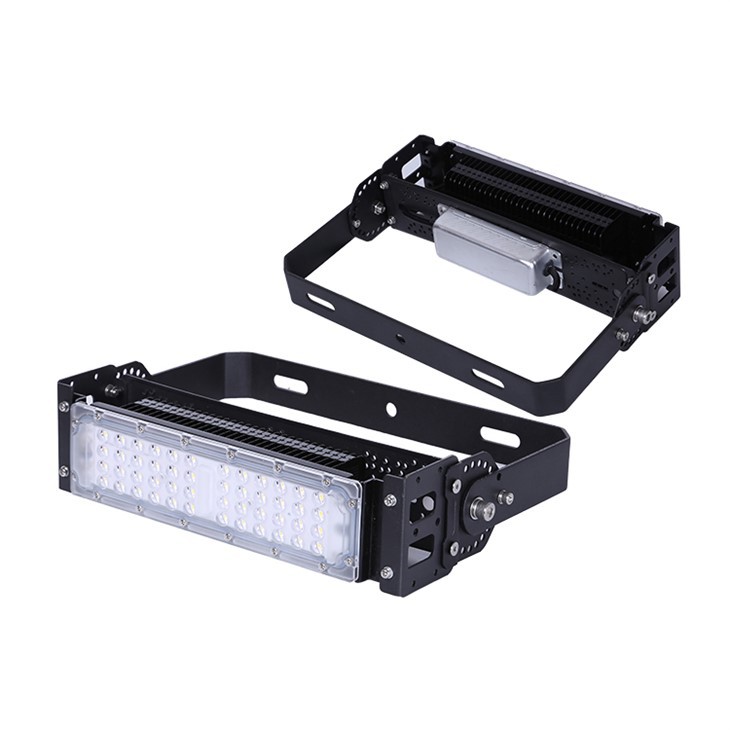
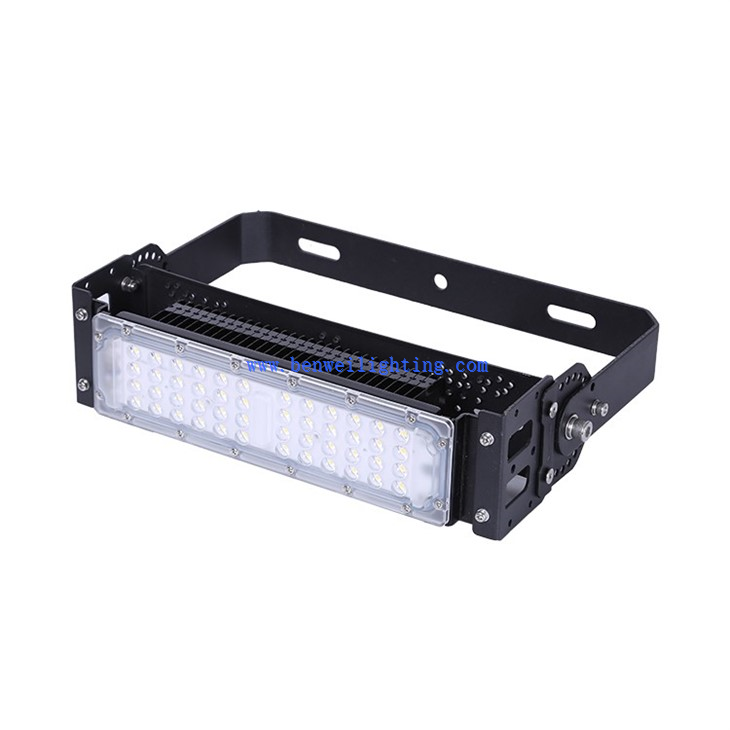
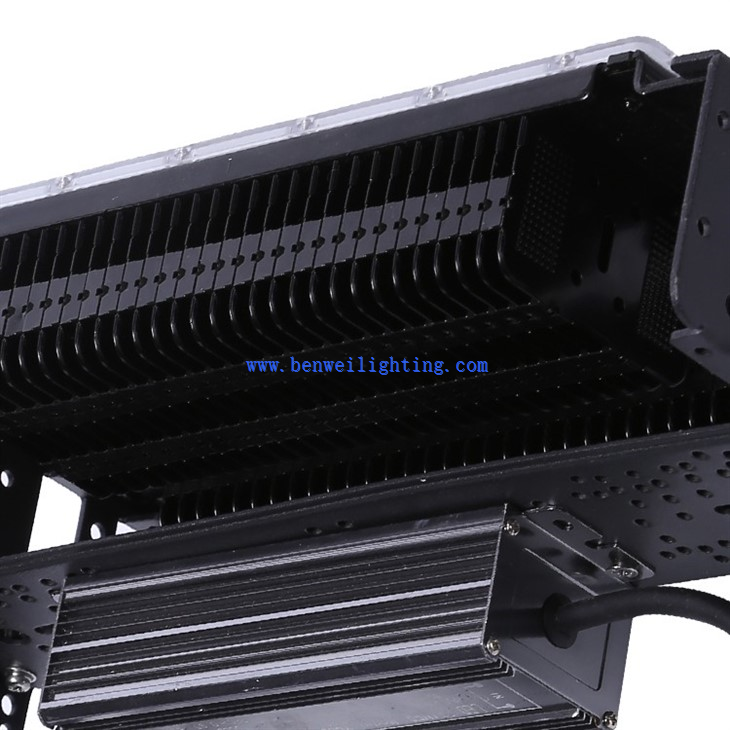
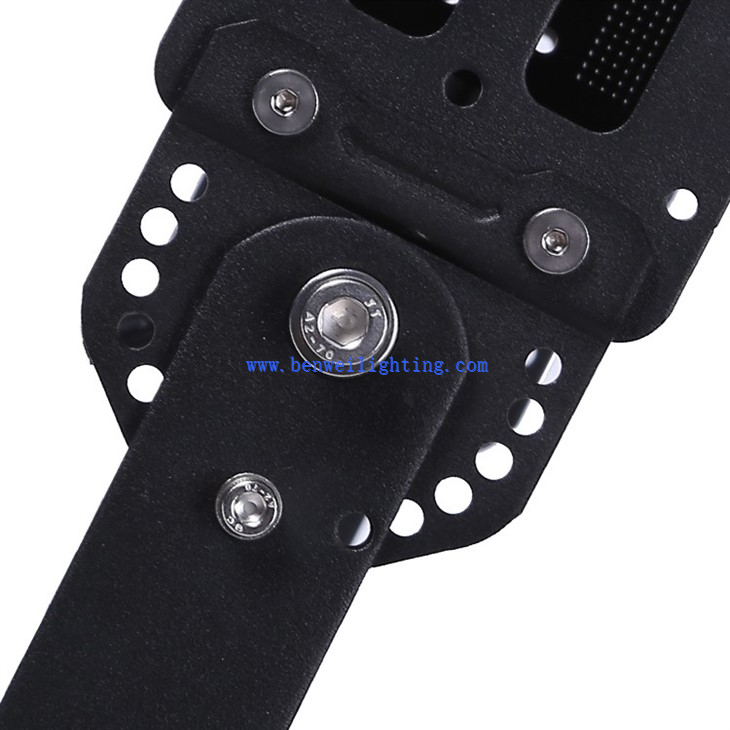
Products Description
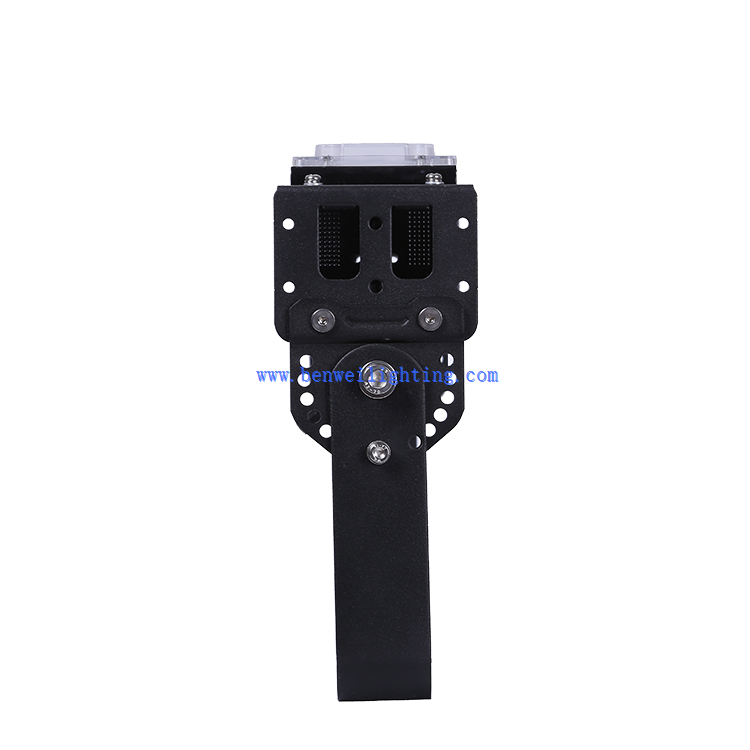
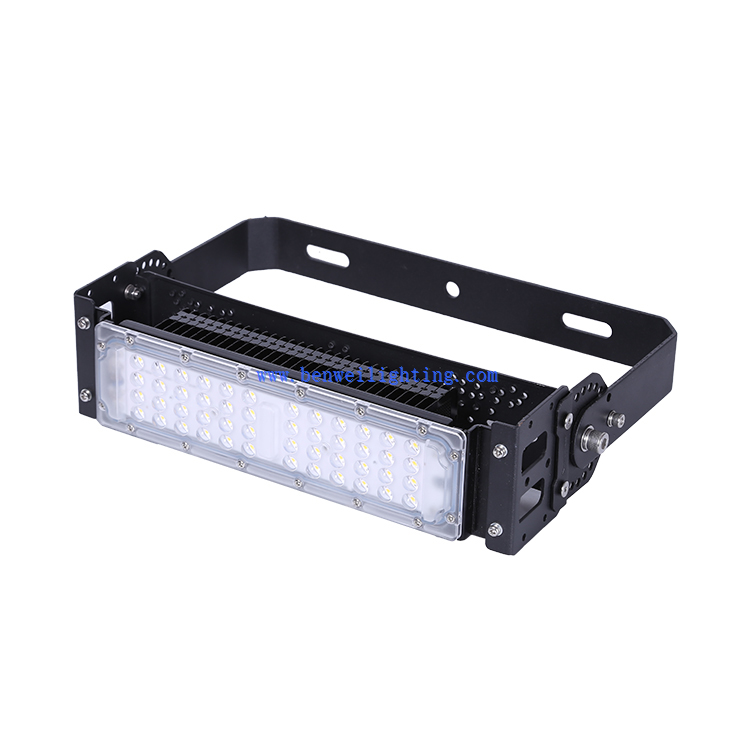
Modular floodlights have individual optical, power supply, and heat dissipation modules that may be disassembled and replaced, unlike integrated floodlights. Modular floodlights have individual optical, power supply, and heat dissipation modules that may be disassembled and replaced, unlike integrated floodlights. This implies you can maintain or upgrade particular modules like "building blocks" instead of replacing the complete light. This implies you can maintain or upgrade particular components like "building blocks" instead of replacing the complete light.
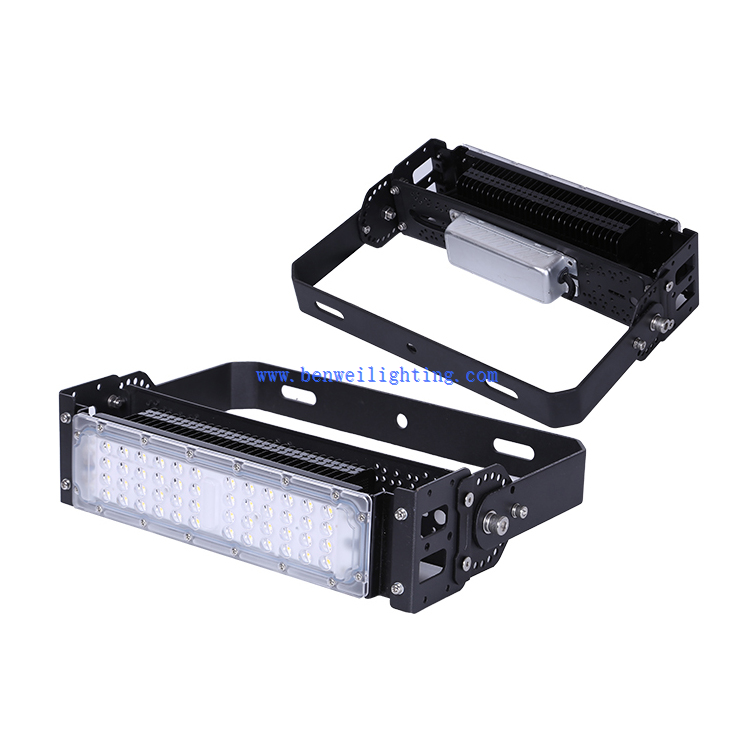
Products Specification
| Voltage | 240VAC |
| Dimmable | NO |
| Beam angle | 45/60 |
| Mounting | Lighting tower/Wall/Ceiling |
| Material | Die-cast aluminium |
| Life Hours | 50,000 |
| Power consumption | 250W |
| Lumens output | 35,000 lm |
Products Details
1. Easy Maintenance and Long Life
If an LED optical module breaks, maintenance staff can replace it without disassembling the luminaire or adjusting the beam angle. Replace the faulty module with your bare hands or basic tools under the pole or with a lifting device in minutes, saving time and money.
Independent Repair: A damaged module can be returned to the workshop for repair without affecting other modules.
In theory, replacing modules with severe light deterioration or damage can extend the luminaire's lifespan indefinitely, achieving the "install once, use forever" notion.
2. Unmatched Flexibility and Upgradeability
Adjustable Light Distribution: The same luminaire housing can hold optical modules with narrow, medium, or wide beam angles. Depending on pole location and illumination area, modules can be combined during installation and commissioning to produce ideal lighting uniformity.
A luminaire's overall output can be modified to meet future illumination standards by swapping modules with different wattages or luminous fluxes.
Stadiums can update without replacing all lighting fixtures when better LED chip technology like Micro-LED becomes available. Buy new optical modules to protect the initial investment.
3. Excellent Reliability
Optimized Thermal Management: Each optical module has a separate, optimized heat dissipation system (such as a vapor chamber and heat sink fins) to keep the main light source at an appropriate temperature, delaying light deterioration and increasing its lifespan.
Defect Isolation: A module defect does not influence other modules or the driver system, boosting lighting system stability.
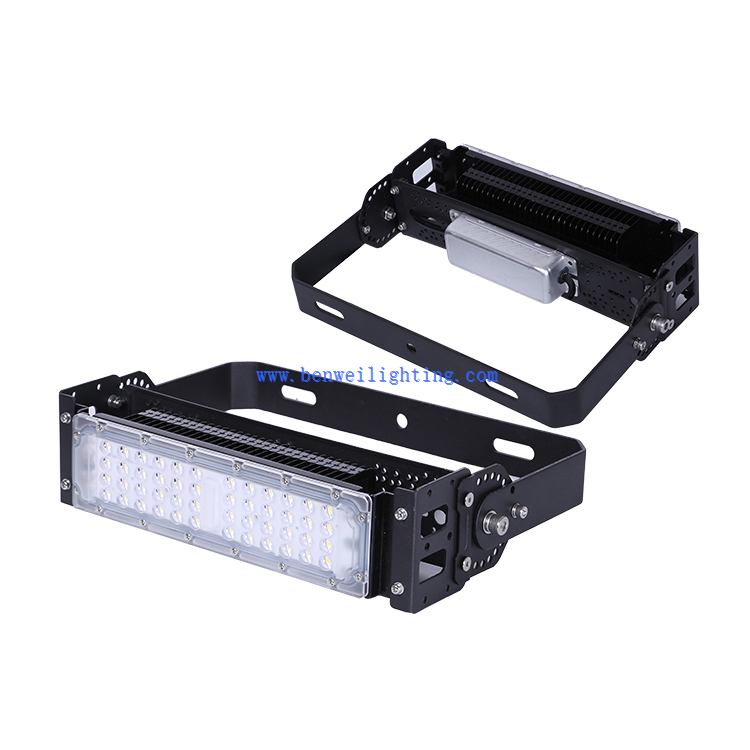
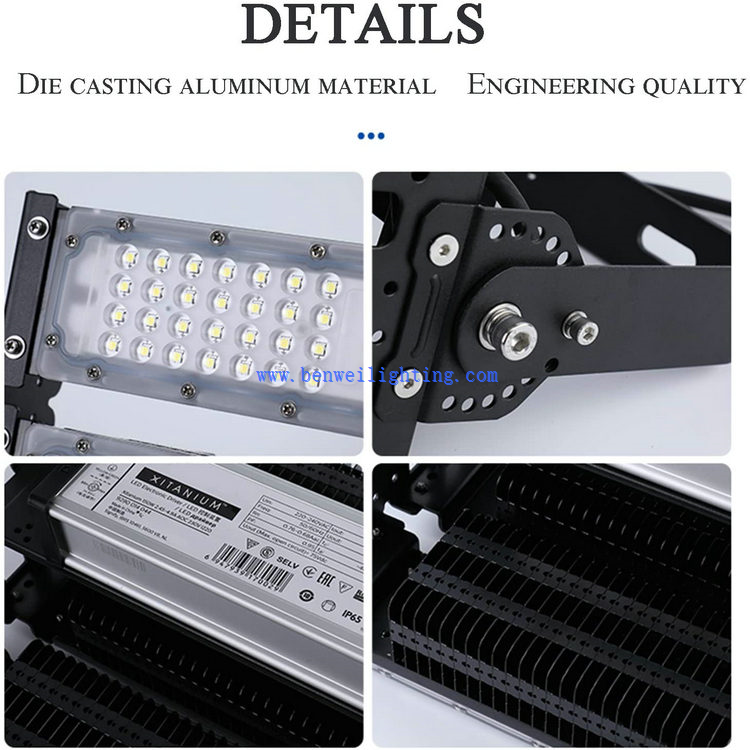
Products Applications
Modular stadium floodlights are the ideal choice for all newly-built or upgraded professional sports venues, and are particularly suitable for:
Large football fields, rugby fields
Baseball field
Athletic Field
Other large outdoor sports venues that require high-level and highly reliable lighting

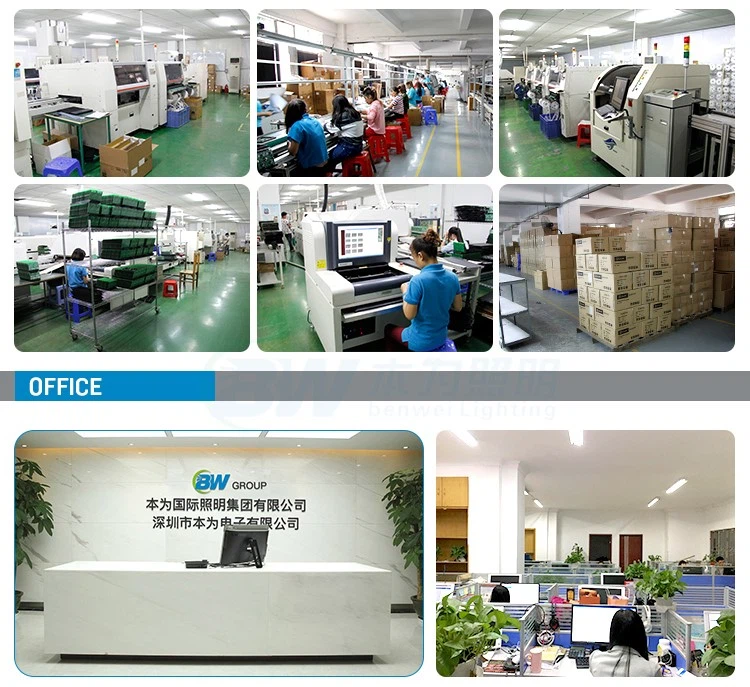
Our Company

FAQ
Q: Why is it said that modular design significantly reduces maintenance costs?
A: Quick replacement: Maintenance personnel on site can replace the faulty module by themselves or using simple tools within a few minutes without the need for professional electricians. There is no need to dismantle the lamp, which significantly reduces the downtime. Targeted maintenance: By purchasing only the faulty modules instead of the entire lamps, the cost of spare parts has been saved. Reduce human risks: Reduced the time and complexity of high-altitude operations, and enhanced operational safety.
Q: What does "upgradability" specifically refer to?
A: This means that your lighting system will not be rendered obsolete due to technological advancements. Lighting effect upgrade: When higher-light-efficiency LED chips become available in the future, you only need to purchase new optical modules to replace the old ones, which will enable you to increase brightness or reduce energy consumption without having to replace the lamp housing or wiring. Function upgrade: For instance, it can be upgraded from a fixed color temperature module to a variable color temperature module, or from a single-color light module to an RGB full-color module, to meet the requirements of new scenarios.
Q: How does modular design enhance the flexibility of lighting design?
A: During the project installation stage, based on the position and illumination distance of each lamp pole, different optical modules with different light distribution angles (such as 15° narrow beam, 30° medium beam, 60° wide beam) can be configured for the same modular lighting fixture for mixed installation. This enables the achievement of the optimal lighting uniformity and minimizes glare and waste.
Q: Is its reliability really higher than that of the integrated lamp?
A: Yes, the reason is: Thermal management optimization: Each optical module typically has an independent and meticulously designed cooling system to ensure that the LEDs operate at the optimal temperature and have a longer lifespan. Fault isolation: A failure of one module will not affect other modules or cause the entire lamp to malfunction. Quality specialization: The drive and optical modules can be provided by top suppliers in their respective fields, ensuring the top performance of each core component.