Things to Know Before Installing Recessed Lighting in Your Home

The Ceiling & Walls
8 Things to Consider Prior to Recessed Lighting Installation in Your Home
Can lights are coveted for their understated appearance that won't take away from the décor. However, it's crucial to decide which lighting types to employ and where they'll go before starting a recessed lighting installation in your home.
By using the items on this website and taking part in affiliate programs, we might be able to make money.
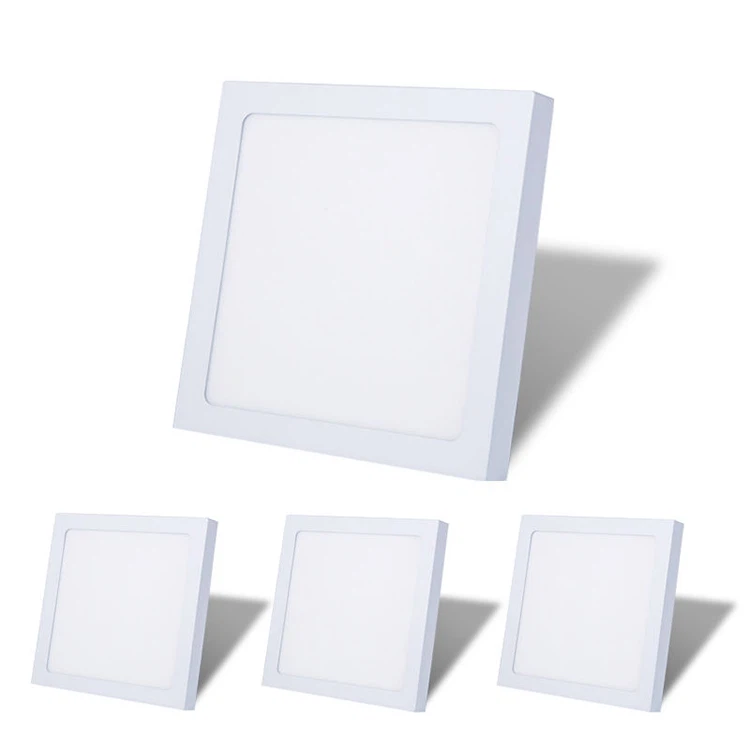
Recessed lighting, which provides discreet illumination and is flush with the ceiling, is a common feature in almost all types of houses. It projects light downward, lighting the whole space without obstructing sightlines or taking up any useful floor space.
These lighting fixtures, also known as can lights, potlights, or downlights, have a bulb inside a spherical housing (the "trim") that is typically between 4 and 6 inches wide and reflects light downward into the room.
Recessed lighting can provide accent lighting to illuminate a dark nook or task lighting over a desk or countertop. But selecting a wattage and bulb type alone won't provide the desired result; other elements must also be taken into account. Before starting a recessed lighting installation job at home, take into account the following.
Layout for Recessed Lighting
The finest lighting impact will be achieved by beginning with a well-planned recessed lighting system. The design must identify the type of lights being installed as well as their arrangement. Think about whether you want task lighting, accent lighting, general lighting for the whole area, or a combination of all three. Depending on the location in the room and the intended effect, a different type of can light will be used. Inadequate illumination may be the result of poor planning.
For instance, homeowners may wish to use open-type can lights with little trim that allow flared bulbs in the main living area while constructing the can-light arrangement for their family room. With a wall-wash can light that shines light directly on the artwork while blocking light from shining in other directions, a favourite painting may become the centre of attention. Reflective can lights can be mounted overhead if a family homework centre is tucked into a corner of the room to provide adequate light to lessen eye strain.
Although it may be adapted onto existing ceilings, recessed lighting is easier to install during new construction.
Recessed lighting is easiest to install during new construction or a significant remodeling, before the ceiling material is put up, because it is installed in the ceiling. By using mounting brackets that are hammered into the strapping, recessed lighting intended for new construction is installed high in the ceiling between the joists.
The drywall is then put up over the lights after they have been properly cut holes in it and linked to the power supply. Without damaging too much drywall, you can still install recessed lighting even if you don't have full access to the ceiling joists. Simply seek for recessed lights that use clips to attach to the drywall rather than joists and strapping and can fit through a small opening in the ceiling.
Location is crucial.
Recessed lighting can be used for accent, task, or general lighting, or a mix of the three. However, unlike floor or table lamps, you only have one chance to arrange recessed lights correctly. Think about the specific spots you want to have adequate lighting, such as over a reading chair or kitchen island.
Recessed lighting may be installed on either new or existing circuits, however installing on an existing circuit is more simpler.
For the majority of do-it-yourselfers, replacing existing can lights with recessed lighting while utilising the same wiring is the easiest method. Although a 15-amp circuit can handle up to 1,800 watts without tripping a breaker, it's best to just utilise 80% of the available power to be safe. Therefore, a circuit run of recessed ceiling lights shouldn't consume more energy than roughly 1,440 watts. The can light's package will state the maximum watts.
Existing circuit: A ceiling light or lights and a light switch make up an existing circuit. If you're thinking about installing recessed lights to replace an existing ceiling light or ceiling fan, bear in mind that the modern LED recessed lights consume very little power and that you may install many of them without overloading the circuit. Adding additional recessed lights to an existing circuit may require drilling through the ceiling joists and removing some of the ceiling drywall, depending on the wiring configuration at the time.
New circuit: To install new recessed lighting, a new electrical circuit will be required for new construction or for homeowners adding an addition to their house. Check before you begin since in certain places adding a new circuit to the service panel necessitates the assistance of a licenced electrician.
You can choose to turn on some lights while leaving others off by wiring recessed lights in zones.
Consider strategically grouping the lights in large rooms with regions that may require different lighting at various times or in places where ambience is desired. Have each zone be capable of operating separately from the others. You'll have greater control over the atmosphere and functionality of the room if you've stacked general lighting, task lighting, and accent lighting. For instance, you may turn off your job lighting, decrease your general lighting, and use accent lighting to draw attention to a fireplace or piece of art.
Beginning the Installation of Recessed Lighting
Recessed lighting installation is made simpler if you have access to the attic, where you may run cables and make holes for the cans. You may still install the recessed light from the room below if you can't get to the ceiling if the house has more than one level. You should install retrofit-compatible can lights since it is the main difference.
Recessed potlights are difficult to take out, so carefully consider if (and where) you want them.
Going from a single ceiling light to recessed lighting is a simple operation, but the reverse is true when switching from recessed lighting to a typical ceiling light. It is necessary to wire new wiring from the light switch to the new light if you install potlights but later decide that you would rather have a huge centre ceiling fan/light combo.
The electrical code prohibits hiding wire junctions with drywall, so if you installed six recessed lights but later decided you didn't like the way they looked, you are unable to remove the recessed lights, twist the wires together, and use them to power the new fan and light combination.
The wiring from the wall switch to the recessed lights must be terminated if you wish to replace them with a single light and replace the existing cable with a new one.
Make sure you absolutely want the look of can lights before installing them because there will be six holes in the ceiling that will need to be patched. You might be possible to install a conventional ceiling light using a conversion kit if you're only replacing one recessed light.
The installation will look much better overall if you use the correct equipment to cut holes in the drywall ceiling.
Use a hole saw, which is essentially a drill attachment, when installing recessed lighting yourself to guarantee a flawless circular hole with the right diameter. Paper templates that are included with recessed lights allow the operator to precisely measure the opening. To discover the precise size hole you'll need, see the lighting's user handbook. Hole saws are available in standard and adjustable sizes.
Take the time to thoroughly measure and label the hole before using a tiny, portable drywall saw. You may make sure you're cutting a precise circle by using a compass. To be sure you are not drilling or cutting into a joist, have a stud finder close by as well.
Final Conclusion
Recessed lights are an excellent alternative for people who want a clean, minimalist design and have low ceilings (less than 8 feet). They don't take attention away from the chosen focal points while adding apparent height to the space.
Recessed lights can be put as task lighting as part of an overall kitchen lighting scheme, or a broad variety of recessed light types are available for producing full-room illumination. They can also be used to produce accent lighting to draw attention to certain pieces of art or sculpture.
If a DIY enthusiast is familiar with electrical wiring and circuit fundamentals, installing them might not be too challenging, but hiring an electrician is the best course of action if there are any doubts.
Any needs or questions, pls feel free to contact us, we will be your best friends.
(click here for more Info)