

Consider a common scenario: It's 9:00 PM, and a shop is busy at the checkout counter when, suddenly, the power cuts out-the entire space plunges into darkness. Customers are left stunned, staff scramble in the dark to find their phones, and someone worries that people might trip in the aisles.
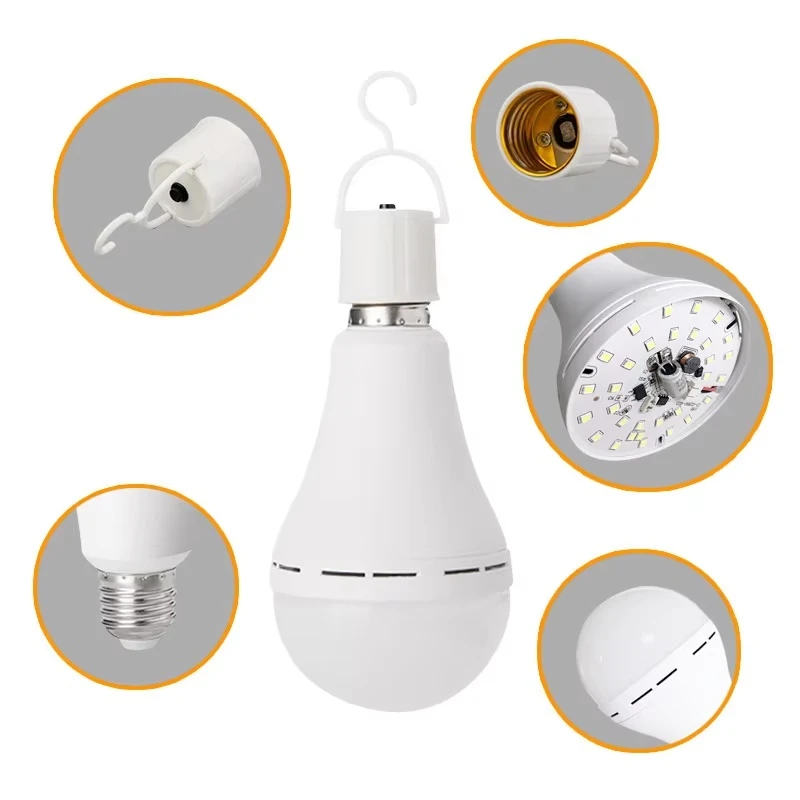
A few minutes of darkness may not be a major disaster, but it is highly likely to cause panic. Traditional emergency lighting requires separate wiring and professional installation-a hassle that leads many small businesses to simply forgo it altogether. Consequently, there is growing interest in a more convenient solution: the smart rechargeable emergency light bulb. These bulbs can be screwed into standard light sockets; they function as regular lights during normal operation but automatically switch to battery power when the electricity goes out.
So, are they a good fit for retail shops, clinics, or rental apartments? Let's look at each scenario.
What is a smart rechargeable emergency light bulb?
Simply put, it is an LED light bulb with a built-in rechargeable battery and control circuitry.
When mains power is on: It functions like a standard light bulb while simultaneously charging its internal battery.
When mains power is cut: It detects the outage and automatically switches to battery power-no manual intervention required.
When mains power is restored: It automatically reverts to normal operation and resumes charging.
Its primary advantage is that it requires no changes to existing wiring. Designed with a standard base, it can simply replace an existing bulb, which is precisely why it is well-suited for small commercial spaces and rental properties.
Retail Shops: Maintaining Order During a Power Outage
For retail stores, restaurants, and convenience stores, the most immediate problem caused by a power outage isn't just the lack of visibility-it's the resulting chaos.
Why it's a suitable solution:
Illuminates entrances, exits, and aisles: Customers can safely navigate toward the exit, reducing the risk of tripping, bumping into things, or trampling.
Prevents total operational paralysis: Staff can still see products and handle cash transactions, ensuring that business doesn't come to a complete standstill.
Low barrier to installation: Many shops operate in rented spaces where major electrical modifications aren't feasible; simply swapping out a light bulb is a practical, non-intrusive solution.
Targeted implementation: You don't need to replace every light in the store-just those in critical areas like entrances, above the checkout counter, or along main aisles-keeping costs manageable. Points to note:
Brightness in emergency mode is typically lower than that of standard lighting; its purpose is to facilitate "evacuation and transition"-do not expect it to provide sufficient illumination for full-scale business operations.
For large-scale retail spaces or shopping mall units, fire safety authorities often have specific requirements for emergency lighting. While standard emergency bulbs can serve as a supplement, you must verify local regulations to determine whether they can be used as a direct substitute.
Conclusion: Highly suitable for small to medium-sized retail spaces, especially leased premises.
Clinics: Buying time to wrap up patient care
The situation in a clinic differs from that of a retail space; during a power outage, people may be seated or lying down, and some may be in the middle of medical procedures.
Why it's suitable:
Waiting areas and corridors: Patients and their families-including the elderly and children-may have limited mobility; consistent lighting helps prevent panic.
Consultation and treatment rooms: Allows medical staff to complete simple tasks, finalize records, or reassure patients before switching to a backup power source.
Reception and pharmacy: Ensures labels and information remain legible during an outage, preventing errors such as dispensing the wrong medication.
Automatic switching: Medical staff, whose hands are occupied, do not need to scramble for flashlights or fumble for light switches.
Points to note:
In areas requiring high-continuity lighting-such as operating rooms, intensive care units (ICUs), or dental treatment areas-these bulbs cannot replace professional medical-grade backup power or emergency lighting systems.
When purchasing, pay close attention to the switching speed and battery runtime. Do not rely solely on the manufacturer's advertised runtime; it is best to test the duration based on actual brightness levels.
Conclusion: Suitable as supplementary lighting for public areas and general consultation rooms in clinics; critical medical areas still require professional-grade solutions.
Rental Apartments: Peace of mind for landlords and tenants alike
Rental properties are among the most ideal settings for this product-simply put, it's hassle-free.
Why it's suitable:
No structural changes or new wiring required: Landlords avoid the need for additional construction work, and there are no disputes over whether to remove the equipment when a tenant moves out. Easy to replace in bulk: You can swap out bulbs in the entryway, stairwell, bathroom, and hallway of an entire apartment in just a few minutes.
Enhances the living experience: If a power outage occurs at night, tenants won't have to fumble around in the dark-a small but thoughtful feature that adds value to your rental property.
Simple maintenance: Replacing a faulty bulb is as straightforward as changing a standard light bulb, making it highly convenient for landlords managing multiple properties.
Points to consider:
Prioritize installation in high-risk areas, such as bathrooms and stairwells.
When purchasing for multiple properties, try to stick to a single model; this simplifies future maintenance and the stocking of spare parts.
Conclusion: Highly recommended, especially for landlords managing multiple rental units.
Summary
Returning to the initial question: Are rechargeable emergency LED bulbs suitable for retail shops, clinics, and rental apartments?
Retail shops: Yes. They are ideal for securing entrances, walkways, and checkout areas, offering flexible installation at a manageable cost.
Clinics: Suitable as a supplementary solution. They work well in public areas and general consultation rooms, though critical medical areas will still require professional-grade emergency systems.
Rental apartments: Highly suitable. They require no electrical modifications and are easy to replace, making them perfect for bulk deployment.
While not a universal solution, they offer a low-barrier option for situations where you want to avoid rewiring while ensuring that a power outage doesn't leave you-or your tenants-in a difficult, pitch-black situation.
Interested in specific models or bulk pricing?
If you are a distributor, a procurement professional, or are currently selecting equipment for a retail, clinic, or apartment project, please get in touch with us. Simply let us know your intended use case, the required bulb base type, and the approximate quantity needed; we will recommend the right model and provide detailed specifications, samples, and a price quote.
Our address
No. 5-3 Niujiao Road, Yanchuan Community, Yanluo Subdistrict, Bao'an District, Shenzhen
bwzm18@ledbenweilighting.com






