Whether you are a home balcony gardening enthusiast, a small-scale greenhouse operator, or an entry-level practitioner in a plant factory, you will likely encounter a common question: Are T8 grow lights truly suitable for plant cultivation? After all, the market is flooded with a dizzying array of grow light types-including T5, T12, and COB models-making it difficult to choose. Yet, the T8-a classic model-continues to hold a firm foothold in the cultivation sector, despite lacking the slender portability of the T5 or the high-efficiency marketing hype of the COB. Today, we will approach this from the perspective of practical cultivation needs, breaking down the core advantages, ideal applications, and key purchasing considerations for T8 grow lights. Our goal is to help you clearly determine whether they align with your specific growing requirements and to help you avoid common pitfalls often encountered by beginners.
Why Have T8 Grow Lights Become a Popular Choice for Cultivation?
The enduring popularity of T8 grow lights stems from their ability to strike a perfect balance between practicality, cost-effectiveness, and adaptability. They are particularly well-suited for the majority of non-commercial cultivation settings. Their specific advantages can be summarized in three key points:
Strong Spectral Suitability: Aligned with Plant Growth Requirements: High-quality T8 grow lights typically feature a full-spectrum design that simulates the wavelengths found in natural sunlight. This spectrum encompasses 450nm blue light (which promotes stem and leaf growth while preventing "legginess" or stretching) and 660nm red light (which stimulates flowering and fruiting, thereby boosting yields). Some high-end models even incorporate far-red and near-ultraviolet light to help plants enhance their stress resistance and nutritional quality. Consequently, these lights can satisfy a plant's entire lighting requirements-from the seedling stage through to maturity-without the need to mix and match different types of fixtures. Compared to traditional fluorescent tubes, T8 grow lights offer a more precise spectrum and higher photosynthetic efficiency-the fundamental reasons why they outperform standard general-purpose lighting tubes.
Energy-Efficient and Durable: Reducing Long-Term Cultivation Costs: The energy consumption of T8 grow lights is significantly lower than that of traditional T12 tubes producing equivalent brightness. Furthermore, their luminous efficiency often exceeds 90%, effectively reducing electricity bills while simultaneously minimizing energy waste. Additionally, these lights typically boast a lifespan of over 20,000 hours; under normal daily usage, they can operate stably for 2 to 3 years without requiring frequent replacement. For home gardeners and small-scale greenhouse operators, this translates into a substantial reduction in long-term maintenance costs.
Easy Installation and Strong Compatibility: The T8 grow light features a standard-size design-approximately 25.4 mm in diameter-making it compatible with most standard T8 light fixtures currently available on the market. Whether for a new installation or as a replacement for existing tubes, no additional equipment modification is required, allowing even beginners to handle the process with ease. Furthermore, its linear design ensures a more uniform distribution of light, preventing issues such as localized light deficiency or "hot spots" that can scorch plants; this makes it particularly well-suited for use with multi-tier growing racks.
Applicable Scenarios for T8 Grow Lights
Not all cultivation environments are suitable for T8 grow lights; their advantages are best realized in small-to-medium-scale setups involving plants with low-to-moderate light requirements. They are primarily suited for the following four types of scenarios:
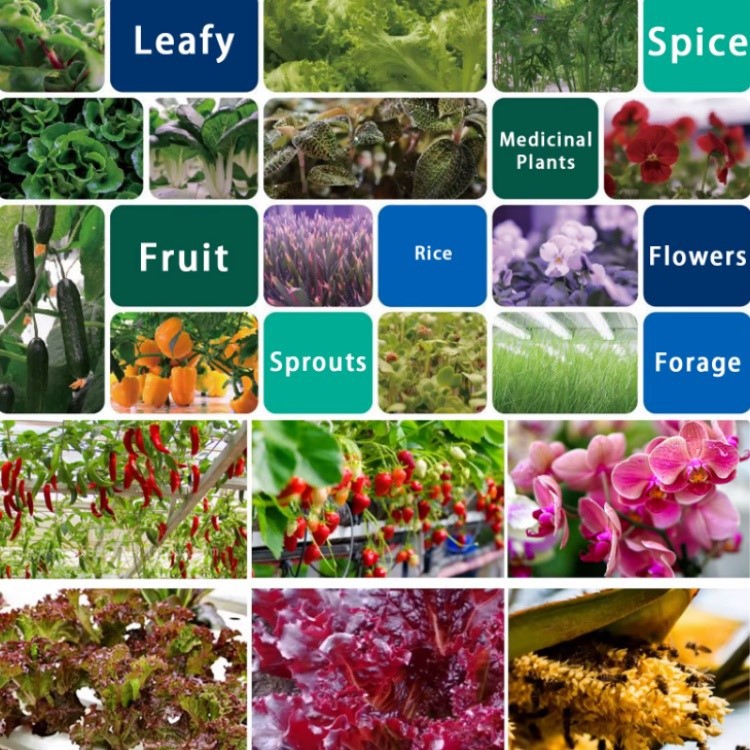
Home Balcony Gardening: Ideal for growing indoor greenery such as succulents, pothos, and spider plants, as well as small hydroponic vegetables like lettuce and spinach. Given the limited space typically available in home gardens, the T8 grow light's slim, lightweight profile is space-efficient. Its gentle illumination satisfies the plants' supplemental lighting needs without causing damage from excessive light intensity, while its energy-efficient nature makes it suitable for continuous, long-term operation.
Small Greenhouses / Seedling Propagation: In environments dedicated to greenhouse propagation or tissue culture, the T8 grow light's stable light output helps boost seed germination rates and seedling survival rates. It is particularly effective during winter months when natural sunlight is scarce, providing supplemental light to foster robust seedling growth and lay a solid foundation for subsequent transplanting.
Multi-Tier Racks / Vertical Farming: The linear structure of the T8 grow light aligns perfectly with the layout of multi-tier growing racks, ensuring uniform light coverage for every layer of plants. This prevents lower-tier plants from suffering from light deprivation caused by shading from the layers above. It is highly suitable for the high-density cultivation of leafy greens and herbs, thereby maximizing yield per unit area.
Indoor Floral Care: For indoor flowering plants-such as roses and gardenias-that require ample light to bloom, T8 grow lights effectively compensate for insufficient indoor lighting. By extending the daily light exposure and promoting flower bud differentiation, they encourage more prolific blooming and extend the overall flowering period. It is worth noting that for crops with high light requirements (such as greenhouse tomatoes, watermelons, etc.), relying solely on T8 grow lights may not be sufficient to meet their needs. It is recommended to pair them with high-efficiency lighting fixtures or to increase the installation density of the T8 tubes.
Three Key Considerations When Purchasing T8 Grow Lights
The quality of T8 grow lights on the market varies significantly. Novice buyers need not chase after high-end specifications; by focusing on the following three points, you can select a product that offers excellent value for money and perfectly suits your specific needs:
Prioritize the Spectrum; Avoid "Pseudo-Full Spectrum" Products: When purchasing, always verify the spectral parameters. Prioritize products that are clearly labeled as "Full Spectrum" or featuring a "Red-Blue Combination Spectrum." Avoid purchasing standard T8 fluorescent tubes intended for general lighting, as these merely emit light but cannot satisfy the specific photosynthetic requirements of plants. High-quality full-spectrum T8 grow lights will clearly indicate the wavelength ranges for blue and red light; some may also provide a PAR value (Photosynthetically Active Radiation)-the higher this value, the more effective the supplemental lighting will be.
Match Power Output to Installation Density: The choice of wattage should be determined based on the cultivation area. Generally, it is recommended to provide 20–30 watts of T8 grow lighting per square meter. Installing the lights too densely can lead to poor heat dissipation, while spacing them too far apart will compromise the uniformity of the lighting coverage. For example, for a balcony cultivation area of 1–2 square meters, 2–3 20-watt T8 tubes should be sufficient to meet requirements; for small greenhouses, the quantity can be increased appropriately based on the total area.
Check the Protection Rating to Suit the Environment:If using the lights in humid environments-such as within greenhouses or near hydroponic racks-it is recommended to select T8 grow lights with an IP65 or higher waterproof rating. This ensures protection against both dust and water, extends the product's lifespan, and prevents potential damage to the tubes or safety hazards caused by moisture. For use in dry indoor environments, an IP44 rating is sufficient to meet requirements.
Avoid These Pitfalls to Maximize the Effectiveness of Your T8 Lights
Many beginners, despite having selected the correct T8 grow lights, fail to achieve optimal supplemental lighting results-and may even harm their plants-due to improper usage. Be sure to avoid the following three common misconceptions:
Misconception 1: The Brighter, the Better.** The light intensity of T8 grow lights is moderate; there is no need to aim for excessively high brightness. During installation, maintain a distance of 20–40 cm between the light fixture and the plants. Placing the light too close can cause leaf burn, while placing it too far away will prevent it from providing effective supplemental lighting.
Misconception 2: Running the lights continuously for 24 hours. Plant growth requires an alternation between day and night cycles. It is recommended to keep T8 grow lights on for 12–16 hours per day to simulate natural circadian rhythms; excessive lighting can disrupt a plant's metabolism and actually hinder its growth.
Misconception 3: Neglecting heat dissipation and maintenance. T8 grow lights generate heat when operated for extended periods; therefore, ensure that the light tubes are not obstructed by debris and that there is adequate ventilation for heat dissipation. Additionally, regularly wipe dust from the surface of the tubes to prevent dust accumulation from compromising lighting efficiency and to extend the lifespan of the fixtures.
Key Summary
Overall, the T8 grow light is a supplemental plant lighting device characterized by its "high cost-effectiveness, broad adaptability, and simple operation." It is ideally suited for scenarios with low-to-moderate lighting requirements-such as home gardening, small-scale greenhouses, and seedling propagation. It features a low barrier to entry with no complex operational hurdles, allowing even beginners to get started quickly. Furthermore, it is energy-efficient and durable, effectively resolving issues related to insufficient indoor lighting and seasonal light fluctuations, thereby fostering robust plant growth and enhancing both yield and quality.
Of course, T8 grow lights do have their limitations; for large-scale cultivation environments with high lighting demands, their supplemental intensity may be insufficient, necessitating their use in conjunction with other high-efficiency lighting fixtures. However, for the majority of gardening enthusiasts and small-scale growers, the advantages of T8 grow lights far outweigh their limitations, making them an excellent choice for entry-level supplemental lighting.
If you are still unsure whether T8 grow lights are suitable for your specific cultivation environment, or if you need guidance on how to select the appropriate wattage and light spectrum based on your growing area and crop type, please feel free to contact us at any time!
Our address
No. 5-3 Niujiao Road, Yanchuan Community, Yanluo Subdistrict, Bao'an District, Shenzhen
benwei10@benweilighting.com