

Few advances in the search for sustainable technology combine simplicity, efficiency, and environmental effect as well as photocatalysis. The UV LED lamp is a vital component in current photocatalytic systems. These sophisticated light sources are transforming the way we filter water, clean air, synthesise chemicals, and make self-cleaning surfaces.
What is the Photocatalytic Reaction with UV LEDs?
Photocatalysis activates a semiconductor catalyst, often titanium dioxide (TiO₂), resulting in reactive oxygen species (ROS) such hydroxyl radicals (•OH) and superoxide radicals (•O₂⁻). These radicals may oxidise and degrade organic contaminants, kill microbes, and catalyse specific chemical processes.
Traditional mercury-based UV lamps have traditionally fuelled these processes, but UV LED lamps are quickly gaining traction. LEDs emit exact wavelengths (often 365 nm UVA, but also 385 nm, 395 nm, and UVC), providing improved control, energy efficiency, and safety in photocatalytic applications.
Key Features of Photocatalytic UV LED Lamps
Precise wavelength control is optimised for photocatalyst activation. For example, 365 nm completely fits the bandgap of anatase TiO₂.
High energy efficiency: 365 nm LEDs have wall-plug efficiencies of 40-60%, which is much better than mercury lamps.
Instant On/Off and Dimming: Millisecond response time combined with superior PWM control for exact reaction management.
Long operational life: 10,000 to 50,000 hours or more, which reduces replacement frequency and maintenance expenses.
Mercury-Free and Eco-Friendly: No harmful materials, RoHS compliance, and low heat output.
Compact and modular design allows for easy integration into a variety of reactor types, ranging from microreactors to huge industrial systems.
Narrow Emission Spectrum: Reduces wasted light and undesirable side effects.
These characteristics make UV LED-driven photocatalysis far more feasible and scalable than previous approaches.

Major applications
1. Environmental Remediation.
UV LED photocatalytic systems are very effective in removing volatile organic compounds (VOCs), formaldehyde, benzene, and other air pollutants. Pharmaceuticals, dyes, pesticides, and new pollutants are successfully removed from water using modern oxidation methods.
2. Air and Surface Purification.
It is widely utilised in HVAC systems, indoor air purifiers, and self-cleaning coatings for buildings, glass, and tiles. When exposed to UV light, the technology breaks down dirt and contaminants.
3. Water disinfection and sterilisation.
UV LEDs, when combined with photocatalysts, enable effective dual-action disinfection by causing direct UV damage to microorganisms as well as radical-induced oxidation. Suitable for drinking water, wastewater, and medicinal purposes.
4. Green Chemical Synthesis.
Photocatalytic UV LEDs allow for selective oxidation, reduction, and coupling reactions under moderate circumstances. This is very useful in pharmaceutical manufacture and sustainable chemistry.
5. Emerging uses
Photocatalytic hydrogen synthesis with CO₂ reduction.
Antifouling coatings for maritime and membrane applications
Food Safety and Preservation
Integrated smart building systems and IoT-enabled purifying devices
Why UV LEDs Are Superior to Traditional Mercury Lamps
| Aspect | UV LED Lamps | Traditional Mercury Lamps |
|---|---|---|
| Energy Efficiency | High | Low to moderate |
| Lifetime | Very long | Shorter |
| Startup Time | Instant | Warm-up required |
| Environmental Impact | Mercury-free | Contains mercury |
| Control & Flexibility | Excellent (dimmable) | Limited |
| Size & Integration | Compact & modular | Bulky |
Challenges and Considerations
Despite their benefits, issues persist:
Higher initial cost (but soon dropping)
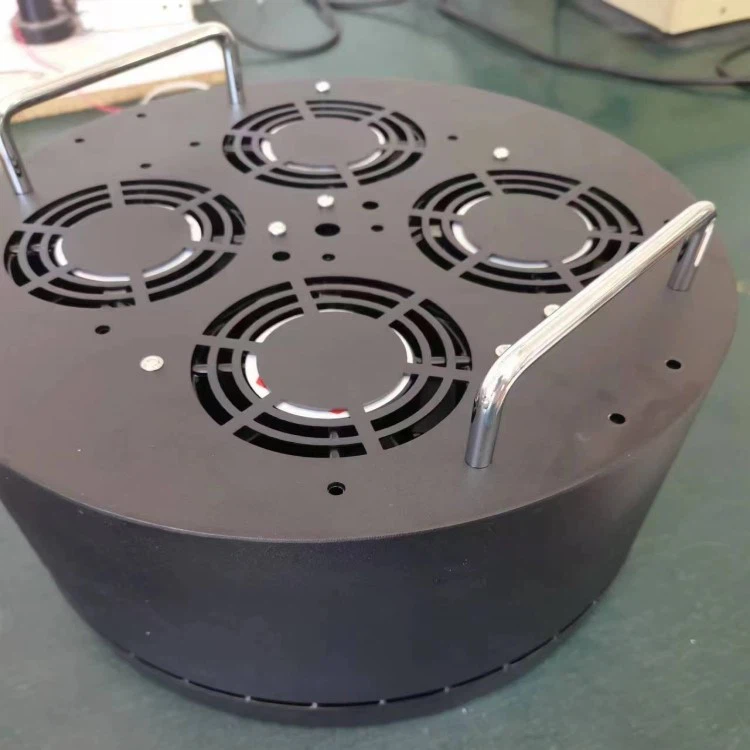
Need for good thermal management.
Catalyst deactivation after continuous usage.
Optimal light dispersion in large-scale reactors
These restrictions are being addressed by reactor design innovations such as optical fibre reactors, 3D-printed structures, and immobilised catalyst systems.





