

Research Background and Operating Principle of Solar-Powered Street Lighting Systems
Popularization Value of Off-Grid Solar Street Lighting Infrastructure
Driven by global carbon neutrality goals and municipal public infrastructure energy-saving renovation, off-grid solar-powered street lights have been widely deployed in urban road zones, rural community roads, scenic access roads and park public passages. Different from conventional grid-connected AC street lighting fixtures, standalone solar street lights adopt photovoltaic power generation mode, featuring zero grid electricity consumption, low operational lifecycle cost, simplified civil construction work and eco-friendly operating attributes. Such sustainable lighting facilities deliver prominent economic and environmental benefits for public municipal engineering. Nevertheless, regional uneven solar resource distribution brings industry-wide doubts about the operational reliability of solar street lights in perennial cloudy, rainy, foggy and shaded low-sunlight regions, which needs systematic professional demonstration and feasibility analysis.
Complete Structural Composition and Power Generation Working Mechanism
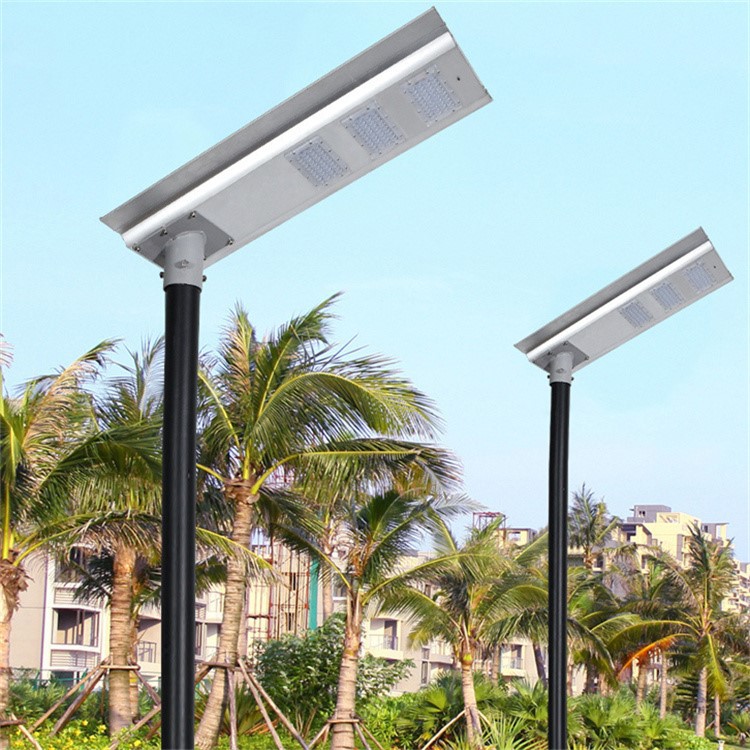
A standard integrated solar street lighting system consists of five core functional modules: monocrystalline or polycrystalline photovoltaic solar panels, intelligent photovoltaic charge-discharge controller, lithium iron phosphate energy storage battery, constant-current LED luminous module and hot-dip galvanized lamp pole bearing structure. Following the photoelectric effect physical principle, solar panels convert photon radiation energy into direct current electrical energy under daytime solar irradiation; the intelligent controller regulates stable current voltage and transmits surplus electric energy to matched storage batteries for sealed energy storage; after ambient illuminance drops to night threshold value, the controller automatically activates discharge loop, and stored electric energy drives LED lamp beads to realize nighttime public road illumination.
Definition Classification of Limited Sunlight Regions
In photovoltaic engineering industry, limited sunlight areas are defined as low-irradiation regions with annual average effective solar radiation less than 3.5kWh/㎡ per day. Classified by formation causes, it includes three typical categories: climate-type low-sunlight areas with perennial rainy, cloudy and hazy weather; terrain-type shaded areas such as mountain valley roads, dense forest roadside and high-rise building enclosed urban roads; seasonal insufficient irradiation areas with short sunshine duration in winter. These regions feature weak solar radiation intensity, fragmented effective sunshine hours and low daily photovoltaic power yield, which constitute core external constraints for solar street light normal operation.
Feasibility Judgment: Application Possibility in Limited Sunlight Areas
Direct Impact of Insufficient Solar Irradiation on System Operating Efficiency
Solar photovoltaic power generation efficiency is positively correlated with effective sunshine duration and solar radiation flux. Under insufficient sunlight conditions, conventional low-efficiency solar panels obtain fewer photon particles, resulting in decreased daily power generation capacity, incomplete battery daily charging and insufficient stored electric quantity. Without targeted system optimization, standard matching solar street lights will suffer nighttime lighting duration shortening, luminous power attenuation, lamp flickering and forced shutdown in severe cases, failing to meet municipal road standardized lighting hours and illuminance requirements.
Definitive Application Conclusion for Low-Irradiation Scenarios
Solar-powered street lights are technically applicable for long-term stable operation in limited sunlight areas, rather than being completely inapplicable. The traditional cognition that solar street lights can only work in high-sunshine arid regions is empirical misunderstanding. Relying on upgraded photovoltaic components, scientific site layout, optimized energy storage configuration and intelligent power regulation program, the power supply-demand balance of the whole lighting system can be realized to offset insufficient natural solar power yield, satisfying daily public road lighting norms in low-sunlight environments.
Core Preconditions for Normal System Operation in Low-Sunlight Zones
Qualified application must meet four collaborative preconditions: upgraded high-photoconversion photovoltaic accessories, shading-free scientific panel layout, capacity-amplified energy storage assembly, and adaptive intelligent lighting control program. Single partial optimization cannot balance power generation and nighttime power consumption, and systematic overall matching design is the fundamental guarantee for reliable lighting output in limited sunlight environments.
Four Core Optimization Measures for Solar Street Lights in Limited Sunlight Areas
Selection of High Photoconversion Efficiency Solar Panels
Ordinary civilian polycrystalline solar panels with 15%-17% conversion efficiency are only adapted for sufficient sunshine regions. For limited sunlight scenarios, engineering-grade high-efficiency monocrystalline silicon solar panels with conversion efficiency above 22% are mandatory preferential selection. Optimized intrinsic semiconductor wafer structure enables high-efficiency panels to capture diffuse reflected light, scattered cloud-penetrating light and weak ambient solar radiation, completing effective power generation even under overcast, foggy and indirect light conditions. Meanwhile, anti-reflection coated panel surface enhances low-light photon absorption rate, improving daily power generation volume under weak irradiation by 35% compared with conventional panels.
Scientific Site Selection and Angular Layout of Photovoltaic Panels
Post-installation shading obstruction is the major artificial factor aggravating sunlight shortage. Professional photovoltaic layout construction standards shall be implemented in low-sunlight areas: install solar panels on top of lamp poles without tall tree canopy, building outer wall and billboard shading; adjust panel inclination angle according to local latitude to fit maximum azimuth solar irradiation track; prioritize open roadside elevated mounting mode instead of side concealed mounting. Construction personnel shall complete on-site sunshine trajectory survey before installation, avoid long-time morning and afternoon shading, maximize effective light receiving time of panels every day.
Capacity-Upgraded Matching of Energy Storage Battery Assembly
Energy storage battery is the core power buffer component balancing photovoltaic power shortage. In limited sunlight areas, conventional standard-capacity batteries cannot store enough electric energy to support all-night continuous lighting. Engineering optimization requires adopting long-cycle low-self-discharge lithium iron phosphate batteries with enlarged rated capacity, matching 1.5 to 2 times battery capacity compared with standard sunshine area configuration. Enlarged battery storage capacity can accumulate electric energy from multiple fragmented weak sunshine periods, realizing uninterrupted nighttime power supply, and supporting 3 to 5 consecutive rainy cloudy days emergency standby lighting without solar charging. Besides, low-temperature resistant battery models are selected for mountain low-sunlight zones to avoid chemical activity decline and storage failure in cold humid environments.
Adaptive Operation Mode Adjustment and Periodic System Maintenance
First, optimize intelligent operating strategy. The built-in controller can set segmented power dimming mode: reduce non-peak road luminous power moderately in midnight low-traffic period to cut redundant power consumption, extend overall lighting duration under limited stored energy. Second, implement standardized full-cycle maintenance management. Regular quarterly inspection includes panel surface dust and bird dung cleaning to eliminate light barrier, battery voltage health detection, line aging overhaul and controller parameter debugging. Timely replace aging attenuated batteries and degraded panels to keep the whole photovoltaic system operating at peak photoelectric conversion efficiency, preventing minor component faults evolving into whole-system lighting failure.
Potential Operational Risks and Avoidance Schemes in Low-Sunlight Regions
Imbalanced Power Generation and Power Consumption Risk
Long-term continuous rainy weather will cause cumulative charging deficit of solar batteries. Avoidance scheme: reserve municipal emergency backup interface for key traffic road solar street lights, realizing manual auxiliary charging under extreme long-term insufficient sunshine weather to guarantee road traffic lighting safety.
Accelerated Component Aging Risk in Humid Low-Sunlight Environment
Most limited sunlight areas feature high air humidity, which easily causes panel junction box oxidation and circuit damp short circuit. Avoidance scheme: adopt IP67 waterproof sealed photovoltaic modules and insulated waterproof wiring harness, add drainage structures at lamp pole wiring ports to improve whole-system environmental corrosion resistance.
Irregular Procurement Matching Risk
Blind adoption of low-cost conventional solar accessories without low-light adaptation function is the main human-induced failure cause. Avoidance scheme: complete local annual sunshine data assessment at the design stage, formulate customized panel-battery collaborative matching scheme, and reject universal standard configuration for low-irradiation special regions.
Conclusion
To sum up, solar-powered street lights are fully applicable for standardized safe operation in limited sunlight areas, yet cannot adopt universal conventional system configuration designed for high-sunshine regions. Insufficient solar irradiation mainly reduces daily photovoltaic power generation efficiency, rather than cutting off photoelectric conversion completely. To achieve stable all-night road lighting performance, municipal engineering constructors must implement targeted optimization measures: select high-efficiency low-light responsive monocrystalline solar panels, arrange shading-free scientific panel mounting angles, configure enlarged-capacity low-self-discharge energy storage batteries, and adjust intelligent segmented dimming operating modes. Combined with periodic professional component maintenance and fault inspection, solar street lighting systems can offset natural sunlight deficiency. Accordingly, low-sunlight regional communities can stably obtain energy-saving, zero-carbon and low-cost public solar road lighting benefits, fulfilling sustainable municipal infrastructure construction goals.

How To Cooperate With Us?
We take great satisfaction in having total control over the manufacturing process and the quality of our products thanks to our own facility. As producers rather than just brokers, we are dedicated to providing our customers with the best prices. Since we are certain that the price and quality of our products are clear, we encourage customers to assess our samples first. Our commitment to quality and customer satisfaction drives us to continuously provide top-notch goods.
Our address
3rd Floor, 5th Building, Hebei Industrial Park, Hualian Community, Longhua District, Shenzhen, China





