

Access to reliable electricity remains a critical challenge in many developing regions, where conventional grid infrastructure is either absent or highly unreliable. In such contexts, the absence of nighttime illumination exacerbates safety risks, limits economic activity, and hinders educational opportunities. Solar-powered streetlights, which convert sunlight into electricity via photovoltaic (PV) cells, present a promising alternative. This paper examines whether these systems can be effectively deployed in areas without electricity access, analyzing their technical feasibility, environmental adaptability, economic considerations, and operational challenges.

Technical Feasibility of Solar-Powered Streetlights in Off-Grid Areas
Core Components and Energy Conversion Mechanism
Solar-powered streetlights consist of four primary components: PV panels, rechargeable batteries, LED lamps, and a charge controller. The PV cells absorb solar radiation and generate direct current (DC), which is stored in batteries during daylight hours. At night, the stored energy powers the LED luminaire. This self-contained design eliminates the need for any external electrical connection, making the system inherently suitable for off-grid locations.
Adaptability to Diverse Environmental Conditions
Modern solar streetlight systems are engineered for resilience. They operate effectively across a wide temperature range (−20°C to 60°C) and are rated with IP65 or higher ingress protection, rendering them resistant to dust, rain, and humidity. In coastal or high-wind areas, reinforced pole designs and corrosion-resistant coatings further enhance durability. Moreover, the modular architecture allows for scalability-smaller units can illuminate pathways, while larger arrays can serve highways or public squares.
Installation Requirements and Site Assessment
Unlike grid-tied lighting, solar streetlights require no trenching, cabling, or transformer stations. Installation involves mounting the pole, securing the PV panel at an optimal tilt angle (typically equal to the local latitude), and anchoring the battery enclosure. A prerequisite for successful deployment, however, is adequate solar insolation. Sites receiving less than 3.5 peak sun hours per day may experience insufficient charging, necessitating oversizing of the PV array or battery bank. Therefore, a detailed solar resource assessment using tools like NASA SSE or PVGIS is recommended prior to installation.
Socioeconomic Benefits for Non-Electrified Communities
Enhancement of Public Safety and Mobility
In areas devoid of street lighting, nighttime accidents and crime rates are disproportionately high. Pedestrians and drivers rely on weak, intermittent sources such as kerosene lamps or vehicle headlights, which pose fire hazards and vision limitations. Solar streetlights provide consistent, uniform illumination (typically 20–50 lux for residential roads), reducing trip hazards and deterring criminal activity. Empirical studies from rural Kenya and India have documented a 30–40% reduction in nocturnal road accidents following the deployment of solar lighting.
Educational and Economic Multipliers
Extended daylight hours enable children to study after sunset, particularly in households lacking indoor electric lighting. Community-level solar streetlights can also illuminate schoolyards or study pavilions, directly supporting literacy and homework completion. Economically, well-lit streets attract small businesses-food stalls, repair shops, and retail kiosks-to operate into the evening, increasing local income and employment. Over time, reliable nighttime lighting signals stability, encouraging micro-entrepreneurship and even tourism in remote areas.
Economic Analysis: Initial Costs Versus Long-Term Savings
Capital Expenditure (CapEx) and Its Barriers
The primary deterrent to widespread adoption is the upfront investment. A standalone solar streetlight unit of moderate quality (40 W LED, 100 Ah battery, 150 Wp PV panel) costs between 500and500and1,200, depending on component specifications and brand. For a village requiring 50 units, the total CapEx may exceed $40,000-a substantial sum for low-income communities or municipal budgets. High-quality components are essential for harsh environments; cheaper alternatives often fail within two years due to battery degradation or PV delamination.
Operational Expenditure (OpEx) and Lifecycle Cost Comparison
Despite high initial costs, solar streetlights offer minimal recurring expenses. There are no electricity bills, and maintenance typically involves annual battery inspection and panel cleaning. A well-designed system has a lifespan of 10–15 years, with battery replacement every 4–7 years. In contrast, extending grid electricity to a remote village can cost 10,000–10,000–30,000 per kilometer of transmission line, followed by ongoing tariffs. Lifecycle cost analysis (LCCA) consistently shows that for locations more than 1–2 km from the nearest grid connection, solar streetlights are cheaper over a 10-year horizon.
Operational Challenges and Mitigation Strategies
Battery Charging Reliability Under Variable Weather
Solar irradiance fluctuates seasonally and on a daily basis due to cloud cover, rain, or dust accumulation. If batteries are undersized, consecutive overcast days can lead to complete discharge, rendering lights inoperative. The mitigation strategy involves: (a) sizing the battery to support at least three to five autonomy days (i.e., days without sun), (b) incorporating a smart charge controller with low-voltage disconnect to prevent deep discharge, and (c) implementing remote monitoring systems (e.g., LoRaWAN or GSM-based) that report battery state-of-charge.
Optimal Panel Placement and Maintenance Protocols
PV panels must be installed free from shading by trees, buildings, or other obstructions. Seasonal sun-angle variations require either adjustable tilt mounts or a fixed tilt optimized for winter solstice (lowest sun angle). Regular cleaning is critical in arid or agricultural regions where dust and bird droppings can reduce efficiency by 20–40%. A simple schedule-cleaning every two months using water and a soft brush-can maintain near-nominal output. Additionally, vegetation management around poles prevents creeping shade.
Technological Limitations and Future Improvements
Current solar streetlight batteries predominantly use lead-acid or lithium iron phosphate (LiFePO₄). Lead-acid is cheap but suffers from short cycle life (300–500 cycles) and poor deep-discharge tolerance. LiFePO₄ offers 2,000+ cycles and better temperature performance but increases initial cost. Emerging alternatives include sodium-ion and solid-state batteries, which promise lower cost and higher safety. Likewise, PV efficiency has risen from 15% to over 22% in commercial panels, and further gains via perovskite tandem cells could reduce the required panel area by 30–40%.
Case Studies of Successful Off-Grid Deployment
Rural Zambia: The Solar Lighting for Schools Project
In 2018, a non-governmental organization installed 200 solar streetlights in five off-grid villages in Eastern Province. Each unit combined a 60 W LED, 150 Ah lithium battery, and 200 Wp polycrystalline panel. After 24 months, surveys indicated a 52% increase in evening market activity and a 68% reduction in reported assaults. Maintenance costs averaged $15 per light per year, primarily for cleaning and occasional driver replacements.
Remote Islands of Indonesia: Hybrid Solar-Wind Systems
On the Kei Islands, where monsoonal cloud cover limits solar alone, authorities deployed hybrid streetlights with small vertical-axis wind turbines (100 W) as supplementary generation. This configuration reduced battery autonomy requirements from five days to two days, cutting the battery bank cost by 35%. The hybrid approach has since been replicated in other high-wind, low-solar regions.
Conclusion and Recommendations
Solar-powered streetlights can indeed be used in areas without access to electricity, provided that technical, economic, and environmental factors are carefully addressed. Their off-grid nature, low maintenance, and long lifespan make them an ideal solution for remote communities, refugee camps, and rural highways. However, successful implementation requires:
Pre-installation solar resource assessment to avoid sites with insufficient insolation.
Appropriate system sizing (battery autonomy, panel output) based on local weather patterns.
Quality assurance for components, especially batteries and charge controllers.
Community engagement and training for basic maintenance (cleaning, vegetation control).
Financing mechanisms such as pay-as-you-go models, micro-loans, or government subsidies to overcome upfront cost barriers.
When these conditions are met, solar streetlights transform nocturnal darkness into safety, productivity, and opportunity. They do not merely replicate grid lighting-they redefine what is possible in the world's most electricity-poor regions. Future research should focus on lowering battery costs through second-life electric vehicle batteries and integrating IoT-based adaptive lighting (dimming when no motion is detected) to further extend battery life. The technology is mature; the challenge now lies in deployment scale and financial inclusion.
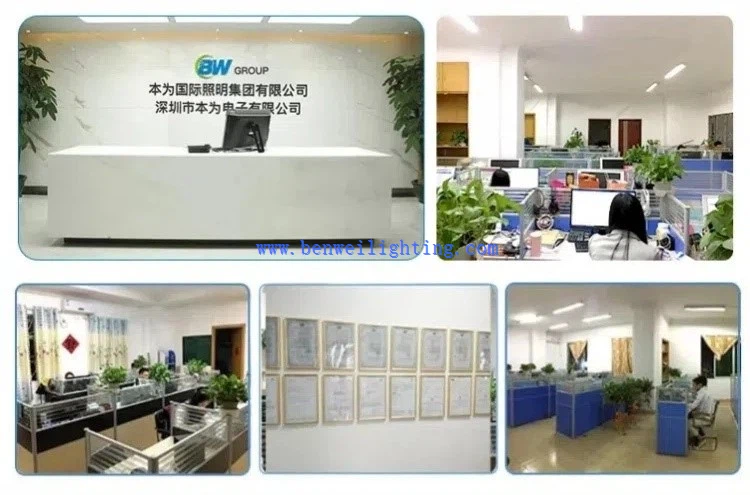
How To Cooperate With Us?
Our firm prides itself on owning its own factory, guaranteeing complete control over the production process and the quality of our goods. We are not only agents; we are manufacturers committed to offering our clients the most competitive rates available. We invite consumers to evaluate our samples first, as we are assured that the quality and pricing of our items are self-evident. Our dedication to excellence and client satisfaction compels us to consistently perform at our best and provide superior quality products.
Our address
3rd Floor, 5th Building, Hebei Industrial Park, Hualian Community, Longhua District, Shenzhen, China





