

Introduction: The High Demands of Wet and Task-Oriented Spaces
Beyond General Illumination
In modern architectural and interior design, lighting is divided into three distinct layers: ambient (general), task, and accent. Nowhere is this more critical than in the kitchen and bathroom. A kitchen is a high-performance workspace where sharp knives and raw ingredients meet; the lighting must be bright enough to prevent accidents and accurate enough to judge the doneness of a steak. The bathroom is a sanctuary for grooming and relaxation; the lighting must flatter skin tones and provide shadow-free illumination for shaving or applying makeup.
The Environmental Challenges
Unlike a living room, these spaces present unique environmental stressors. Bathrooms are plagued by high humidity, steam, and rapid temperature fluctuations. Kitchens face grease vapor, heat from stovetops, and frequent cleaning chemicals. Therefore, the chosen LED downlight must be structurally robust, thermally efficient, and optically superior.
The Core Debate: SMD vs. COB
When sourcing wholesale or specifying downlights, the primary technological fork in the road is between SMD and COB. While both are forms of LED technology, their internal architecture drastically changes how they perform in a wet, task-intensive environment. This paper will dissect these differences to help you make a highly informed purchasing decision.
Technical Definitions: The Anatomy of SMD and COB
To understand which is better, one must understand how each is constructed.
SMD (Surface Mounted Device): The Traditional Standard
Manufacturing and Architecture
SMD LEDs consist of individual, packaged diodes that are soldered onto the surface of a printed circuit board (PCB). A typical SMD downlight might use an array of 12 to 30 small diodes to achieve the desired brightness.
Optical Characteristics
Because SMD arrays rely on multiple distinct point sources, they often create a "multi-shadow" effect. If you hold your hand under an SMD light, you will see multiple, overlapping shadows. Furthermore, SMD technology is highly cost-effective to manufacture, making it the standard for budget-tier builder-grade lighting.
COB (Chip-on-Board): The Premium Evolution
Manufacturing and Architecture
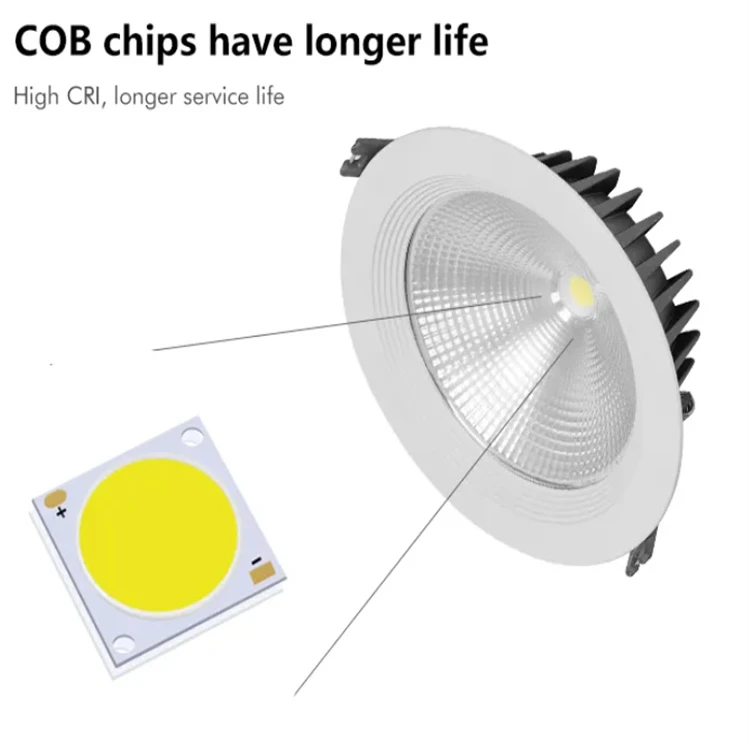
COB technology flips the script. Instead of individual packaged diodes, multiple LED chips (dies) are mounted directly onto a single ceramic or metal-core substrate. This entire cluster is then covered with a single, continuous layer of phosphor.
Optical and Thermal Superiority
Because a COB acts as a single, high-density light source, it emits a remarkably smooth, uniform beam with no multi-shadow effect. Additionally, because the heat is concentrated in one central area rather than spread across multiple small components, a properly designed COB fixture (like the ones in our factory line) is easier to thermally manage, ensuring longer life and stable color rendering.
Environmental Demands: Why Kitchens and Bathrooms Are Unique
High Humidity and Moisture Resistance
The Threat of Corrosion
In a bathroom, steam from showers can condense on cold surfaces. In cheaply made fixtures, moisture can penetrate the housing, causing corrosion on the PCB or, worse, a short circuit.
Sealing and Structural Integrity
A premium downlight must have a robust, one-piece housing. Our fixtures utilize a die-cast aluminum radiator which is precision-machined to create a tight seal between the optical lens and the heat sink. This structural integrity prevents moisture ingress, ensuring the fixture remains safe and functional for years.
Task Lighting and Visual Comfort
Color Rendering for Food and Grooming
In the kitchen, high CRI is essential for food safety. You need to see the true red of raw meat to judge freshness. In the bathroom, poor color rendering makes skin look pale or sickly, leading to over-application of makeup.
Glare Control in Reflective Surfaces
Bathrooms are full of reflective surfaces-mirrors, glass shower doors, and polished tiles. A poorly designed light with a high UGR (Unified Glare Rating) will create blinding reflections. A deep anti-glare recessed cup is mandatory in these spaces.
Comparative Analysis: COB vs. SMD in Kitchens & Bathrooms
Light Quality and Uniformity
The "Multi-Shadow" Problem in Kitchens
Imagine chopping vegetables under a budget SMD light. The multiple diodes create a chaotic web of overlapping shadows on the cutting board, making precision work difficult and eye-straining.
COB's Smooth Beam for Bathroom Mirrors
When standing in front of a bathroom mirror, you want an even wash of light across your face. SMD arrays can create harsh "hot spots" or scalloped light patterns on the wall. Our COB downlights, paired with a high-transparency lampshade, deliver a smooth, uniform beam that flatters the face and eliminates unflattering shadows.
CRI and Color Fidelity: The R9 Factor
Appetizing Food Presentation
Our CRI≥90 COB downlights are specifically engineered to deliver exceptional red rendering (a high R9 value). In the kitchen, this means a wooden cutting board looks rich and warm, and a fresh tomato looks vibrant and appetizing. The visual experience of cooking and dining is elevated.
Accurate Skin Tones
In the bathroom, a CRI≥90 light mimics natural daylight. This is crucial for shaving or applying makeup. You see your true skin tone, ensuring you look your best when you step out into the natural light.
Thermal Management and Lifespan
Why SMD Struggles in Enclosed Ceilings
Kitchens and bathrooms often have insulated ceilings or are enclosed spaces where heat builds up. SMD arrays, with their multiple small components, can struggle with thermal dissipation if the housing is inadequate, leading to rapid lumen depreciation (dimming over time).
The Die-Cast Aluminum Radiator Advantage for COB
Our COB fixtures feature a heavy-duty die-cast aluminum radiator. As illustrated in our engineering diagrams, the deep, vertical fins maximize surface area for rapid heat dissipation. Heat is wicked away from the COB chip, ensuring the LED operates at optimal temperatures. This prevents the phosphor coating from degrading, guaranteeing that the light remains bright and the color rendering remains accurate for 50,000 hours or more.
Key Features to Look for in Wet-Rated Downlights
When procuring lighting for kitchens and bathrooms, contractors and homeowners must look beyond the LED chip and examine the entire luminaire architecture.
Robust Heat Dissipation
Die-Casting Aluminum Radiators
Plastic or thin stamped-steel housings are a recipe for failure in high-heat environments. Die-cast aluminum offers unmatched thermal conductivity. Our radiators are designed with optimal fin geometry to ensure the LED never reaches a critical temperature, even during prolonged use.
Preventing Lumen Depreciation
By maintaining a low junction temperature, the lumen output remains stable over years of use. You won't have to deal with the frustration of lights that slowly dim and turn blue/green in your bathroom over time.
Optical Design and Glare Reduction
Deep Anti-Glare Cups
Our downlights feature a deep-set reflective cup. This design ensures that the light is directed downwards onto the task area (e.g., the kitchen counter or bathroom vanity) without blinding the user. The low UGR (Unified Glare Rating) is essential for comfort.
High Transparency Lampshades
The optical lens is crafted from high-transparency materials. This ensures maximum light transmission (efficacy) and protects the COB chip from dust, moisture, and grease.
Installation and Aesthetics
Strong Electroplate Springs
Safety and reliability are paramount. Our fixtures utilize heavy-duty electroplated springs to ensure a secure grip on the ceiling drywall, preventing sagging.
Customizable Lamp Cups
Interior design requires flexibility. Our downlights offer customizable lamp cups (trims) in various colors (white, black, custom finishes). This allows the lighting to blend seamlessly into the ceiling, whether you have a traditional white bathroom or a modern, dark-themed kitchen.
Commercial Value and OEM/ODM Flexibility
For distributors, contractors, and interior designers, the choice between SMD and COB is also a business decision.
Factory Direct Pricing
By sourcing directly from our factory, you eliminate the markups associated with trading companies. We offer a competitive price, good quality SMD/COB downlight that allows you to maximize your project margins while delivering superior illumination.
Tailoring to Specific Market Needs
We understand that different clients have different budgets. Our OEM/ODM support allows you to build a product mix:
Offer SMD downlights for budget-driven, general lighting projects.
Offer COB downlights (with CRI≥90 and die-cast radiators) for premium, high-end kitchen and bathroom designs where performance and aesthetics are paramount.
Conclusion: The Verdict for Kitchens and Bathrooms
When comparing COB and SMD LED downlights for high-demand spaces like kitchens and bathrooms, COB technology emerges as the clear victor for premium applications.
While SMD offers a budget-friendly general lighting solution, it cannot compete with the optical uniformity, color fidelity (CRI≥90), and visual comfort of a COB light source. When paired with a die-cast aluminum radiator for fast heat dissipation and a deep anti-glare cup, COB downlights deliver a level of performance that standard fixtures simply cannot match.
By choosing our COB downlights for your kitchen and bathroom projects, you are investing in:
Flawless Color Rendering: CRI≥90 ensures food looks appetizing and skin tones look natural.
Superior Optical Comfort: COB technology eliminates harsh multi-shadows and glare.
Unmatched Durability: Die-cast aluminum radiators withstand humidity and ensure a long, stable lifespan.
Aesthetic Flexibility: Customizable lamp cups blend seamlessly into any interior design.
How To Cooperate With Us?
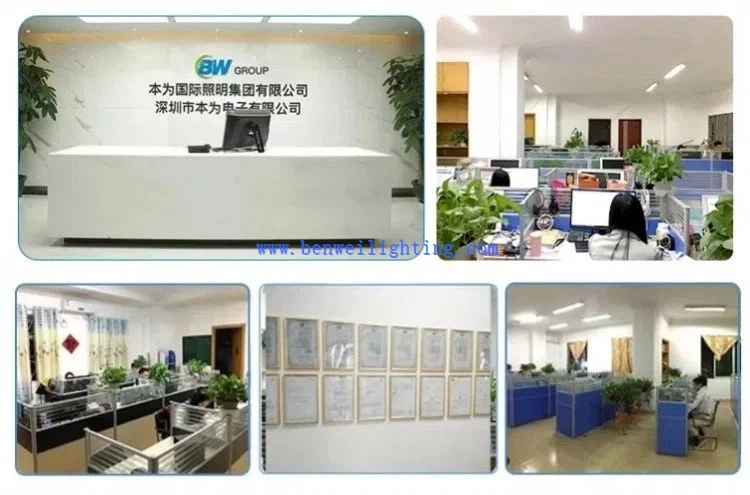
We are happy to have total control over the manufacturing process and the calibre of our products since we have our own facilities. Since we are producers rather than just brokers, we are dedicated to providing our customers with the best pricing. Since we are certain that the price and quality of our products are clear, we invite customers to see our samples first. Our commitment to quality and customer satisfaction drives us to continuously provide top-notch goods.
Our address
3rd Floor, 5th Building, Hebei Industrial Park, Hualian Community, Longhua District, Shenzhen, China





