

1. The effect of light on the reproductive endocrine of poultry
The control that light has over the endocrine system of chickens is very important. The performance of laying hens in terms of output is directly impacted by variations in light intensity and light time. Its mode of operation can be broadly described as follows: According to widespread consensus, birds have two photoreceptors: the retinal receptor, which is the eye, and the hypothalamic receptor, which is stimulated by light through the optic nerve. Additionally, the pineal gland and hypothalamus can be affected by light. When the hypothalamus is aroused, it releases a gonadotropin-releasing hormone, which travels through the pituitary portal system to the anterior pituitary and triggers the formation of follicles and ovulation. The mature follicles release estrogen, which causes the hen's cockscomb to turn red, the phalanx to enlarge, and other secondary sex traits to manifest. Estrogen also supports the hen's oviduct's development and maintenance of its abilities. Additionally, estrogen can speed up calcium metabolism, which is good for the development of eggshells. The hen ovulates as a result of the ovulation hormone.
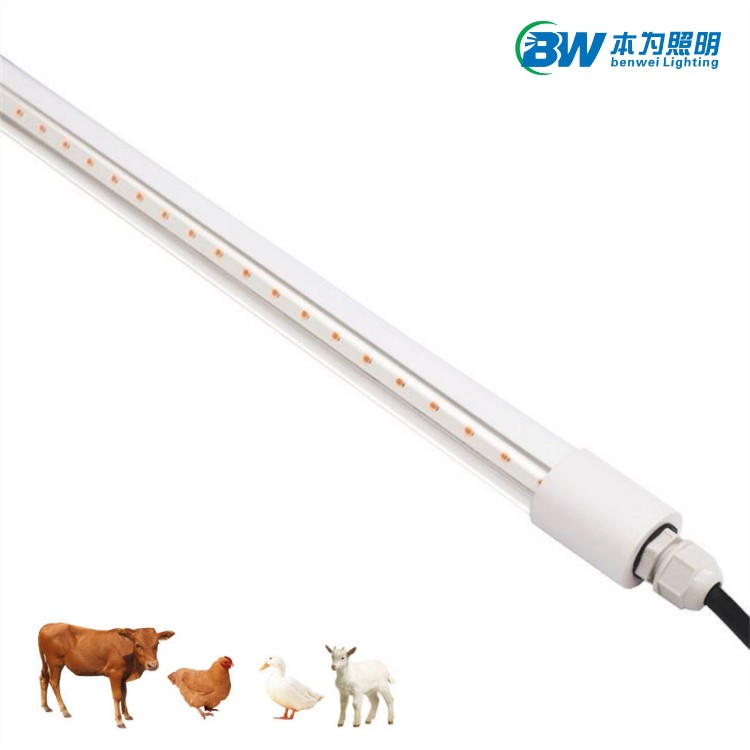
2. Several light-related factors affect the production of laying hens
A. light intensity
It is typically distinguished by luminosity. The norm in poultry production is often 20–30lux, depending on the age of the hens. The light intensity in the chicken house varies significantly due to differences in the quantity, kind, and distribution position of light sources. In order to determine the height arrangement and spacing distance of lights in the chicken house, it is therefore important to combine light sources, utilizes scientific calculating methods, and employ expert illuminance meters for testing.
B. Lighting period
Laying chickens need varied amounts of light at different phases of their maturation, and different varieties of chicken need various amounts of light. I won't reiterate them here because there are already a ton of pertinent standards that can be used as a guide.
C. light shade
Humans have trichromatic vision because they have three different types of receptors. The range of visible spectrum wavelengths that the human eye can perceive spans from 400 to 760 nm. The human eye distinguishes between distinct colors of light by detecting electromagnetic waves with various wavelengths. The visible light spectrum of chickens differs from the visible light spectrum that can be seen by human eyes. Animals with four-color vision are birds. They are able to see red, green, blue, and ultraviolet light because of their four different cone kinds. Different senses of light and color result in various feedback from laying chickens.
D. No flicker
The term "stroboscopic" describes the intensity of point light source luminous flux oscillations. The severity of the stroboscopic depends directly on the technical quality of the electric light sources and is inversely proportional to the fluctuation depth. The lamp tube is aging, the frequency of the power grid is unstable, the electronic rectifier is subpar, the voltage fluctuation is unstable, the stroboscopic effect is severe, and the lamp tube may be strobe. There is strong evidence that chickens can see stroboscopic phenomena of various light sources and that these stroboscopic phenomena can influence chicken behavior, despite the fact that the human eye cannot discern less visible stroboscopic events. As a result, one of the factors for determining whether a light source is healthy or harmless is whether it flickers or not.
A significant number of closed chicken houses have emerged as a result of the expansion and intensification of domestic laying hen breeding, which not only significantly reduced communication between the inside and outside of the house but also had an impact on the "small environment" within the house. The structure puts out stricter standards. An artificial lighting system with uniform distribution, adequate illumination, and precise control is also necessary in order to achieve more precise control of the temperature, humidity, and ventilation volume in the home.






