

Introduction
Because of its influence on the chicken's physiology and behavior, light is a crucial factor in poultry farming. The bird's metabolism, body temperature, and other processes are all improved by the regular exposure to light, which also enables the bird to develop a regular sleep and wake schedule. Light has three primary purposes for birds: it aids in seeing, it stimulates internal cycles due to day-length fluctuations, and it triggers hormone production. Light energy influences development, reproduction, and productivity in both avian and mammalian species. Proper lighting promotes proper eye development in poultry, enables sufficient flock inspection, improves access to food and water, reduces aggressive behavior, helps achieve maximum productivity, allows for adequate rest periods, and so on.
Light has been used as a management tool to control productivity, health, and welfare in intensive poultry operations since their inception. In reality, nutritional density, feed type, and light all play separate but interrelated roles. Hormones involved in development, adulthood, and reproduction are all affected by light's ability to modulate their secretion. In particular, light influences the pineal gland, which aids in circadian rhythm synchronization and suppresses melatonin secretion. Birds are able to maintain an optimum rate of metabolism, physiological function, and behavioral pattern thanks to their circadian rhythm.
There are now a variety of illumination programs (wavelength, intensity, and duration) and devices used by the poultry industry. Over the last several decades, researchers have focused on using different light colors (e.g., blue, green, red, and white) and lighting sources (e.g., incandescent, fluorescent, and LED lights) to improve poultry illumination.
Scientific studies have shown that exposure to red light speeds up sexual maturation in chickens. However, blue lights were shown to have a stronger correlation with positive outcomes including increased growth, reduced bird stress, and a better immunological response, while the reasons behind these effects remain unclear.
Avian eyesight
Chickens have the same basic trichromatic vision as other vertebrates and may be easily taught to recognize different hues. In contrast to mammals, light may affect the hypothalamus and, in particular, reproduction by penetrating the skull of these creatures. It is well-known that the development and behavior of meat chickens are affected by photoperiod, which is simply a shift in light intensity.
There are seven different kinds of photoreceptor cells in the eye of the chicken (Gallus gallus), including one rod and six cones. The four different kinds of single cones in their eyes allow them to see colors in a tetrachromatic spectrum, with the highest sensitivity to violet, blue, green, and red light, respectively. In contrast, double cones are made up of primary and accessory members that are tightly apposed to form a single functional unit; this unit is assumed to facilitate brightness detection, which is employed for motion perception.
Nature of Light Traits
Light control has become an increasingly important tool for poultry farmers. Light sources, light intensity, light hue, and the photoperiod regime all contribute to the effects of light. There are now a variety of illumination programs (wavelength, intensity, and duration) and devices used by the poultry industry. Duration, intensity, and color of light all have a role in how light affects chicken biology. These four attributes of light that impact development, output, reproduction, and well-being allow us to categorize it.
*Illumination sources
*In terms of how much light it gives out.
*Colour
*Time spent in the dark
1.Sources of light- The main source of light on Earth is the Sun i.e. Natural source.From prehistoric campfires to today's LPG lamps, fire has always played a crucial role in humankind's ability to see at night. Artificial light sources, such as electric lights, have largely supplanted firelight since their invention and widespread use.
2.Intensity in terms of illumination- Illumination on a surface is measured in foot-candles. One candlepower is the amount of light emitted by a point source located at the center of a sphere with an imaginary radius of one foot. So, one lumen per square foot is equivalent to one foot candle. Assume that 10.76 lux is equivalent to 1 foot candle.
Broiler behavior is significantly affected by the amount of available light. A reduction in light intensity is beneficial in preventing aggressive actions that may lead to cannibalism, whereas an increase in light intensity leads to greater activity. During the grow-out stage, manufacturers often utilize sophisticated electrical devices to temporarily boost light intensity to encourage more physical activity, hence lowering the prevalence of skeletal and metabolic problems. In the case of broilers, a minimum light intensity of 20lx is utilized throughout the early stages of life (brooding age). Limiting exposure to light, both in terms of intensity and duration, is a frequent technique beyond the early stage. Continuously low light levels (1 lux or less) have been linked to increased foot pad lesions and poor eye development in meat chickens, both of which may have detrimental effects on poultry welfare. When housing young birds, make sure the lighting is bright enough for them to discover food and water in the first few days. The recommended light intensity for commercial flocks during the first three to seven days (20-50 lux) is often greater than throughout the raising and growth phase (5-10 lux).
3. Colour
Since chicken farming is a long-term production activity, the use of LEDs may be a significant approach to reduce production costs. Production, mortality, and egg weight in layer farms were not affected by the color of the lights used. Both hyperplasia (increase in fiber number) and hypertrophy (increase in fiber size) contribute to muscular development (increase in fiber size). At the time of hatch, the majority of the muscle fiber formation process has already been completed. Muscle fiber elongation, also known as hypertrophy, occurs after hatching due to the recruitment of satellite cell nuclei. Due to the fact that satellite cells are the sole source of new nuclei in chicken skeletal muscles, it has been theorized that the increased muscle weight seen in the green and blue light groups during the first few days of life may be the result of enhanced satellite cell proliferation. More floor-pecking, wing-stretching, and aggressive behavior were seen in birds bred in the red-light treatment, whereas more walking activity was observed in birds reared in the white-light treatment. When it comes to false-positive rate (FCR), green has the highest, followed by yellow and red lights. Blue light has been shown to improve the immunological response in chickens. Perhaps the blue therapy had a sedative effect on the chickens, leading to these findings. As an added bonus, blue light would help mitigate the detrimental consequences of the stress response, resulting in an overall more balanced immunological response. That's why it seems sense that blue light might have a significant role in reducing the stress reaction and boosting the immune system function of chickens. Layer mortality during the laying season may be affected by the light coloration of chickens as early as the raising phase. Poultry have photoreceptors in the hypothalamus that respond better to blue and green light than red.
4. Duration of light
It is common practice to enhance the amount of time that lighting is on during the brooding stage so that the chicks may easily reach the food and water sources. Lighting should be turned off after 3–7 days, but may be kept on for 23 hours a day in the start. For layers chicks, the first week following placement is an ideal time to utilize intermittent lighting (4 hours on, 2 hours off). There will be a period of total darkness for one hour before any power outages occur to let people adjust to the change. Once the brooding stage ends, the light cycle is altered to promote optimal development and sexual maturation in the pullets. From week 0 to week 8, the amount of daylight gradually decreases until the lights are on for 10 hours every day by week 8. Next, between 16 and 30 weeks of age, there is a slow but steady brightening of the environment. To delay sexual maturity, optimize pullet development, and encourage early egg size, a gradual reduction in light hours from 0 to 12 weeks is optimal.
The second significant factor of light that affects broiler performance is the length of the lighting cycle, or photoperiod. This topic is where the vast majority of research on lightweight management has concentrated. Based on the results of the research, continuous illumination is preferable for broilers. In industrial settings, the optimal growth rate is achieved by using continuous light, often known as 23L:1D. The age of the hens and the kind of housing will determine the ideal amount of time for artificial lighting. Efforts to determine the best photoperiodic regime for hens continue to be the subject of research and debate. Broilers need a minimum of 4 hours of sleep every day, however at critical periods of their development, this number may need to be increased.
Configuration of Illumination Devices
For efficient administration and long-term productivity, the lighting layout of a chicken house is crucial. The lights should be spaced far enough apart to ensure that the greatest possible amount of light is cast across the broadest possible region. The answers to these questions will be determined by the structure and features of your facility. Lighting intensity of 1 watt per 1 to 1.5 birds, or 0.28 square meters. Light up an area of 9.3 square meters using a 40-watt light. Place your bulbs at a height of 2 meters from the ground, and leave at least 2.5 to 3 meters between each pair. The lower light is suspended between 1.8 and 2.0 meters above the floor, while the higher light is suspended between 0.2 and 0.4 meters over the roost of the hen house. A good rule of thumb is to place bulbs at a distance of 1.5 times the height of the bulb from the ground level of the bird you're trying to attract. As a rule of thumb, you should place your bulbs such that the distance from the bulbs to the outside margins of the home is only half the distance between bulbs. Light bulbs in a cage system should be positioned such that their beams illuminate both the food and the birds. Reflectors that have been recently cleaned may enhance the amount of light reaching the ground by as much as 50 percent, which is very helpful for birds. Cone-shaped reflectors should be avoided since they concentrate light in a small region. A flat reflector with a rounded edge is recommended. The bulb should be put at a height of 7-8 feet in a deep litter system, while in a cage house it should be kept in the aisle. In the event that you are having an open house, don't hang any lights by their cords.
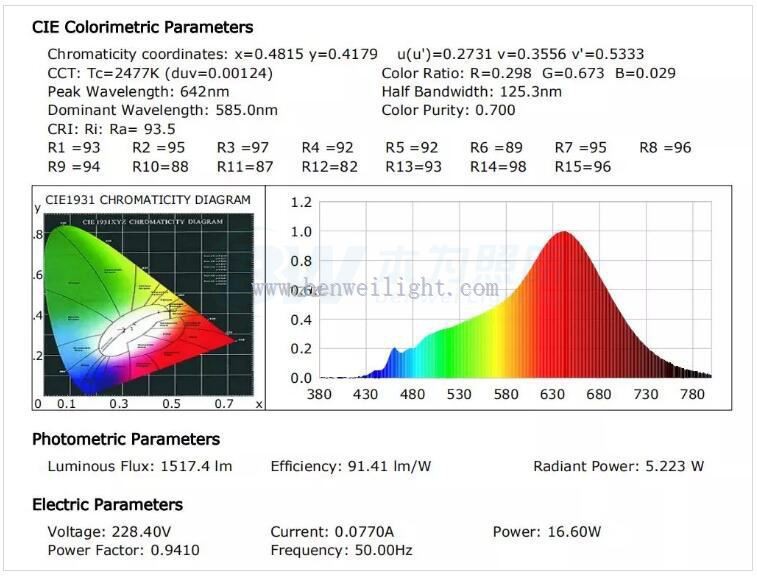

Benwei chicken coop lighting for egg production
|
Power |
Dimension(MM) |
LED Quantity(PCS) |
|
9W |
600*26mm |
Epistar 2835/48PCS |
|
13W |
900*26mm |
Epistar 2835/72PCS |
|
18W |
1200*26mm |
Epistar 2835/96PCS |
|
24W |
1500*26mm |
Epistar 2835/120PCS |
|
36W |
2400*26mm |
Epistar 2835/384PCS |





