

Introduction: The Case Against Fixture-by-Fixture Bulb Selection
Why Homes End Up with a Fragmented Lighting System
The typical home lighting system is not designed. It accretes. A floor lamp is purchased with whatever bulb came in the box. A chandelier is fitted with a set of bulbs chosen for the lowest price per unit. Bedside lamps receive a different bulb type entirely, often because a spare was available or because the packaging promised "warm white" without further specification. The result is a home in which every fixture may function individually, but the lighting as a whole lacks coherence: color temperatures clash, diffusion quality varies, glare appears in some fixtures and not others, and the visual experience changes unpredictably as the eye moves from room to room.
This fragmentation is not an aesthetic inevitability. It is the outcome of treating the bulb as a consumable afterthought rather than as the component that determines the actual light in the room. The fixture shapes and positions the light, but the bulb produces it. If the bulbs differ, the light differs-regardless of how carefully the fixtures were chosen.
The E27 Interface as a Unifying Standard
The E27 Edison screw base, with its 27-millimeter threaded diameter, is the standard size for most medium-sized domestic light fixtures, including pendant lights, floor lamps, and wall sconces. It is not the only domestic base-E14 appears in smaller chandeliers and bedside lamps, and B22 bayonet mounts persist in some markets-but it is the most broadly deployed across the fixture categories that define a home's lighting layers. A floor lamp, a table lamp, a pendant over a dining table, and many chandeliers will all accept an E27 bulb.
This universality creates a strategic opportunity that is rarely exploited. If a single high-performance E27 bulb is specified for every compatible fixture in the home, the optical and thermal characteristics of that bulb become the home's lighting baseline. The floor lamp and the chandelier may serve different functions and occupy different positions in the layered scheme, but they produce light of the same character. The home achieves continuity without requiring matching fixtures, and it achieves that continuity at the bulb level, where the actual light is generated.
What This Article Examines
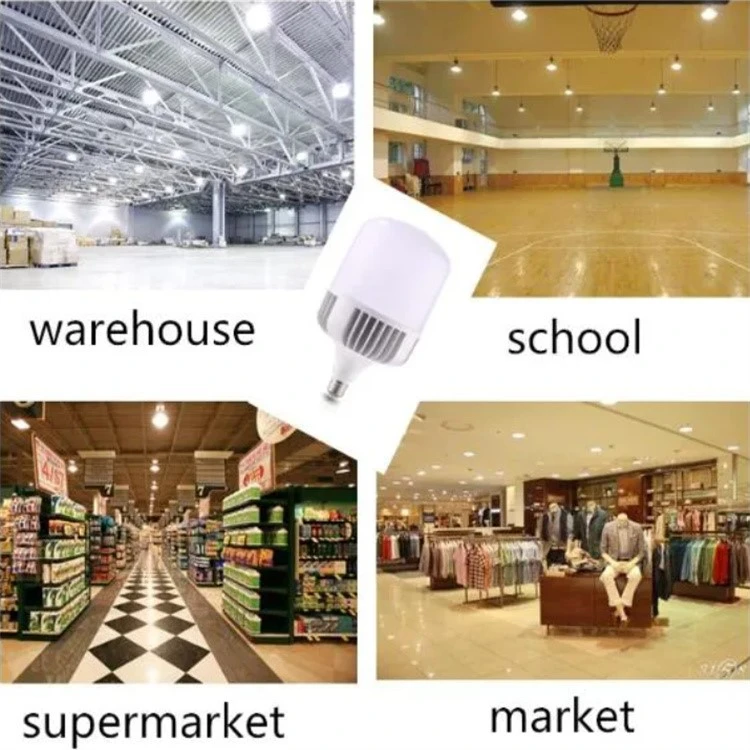
This article examines the case for standardizing on the high-wattage E27 LED bulb with an aluminum fin heat sink, active cooling fan, and high-transmittance PC lampshade across the home's fixture types. Part 2 analyzes the E27 interface as a design enabler and a constraint. Part 3 examines the fixture-specific requirements of floor lamps, chandeliers, and the intermediate categories between them. Part 4 examines the optical contribution of the PC diffuser to residential light quality. Part 5 addresses the thermal architecture that allows the bulb to perform reliably in both open and enclosed fixtures. Part 6 presents the economic and practical case for standardization, and Part 7 concludes with a specification framework.
The E27 Interface: Standardization as Strategy
The Physical and Electrical Logic of E27
The E27 base is a screw-in interface: the bulb is inserted and rotated until the threaded collar engages the socket contact. The "27" refers to the base diameter in millimeters, and the "E" stands for Edison screw. The interface is mechanically simple and electrically robust, and it has been standardized for so long that E27 sockets are present in an extraordinary range of residential fixtures, from inexpensive floor lamps to crystal chandeliers.
For the homeowner, this means the bulb is not locked into a single fixture type. A bulb purchased for a floor lamp can be transferred to a table lamp or a pendant if the need arises. More importantly, it means the homeowner can choose a bulb based on its light quality and thermal performance rather than on its compatibility with a single fixture. The E27 interface frees the bulb selection from the fixture selection, and that freedom is the precondition for standardizing on a single high-performance bulb across the home.
Compatibility Verification: The One Non-Negotiable Step
The E27 interface is widely compatible, but it is not universal. E14 bases appear in smaller chandeliers and bedside lamps, and B22 bayonet bases appear in some markets and older fixtures. Before standardizing, the homeowner must verify the socket type of each fixture by inspecting the existing bulb's base or checking the fixture's safety label. An E27 bulb will not physically fit an E14 or B22 socket, and attempting to force compatibility risks damaging the socket threads or the bulb base.
The verification step is simple but consequential. It determines which fixtures can participate in the standardization strategy and which require a different bulb type. In a typical home, the majority of floor lamps, table lamps, and pendant fixtures will accept E27, while smaller decorative chandeliers may require E14. The strategy should be applied to the compatible fixtures first, and the incompatible fixtures can be addressed separately if the homeowner wishes to extend the approach.
Why Standardization Matters for the Layered Home
Contemporary residential lighting design is layered lighting. Rather than relying on a single overhead source, designers combine ambient, task, and accent layers that can be adjusted independently to suit the activity and the time of day. A floor lamp provides ambient or reading light; a chandelier provides a decorative accent and ambient fill; a table lamp provides task light or a warm secondary glow.
In a layered system, the eye moves between layers constantly. If each layer uses a different bulb with a different color temperature, diffusion quality, or glare profile, the eye registers those differences as visual inconsistency. The room may be adequately lit in the photometric sense, but it does not feel coherent. Standardizing on a single E27 bulb across the compatible fixtures eliminates that inconsistency. The layers remain distinct in function and position, but they share a common light character, and the room reads as a unified space rather than a collection of separately lit zones.
Fixture-Specific Requirements: Floor Lamps, Chandeliers, and Everything Between
Floor Lamps: Lumen Demand and Directional Flexibility
A floor lamp occupies a specific position in the residential lighting scheme. It is typically placed beside a seating area or a reading chair, and its function is often dual: general ambient fill for the room and focused task light for the person beneath it. The lumen requirement varies with the function. For a bedside or accent floor lamp, 250–500 lumens may be sufficient; for general room lighting, 700–1,000 lumens is a common target; and for a reading lamp or a lamp serving a larger space, 1,200 lumens and above may be appropriate.
A high-wattage E27 LED bulb in the 10–25W range, producing roughly 800–2,500 lumens, can serve the full range of floor lamp applications depending on the fixture's shade and the room's size. The bulb's PC diffuser is particularly valuable in a floor lamp because the shade often reveals the bulb from certain viewing angles. A frosted or opal diffuser softens the source, reducing glare and producing the comfortable, even light that makes a floor lamp pleasant to sit beside.
Chandeliers: Multi-Source Coherence and Dimming Compatibility
A chandelier presents a different set of requirements. It is typically a multi-source fixture, with anywhere from three to a dozen or more bulbs arranged symmetrically. Each bulb contributes to the fixture's overall output, and consistency across the bulbs is essential. If one bulb differs in color temperature, brightness, or diffusion quality from its neighbors, the chandelier will show it. The multi-source configuration amplifies the cost of inconsistency in a way that a single-source floor lamp does not.
Chandeliers also frequently expose the bulbs directly. The decorative arms and open structure that make a chandelier visually interesting also mean that the bulb's silhouette and surface finish are visible from below. A bulb with a clean, rounded profile and an even, diffused glow reads as intentional; a bulb with a harsh source or an industrial profile disrupts the fixture's decorative intent. The Type A or Type B silhouette, with its PC shade, provides the soft, uniform appearance that a multi-source decorative fixture requires.
Dimming compatibility is a further consideration. Many chandeliers are installed on dimmer circuits, and older leading-edge dimmers can cause flicker or buzzing when paired with LED bulbs that fall below the dimmer's minimum load threshold. A dimmable high-performance E27 bulb, verified for compatibility with the existing dimmer, preserves the chandelier's ability to shift from bright task-oriented light to warm ambient glow without introducing flicker or noise.
Pendant Lights, Sconces, and Table Lamps: The Intermediate Categories
Between the floor lamp and the chandelier lie the fixtures that complete the layered scheme: pendants over kitchen islands and dining tables, wall sconces flanking mirrors or artwork, and table lamps on consoles and bedside tables. These fixtures share the E27 interface and the same optical requirements as the larger categories. A pendant may be the primary light source for a dining table, requiring 800–1,500 lumens; a sconce may provide accent or task light at a lower output; a table lamp may serve reading or ambient functions with a lumen requirement in the 400–1,000 range.
The standardization strategy applies across all of these categories. The same bulb type, installed in a pendant, a sconce, and a table lamp, produces the same warm, diffused light character in each. The fixtures differ in position and function, but the light they deliver is consistent. This is the practical meaning of "transforming home lighting with one E27 bulb": not that every fixture becomes identical, but that every compatible fixture contributes the same optical quality to the room's layered composition.
The Optical Contribution: PC Diffusion and Residential Light Quality
Diffusion as the Difference Between Comfort and Glare
The single most consequential optical property of a residential bulb is its diffusion. A bare or lightly frosted LED source produces a concentrated point of luminance that the eye must accommodate around, creating visual tension even when the overall light level is adequate. A high-transmittance polycarbonate diffuser distributes the source luminance across the full surface of the lampshade, converting the point source into an even, low-glare glow. The result is light that feels ambient rather than directional, comfortable rather than clinical.
Polycarbonate diffusers with controlled diffusion achieve total light transmittance in the range of 85–92%, which means the diffusion is achieved without sacrificing a disproportionate share of the emitted lumens. A low-grade diffuser that achieves softness through absorption converts optical inefficiency into heat inside the lamp volume, adding to the thermal load and reducing the maintained light output. The high-transmittance PC shade delivers comfort without that penalty.
Color Temperature Coherence Across the Home
Color temperature is measured in Kelvin, and the residential consensus is clear: warmer temperatures in the 2,200–3,000 K range suit bedrooms, living rooms, and decorative fixtures, while neutral temperatures around 4,000 K suit kitchens, hallways, and home offices. A 2,700 K bulb is the classic residential color-soft, flattering, and easy on the eyes-while 3,000 K offers slightly more clarity while remaining unmistakably warm.
The standardization strategy depends on selecting a color temperature that works across the home's compatible fixtures. For a living room and bedroom-focused installation, 2,700–3,000 K is the appropriate range. Every fixture that uses the standardized bulb will then produce the same warm character, and the eye will not register a color shift as it moves from the floor lamp to the chandelier to the bedside table. The home's evening lighting becomes a continuous warm environment rather than a patchwork of differing color temperatures.
Color Rendering and the Appearance of Materials
Color rendering-measured as CRI or Ra-describes how faithfully a light source renders the colors of objects in the room. A CRI of 80 or above is the standard for most residential applications, and higher values (90+) are recommended where the homeowner has invested in paint, textiles, or wood finishes that deserve accurate color reproduction. A bulb with poor color rendering makes those surfaces look duller and less saturated, undermining the aesthetic decisions the homeowner has made elsewhere.
The high-performance E27 bulb, with its thermally stable LED array and PC diffuser, is designed to maintain its color rendering over the service life. High junction temperatures reduce CRI and shift the spectral output, which is why the thermal architecture matters for the optical outcome. A bulb that holds its junction temperature holds its color rendering, and that is what allows the home's material palette to look as intended year after year.
Beam Angle and Light Distribution
Beam angle describes how broadly the bulb spreads its light. A wide beam angle of around 180–200 degrees spreads light evenly around a room, while a 360-degree model is suitable for fixtures designed to emit light in every direction. For a floor lamp with a shade that directs light upward and downward, a broad distribution is appropriate. For a chandelier with multiple bulbs, the combined output of several broad-distribution bulbs produces an even ambient fill.
The PC diffuser on the high-performance E27 bulb contributes to the effective beam angle by scattering the source emission across a wider area. The result is a distribution that suits the layered residential environment: broad enough to provide ambient fill, soft enough to avoid harsh shadow patterns, and consistent enough to maintain the coherence that standardization is intended to achieve.
The Thermal Architecture: Why the Bulb Must Survive the Fixture
The Enclosed Fixture Problem
Not every residential fixture is open to the air. Chandeliers with glass or fabric shades, table lamps with closed tops, and sconces with tight metal enclosures all create thermal environments in which the heat generated by the LED bulb cannot escape as readily as it would in an open fixture. The engineering literature on socket-type LED lamps is explicit about the consequence: in enclosed shades, heat gets trapped, the junction temperature rises, and lumen depreciation accelerates.
This is the thermal reality that separates a high-performance bulb from a commodity bulb. A commodity LED bulb may produce adequate light in an open floor lamp, but in an enclosed chandelier shade its junction temperature will rise, its output will dim, and its color may shift over time. The high-performance E27 bulb addresses this through its aluminum fin heat sink, which conducts heat away from the LED board and spreads it across a larger surface area, and its integrated active cooling fan, which forces air across the fin surfaces to increase the convective heat transfer coefficient.
Aluminum Fins and Active Cooling in the Residential Context
The aluminum fin architecture is the same thermal strategy used in specification-grade commercial luminaires, adapted to the compact envelope of an E27 bulb. Aluminum's high thermal conductivity moves heat rapidly from the localized LED hot spots into the fin structure, and the finned geometry increases the surface area available for convective transfer to the air. In a compact high-output bulb, however, passive finning has a practical ceiling. The integrated fan changes the convective coefficient, increasing heat transfer by a factor of two to five compared with natural convection depending on airflow and geometry.
For the homeowner, the practical significance is straightforward. A bulb with fins and a fan can operate at a higher output in an enclosed fixture without exceeding its thermal window. That means the chandelier can use the same high-output bulb as the open floor lamp, rather than requiring a derated or lower-performance alternative. The thermal architecture is what makes standardization across fixture types physically viable.
The Driver and the Service Life of the Standardized Bulb
The driver is the second thermally sensitive subsystem. Electrolytic capacitors and semiconductor components degrade faster at elevated temperatures, and driver failure is a common mode of premature LED bulb failure even when the LED chips remain functional. An IC constant-current driver maintains stable current delivery despite input voltage fluctuation, preserving consistent light output and color, and its anti-interference design reduces susceptibility to electrical noise on the home's mains supply.
The active cooling fan protects the driver as well as the LEDs by keeping the entire electronic assembly within its operating window. This is why the thermal architecture is a service-life specification, not merely a brightness specification. A standardized bulb that survives the thermal environment of the home's most enclosed fixture will deliver the same light character across all the fixtures for the full service life. A bulb that fails early in the chandelier forces the homeowner to replace it with a different product, and the coherence that standardization was intended to achieve is lost.
The Economic and Practical Case for Standardization
Purchasing Simplicity and Inventory Reduction
Standardizing on one E27 bulb type simplifies the homeowner's purchasing and inventory. Instead of tracking multiple bulb types for different fixtures, the homeowner maintains a single spare type. When a bulb fails, the replacement is already on hand, and it matches the optical character of the bulb it replaces. The practical value of this simplicity is easy to underestimate until a chandelier bulb fails and the homeowner discovers that the local store no longer stocks the exact model that was installed two years earlier.
Energy Savings and the Wattage Displacement Across the Home
The energy case for LED replacement is well established at the fixture level, but standardization amplifies it at the home level. A high-wattage E27 LED bulb producing 800–2,500 lumens consumes a fraction of the wattage of the incandescent or halogen bulbs it replaces. When every compatible fixture in the home uses the same efficient bulb, the aggregate reduction in connected lighting load is larger than a partial replacement strategy would achieve, and the savings accumulate across all the hours the home's lighting is in use.
The thermal architecture supports the energy case by protecting the bulb's efficacy over time. A bulb that overheats loses efficacy: it produces less light for the same wattage, and its service life shortens. The fins and fan keep the junction temperature within its window, preserving the efficiency advantage that the LED source provides.
Maintenance Reduction at Awkward Heights
Chandeliers are often mounted high above dining tables or in stairwells, and replacing a bulb in such a fixture is a maintenance event that many homeowners avoid until the bulb has failed completely. A thermally well-managed bulb with a long service life reduces the frequency of those events. The standardization strategy compounds the benefit: the same long-life bulb is used in the accessible floor lamp and the difficult-to-reach chandelier, so the chandelier does not need to be accessed more often simply because it uses a different, shorter-lived product.
Specification and Implementation Framework
Verify Socket Types Before Standardizing
Inspect every fixture's socket before purchasing standardized bulbs. Confirm whether each is E27, E14, or B22 by examining the existing bulb's base or the fixture's safety label. Apply the standardization strategy to the E27-compatible fixtures first; the incompatible fixtures can be addressed with a different bulb type if the homeowner wishes to extend the approach.
Select a Color Temperature for the Home's Evening Zones
For living rooms, bedrooms, and dining areas, select 2,700–3,000 K to create a warm, flattering, and coherent evening environment. For kitchens, home offices, and utility areas, a neutral 4,000 K may be more appropriate, and the homeowner may choose to standardize separately for these zones. The key is coherence within each zone, not necessarily uniformity across the entire home.
Confirm Dimmer Compatibility
If any fixture is on a dimmer circuit, verify that the selected bulb is compatible with the existing dimmer. Older leading-edge dimmers may require a minimum load that a low-wattage LED bulb does not provide, causing flicker or buzzing. A dimmable high-performance bulb, tested with the home's dimmer, preserves the fixture's dimming function without introducing electrical noise.
Account for Fixture Dimensions and Ventilation
Measure the available diameter and height inside each fixture's shade before installing the standardized bulb. A bulb that fits the socket may still be too large for the shade, and an enclosed fixture may restrict the airflow the bulb's thermal design requires. Where a fixture is fully enclosed, confirm the bulb's suitability with the manufacturer.
Establish a Post-Installation Observation Protocol
After installation, observe the bulbs over the first several weeks. Check for consistent color and brightness across fixtures, listen for fan noise in quiet rooms, and confirm that dimming operates smoothly where applicable. If a bulb in an enclosed fixture shows visible dimming or color shift earlier than the bulbs in open fixtures, the thermal environment of that fixture may be more restrictive than expected, and a different bulb or fixture ventilation strategy may be required.
Conclusion
Transforming home lighting with one E27 bulb is not a matter of finding a single product that suits every fixture equally. It is a matter of recognizing that the bulb, not the fixture, determines the actual light in the room, and that standardizing the bulb across compatible fixtures is the most direct way to achieve optical coherence in a layered home. The E27 interface makes this possible by appearing in the floor lamps, pendants, sconces, and chandeliers that define the residential lighting scheme. The high-transmittance PC shade makes it desirable by producing the soft, glare-free, warm-toned light that the home's aesthetic and wellness goals require. And the aluminum fin and active cooling architecture make it durable by keeping the bulb within its thermal window in both open and enclosed fixtures, so that the light character remains stable over the service life.
The practical logic is simple. A home with a floor lamp, a chandelier, and a handful of intermediate fixtures is a lighting system, whether or not it was designed as one. Treating it as a system-verifying sockets, selecting a coherent color temperature, confirming dimmer compatibility, and specifying a bulb with the thermal competence to survive the most enclosed fixture in the house-produces a result that individual fixture-by-fixture bulb purchases cannot. The one E27 bulb, properly specified, is the mechanism that turns a collection of fixtures into a coherent lighting environment. It is not a compromise across fixture types. It is the design decision that makes the fixtures work together.
How To Cooperate With Us?
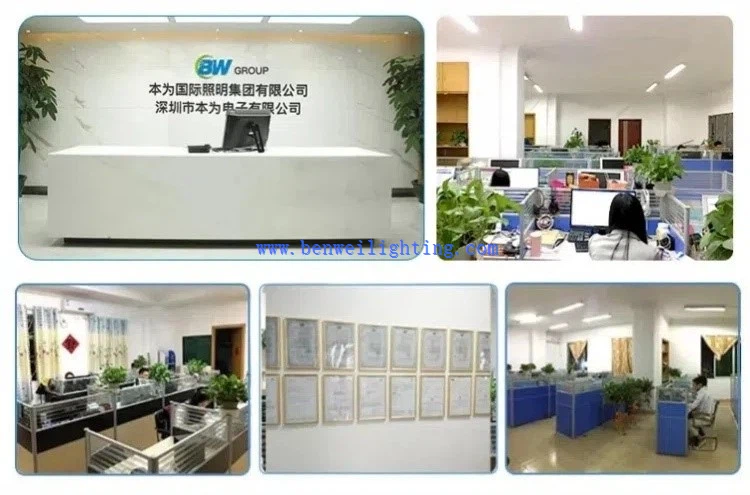
We are happy to have total control over the manufacturing process and the calibre of our products since we have our own facilities. Since we are producers rather than just brokers, we are dedicated to providing our customers with the best pricing. Since we are certain that the price and quality of our products are clear, we invite customers to see our samples first. Our commitment to quality and customer satisfaction drives us to continuously provide top-notch goods.
Our address
3rd Floor, 5th Building, Hebei Industrial Park, Hualian Community, Longhua District, Shenzhen, China





