

Introduction: The Vulnerability of the Optical Interface
The Fatal Flaw of Standard Lighting
To appreciate the engineering marvel of an explosion-proof fixture, one must first understand the chaotic nature of the environments it serves. Chemical processing plants, oil and gas refineries, mining operations, and heavy manufacturing floors are battlegrounds for equipment. High-pressure washdowns, falling tools, swinging machinery, and abrasive airborne particulates are constant threats.
In such settings, standard commercial glass is entirely inadequate. Standard glass is brittle; it possesses a low tolerance for kinetic impact and is highly susceptible to thermal shock. When a standard glass lens shatters, it creates a cascade of failure. The internal LED array is exposed, the IP65 seal is breached, and the explosion-proof integrity is nullified.
Why the Lens is the Weakest Link
The lens is the largest single surface area on the luminaire and the only component directly exposed to the immediate environment while shielding the delicate semiconductor chips. It must simultaneously transmit maximum light, withstand immense physical pressure, endure rapid temperature changes, and maintain a hermetic seal. If the lens fails, the entire lighting system fails. This is why the engineering philosophy of our new explosion-proof floodlight is centered around creating an "unbreakable" optical interface.
Redefining the Standard: The "Hammer-Tested" Philosophy
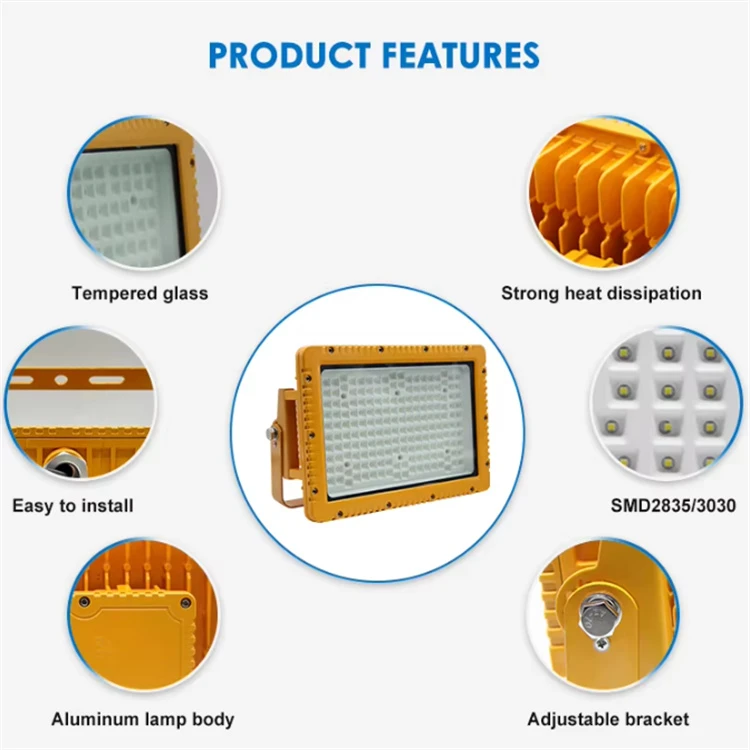
The phrase "Hammer-Tested" is not a marketing hyperbole; it is a literal, physical demonstration of the product's durability. As visually documented in our product specifications, the tempered glass lens is subjected to severe blunt force trauma with a heavy claw hammer. In a standard fixture, this impact would result in immediate, catastrophic shattering. In our fixture, the glass absorbs the kinetic energy, disperses it across its surface, and remains intact. This rigorous testing proves to procurement professionals that this fixture is engineered to survive the absolute worst-case scenarios.
The Science of Tempered Glass: Engineering Unbreakable Illumination
The Manufacturing Process: Thermal and Chemical Strengthening
To understand why the hammer test does not shatter the lens, one must look at the material science behind tempered glass. Standard glass is annealed, meaning it cools slowly, leaving internal stresses relatively neutral.
Tempered glass undergoes a rigorous heating and rapid cooling process. The glass is heated to over 600°C (1,112°F) and then rapidly cooled with high-pressure air jets.
Internal Compressive Stress
This rapid cooling causes the exterior surfaces of the glass to cool and solidify faster than the interior. As the interior eventually cools and contracts, it pulls inward on the already-rigid exterior surfaces. This creates a state of high internal compressive stress on the surface, balanced by tensile stress in the center.
The Physics of Shattering (or Not Shattering)
To break tempered glass, an external force must first overcome this immense surface compressive stress. Because the surface is essentially "armored" by this internal tension, it takes an exponentially greater force to cause a fracture. When tested, tempered glass is typically four to five times stronger than standard glass of the same thickness. Furthermore, if it does finally reach its breaking point, it shatters into small, blunt pebbles rather than sharp, lethal shards-a crucial safety feature for personnel below.
Impact Resistance: Beyond the Hammer Test
The hammer test is the most visceral proof of durability, but it is merely a proxy for the real-world hazards the fixture will face.
Absorbing Kinetic Energy
In a manufacturing plant, the luminaire might be struck by a flying metal tool, a piece of falling masonry, or the inadvertent swing of a forklift mast. The tempered glass lens is engineered to absorb and dissipate this kinetic energy. The robust thickness of the glass (often 4mm to 6mm or more, as shown in the caliper measurement in our product visuals) provides a physical barrier that prevents puncturing or fracture.
Protection from Environmental Debris
Outdoor industrial sites, such as offshore rigs or mining quarries, are subject to wind-blown debris, hail, and falling rocks. The tempered glass, combined with the heavy-duty steel wire guard mounted over the face of the fixture, provides a redundant defense system. The wire guard takes the initial brunt of the impact, dispersing the force, while the tempered glass provides the final, unyielding wall of protection.
Thermal Shock Resistance: The Overlooked Threat
The Thermal Dynamics of Industrial Lighting
While physical impacts are obvious threats, thermal shock is the silent killer of industrial lighting lenses. Thermal shock occurs when a material is subjected to a rapid, drastic change in temperature.
In a hazardous environment, a luminaire might operate at an internal temperature of 50°C to 60°C (122°F to 140°F). If a sudden thunderstorm occurs, or if a facility initiates a high-pressure cold-water washdown protocol, the external surface of the glass is instantly chilled. Standard glass cannot expand or contract quickly enough to accommodate this gradient, resulting in immediate cracking.
Surviving the Extremes: Hot Fixtures and Cold Rain
The tempered glass used in this floodlight is specifically engineered for exceptional thermal shock resistance.
Coefficient of Thermal Expansion
The manufacturing process allows tempered glass to maintain structural integrity even when subjected to temperature differentials of up to 150°C (270°F) or more. This means the fixture can be operating at maximum thermal capacity while being hit by freezing rain or cold water jets without fracturing.
Preventing Catastrophic Cracking
By preventing thermal cracking, the tempered glass ensures that the hermetic seal of the luminaire remains intact. This is absolutely critical for maintaining the IP65 waterproof rating and the "Ex" explosion-proof certification. A crack of even a millimeter would allow combustible gases or moisture to enter the housing, rendering the entire safety system void.
The Synergy of Protection: Glass, Aluminum, and Wire Guard
The "Ex" Explosion-Proof Seal
The tempered glass does not work in isolation; it is an integral part of a holistic protection system. The glass is secured to the housing via a high-tensile, multi-bolt perimeter flange.
Hermetic Sealing and IP65 Rating
Between the tempered glass and the high-purity die-cast aluminum housing lies a specialized, industrial-grade silicone gasket. As the perimeter bolts are tightened, the glass compresses this gasket uniformly, creating an airtight, IP65-rated seal. This seal prevents the ingress of dust (the "6" in IP65) and water jets (the "5" in IP65). The tempered glass acts as the rigid, unyielding shield that allows this seal to be maintained under pressure.
The Die-Cast Aluminum Backbone
A high-strength lens is useless if the frame it is mounted to flexes or deforms. That is why the lens is mated to a high-purity, die-cast aluminum body. The aluminum housing is rust-proof, corrosion-resistant, and structurally rigid. It provides a perfectly flat, robust mating surface for the tempered glass, ensuring that the explosion-proof seal is never compromised by warping or structural failure.
The Last Line of Defense: The Steel Wire Guard
For applications where the risk of falling objects is extreme, the integration of the heavy-duty steel wire guard is essential. This guard is mounted directly over the tempered glass using robust stainless steel brackets. It acts as a sacrificial barrier. If a heavy object falls on the fixture, the wire guard absorbs the impact and deflects the object, leaving the tempered glass and the internal SMD LED array entirely unharmed.
The Procurement Advantage: Why "Hammer-Tested" Equals High ROI
Minimizing Maintenance and Downtime
For B2B procurement officers and facility managers, the "Hammer-Tested" durability of this tempered glass translates directly to massive financial savings.
The True Cost of Replacing a Lens
When a standard glass lens shatters, the facility cannot simply replace the glass. The entire fixture is compromised, and in a hazardous area, it must be immediately de-energized and removed. This requires a specialized maintenance crew, the issuance of hot-work permits, and potentially a shutdown of the immediate operational zone. By utilizing impact-resistant tempered glass, the risk of accidental breakage is virtually eliminated, reducing maintenance costs to near zero over the lifespan of the fixture.
Regulatory Compliance and Liability Mitigation
Operating in an environment with flammable gases or combustible dust is a high-liability endeavor. Regulatory bodies (such as OSHA, ATEX, and IECEx) strictly enforce the use of certified explosion-proof equipment.
Mitigating Risk
A broken lens is an immediate safety violation. By choosing a fixture with a rigorous "Hammer-Tested" tempered glass lens, facility managers demonstrate a proactive commitment to safety. This mitigates the risk of catastrophic explosions, regulatory fines, and severe legal liabilities. It ensures that the facility is compliant with the most stringent international safety codes.
OEM Customization for Specific Hazard Profiles
Recognizing that different industries face different threats, this product supports OEM custom processing. Whether a facility requires a thicker glass lens for extreme high-pressure washdowns, a specialized anti-glare coating, or integration with specific structural wire guards, the robust platform of the fixture can be tailored to meet exact specifications. This flexibility makes it an ideal choice for large-scale B2B procurement.
Conclusion
The title "Hammer-Tested: Why Our Explosion-Proof Tempered Glass is the Industry Standard" is not merely a claim of durability; it is a declaration of engineering superiority.
In the hazardous environments where this luminaire operates, failure is not an option. The optical lens is the frontline defense for the delicate internal electronics and the primary barrier preventing a catastrophic breach of the explosion-proof seal. By utilizing high-strength tempered glass-proven through rigorous kinetic and thermal shock testing-and integrating it with a robust die-cast aluminum housing and a heavy-duty steel wire guard, this fixture sets a new benchmark for industrial safety.
For procurement professionals, the decision is clear. Investing in a fixture with "unbreakable" illumination is an investment in operational continuity, worker safety, and long-term financial efficiency. Do not allow a fragile lens to become the weakest link in your facility's safety infrastructure. Choose the industry standard. Choose the fixture that is built to take a hit.
How To Cooperate With Us?
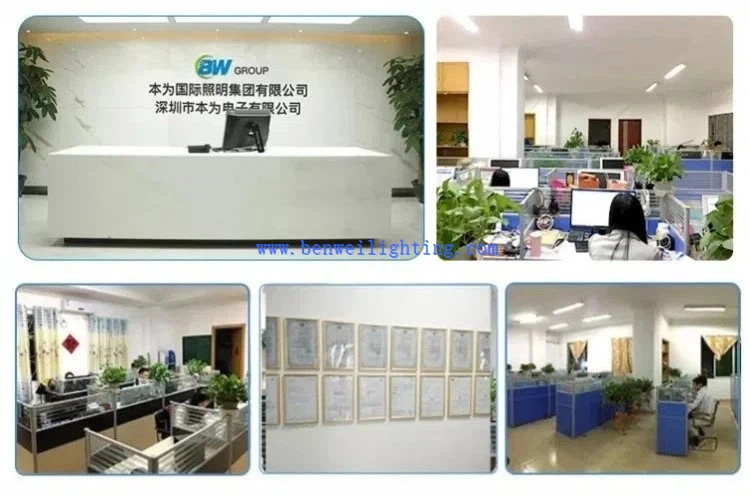
We are happy to have total control over the manufacturing process and the calibre of our products since we have our own facilities. Since we are producers rather than just brokers, we are dedicated to providing our customers with the best pricing. Since we are certain that the price and quality of our products are clear, we invite customers to see our samples first. Our commitment to quality and customer satisfaction drives us to continuously provide top-notch goods.
Our address
3rd Floor, 5th Building, Hebei Industrial Park, Hualian Community, Longhua District, Shenzhen, China





