

Introduction: The Criticality of Hazardous Area Lighting
The Anatomy of a Hazardous Environment
To understand the necessity of the "Ex" mark, one must first appreciate the inherent dangers of a hazardous location. These are environments where the atmosphere contains, or may potentially contain, explosive concentrations of substances. This includes flammable gases (such as methane, propane, or hydrogen), vapors from volatile liquids (like solvents or fuels), and combustible dusts (such as grain, coal, or metal particles).
Common industrial settings that fall into this category include oil and gas refineries, chemical processing plants, mining operations, pharmaceutical manufacturing facilities, and wastewater treatment centers. In these zones, the air itself is a potential fuel source.
The Ignition Triangle: Why Standard Lighting is a Threat
For an explosion to occur, three elements must be present: fuel, oxygen, and an ignition source. In a hazardous environment, the fuel (gas, vapor, or dust) and oxygen are already present. Therefore, the introduction of any potential ignition source is inherently dangerous.
Standard commercial light fixtures are inherently unsafe in these zones. They can generate sparks through faulty wiring, loose connections, or the simple act of a switch turning on and off. Furthermore, standard fixtures-particularly traditional halogen or incandescent lamps, and even poorly designed LED fixtures-can generate extremely high surface temperatures. If the surface temperature of the light fixture exceeds the auto-ignition temperature of the surrounding gas or dust, a catastrophic explosion will occur.
The Financial and Human Cost of Non-Compliance
The consequences of an explosion in an industrial facility are devastating. They range from loss of human life and severe injuries to the total destruction of facilities, multi-million dollar operational shutdowns, and severe legal and regulatory penalties.
For B2B procurement officers, selecting non-compliant lighting is a massive liability. Therefore, the presence of the "Ex" mark on a luminaire is not just a helpful feature; it is a non-negotiable requirement for legal operation and a fundamental safeguard for human life.
Decoding the "Ex" Mark: Global Standards and Classifications
What Does the "Ex" Mark Actually Mean?
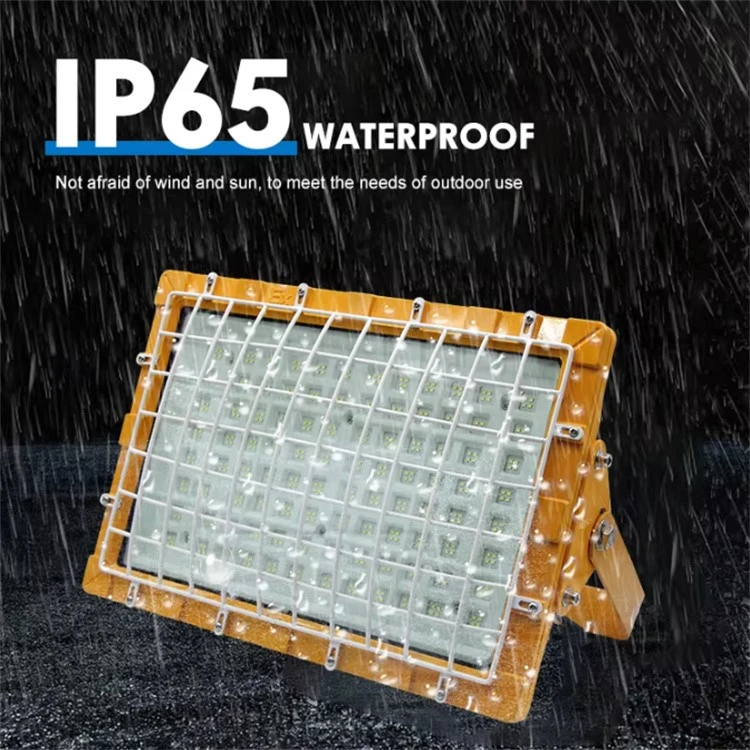
The prominent "Ex" embossed on the robust yellow housing of our explosion-proof floodlight is an internationally recognized symbol denoting that the equipment is designed and certified to operate safely in explosive atmospheres. It signifies that the equipment will not act as an ignition source.
The "Ex" mark is governed by rigorous international standards, most notably the IECEx (International Electrotechnical Commission) system and the ATEX directives (used widely in Europe). These standards dictate every aspect of the fixture's design, from its structural integrity to its thermal output.
The Principle of Containment and Prevention
Explosion-proof lighting does not prevent the entry of explosive gases into the housing (that is the job of a hermetically sealed enclosure). Instead, it is built on the principle of containment. If a spark occurs inside the fixture, the robust housing is engineered to withstand the internal pressure of a small explosion and prevent flames from escaping into the surrounding hazardous atmosphere.
Temperature Classifications (T-Codes)
A critical component of the "Ex" certification is the temperature classification (T-Code). The luminaire's maximum surface temperature must never exceed the auto-ignition temperature of the surrounding gas.
T1 to T6: Gases are categorized based on their ignition temperatures. For example, T1 (450°C) is the highest, and T6 (85°C) is the lowest.
Our fixture is designed with advanced thermal management to ensure that even under maximum load, the surface temperature remains well below the threshold of the hazardous materials present in the environment, earning its "Ex" certification.
Understanding Zones and Divisions
The "Ex" mark also delineates the specific zones in which the fixture is safe to operate. These zones are determined by the frequency and duration of the presence of explosive atmospheres.
Zone 1 & 2 (Gases): Zone 1 is where explosive gas is likely to occur in normal operation; Zone 2 is where it is not likely to occur, but if it does, it will be for a short time.
Zone 21 & 22 (Dusts): Similar classifications exist for combustible dust environments.
A fully certified "Ex" luminaire, built with high-purity die-cast aluminum and tempered glass, is typically rated for these high-risk zones, providing facility managers with the absolute assurance that their lighting infrastructure will not be the catalyst for an explosion.
The Engineering Behind the "Ex" Mark: How This Product Earns Its Certification
Achieving the "Ex" mark is not a matter of simply attaching a label. It requires a synergistic combination of elite materials, precision engineering, and rigorous testing. Our new explosion-proof LED floodlight achieves this certification through several key design elements.
The Unyielding Shell: High-Purity Die-Cast Aluminum
The foundation of the explosion-proof integrity is the housing.
Withstanding Internal Pressure
In a worst-case scenario, if an internal electronic component fails and causes a spark, the die-cast aluminum housing must contain the resulting explosion. The thick-wall construction and unibody die-cast design ensure immense structural rigidity. The housing is engineered to withstand the extreme internal pressures of an explosion without rupturing or distorting.
Corrosion Resistance and Environmental Protection
Industrial environments are often highly corrosive. If the housing were to degrade, the explosion-proof seal would be compromised. The high-purity aluminum is inherently rust-proof and is further protected by a durable, yellow epoxy powder coat. This ensures the fixture can survive decades of exposure to chemical vapors, salt spray, and moisture without losing its structural integrity.
The Frontline Defense: Tempered Glass and Steel Wire Guard
The optical lens is the most vulnerable part of any luminaire. A broken lens immediately voids the "Ex" certification.
The Hammer-Tested Tempered Glass
This fixture utilizes high-strength, tempered glass. Through a specialized heating and rapid cooling process, the glass is endowed with immense internal compressive stress, making it four to five times stronger than standard glass. It is rigorously tested to withstand severe kinetic impacts (such as a hammer strike) and extreme thermal shock (such as cold water hitting a hot fixture). If it does break, it shatters into blunt pebbles, not lethal shards.
The Heavy-Duty Wire Guard
For extreme environments, an optional heavy-duty steel wire guard provides an additional layer of defense. It absorbs the brunt of any falling objects or machinery impacts, ensuring the glass lens and the internal LED array remain hermetically sealed.
The Hermetic Seal: IP65 Waterproofing
To maintain the "Ex" rating, the luminaire must prevent dust and water from entering the housing, as moisture could cause short circuits.
The Silicone Gasket System
The integration of the tempered glass and the aluminum body is secured by a high-tensile, multi-bolt perimeter flange. A specialized, industrial-grade silicone gasket sits between the glass and metal. The bolts apply uniform pressure, creating an airtight and watertight seal that achieves an IP65 rating. The "6" means it is completely dust-tight; the "5" means it can withstand high-pressure water jets from any direction.
The Thermal Dynamic: Why Heat Management is Critical for the "Ex" Mark
The Danger of Surface Temperature
As established, one of the primary risks in hazardous areas is surface temperature. LEDs are far more efficient than traditional lighting, but they still generate heat. If the heat generated by the SMD 2835/3030 LED chips is not managed, the surface of the fixture could exceed the T-Code limit, instantly voiding the "Ex" certification and creating a severe fire hazard.
The "Pressure Cooker" Challenge
Because the fixture must be hermetically sealed (IP65) to maintain its explosion-proof integrity, heat cannot escape through vents. It is trapped inside.
The Solution: Advanced Finned Heat Dissipation
To prevent the internal temperature from rising to dangerous levels, this luminaire employs a robust thermal management system.
Maximizing Convection Surface Area
The rear of the aluminum housing features a deep, heavily finned heat sink design. This dramatically increases the surface area exposed to the ambient air. As the heat transfers from the LED chips to the aluminum body, the fins facilitate rapid convection. The heat rises and dissipates into the atmosphere, continuously drawing the internal temperature down.
High Thermal Conductivity of Aluminum
The use of high-purity die-cast aluminum is crucial. It rapidly conducts heat away from the sensitive SMD LED chips and the internal driver, ensuring they operate at optimal temperatures. This not only maintains the "Ex" certification by keeping surface temperatures low but also drastically extends the lifespan of the LED components.
The Procurement Advantage: Why the "Ex" Mark Drives High ROI
Total Cost of Ownership (TCO) Reduction
For the B2B procurement professional, investing in an "Ex"-certified luminaire is a strategic financial decision.
Energy Efficiency of SMD LEDs
The high luminous efficacy of the SMD 2835/3030 chips means these fixtures consume significantly less energy than legacy HPS or metal halide lamps, resulting in immediate and substantial reductions in electricity costs.
Eliminating Maintenance Downtime
The true cost of lighting is not the purchase price; it is the cost of maintenance. Replacing a fixture in a hazardous area is a massive undertaking. It requires specialized crews, hot-work permits, and often facility shutdowns. By utilizing advanced heat dissipation and unyielding materials (tempered glass, die-cast aluminum), the lifespan of the fixture is maximized. The frequency of maintenance is slashed, saving the facility thousands in labor and lost productivity.
Regulatory Compliance and Liability Mitigation
Operating lighting in a hazardous zone without the proper "Ex" certification is illegal and highly dangerous. In the event of an accident, the facility operator and procurement team could face severe legal liability, including massive fines and even criminal charges.
Proving Due Diligence
By selecting a luminaire with the prominent "Ex" mark, the procurement team demonstrates due diligence. It provides documented assurance that the lighting infrastructure meets the stringent safety requirements of IECEx and ATEX. This compliance is essential for insurance validity and passing safety audits.
OEM Customization: Tailoring the "Ex" Solution
Recognizing that not all hazardous zones are the same, this product line supports OEM custom processing. Whether a facility requires specific T-Codes, specialized beam angles for high-bay applications, or custom mounting brackets, the robust aluminum platform can be tailored. This flexibility ensures that large-scale B2B buyers can procure the exact lighting solution required for their specific hazardous environment.
Conclusion
The "Ex" mark is far more than a regulatory sticker; it is a covenant of safety. It represents a manufacturer's commitment to engineering excellence, material superiority, and uncompromising quality control.
From the unyielding protection of the tempered glass and the heavy-duty steel wire guard, to the immense structural integrity of the high-purity die-cast aluminum housing, and the sophisticated thermal management of the finned heat sink-every element of this explosion-proof LED floodlight is designed to contain danger and deliver unbreakable illumination.
For facility managers and procurement officers, the message is clear. In the unforgiving reality of hazardous locations, settling for standard lighting is a risk you cannot afford to take. Understand the "Ex" mark, demand the certification, and invest in the technology that guarantees operational continuity and worker safety. Choose the luminaire that bears the "Ex" mark with pride-choose the ultimate in explosion-proof illumination.
How To Cooperate With Us?
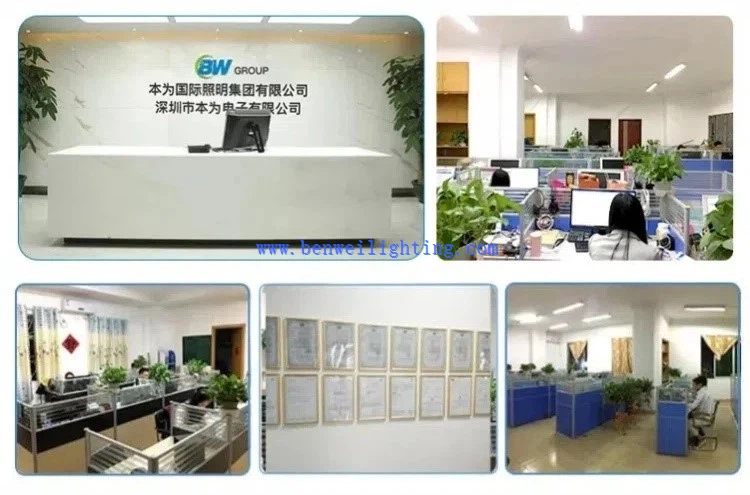
We are happy to have total control over the manufacturing process and the calibre of our products since we have our own facilities. Since we are producers rather than just brokers, we are dedicated to providing our customers with the best pricing. Since we are certain that the price and quality of our products are clear, we invite customers to see our samples first. Our commitment to quality and customer satisfaction drives us to continuously provide top-notch goods.
Our address
3rd Floor, 5th Building, Hebei Industrial Park, Hualian Community, Longhua District, Shenzhen, China





