

Introduction: The Financial Toll of Corrosion
The Hidden Enemy in Industrial Facilities
Corrosion is not merely an aesthetic issue; it is a pervasive, destructive force that costs global industries billions of dollars annually. In environments such as chemical processing plants, wastewater treatment facilities, offshore oil rigs, and coastal manufacturing sites, luminaires are constantly bombarded by aggressive agents. These include acidic vapors, alkaline dusts, saline sea spray, and high-humidity washdowns.
When a standard light fixture is installed in these zones, the clock is ticking toward failure. Rust begins to form, weakening the structural integrity of the housing. As the metal degrades, gaskets lose their compression, seals fail, and moisture penetrates the internal circuitry.
The Catastrophic Cascade of Housing Failure
When a housing fails due to corrosion, the consequences extend far beyond a flickering light. In a hazardous environment, a compromised housing instantly voids the explosion-proof ("Ex") certification. The ingress of moisture causes short circuits, which can generate sparks-a lethal ignition source in an atmosphere filled with flammable gases or combustible dust. Therefore, the selection of the lamp body material is fundamentally a life-safety decision, as well as a financial one.
The Inadequacy of Traditional Materials
Historically, industrial lighting housings were constructed from stamped steel, cast iron, or heavy plastics. Each of these materials possesses fatal flaws in aggressive environments.
Steel: While strong, steel is highly susceptible to oxidation. Even with painting, any scratch or chip exposes the underlying iron to rust, which spreads beneath the coating.
Plastics: While rust-proof, polymers are vulnerable to UV degradation and chemical solvents. They become brittle over time and lack the structural rigidity to contain an internal explosion or withstand high-pressure impacts.
The Paradigm Shift to High-Purity Aluminum
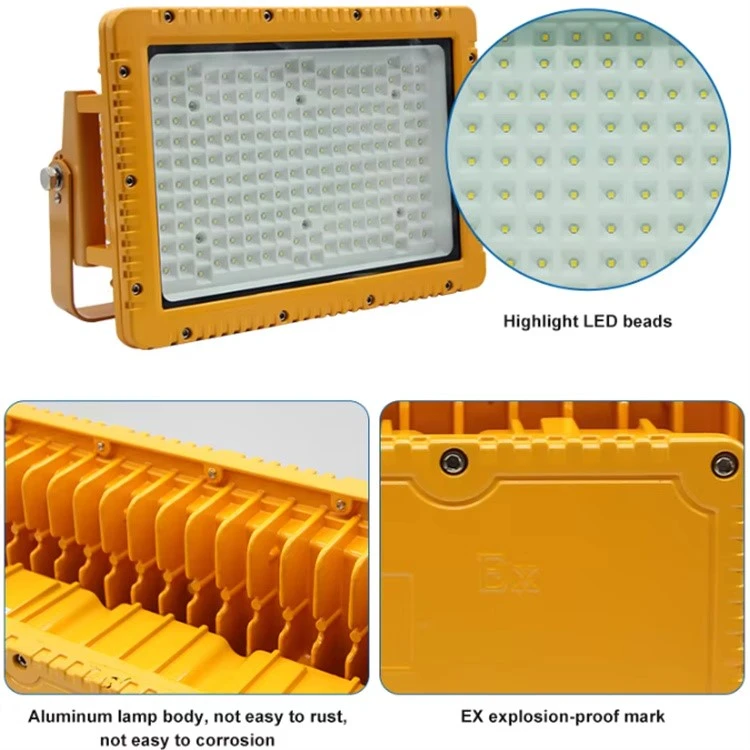
To solve the corrosion paradox, our explosion-proof floodlight utilizes a high-purity, die-cast aluminum lamp body. Aluminum was selected not merely as an alternative, but as the definitive solution. It offers an unparalleled synergy of structural strength, thermal conductivity, and inherent corrosion resistance, making it the ultimate material for the most demanding industrial environments.
The Electrochemical Superiority of Aluminum
Understanding the Oxidation Process
To understand why aluminum is rust-proof, one must examine the electrochemistry of metals. Iron (in steel) oxidizes to form iron oxide (rust). Iron oxide is a flaky, porous substance that does not adhere to the base metal. It flakes off, exposing fresh iron to the elements, and the destructive cycle continues until the metal is entirely consumed.
The Passivation Layer: Aluminum's Natural Armor
Aluminum behaves entirely differently. When aluminum is exposed to oxygen in the air, it immediately forms a microscopic layer of aluminum oxide. This layer, known as the passivation layer, is incredibly dense, stable, and impermeable. Furthermore, it bonds tenaciously to the underlying aluminum.
If the surface of the aluminum is scratched, the passivation layer immediately reforms in milliseconds. This self-healing property acts as a microscopic, invisible shield, preventing oxygen and moisture from reaching the base metal. This is why aluminum is inherently rust-proof and highly resistant to environmental degradation.
Chemical and Salt Spray Resistance
The high-purity aluminum used in our lamp body is specifically alloyed to enhance its resistance to chemical attack and salt spray.
Withstanding the Chemical Plant Atmosphere
In chemical plants, the air is often laced with chlorine, sulfur dioxide, and other corrosive vapors. The stable oxide layer on the aluminum housing resists these acidic and alkaline attacks. This ensures that the structural integrity of the "Ex" seal remains uncompromised for decades, unlike steel or plastic fixtures that would rapidly degrade and pose a severe safety hazard.
Conquering the Coastal and Offshore Threat
For facilities located near the ocean or offshore oil rigs, salt spray is the primary agent of destruction. Salt accelerates the electrochemical reaction of rust in steel. However, the dense passivation layer of aluminum effectively repels chloride ions, preventing pitting and structural failure.
The Engineering of the Die-Cast Process
Structural Rigidity for Explosion-Proof Integrity
While the material is crucial, the manufacturing process dictates its performance. The lamp body is manufactured using high-pressure die-casting.
The Unibody Construction
Die-casting involves injecting molten aluminum into a precision-machined steel mold under immense pressure. This allows for the creation of a seamless, unibody housing with complex internal ribbing. This design maximizes structural rigidity without adding unnecessary weight.
In the context of an explosion-proof luminaire, this structural integrity is paramount. If an internal spark causes a small explosion within the housing, the die-cast aluminum body is engineered to contain the pressure without fracturing or allowing flames to escape into the hazardous atmosphere.
Precision Mating Surfaces
For an explosion-proof fixture to function properly, the mating surfaces (where the glass lens meets the metal housing) must be perfectly flat. The die-casting process ensures precise dimensional tolerances. This allows the specialized silicone gasket to compress uniformly, creating the airtight and watertight seal necessary to achieve the IP65 rating.
Beyond the Base Metal: The Epoxy Powder Coat Defense
The Synergy of Metal and Coating
While aluminum is inherently corrosion-resistant, industrial environments can be so extreme that additional protection is required. To provide a formidable barrier against abrasive wear and chemical erosion, the entire luminaire is coated with an industrial-grade epoxy powder coat.
The Powder Coating Process
Unlike traditional liquid paints that use solvents, powder coating involves applying a dry, electrostatically charged powder to the aluminum surface. The fixture is then cured in a high-temperature oven, causing the powder to melt and chemically cross-link, forming a hard, continuous plastic-like shell.
UV and Chemical Resistance
This robust finish provides exceptional resistance to UV radiation (preventing fading or chalking), abrasion, and chemical solvents. The bright yellow color of the coating is not merely aesthetic; it serves as a vital safety indicator, ensuring the fixture is highly visible in dimly lit industrial zones.
The Finishing Touches: Stainless Steel Hardware
Corrosion is only as strong as the weakest link. To ensure the entire fixture is immune to rust, all external hardware-including the adjustable mounting bracket bolts, the perimeter flange bolts, and the wire guard brackets-are constructed from stainless steel. This prevents galvanic corrosion and ensures that the fixture can be serviced or re-aimed years after installation without the bolts seizing or snapping.
The Procurement Advantage: Maximizing ROI Through Longevity
Slashing Total Cost of Ownership (TCO)
For B2B procurement professionals, the initial cost of an aluminum-bodied explosion-proof light is an investment, not an expense. The true metric is the Total Cost of Ownership (TCO) over a ten or twenty-year period.
The Elimination of Maintenance Cycles
In a harsh environment, a steel or plastic fixture might need to be replaced every three to five years due to corrosion. Replacing a fixture in a hazardous zone requires specialized maintenance crews, hot-work permits, and often involves expensive facility downtime. By utilizing a rust-proof aluminum body, the fixture's lifespan is extended to 50,000+ hours (and often much longer). The reduction in maintenance labor and replacement part costs alone results in a massive ROI.
Energy Efficiency of SMD LEDs
This structural longevity is complemented by the internal SMD 2835/3030 LED chips. These chips deliver high lumens per watt, drastically reducing the facility's energy consumption. The combination of low energy use and zero maintenance makes the aluminum-bodied floodlight the most financially efficient choice on the market.
Mitigating Liability and Ensuring Compliance
Operating a rusted or degraded fixture in a hazardous zone is a violation of safety regulations (such as IECEx and ATEX). If an accident occurs, the facility operator faces severe legal liabilities and fines. By choosing a rust-proof, aluminum-bodied fixture with the official "Ex" mark, procurement officers demonstrate due diligence and ensure full regulatory compliance, protecting both the workers and the company's bottom line.
Conclusion
The title "Rust-Proof and Corrosion-Resistant" is not a marketing exaggeration; it is a scientific reality derived from the meticulous selection of high-purity aluminum and advanced manufacturing processes.
From the self-healing passivation layer that defies oxygen, to the unibody die-cast construction that ensures structural integrity, and the rugged epoxy powder coat that repels chemical attacks-every aspect of this lamp body is engineered to survive. For facility managers and procurement officers, investing in this technology means putting an end to the relentless cycle of rust, maintenance, and downtime. Choose the aluminum-bodied explosion-proof luminaire-the ultimate safeguard for your operations and your investment.
How To Cooperate With Us?
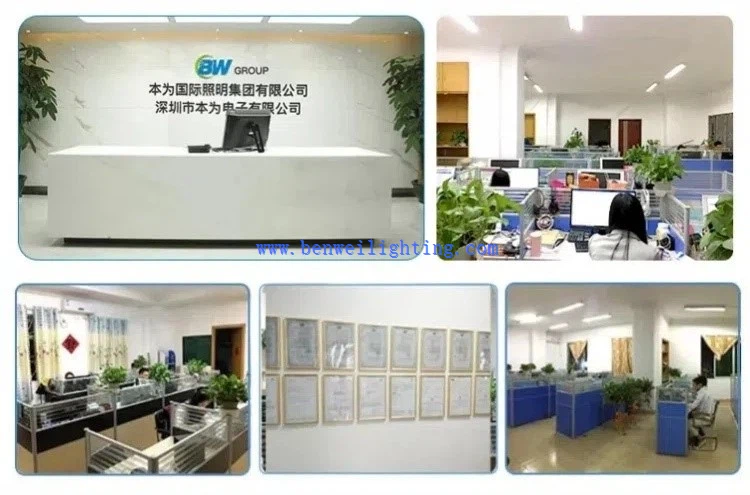
We are happy to have total control over the manufacturing process and the calibre of our products since we have our own facilities. Since we are producers rather than just brokers, we are dedicated to providing our customers with the best pricing. Since we are certain that the price and quality of our products are clear, we invite customers to see our samples first. Our commitment to quality and customer satisfaction drives us to continuously provide top-notch goods.
Our address
3rd Floor, 5th Building, Hebei Industrial Park, Hualian Community, Longhua District, Shenzhen, China





