

Introduction: The Life-Safety Imperative
Defining the Hazardous Area
A hazardous area is any location where the atmosphere contains, or may contain, explosive concentrations of substances. This includes flammable gases (such as methane or hydrogen), vapors from volatile liquids (like solvents or fuels), and combustible dusts (such as grain, coal, or metal particles).
Common industrial settings that fall into this category include oil and gas refineries, chemical processing plants, mining operations, pharmaceutical manufacturing facilities, and wastewater treatment centers. In these zones, the very air is a potential fuel source.
The Ignition Triangle and the Role of Lighting
For an explosion to occur, three elements must be present: fuel, oxygen, and an ignition source. In a hazardous environment, the first two are omnipresent. Therefore, any equipment introduced into the zone must be engineered to eliminate the third.
Standard commercial lighting is a primary ignition risk. It can generate sparks through faulty wiring, loose connections, or the simple act of a switch operating. Furthermore, even if there are no sparks, the surface temperature of standard lighting fixtures can easily exceed the auto-ignition temperature of the surrounding gases or dusts.
The Financial and Legal Cost of Non-Compliance
Selecting the wrong lighting is not just a safety risk; it is a massive financial and legal liability. Operating non-compliant equipment in a hazardous zone violates strict global regulations. In the event of an incident, the facility operator and the procurement team could face massive fines, the invalidation of insurance policies, and even criminal charges for criminal negligence. Therefore, choosing the right explosion-proof lighting is the foundational act of risk mitigation.
Decoding the Certifications: The "Ex" Mark and Beyond
Understanding the "Ex" Mark
The prominent "Ex" embossed on the housing of an explosion-proof luminaire is the international symbol denoting that the equipment is designed and certified to operate safely in explosive atmospheres. However, the "Ex" mark is just the beginning. Buyers must look deeper into the specific certifications.
IECEx and ATEX Directives
Global procurement requires adherence to recognized standards. The two primary frameworks are:
IECEx: The International Electrotechnical Commission System for Certification to Standards Relating to Equipment for Use in Explosive Atmospheres. This is the global standard.
ATEX: The European Union directives for controlling explosive atmospheres.
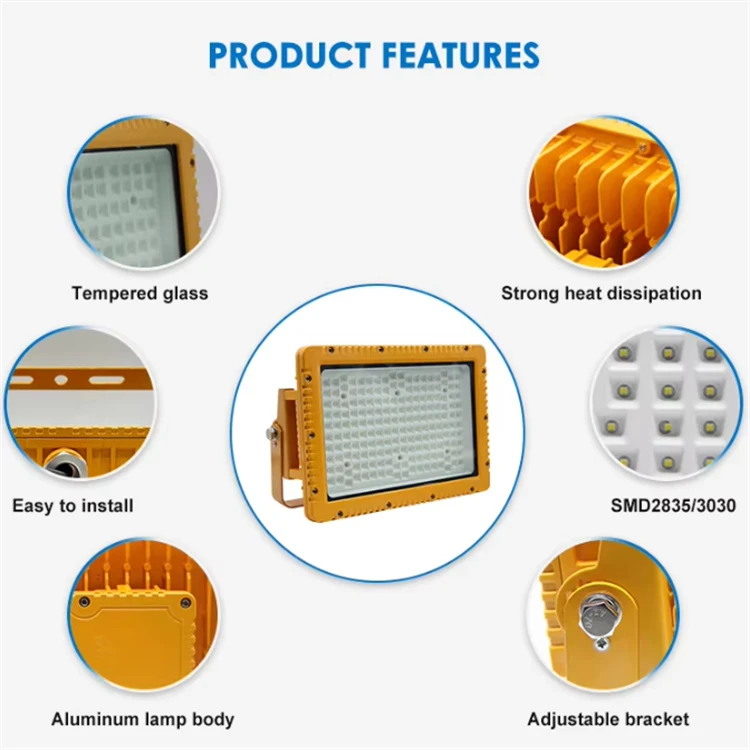
A premium luminaire, like our floodlight, will be certified under these frameworks, proving it has undergone rigorous testing for structural integrity and thermal output.
Understanding Equipment Groups and Zones
Not all hazardous areas are the same. The "Ex" certification will specify the Equipment Group and Zone.
Group I: Mining (underground).
Group II: Surface industries (oil, gas, chemical).
Zones: The higher the zone number, the lower the risk (e.g., Zone 2 is less hazardous than Zone 1). A truly versatile explosion-proof light should be certified for the most demanding zones (Zone 1, Zone 2, Zone 21, Zone 22) to ensure maximum safety margins.
The Critical Role of Thermal Management (T-Codes)
The Danger of Surface Temperature
As established, one of the primary risks in hazardous areas is surface temperature. If the surface of the light fixture exceeds the auto-ignition temperature of the surrounding gas or dust, an explosion will occur. This is where the engineering of the light becomes critical.
The "Pressure Cooker" Challenge
Because explosion-proof fixtures must be hermetically sealed to prevent gases from entering, heat cannot escape through vents. The heat generated by the internal LED chips is trapped inside. If the fixture lacks a robust heat sink, the internal and external temperatures will rapidly rise to dangerous levels.
The Solution: Advanced Finned Heat Dissipation
To prevent the surface temperature from exceeding its T-Code rating, the luminaire must act as an efficient thermal capacitor.
High-Purity Die-Cast Aluminum
Aluminum is the ideal material for thermal management due to its exceptional thermal conductivity. It rapidly absorbs heat from the LED chips and transfers it to the exterior of the housing.
Maximizing Surface Area
Our floodlight features an extensive array of deep, vertical cooling fins on the rear housing. This "strong heat dissipation design" dramatically increases the surface area exposed to ambient air. As heat rises via convection, cooler air is drawn across the fins, continuously siphoning thermal energy away from the fixture. This guarantees that the surface temperature remains safely below the auto-ignition threshold, maintaining the "Ex" certification.
Evaluating Material Science for Absolute Safety
Tempered Glass vs. Standard Glass
The optical lens is the most vulnerable component of the luminaire. If the lens shatters, the explosion-proof integrity is instantly compromised.
Impact and Thermal Shock Resistance
Our fixture utilizes high-strength tempered glass. Through a specialized heating and rapid cooling process, it becomes four to five times stronger than standard glass. It can withstand severe kinetic impacts (as proven by the rigorous hammer test) and extreme thermal shock (such as cold water hitting a hot fixture). If it does break, it shatters into blunt pebbles, not lethal shards.
The Robustness of the Housing
The housing must contain an internal explosion without rupturing. High-purity die-cast aluminum provides immense structural rigidity. Combined with an industrial-grade epoxy powder coat, it ensures the fixture is rust-proof and corrosion-resistant, preventing structural degradation in corrosive environments.
IP65 Waterproofing and Dust-Tight Seals
A critical safety criterion is the Ingress Protection (IP) rating. An IP65 rating is essential for hazardous areas. The "6" means the fixture is completely dust-tight, preventing combustible dust from entering and causing short circuits. The "5" means it can withstand high-pressure water jets. This is achieved through a specialized silicone gasket and a multi-bolt perimeter flange that hermetically seals the unit.
The Procurement Checklist: Maximizing Value and Safety
Evaluating the Light Source: SMD LED Technology
Safety is not just about preventing explosions; it is also about ensuring visibility. Poorly lit areas lead to slips, trips, falls, and the inability to spot dangerous leaks or hazards.
High-Lumen Performance
Our fixture utilizes SMD 2835/3030 LED chips. These chips provide high luminous efficacy, ensuring the work area is brilliantly lit. The dense array of chips eliminates harsh shadows and glare, providing uniform illumination that enhances worker safety and productivity.
Considering the Total Cost of Ownership (TCO)
While the initial cost of a premium explosion-proof light is higher, the ROI is immense. By selecting a fixture with robust heat dissipation and unyielding materials, the facility eliminates the high costs of maintenance, downtime, and potential regulatory fines.
The Importance of OEM Customization
Facilities have unique layouts and specific hazard profiles. A premium manufacturer should offer OEM custom processing. This allows procurement teams to specify exact wattages, beam angles, and mounting configurations, ensuring the lighting solution is perfectly tailored to the facility's needs.
Conclusion
Choosing the right explosion-proof lighting is not a purchasing transaction; it is a commitment to safety and operational integrity. By understanding the "Ex" certification, demanding rigorous thermal management, and insisting on premium materials like tempered glass and die-cast aluminum, facility managers can eliminate the risk of catastrophic failure.
Do not compromise on safety. The cost of failure is simply too high. Choose the luminaire engineered to meet the most stringent global standards. Choose the ultimate in explosion-proof safety.
How To Cooperate With Us?
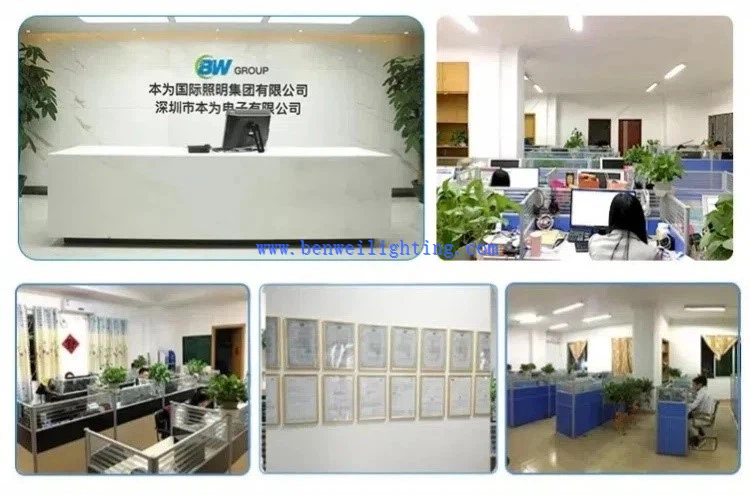
We are happy to have total control over the manufacturing process and the calibre of our products since we have our own facilities. Since we are producers rather than just brokers, we are dedicated to providing our customers with the best pricing. Since we are certain that the price and quality of our products are clear, we invite customers to see our samples first. Our commitment to quality and customer satisfaction drives us to continuously provide top-notch goods.
Our address
3rd Floor, 5th Building, Hebei Industrial Park, Hualian Community, Longhua District, Shenzhen, China





