

Track lighting systems are highly flexible and adjustable lighting solutions widely applied in modern commercial display spaces, residential interior decoration, exhibition halls and studio environments. Different from fixed embedded and surface-mounted lamps, track lights adopt a combined structure of slide tracks and movable lamp heads, which can realize arbitrary angle adjustment and position displacement, so as to form precise directional lighting and key accent lighting for specific areas, exhibits and decorative modeling. With the advantages of flexible layout, strong plasticity and high space utilization rate, track lighting systems have become one of the mainstream functional and decorative integrated lighting equipment.
In the long-term continuous operation process, track lights are easily affected by indoor floating dust, particulate impurities, fiber sediments and environmental moisture. The accumulation of dirt on the track body, lamp holder and bulb surface will reduce the light transmittance and luminous efficiency, resulting in dark light, uneven illumination and weakened accent lighting effect. In addition, long-term dust accumulation on the track circuit contact parts will also cause poor electrical contact, local heat accumulation and potential circuit failure risks, which seriously affect the service life and operational safety of the lighting system. Based on the structural characteristics of track lights and electrical safety specifications, this paper systematically elaborates the standardized disassembly, cleaning and reassembly procedures of track lighting systems, and summarizes scientific long-term maintenance strategies, so as to provide professional technical support for the stable operation and performance maintenance of track lighting equipment.
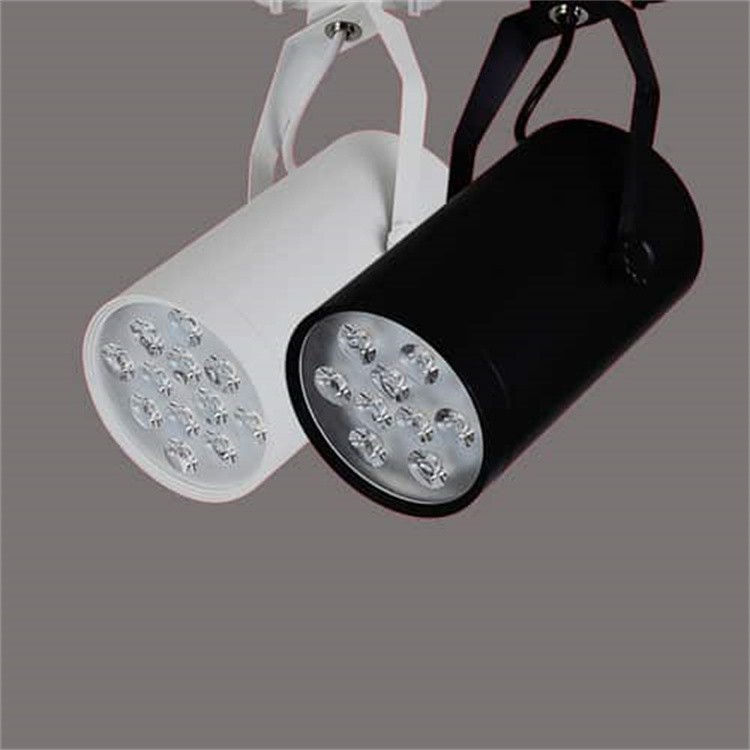
Pre-Cleaning Safety Preparation and Standardized Disassembly Specifications
Track lighting equipment integrates mechanical fixed structure and electrical circuit system. The cleaning operation involves equipment disassembly and component contact. It is necessary to implement strict safety protection and standardized disassembly processes before formal cleaning to avoid electrical safety accidents and mechanical damage to equipment components.
Complete Power Cut and Safety Lockout
Electrical safety protection is the primary core link of track light cleaning and maintenance. Before any equipment contact and disassembly operation, thorough power cut processing must be completed. Operators need to locate the independent circuit breaker of the track lighting loop in the household or commercial distribution box and toggle the switch to the complete off state to cut off the overall power supply of the equipment. For track lighting systems with independent plug power supply, the power plug can be directly pulled out to realize physical power cut.
After the power cut operation, it is necessary to wait for 1 to 2 minutes and use a professional voltage tester to detect the residual voltage of the track circuit and lamp wiring terminals, so as to confirm that there is no residual current in the circuit. This operation can effectively avoid electric shock accidents and circuit short circuit risks caused by residual voltage during disassembly and cleaning, and ensure the whole maintenance process is carried out in a zero-power safe state.
Standard Removal of Lighting Bulbs
After confirming the safety of power cut, the bulb disassembly operation can be carried out. The bulb is a fragile optical component of track lights, which is easy to crack, damage and leave scratches due to external force extrusion and friction during cleaning. Prior disassembly of the bulb can not only avoid component damage in the subsequent track cleaning process, but also realize comprehensive dead-angle-free cleaning of the track chute and contact structure.
In the disassembly process, hold the bulb lamp body stably with clean and dry hands, rotate the bulb counterclockwise slowly and evenly according to the thread specification, and separate the bulb from the lamp base. It is forbidden to apply violent torsion and unilateral force to prevent the bulb from breaking and the lamp base thread from slipping. The disassembled bulbs shall be placed on a clean soft cushion in order to avoid secondary pollution and scratch damage, waiting for subsequent independent cleaning treatment.
Professional Cleaning Process of Track Lighting System Components
The track lighting system is mainly composed of two core cleaning parts: metal conductive track and lighting bulb. The two components have different structural materials and electrical characteristics, so targeted differentiated cleaning processes and tools should be adopted to ensure cleaning effect while protecting equipment structure and electrical performance.
Dust Removal and Cleaning of Track Structure
The track is the load-bearing and conductive core component of the track lighting system, which is mostly made of aluminum alloy metal materials, with built-in conductive copper bars and sliding chutes. The long strip open structure of the track is easy to accumulate floating dust, fiber debris, cobwebs and particulate dirt. Long-term dirt accumulation will block the track sliding chute, affect the free movement of the lamp head, and even cause poor contact between the lamp head conductive terminal and the track copper bar, resulting in lamp flicker and no light failure.
For conventional surface dust and floating dirt, a high-density soft-bristled brush or dry microfiber cloth can be used for overall wiping and sweeping along the track chute direction. For stubborn adhered dirt and deep gap debris accumulated in the track groove, a vacuum cleaner equipped with a soft brush suction head can be used for adsorption cleaning. All track cleaning operations must be kept completely dry. It is forbidden to use wet cloth, water washing and liquid cleaning agents to avoid liquid infiltration into the track conductive structure, which causes oxidation and corrosion of conductive copper bars, circuit short circuit and electrical component damage. After cleaning, check the track sliding smoothness and remove residual sundries to ensure the normal sliding and conductive function of the track.
Dry Cleaning Treatment of Lighting Bulbs
The bulb is the core light-emitting component of the track light, and its surface smoothness and light transmittance directly determine the lighting brightness and light quality. Dust, fingerprints and oil stains attached to the bulb surface will reduce light transmittance, cause light scattering and shadow distortion, and weaken the directional spotlight effect of track lights.
The bulb cleaning must adhere to the pure dry cleaning principle. Use a clean, lint-free microfiber cloth or ultra-soft bristle brush to gently wipe the bulb surface in a circular motion to remove accumulated dust and fine particulate dirt. It is strictly prohibited to use tap water, aqueous cleaning solution, chemical spray detergent and alcohol disinfectant for cleaning. Liquid substances will penetrate into the bulb internal wiring and circuit structure along the thread gap, causing insulation layer damage, circuit aging and internal component burnout. Meanwhile, chemical reagents will corrode the bulb surface coating, resulting in light attenuation and service life reduction. After cleaning, place the bulb in a dry and dust-free environment for standby to ensure the surface is clean, dry and free of residual fiber impurities.
Equipment Reassembly, Inspection and Functional Debugging
After completing the component cleaning work, standardized reassembly and functional debugging are required to ensure the stable installation and normal operation of the track lighting system, eliminate potential installation hidden dangers, and verify the cleaning and maintenance effect.
Standard Component Reassembly
The reassembly operation shall follow the reverse process of disassembly. Take the cleaned dry bulb, align the thread with the track light lamp base, rotate clockwise at a uniform speed and screw it tightly. During reassembly, ensure the bulb is vertically installed in place with firm contact, no loose deviation and thread slipping, so as to guarantee stable electrical conduction between the bulb and the lamp base.
After all bulbs are installed, check the overall matching degree of the lamp head and track structure, adjust the lamp head angle and position to ensure flexible sliding and free angle switching, and confirm that all components are installed in place without dislocation and looseness.
Power Restoration and Functional Test
After confirming that the equipment reassembly is standardized and no sundries are left in the track structure, restore the power supply of the track lighting circuit by closing the circuit breaker or plugging in the power supply. Turn on the lighting switch to test the working state of each track light unit. Observe whether the light is stable and bright, without flicker, dark light and no-light failure. Simulate the lamp head sliding and angle adjustment operation to verify the normal mechanical and electrical functions of the track system, ensuring that the cleaned track light can achieve optimal lighting performance.
Long-Term Scientific Maintenance and Daily Management Specifications
Regular standardized maintenance is the key to maintain the long-term luminous efficiency, stable performance and extended service life of track lighting systems. Reasonable daily maintenance can effectively reduce dirt accumulation, avoid equipment failure caused by poor cleaning, and reduce the frequency of deep maintenance.
Regular Dust Removal Cycle and Operation Standards
It is recommended to carry out comprehensive dry dust removal maintenance for track lighting systems once a week. Use a dry microfiber cloth or soft-bristled brush to wipe the track surface, chute gap and bulb surface, timely remove floating dust and newly accumulated impurities, and avoid long-term stacking of dirt to form stubborn stains. Regular shallow maintenance can reduce the difficulty of deep cleaning, maintain long-term high light transmittance of the equipment, and ensure the stable spotlight effect of track lights.
Prohibition of Hazardous Cleaning Materials
In all cleaning and maintenance operations, corrosive chemical cleaning agents, abrasive cleaning tools and wet washing methods are strictly prohibited. Strong acid and alkali chemical reagents will corrode the track surface anti-rust coating and the bulb optical coating, resulting in shell fading, coating peeling and light attenuation. Abrasive tools will scratch the smooth surface of the track and bulb, affect the appearance and cause light scattering. Adhering to the dry cleaning and mild maintenance principle is an important guarantee to protect the structural performance and appearance of track lighting equipment.
Daily Fault Prevention Management
In daily use, avoid frequent violent collision and arbitrary disassembly of track lights, prevent structural looseness and circuit contact damage. Regularly observe the lighting state of the equipment, and timely clean up dust and hidden dirt once abnormal light dimming and flicker are found. Through standardized daily management, the operational safety and lighting performance of the track lighting system can be maintained for a long time.
Conclusion
Track lighting system is a precise electromechanical integrated lighting equipment, and scientific standardized cleaning and maintenance are important links to ensure its lighting effect, operational safety and service life. The complete maintenance process includes pre-operation power cut safety protection, standardized bulb disassembly, dry cleaning of track and bulb components, equipment reassembly and functional debugging, as well as long-term cyclic daily maintenance. Adhering to dry cleaning operation specifications and avoiding hazardous chemical materials can effectively protect the electrical structure and optical performance of track lights.
Reasonable regular maintenance can not only maintain the high brightness and precise directional lighting effect of track lighting systems, optimize indoor lighting quality, but also effectively avoid electrical faults and safety hazards caused by dust accumulation and poor contact, reduce equipment loss and maintenance costs. Standardized cleaning and maintenance management enables track lighting equipment to maintain stable and efficient working performance for a long time, and continuously provide high-quality lighting services for commercial and residential indoor spaces.

How To Cooperate With Us?
Having its own factory gives our firm complete control over the production process and the quality of our goods, which we take great pride in. We are manufacturers, not only brokers, committed to offering our clients the lowest costs. We invite consumers to evaluate our samples first since we are certain that the cost and quality of our items are evident. Our dedication to excellence and client happiness motivates us to consistently provide superior products.
Our address3rd Floor, 5th Building, Hebei Industrial Park, Hualian Community, Longhua District, Shenzhen, China





