

Microbial contamination including pathogenic bacteria, viruses, and fungi in living and working environments is a key factor inducing infectious diseases and reducing environmental health quality. Traditional environmental disinfection methods such as chemical reagent spraying and manual wiping have obvious limitations, including residual chemical pollution, incomplete disinfection coverage, and low efficiency for continuous microbial inhibition. Ultraviolet (UV) disinfection technology, as a physical sterilization method with high efficiency, no secondary pollution and convenient operation, has been widely applied in public health venues, residential spaces, medical institutions and industrial environments in recent years. UV disinfection lights achieve microbial inactivation by destroying the nucleic acid structure of microorganisms, which can effectively block the proliferation and transmission of pathogenic microorganisms. However, the disinfection efficacy, application frequency, safety risks and applicable scenarios of UV lights vary significantly with different UV bands. A systematic exploration of the classification mechanism, application frequency criteria, operational specifications and supporting disinfection strategies of UV disinfection lights is of great significance for standardizing environmental disinfection operations and building long-term stable germ-free environments. This paper comprehensively discusses the key technical points and practical application norms of UV disinfection lights for environmental germ-free maintenance based on the classification characteristics and sterilization principles of different UV bands.
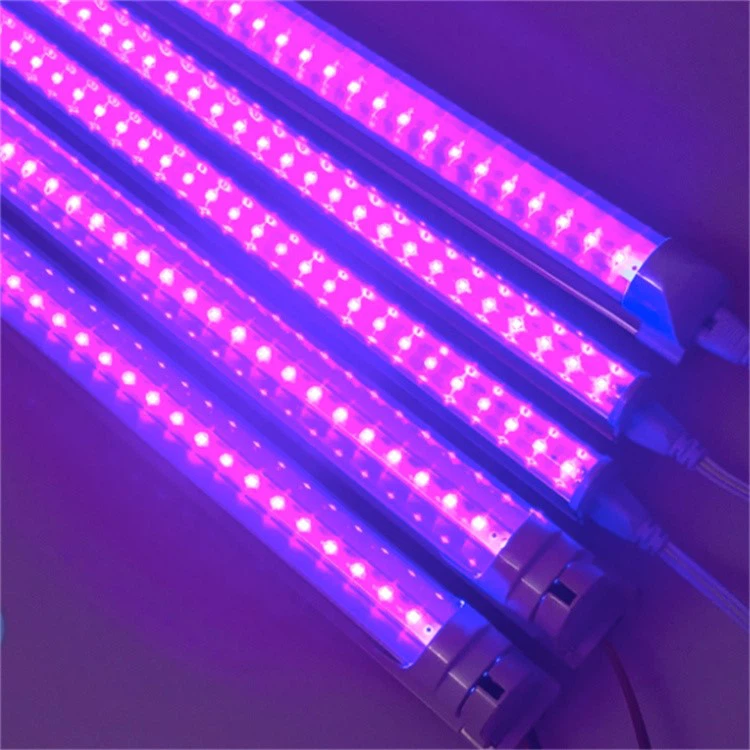
Core Influencing Factors of UV Disinfection Light Application Frequency
The reasonable application frequency of UV disinfection lights is not fixed, but is comprehensively determined by environmental attributes, pollution degree, personnel and activity characteristics, and equipment parameters. Blindly increasing or reducing the use frequency will either cause safety hazards and equipment loss or lead to insufficient disinfection effect and residual microbial contamination. The core influencing factors are refined and analyzed as follows.
Environmental Space Scale and Structural Characteristics
The spatial volume, internal structure and ventilation condition of the disinfection environment directly affect the diffusion range of microorganisms and the coverage efficiency of UV disinfection. For small closed spaces such as family bedrooms, office single rooms and small commodity storage rooms, the microbial accumulation speed is slow, and the UV light can achieve full-space coverage in a short time, so the application frequency can be appropriately reduced. For large open or semi-open spaces including hospital wards, school classrooms, office halls and shopping mall public areas, the space has large fluidity of air and frequent personnel flow, microorganisms are easy to gather and spread in dead corners such as ground gaps, equipment surfaces and air layers, which requires higher disinfection frequency and longer single irradiation time to ensure comprehensive sterilization coverage. In addition, spaces with complex structures such as multi-cornered corridors and equipment-intensive workshops have more disinfection blind areas, and it is necessary to appropriately increase the number of UV irradiation times and adjust the irradiation angle to make up for the insufficient disinfection coverage.
Environmental Microbial Contamination Risk Level
According to the types of resident microorganisms, contamination renewal speed and disease transmission risk, environmental spaces can be divided into high-risk, medium-risk and low-risk disinfection scenarios, which correspond to different UV lamp application frequency standards. High-risk environments refer to venues with dense personnel, high pathogenic microorganism concentration and easy cross-infection, including general hospitals, specialized infectious disease hospitals, nursing homes, kindergartens and school teaching areas. These venues have continuous microbial contamination renewal, and daily UV disinfection is a basic guarantee to control microbial density, with a recommended daily irradiation frequency of 1-3 times according to personnel activity intensity. Medium-risk environments include daily office spaces, commercial catering areas and public transportation stations, where the microbial contamination degree is moderate, and regular disinfection 2-3 times a week can meet germ-free maintenance requirements. Low-risk environments such as private residential spaces and independent closed offices have low personnel mobility and slow microbial renewal, and weekly targeted UV disinfection can effectively maintain environmental hygiene.
Personnel and Living Creature Activity Density
The number of indoor residents, staff and domestic animals is an important factor affecting microbial proliferation efficiency. Human body metabolism, respiratory exhalation and surface contact will continuously release bacteria and microorganisms into the environment, and animal hair, excrement and skin metabolism will further accelerate microbial accumulation. Spaces with high-density personnel and animal activities have faster microbial reproduction speed and higher diversity of contaminating microorganisms, so it is necessary to improve the application frequency of UV disinfection lights to inhibit microbial proliferation. On the contrary, for vacant spaces with long-term no personnel and animal activities, the microbial contamination degree is extremely low, and intermittent low-frequency disinfection is sufficient to maintain environmental cleanliness.
Classification, Sterilization Mechanism and Scenario Adaptability of UV LED Lights
Ultraviolet light involved in environmental disinfection and industrial application is mainly divided into three bands: UVA (315–400 nm), UVB (280–315 nm) and UVC (200–280 nm). Different band UV LEDs have differences in photon energy, material penetration ability, microbial inactivation efficiency and biological safety, resulting in completely different application directions and disinfection values. Among them, UVC is the core band for environmental germ-free disinfection, while UVA and UVB are mainly applied in industrial manufacturing, medical auxiliary treatment and plant cultivation, with limited auxiliary disinfection effects. The detailed mechanism and application specifications of each band are analyzed as follows.
UVA LEDs: Structural Characteristics and Diversified Application Scenarios
UVA LEDs operate in the wavelength range of 315 nm to 400 nm, belonging to long-wave ultraviolet light. Compared with UVB and UVC, UVA has lower single-photon energy, which enables it to penetrate the surface of most polymer materials and organic substances without causing instantaneous structural damage to materials and biological tissues. Its photon energy cannot directly destroy the nucleic acid structure of microorganisms, so the direct sterilization and disinfection efficiency is extremely low, and it cannot be used as a core equipment for environmental germ-free treatment. However, UVA can excite fluorescence reaction of specific organic substances and microbial metabolites, and has stable photochemical reaction characteristics, which makes it widely used in industrial processing, detection and auxiliary medical fields.
In industrial manufacturing, UVA LEDs are the core light source for resin, ink and adhesive curing. Through precise photopolymerization reaction, UVA light can quickly cure photosensitive materials such as 3D printing resin, printing ink and industrial bonding adhesive. Compared with traditional thermal curing, UVA curing produces less surface heat stress, avoids material deformation and damage, and improves curing efficiency and product yield, which is widely used in precision manufacturing, printing and packaging industries. In forensic detection and security inspection fields, UVA LEDs rely on fluorescence excitation technology to identify micro cracks on material surfaces, residual biological materials such as blood stains and body fluids, and counterfeit features of counterfeit banknotes and certificates, providing accurate technical support for trace evidence detection and security verification.
In horticultural research, UVA light can regulate the secondary metabolite synthesis and stress response mechanism of plants. Appropriate UVA irradiation can improve the stress resistance of plants and enrich the active nutrient components of crops, so it is often added to plant growth supplementary light sources for scientific research and precision planting experiments. In medical auxiliary treatment, under standardized controlled environment, UVA LED phototherapy equipment is widely used in the clinical treatment of psoriasis, chronic dermatitis and other skin diseases, achieving safe and non-invasive auxiliary treatment through regulated light irradiation.
UVB LEDs: Biological Characteristics and Niche Professional Applications
UVB LEDs are medium-wave ultraviolet light sources with a working wavelength of 280 nm to 315 nm, and their photon energy is between UVA and UVC. UVB has significant biological activity, which can act on the epidermal tissue of organisms, regulate plant physiological metabolism, and promote human skin to synthesize vitamin D. Different from UVC's strong microbial inactivation ability, UVB has weak damage effect on microbial nucleic acids, so it cannot achieve efficient environmental disinfection. Meanwhile, long-term excessive UVB irradiation will cause certain damage to human skin and mucous membranes, so its application scenarios are limited to professional and standardized controlled environments, belonging to niche special ultraviolet light sources.
In medical phototherapy, UVB LED equipment has become a mainstream clinical auxiliary treatment device for skin diseases. It is widely used in the treatment of vitiligo, psoriasis, eczema and other intractable skin diseases. Compared with traditional mercury lamp UV equipment, UVB LED devices have the advantages of mercury-free environmental protection, instant start and stop, small volume and adjustable light intensity, which can realize precise quantitative irradiation and improve the safety and effectiveness of clinical treatment. In agricultural planting, moderate UVB irradiation can activate the stress resistance mechanism of plants, significantly improve the synthesis efficiency of plant secondary metabolites such as anthocyanins and flavonoids, enhance plant disease resistance and stress resistance, and improve the nutritional value and ornamental value of crops and ornamental plants.
In scientific laboratory research, UVB LEDs are used as precise light source equipment for DNA analysis, protein characterization and microbial physiological mechanism research. The stable wavelength and adjustable irradiation intensity of UVB LEDs can provide accurate ultraviolet stimulation conditions for biological experiments, ensuring the repeatability and accuracy of experimental data.
UVC LEDs: Sterilization Mechanism and Core Disinfection Application
UVC LEDs are short-wave ultraviolet light sources with a wavelength range of 200 nm to 280 nm, with the highest photon energy among the three UV bands. It is the only UV band with efficient and rapid microbial inactivation ability, known as the core powerhouse of ultraviolet disinfection technology. The core sterilization mechanism is that high-energy UVC photons can directly destroy the molecular structure of microbial DNA and RNA, break the nucleic acid chain of bacteria, viruses and fungi, inhibit their replication, transcription and proliferation functions, and finally lead to permanent inactivation of microorganisms. Relevant experimental studies have verified that qualified UVC LED disinfection equipment can achieve a microbial inactivation rate of up to 99.9% in a few minutes of targeted irradiation, which can efficiently remove pathogenic microorganisms on environmental surfaces and in air.
Compared with traditional mercury-based UV disinfection lamps, UVC LEDs have the advantages of mercury-free environmental protection, low energy consumption, fast start-up, long service life and adjustable irradiation intensity, and are gradually replacing traditional mercury lamps as the mainstream equipment for environmental disinfection, water purification and article sterilization. However, high-energy UVC light has strong irritation and damage to human skin and eye conjunctiva, and short-term exposure will cause skin redness and eye inflammation, while long-term excessive exposure will cause irreversible tissue damage, so UVC disinfection operation must be carried out in an unmanned and animal-free environment.
In water purification treatment, portable and fixed UVC LED water purifiers realize high-efficiency inactivation of bacteria, viruses and protozoa in water body, achieving significant logarithmic reduction of microbial pollutants. This equipment abandons mercury-containing structures of traditional water disinfection equipment, with the characteristics of energy saving, environmental protection and convenient maintenance, and is widely used in domestic drinking water purification, portable outdoor water treatment and industrial circulating water sterilization. In air and surface sterilization, UVC LED modules are embedded in HVAC ventilation systems, medical high-precision sterilizers, and civil disinfection equipment such as mobile phone disinfectors and electric toothbrush sanitizers, realizing all-round sterilization of indoor circulating air and high-frequency contact surfaces.
In food safety protection, UVC LED irradiation technology is applied to the surface sterilization of fresh fruits, vegetables and packaged food. By reducing the surface microbial load of food and packaging materials, it effectively inhibits the growth of spoilage bacteria and pathogenic bacteria, prolongs the shelf life of fresh food, and reduces the risk of food-borne diseases.
Standardized Operation Specifications for UVC Disinfection Lamps
As the core equipment for environmental germ-free maintenance, UVC disinfection lamps have strict operational standardization requirements. Irradiation duration, irradiation distance, equipment intensity and safety protection measures will directly affect the final disinfection effect and environmental safety. In practical application, the operation must be standardized in accordance with the manufacturer's professional specifications and industry technical standards.
Irradiation Duration and Intensity Matching Criteria
The effective disinfection duration of UVC lamps is determined by two core parameters: lamp power intensity and vertical distance from the light source to the disinfection surface. High-power high-intensity UVC equipment can achieve 99.9% microbial inactivation within 3-5 minutes of short-distance irradiation (less than 1 meter). For low-power household UVC lamps or long-distance disinfection scenarios (1-3 meters), the single effective irradiation duration needs to be extended to 15-30 minutes to make up for the attenuation of light intensity and ensure sufficient photon energy to destroy microbial nucleic acids. For large-space air disinfection, it is necessary to extend the irradiation time appropriately according to the space volume to ensure that the circulating air fully contacts with UVC light source and complete comprehensive sterilization.
Safety Protection and Intelligent Control Specifications
All UVC disinfection operations must adhere to the unmanned operation principle, and personnel and pets must completely leave the disinfection space before equipment startup. Most high-standard UVC disinfection lamps are equipped with intelligent automatic shutdown devices, which can realize timed shutdown, human body induction power-off and over-irradiation protection functions, effectively avoiding safety accidents caused by human misoperation and excessive UV irradiation. In public medical and commercial scenarios, it is necessary to set up obvious UV disinfection warning signs, and equip the equipment with remote control and timing start-stop functions to realize standardized and safe unmanned disinfection operation.
Comprehensive Environmental Germ-Free Maintenance Strategy
UV disinfection light is an efficient auxiliary equipment for environmental sterilization, but single UV irradiation cannot achieve long-term stable germ-free effect. To build a clean and healthy microbial-free environment, it is necessary to form a comprehensive disinfection system combining physical UV sterilization, manual cleaning and personal hygiene management.
Regular Surface Cleaning and Chemical Sanitization
Daily mechanical cleaning such as wiping, sweeping and vacuuming can remove surface dust, organic residues and most floating microorganisms, which is the basic premise of UV disinfection. For high-frequency contact surfaces such as door handles, switch panels, table tops and equipment buttons, regular targeted sanitization and disinfection with food-grade and medical-grade disinfectants can effectively reduce microbial adhesion. The combination of chemical sanitization and UV physical sterilization can make up for the respective limitations of single disinfection method, realize deep removal of residual microorganisms, and avoid microbial regeneration and proliferation caused by organic residue coverage.
Personal Hygiene and Public Health Management
Human body is the main carrier and transmission medium of environmental microorganisms. Maintaining good personal hygiene habits is the key link to block microbial transmission. Frequent hand washing with standardized procedures can effectively remove pathogenic bacteria on hand surfaces and avoid cross-contamination of environmental surfaces. In high-risk public environments, standardized wearing of masks can block the spread of respiratory microorganisms, reduce the concentration of airborne bacteria and viruses, and cooperate with UV air disinfection to improve the overall environmental hygiene level. In addition, regular ventilation of indoor spaces can accelerate the discharge of indoor floating microorganisms and dirty air, and further optimize the environmental microbial environment.
Conclusion
The application frequency of UV disinfection lights for environmental germ-free maintenance is dynamically adjusted according to environmental risk level, spatial characteristics, personnel activity density and equipment parameters. High-risk public venues such as medical institutions and educational venues are suitable for daily UVC disinfection, while residential and low-density office spaces can adopt intermittent low-frequency disinfection modes. Among the three mainstream UV bands, UVC LED is the only efficient sterilization light source, which can realize rapid and efficient inactivation of pathogenic microorganisms, while UVA and UVB are mainly applied in industrial processing, medical auxiliary treatment and scientific research, with limited disinfection application value. In the application process of UVC disinfection equipment, it is necessary to strictly abide by the manufacturer's operation specifications, match reasonable irradiation duration and distance, and implement strict safety protection measures.
Single UV physical disinfection has certain limitations. Only by combining standardized UV disinfection operation, daily surface cleaning and sanitization, and standardized personal hygiene management can we build a full-dimensional and long-term stable environmental germ-free system. Proactive and standardized environmental disinfection and health management measures can effectively reduce the risk of microbial transmission and infectious disease occurrence, and provide a safe and healthy living and working environment for human beings.
How To Cooperate With Us?
Having its own factory gives our firm complete control over the production process and the quality of our goods, which we take great pride in. We are manufacturers, not only brokers, committed to offering our clients the lowest costs. We invite consumers to evaluate our samples first since we are certain that the cost and quality of our items are evident. Our dedication to excellence and client happiness motivates us to consistently provide superior products.
Our address
3rd Floor, 5th Building, Hebei Industrial Park, Hualian Community, Longhua District, Shenzhen, China





