

Introduction: Common Transportation Damage Pain Points of Traditional Flood Lights
Main Damage Forms of Flood Lights in Logistics
In global cross-border transportation, including sea freight, land freight, and air freight, LED flood lights will face multiple uncertain physical damages throughout loading and unloading, long-distance vibration, stacking extrusion, and accidental collision. Different from ordinary daily consumer goods, flood lights have a typical composite structure of "metal shell + fragile optical lens + precision internal circuit". Among them, the four corners of the lamp body are the stress concentration points of the whole product, and the transparent PC or tempered glass lens belongs to vulnerable parts with low impact resistance. According to logistics industry data, more than 70% of flood light product damage in bulk transportation occurs at the corner collision and lens cracking, including edge chipping, lens breakage, shell deformation, and internal chip displacement caused by external force impact.
In addition, long-term vehicle vibration and container stacking pressure will cause continuous friction and subtle extrusion on the corners of unpackaged or simply packaged flood lights. Slight damage will lead to lens scratch and light transmittance reduction, while severe damage will directly cause product scrapping, bringing huge economic losses to suppliers and buyers. For cross-border e-commerce and wholesale customers, transportation damage will also lead to delayed delivery, customer complaints, and increased after-sales replacement costs, seriously affecting market competitiveness.
Defects of Traditional Flood Light Structural Design
Most low and medium-end flood lights on the market adopt a flat right-angle border design without any corner protection structure. This traditional integrated border design has two fatal defects in transportation protection. First, the right-angle corners are completely exposed without buffer space, and all external impact force will directly act on the lamp body and lens frame, forming instantaneous high local pressure that exceeds the bearing limit of the lens material. Second, the integrated border has no independent energy dissipation structure. After being impacted, the vibration force will be transmitted to the internal aluminum heat sink and LED light board, causing virtual welding of circuit components and hidden faults such as light decay and flicker in subsequent use.
Although some manufacturers reduce damage rates by thickening packaging foam and cartons, external packaging protection has obvious limitations. Foam packaging is easy to deform and age after long-distance extrusion, and cannot resist strong collision impact during mechanical loading and unloading. Moreover, excessive packaging will increase overall product volume and weight, raising logistics costs for bulk orders, which is not conducive to large-scale cross-border sales.
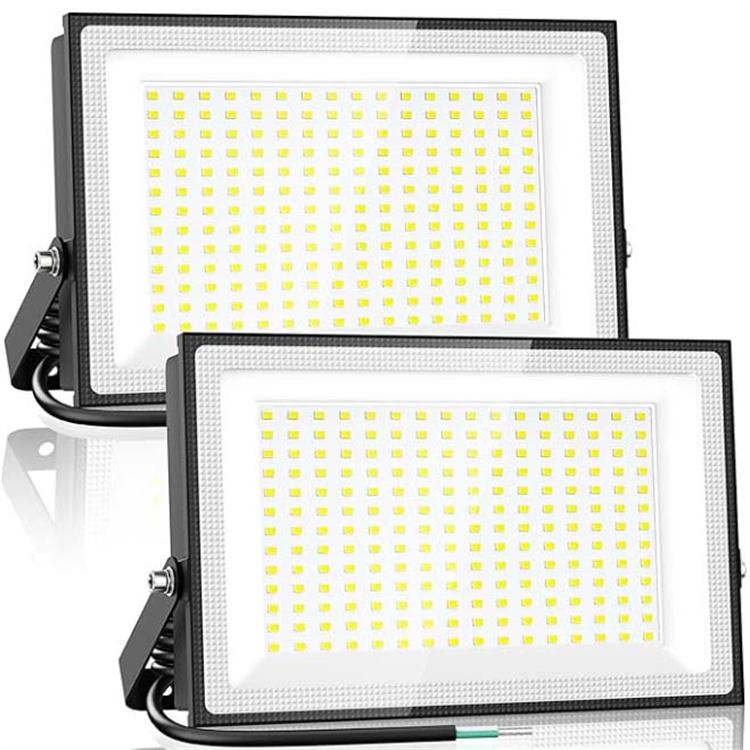
Structural Protection Principle of Flood Light Protective Rim Angles
Core Mechanical Energy Dissipation Mechanism
The protective rim angle of the optimized flood light is an independent reinforced buffer structure designed based on structural mechanics and impact energy dissipation principles. Different from the traditional integrated right-angle border, the four-corner protective rim angle forms a raised buffer protection zone around the lamp body. Its core working principle is to change the force-bearing mode of the product during collision and extrusion. When the flood light is impacted by external force during transportation, the raised rim angle will contact the external object first, and the buffer structure will absorb most of the instantaneous impact energy through slight structural deformation.
This energy dissipation mechanism avoids direct contact between the fragile lens and the external hard object, and converts the concentrated local impact force into uniform dispersed force through the rim angle structure. The overall stress of the lamp body is balanced instantly, which fundamentally reduces the stress concentration of the lens and the lamp frame. Compared with ordinary right-angle structures, the protective rim angle can reduce the instantaneous impact pressure on the lens by more than 60%, greatly improving the impact resistance of the whole machine.
Overall Structural Stability Enhancement
In addition to the buffer energy dissipation function, the four-corner protective rim angle also optimizes the overall structural stability of the flood light. The independent reinforced rim angle forms a stable square support structure at the four stress points of the lamp body. During container stacking and pallet transportation, the rim angle bears the main stacking pressure, which effectively supports the lamp body space and prevents the upper and lower layers of products from extruding and deforming the lens and the thin lamp shell.
For long-distance vibrating transportation, the rigid connection between the rim angle and the lamp frame enhances the overall torsional resistance of the product, avoids the loosening of the internal fixing screws and the displacement of the light board caused by continuous vibration, and eliminates hidden quality dangers caused by logistics vibration. This structural reinforcement design makes the flood light have excellent anti-compression and anti-vibration capabilities without increasing the weight of the whole machine, realizing lightweight and high-strength protection.
Practical Value of Protective Rim Angles in Reducing Transportation Breakage Rates
Significantly Reduce Visible Damage of Vulnerable Parts
The most intuitive value of protective rim angles is to solve the problem of easy breakage of flood light lenses and edge frames. In actual bulk transportation tests, flood lights equipped with four-corner protective rim angles have almost zero lens cracking and edge chipping damage, while traditional right-angle flood lights have a damage rate of 8%–15% in the same transportation environment. The raised rim angle completely wraps the fragile edge of the lens, isolating friction and collision between products, and avoiding lens scratches, cracks, and edge wear during loading, unloading, and transportation.
At the same time, the protective rim angle can prevent the paint peeling and metal deformation of the lamp shell corners. The surface anti-corrosion coating of the lamp body is completely protected, maintaining the intact appearance of the product after long-distance transportation, ensuring that the product can be directly sold and installed without secondary maintenance, and greatly improving the product yield of logistics links.
Eliminate Hidden Logistics Damage and Reduce After-Sales Costs
Most traditional flood light transportation damages are not only visible surface breakages but also potential internal hidden damages that are difficult to detect. Slight vibration and impact will cause displacement of internal LED chips, virtual welding of constant current driver circuits, and deformation of heat sink components. These hidden problems will not appear immediately after transportation, but will cause light flicker, rapid light decay, and even short-circuit burnout after a period of use, bringing high after-sales maintenance costs to merchants.
The protective rim angle effectively weakens the vibration and impact force transmitted to the interior of the lamp body, protects the stability of the internal precision electronic components, and avoids hidden structural damage. For cross-border wholesale customers, this design can reduce the after-sales failure rate of products by more than 50%, save a lot of after-sales labor and logistics costs, and improve customer repurchase rate and brand trust.
Optimize Packaging Adaptability and Reduce Logistics Costs
Due to the poor protection performance of traditional right-angle flood lights, merchants often need to use thick foam, multi-layer cartons, and independent packaging for protection, which greatly increases packaging volume and logistics weight. The optimized protective rim angle realizes structural self-protection of the product itself, which can reduce the dependence on excessive packaging materials. Under the premise of ensuring transportation safety, it can simplify the packaging process, reduce packaging volume by about 10%–15%, and effectively reduce the unit logistics cost of bulk orders.
In addition, the regular buffer structure formed by the four-corner rim angle makes the product stacking more neat and stable, improves the space utilization rate of containers and pallets, and can load more products in a single transportation, further reducing the average transportation cost of a single product. This advantage is particularly prominent in large-scale cross-border bulk transportation, bringing substantial cost-saving benefits to distributors.
Application Advantages of Our Upgraded Flood Light Protective Rim Angle Design
Integrated Reinforced Molding Process
Our industrial-grade LED flood light adopts an integrated die-casting molding protective rim angle structure, which is seamlessly connected with the lamp body without splicing gaps. Compared with the adhesive auxiliary protective corners of ordinary products, the integrated molding process has higher structural strength, is not easy to fall off and deform during long-term transportation and use, and has durable protection performance. The rim angle adopts high-strength engineering plastic and metal composite material, which has both toughness and rigidity, can resist strong impact and extrusion, and is suitable for all kinds of harsh long-distance transportation scenarios.
Multi-Scenario Anti-Damage Compatibility
This protective rim angle design is compatible with sea freight, land freight, air freight and other global transportation modes, and can adapt to violent mechanical loading and unloading, long-term sea transportation humidity and vibration, highway bump vibration and other complex logistics environments. At the same time, the anti-collision and anti-friction performance of the rim angle also protects the product during factory turnover and on-site construction, reducing the damage rate in the whole process from production, transportation to installation.
No Impact on Product Performance and Installation
The optimized protective rim angle only strengthens the structural protection of the product corners, and does not change the original lighting angle, heat dissipation performance and installation mode of the flood light. It does not block the light output of the lens, nor does it affect the heat dissipation efficiency of the aluminum heat sink. The reserved installation space completely matches the traditional installation brackets and scenarios, realizing zero adaptation cost upgrade while improving transportation protection performance.
Conclusion
Protective rim angles have become an indispensable optimized structural design for high-quality industrial-grade LED flood lights, solving the industry pain point of high transportation breakage rate caused by unreasonable traditional right-angle structure. Through the core principles of buffer energy dissipation, force dispersion and structural reinforcement, the protective rim angle effectively reduces the visible breakage rate and hidden failure rate of flood lights in long-distance bulk transportation, greatly reduces customer logistics costs and after-sales maintenance costs, and improves product market competitiveness.
For global lighting distributors, engineering contractors and cross-border sellers, flood lights with independent protective rim angle structures are more cost-effective and stable long-term lighting solutions. It not only ensures the intact rate of product transportation, but also guarantees the long-term stable working performance of the product, realizing dual value improvement of product quality and economic benefit.
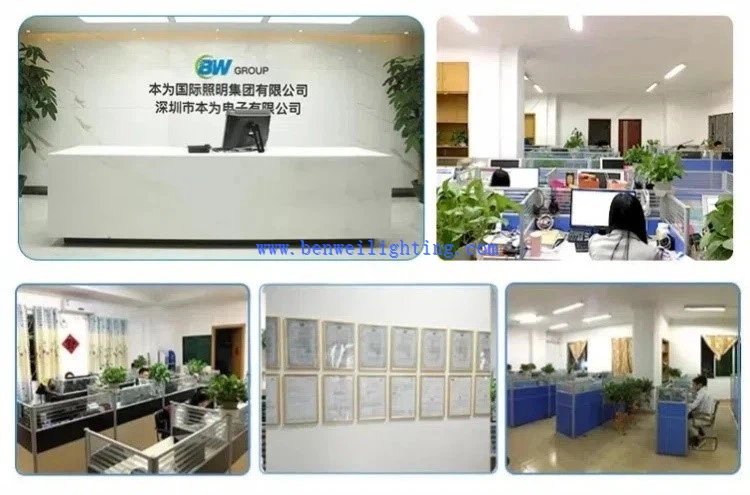
How To Cooperate With Us?
We take great satisfaction in having total control over the manufacturing process and the quality of our products thanks to our own facility. As producers rather than just brokers, we are dedicated to providing our customers with the best prices. Since we are certain that the price and quality of our products are clear, we encourage customers to assess our samples first. Our commitment to quality and customer satisfaction drives us to continuously provide top-notch goods.
Our address
3rd Floor, 5th Building, Hebei Industrial Park, Hualian Community, Longhua District, Shenzhen, China





