

Introduction: The Hazards and Root Causes of Workshop Dark Corners
Practical Hazards of Unbalanced Workshop Lighting
Professional workshops, including mechanical processing workshops, electronic assembly workshops, automobile maintenance workshops, and storage sorting workshops, have strict requirements for lighting uniformity, illuminance stability, and full-space coverage. In actual operation, most workshops face common lighting problems such as dark wall corners, shadow dead zones under equipment, insufficient light on workbench edges, and layered brightness differences in overhead spaces. Long-term operation in uneven lighting environments will bring multiple negative impacts. For precision processing workshops, local dark areas lead to blurred observation of tiny parts and processing lines, directly reducing product yield and increasing defective rate. For manual assembly and maintenance work, frequent switching between bright and dark vision areas causes visual fatigue, dizziness, and reduced work concentration, significantly lowering overall work efficiency. More importantly, dark corners in workshops easily hide equipment faults, scattered sundries, and potential safety risks such as line aging, greatly improving the probability of operational accidents and bringing hidden dangers to enterprise production safety. In addition, uneven lighting forces workers to adjust working postures frequently or rely on auxiliary portable lights, which increases unnecessary operational costs and affects standardized workshop management.
Core Reasons for Dark Corner Formation in Traditional Lighting
The fundamental cause of workshop dark corners lies in the inherent optical defects of traditional lighting fixtures and unreasonable light distribution design. First, most traditional fluorescent tubes and ordinary LED linear tubes adopt a narrow beam angle design of 120° to 180°. The light energy is highly concentrated in the central vertical area of the lamp body, and the light attenuation speed at the edge and side is extremely fast, resulting in insufficient illuminance in the peripheral coverage area and forming obvious dark areas at workshop corners and equipment gaps. Second, traditional lamp bodies have poor light diffusivity. The light is direct and concentrated, and it is easy to form dense shadows when blocked by equipment, workpieces, and human bodies, which cannot be naturally filled and eliminated. Third, the structural design of traditional tubes limits the light emission range. Most single-sided light-emitting tubes cannot realize omnidirectional light output, and the top and side light output is blocked by the lamp shell and mounting bracket, further reducing the effective lighting coverage. Finally, the low light transmittance of traditional lampshades and inconsistent chip luminous uniformity lead to local bright and dark alternation, aggravating the unbalanced lighting effect of the whole workshop. These inherent defects make traditional lighting unable to adapt to the large-space and multi-obstacle lighting characteristics of workshops, and dark corners become an unsolved persistent problem.

Technical Defects of Traditional Workshop Lighting Fixtures
Limitations of Beam Angle Design
Beam angle is the core parameter determining the lighting coverage range of linear lamps. Traditional workshop LED tubes and fluorescent tubes are limited by single-sided light-emitting structure and ordinary light distribution lens technology, with a beam angle generally between 120° and 180°. This narrow-angle light distribution mode can only form a strip high-brightness area directly below the lamp body. When the lamp spacing is fixed, the overlapping range of light between adjacent lamps is small, and the corner areas away from the lamp center cannot obtain effective light supplement. For large-span workshops with wide space and dense equipment arrangement, the narrow beam angle will lead to a large number of lighting blind zones between walls, equipment intervals, and workbench edges. Even if the number of lamps is increased to improve local brightness, it cannot fundamentally solve the problem of uneven light distribution, but will cause excessive local illuminance, serious light waste, and increased energy consumption cost.
Defects of Light Diffusion and Luminous Uniformity
Most traditional linear lighting products use low-transmittance ordinary plastic lampshades or bare board light emission design. The low-quality lampshade has poor light diffusion performance, which cannot scatter the light evenly, resulting in obvious LED lamp bead spots and harsh glare. The bare board light emission mode makes the light highly directional, and once blocked by any obstacle, it will form clear and dark shadows that are difficult to eliminate. In addition, traditional driving solutions have poor current stability, resulting in inconsistent luminous brightness of lamp beads in different areas of the tube. Local light decay is fast, and the long-term use process will gradually form partial dark areas of the lamp body, further destroying the overall lighting uniformity of the workshop. These defects determine that traditional lighting fixtures can only achieve local lighting, not full-space uniform lighting, and dark corners are inevitable.
Comprehensive Cost Loss Caused by Lighting Defects
The dark corner problem of traditional workshop lighting brings continuous economic cost loss to enterprises. In order to make up for the insufficient brightness of dark areas, enterprises often need to increase the number of auxiliary lights, resulting in increased initial procurement costs and later electricity bills. The service life of traditional fluorescent tubes and ordinary LED tubes is short, with serious light decay. The lamps need to be replaced frequently, which increases labor maintenance costs and equipment replacement costs. At the same time, the product defective rate and rework rate increased by poor lighting, as well as the efficiency loss caused by visual fatigue of workers, form invisible economic loss. In the long run, the comprehensive operating cost of traditional defective lighting is far higher than the cost of adopting high-performance uniform lighting fixtures.
Core Advantages of 320° Beam T8 LED Tube in Eliminating Workshop Dark Corners
320° Ultra-Wide Beam Angle: Omnidirectional Light Coverage Without Blind Zones
Different from the narrow-angle design of traditional lamps, this professional T8 aluminum-plastic LED tube adopts a customized 320° ultra-wide beam angle optical design, which breaks through the limitation of single-sided light emission of traditional linear lamps. The lamp body realizes large-angle light output in almost all directions, retaining only a tiny dead angle at the top heat dissipation area, which does not affect the actual lighting effect. The 320° ultra-wide light distribution can form a large-area uniform light coverage surface, effectively covering workshop corners, equipment gaps, workbench edges, and other easily shadowed areas that cannot be covered by traditional lamps. The ultra-wide beam angle makes the light overlap range between adjacent lamps larger and more uniform, completely eliminating the layered dark areas caused by insufficient light overlap. Whether it is high-ceiling large-space workshops or compact multi-equipment small and medium-sized workshops, the 320° full-angle light output can realize seamless lighting coverage from the center to the periphery, fundamentally solving the workshop dark corner problem.
High-Transmittance Frosted PC Diffuser: Uniform Light Fills Shadow Zones
This T8 LED tube is equipped with high-grade frosted PC diffuser, with a light transmittance rate as high as 90%. Compared with ordinary low-transmittance lampshades on the market, it has higher luminous efficiency and better light diffusion performance. The professional frosting process can uniformly scatter the concentrated light emitted by SMD2835 high-brightness lamp beads, eliminate lamp bead spots and harsh glare, and form soft and uniform surface light source lighting. The scattered light has strong shadow filling ability. When blocked by workshop equipment, workpieces, and human bodies, the diffused light can naturally fill the shadow gaps, avoid the formation of hard dark shadows, and realize integrated uniform brightness of the whole space. This optical design perfectly adapts to the complex lighting environment of workshops with many obstacles, ensuring that every corner of the workshop obtains stable and consistent illuminance.
High-Precision Light Distribution Design: Optimize Workshop Light Uniformity
The product adopts industrial-grade photometric simulation calibration design, with uniform arrangement of high-density SMD2835 lamp beads, consistent luminous flux of each lamp bead, and no local dimming or brightness difference. Combined with the half-aluminum and half-plastic integrated structure, the lamp body has stable light emission and no light deviation. The ultra-wide beam angle matches the professional light distribution curve, which can effectively improve the space illuminance uniformity of the workshop, increase the peripheral illuminance value by more than 40% compared with traditional lamps, and reduce the overall brightness difference of the space to less than 10%. After actual workshop verification, under the same lamp spacing and installation height, the 320° beam T8 LED tube can make the workshop corner illuminance reach the standard working lighting requirement of 500-750 lux, completely solving the problem of insufficient peripheral brightness and realizing real full-space standardized lighting.
Auxiliary Performance Advantages to Stabilize Workshop Lighting Effect
Ultra-Low Light Decay and Long Service Life: Long-Term Uniform Lighting
In addition to solving dark corners fundamentally, this T8 LED tube has excellent long-term stable lighting performance. It adopts high-quality aluminum alloy heat dissipation structure, which efficiently conducts the heat generated by lamp beads and drivers, reduces the operating temperature of the lamp body, and avoids luminous attenuation and brightness drop caused by high temperature. The product has an ultra-long service life of 50,000 hours, with a light decay rate of less than 5% after 1,000 hours of operation and only 18% after 30,000 hours. Compared with traditional lamps with fast light decay and easy local dimming, it can maintain long-term consistent luminous brightness, avoid new dark areas caused by lamp aging, and ensure the long-term stability of workshop full-space uniform lighting.
Wide Voltage Stability and Full Protection: Adapt to Complex Workshop Environment
The built-in IC constant-current driver supports AC 85-265V universal wide voltage input, which can adapt to unstable power grid environments in different regions and avoid brightness fluctuation and local darkening caused by voltage changes. The lamp body has IP40 dustproof protection grade, which can effectively block workshop floating dust, particle sundries, and fiber impurities, prevent internal circuit blockage and lamp bead pollution from affecting light emission, and ensure long-term stable light output. At the same time, it has over-current, over-voltage, short-circuit and surge protection functions, with low failure rate and strong environmental adaptability, suitable for all kinds of indoor workshop working environments, and continuously maintain high-quality uniform lighting effect.
High Energy Saving and Low Maintenance: Reduce Workshop Operating Costs
While eliminating dark corners and improving lighting quality, this 320° beam T8 LED tube has excellent energy-saving performance, which can save more than 65% of electricity consumption compared with traditional fluorescent tubes. The plug-and-play design is compatible with standard T8 lamp holders, with simple installation and low labor cost. The ultra-long service life and ultra-low failure rate greatly reduce the frequency of lamp replacement and daily maintenance workload. For industrial workshops that operate for a long time and work continuously, it can effectively reduce comprehensive operating costs while improving lighting safety and work efficiency, realizing the dual value of lighting quality upgrading and cost reduction and efficiency improvement.
Conclusion
Workshop dark corners and uneven lighting are key factors restricting workshop production efficiency, product quality and operation safety, and the core solution is to replace traditional narrow-beam and low-uniformity lighting fixtures with ultra-wide beam uniform lighting products. The 320° ultra-wide beam T8 aluminum-plastic LED tube breaks through the optical limitations of traditional linear lighting. Through 320° omnidirectional light distribution, high-transmittance uniform diffusion technology and high-precision light distribution design, it completely eliminates workshop lighting blind zones and shadow dead zones, realizing full-space uniform and high-brightness lighting. At the same time, with the advantages of ultra-low light decay, long service life, wide voltage stability and high safety protection, it ensures the long-term stable operation of workshop lighting. For workshop lighting renovation and new construction projects, this product is a professional, efficient and cost-effective optimal solution, which can fundamentally solve the dark corner problem, create a standardized and safe lighting working environment, and bring substantial economic and safety benefits to enterprise production and operation.
How To Cooperate With Us?
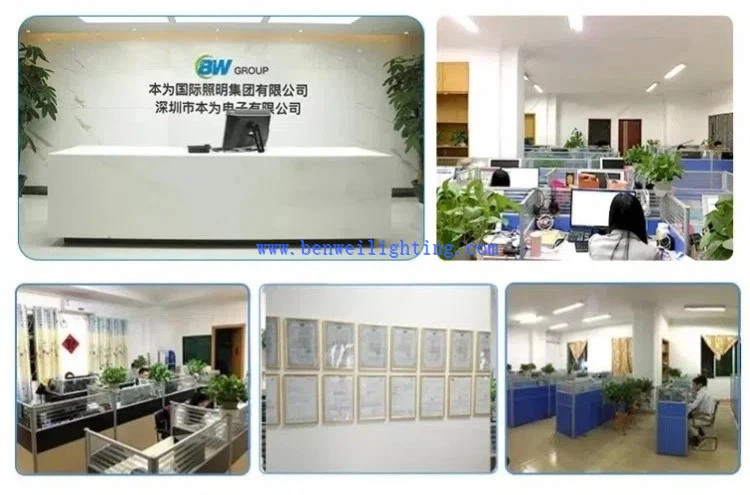
Having its own factory gives our firm complete control over the production process and the quality of our goods, which we take great pride in. We are manufacturers, not only brokers, committed to offering our clients the lowest costs. We invite consumers to evaluate our samples first since we are certain that the cost and quality of our items are evident. Our dedication to excellence and client happiness motivates us to consistently provide superior products.
Our address
3rd Floor, 5th Building, Hebei Industrial Park, Hualian Community, Longhua District, Shenzhen, China





