

Introduction: Thermal Failure - The Core Killer of LED Flood Light Lifespan
The Service Life Gap Between LED Chips and Finished Lamps
The theoretical service life of high-quality LED lighting chips represented by 5054 high-brightness chips can reach 50,000 to 100,000 hours, which is far higher than that of all traditional outdoor lighting sources. In actual market application, however, many ordinary LED flood lights fail prematurely within 1 to 3 years of use, with problems such as obvious brightness dimming, stroboscopic flicker, circuit short circuit, and lamp body burnout. A large number of industry test data shows that the chip damage rate of prematurely failed LED flood lights is less than 8%, while more than 92% of failures are caused by long-term high-temperature operation and unbalanced thermal diffusion.
This severe service life gap between theoretical chip life and actual finished lamp life reveals a key industry truth: the luminous chip determines the upper limit of LED flood light performance, while the heat dissipation system determines the actual service life and long-term stability of the lamp. For outdoor LED flood lights that need continuous long-hour operation, efficient and stable thermal management is the core guarantee of long-term service life.
Thermal Damage Mechanism of LED Flood Lights Under High-Temperature Operation
LED chips belong to semiconductor light-emitting devices, which are extremely sensitive to operating temperature. When the LED flood light works, electric energy is converted into light energy, and about 70% of the electric energy is converted into heat energy, which needs to be discharged from the lamp body in time. If the heat cannot be dissipated efficiently and accumulates inside the lamp body, the junction temperature of the LED chip will continue to rise, triggering irreversible aging damage.
Long-term high-temperature operation will accelerate the light attenuation of LED chips, reduce luminous efficiency year by year, and cause the lamp brightness to drop sharply within a short service cycle. At the same time, high temperature will accelerate the aging of internal driving power supply, electronic components, and insulating glue, reduce the insulation performance and load capacity of the circuit system, and easily cause short circuit, open circuit, and lamp body failure. In addition, frequent temperature changes in outdoor environments will lead to thermal expansion and contraction of internal and external structures, aggravating structural aging and reducing the overall durability of the flood light.
The Necessity of Professional Heat Sink for Outdoor Flood Lights
Different from indoor LED lighting products, outdoor LED flood lights face harsher operating environments, including high-temperature summer exposure, high-humidity rainy days, dusty industrial sites, and long-term uninterrupted lighting operations in warehouses, stadiums, and engineering yards. Ordinary simple heat dissipation structures such as thin iron shells and plastic shells have low thermal conductivity and poor heat dissipation efficiency, which cannot meet the long-term heat dissipation needs of high-power flood lights.
As a professional thermal management component for high-power LED flood lights, die-cast aluminum heat sinks have excellent thermal conductivity, structural stability, and environmental adaptability, which can fundamentally solve the problem of internal thermal accumulation of lamps, stabilize the chip operating temperature, and maximize the release of the life potential of LED chips. It is an indispensable core configuration for high-life and high-stability outdoor LED flood lights.
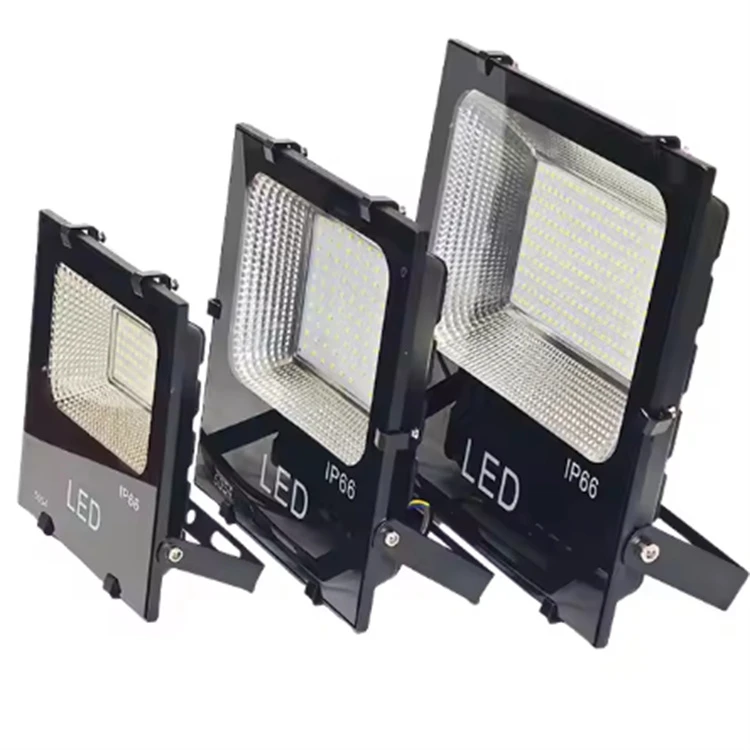
Material and Structural Advantages of Die-Cast Aluminum Heat Sinks
Superior Thermal Conductivity of Die-Cast Aluminum Materials
The thermal conductivity of heat sink materials is the core index that determines heat dissipation efficiency. The die-cast aluminum alloy adopted by our LED flood light heat sink has a thermal conductivity of up to 200W/(m·K), which is far higher than that of ordinary iron materials, plastic materials, and ordinary recycled aluminum materials. Compared with plastic heat sinks with almost no thermal conductivity, die-cast aluminum can quickly absorb the heat generated by LED chips and conduct it to the surface of the heat sink; compared with ordinary thin iron heat dissipation shells, its heat conduction speed is more than 3 times faster, avoiding local high temperature and heat accumulation of chips.
In addition, high-purity die-cast aluminum alloy has uniform material density and stable thermal conductivity, without the problem of uneven heat dissipation caused by material impurities of recycled aluminum. It can maintain efficient and stable heat conduction performance in long-term high-temperature and harsh outdoor environments, providing a stable thermal foundation for the long-term operation of LED lamps.
Optimized Ribbed Heat Dissipation Structure Design
Different from the flat and simple structure of ordinary heat sinks, our die-cast aluminum heat sink adopts an integrated ribbed fin structure design. Through professional mechanical die-casting molding, a large number of orderly arranged heat dissipation fins are formed on the surface of the heat sink. This structural design greatly expands the effective heat dissipation area of the lamp body. Under the same volume and power conditions, the heat dissipation area of the ribbed die-cast aluminum heat sink is 2.5 times that of the ordinary flat heat sink.
The three-dimensional fin structure can form an efficient air convection channel between the lamp body and the external air. When the ambient air flows through the heat dissipation fins, it can quickly take away the surface heat of the heat sink, realizing dual heat dissipation modes of heat conduction and air convection. This passive circulating heat dissipation mode does not need auxiliary fans, avoiding fan failure, dust blockage, and additional noise problems, and ensures long-term stable heat dissipation effect of the flood light in various outdoor environments.
Integrated Die-Cast Molding Structural Stability
The die-cast aluminum heat sink adopts one-piece die-cast molding process, with no splicing gaps or loose structures inside the lamp body. The integrated structure not only improves the overall structural strength of the flood light, but also avoids the heat conduction loss caused by splicing gaps of assembled heat sinks. The seamless fit between the heat sink and the LED light board realizes zero-distance heat conduction, ensuring that the heat generated by the chip can be transmitted to the heat sink surface in the fastest time without delay.
At the same time, the integrated die-cast aluminum structure has strong compression resistance, impact resistance, and anti-vibration performance. It can resist external vibration and impact in industrial sites, construction sites, and stadium scenarios, avoid structural deformation and heat dissipation failure, and ensure the long-term stability of the heat dissipation system, which is an important prerequisite for the long service life of flood lights.
Mechanism Analysis: How Die-Cast Aluminum Heat Sinks Extend LED Flood Light Lifespan
Reduce Chip Junction Temperature and Suppress Light Attenuation
Light attenuation is the main cause of brightness reduction and performance degradation of LED flood lights. Industry professional test data shows that for every 10℃ increase in the operating junction temperature of LED chips, the light attenuation rate will increase by 15% to 20%, and the service life will be shortened by more than 30%. The efficient heat conduction and convection heat dissipation capacity of die-cast aluminum heat sinks can effectively control the chip junction temperature within a stable and safe range (below 65℃) during long-term operation.
By continuously and efficiently exporting the internal heat of the lamp body, the die-cast aluminum heat sink avoids the long-term high-temperature overload operation of the chip, greatly reduces the thermal aging speed of the chip phosphor and semiconductor layer, and suppresses the rapid light attenuation. Compared with ordinary flood lights, our die-cast aluminum heat sink LED flood light has a light attenuation rate of less than 5% after 10,000 hours of continuous operation, and the brightness retention rate is as high as 95%, which ensures that the lamp can maintain stable high brightness for a long time and avoid frequent replacement caused by brightness failure.
Protect Internal Electrical Components and Reduce Failure Rate
In addition to LED chips, the internal driving power supply, capacitor, circuit board, and other electronic components of the flood light are extremely sensitive to temperature. Long-term high-temperature accumulation will lead to capacitor bulging and leakage, power supply burnout, circuit board carbonization, and other faults, which are the main causes of sudden failure of LED flood lights.
The excellent heat dissipation performance of die-cast aluminum heat sinks keeps the internal working temperature of the lamp body stable, avoids high-temperature impact on electronic components, effectively prolongs the service life of the driving system and circuit system, and reduces the overall failure rate of the lamp. Field application data shows that the failure rate of LED flood lights equipped with high-quality die-cast aluminum heat sinks after 3 years of continuous operation is less than 2%, while the failure rate of ordinary heat dissipation structure flood lights is as high as 35%. The stable thermal environment greatly improves the overall reliability and service cycle of the product.
Improve Environmental Adaptability and Reduce Structural Aging
Outdoor LED flood lights need to cope with extreme weather such as high temperature, heavy rain, cold wind, and dust all year round. Ordinary heat dissipation structures are prone to structural aging, deformation, and rust under the alternating action of high temperature and humidity, resulting in reduced heat dissipation efficiency and water and dust ingress.
The die-cast aluminum alloy material has natural anti-corrosion, anti-rust, and anti-oxidation properties. After professional surface treatment, it can resist ultraviolet radiation, rain erosion, and industrial corrosive gas erosion. The stable structural performance ensures that the heat sink will not deform, rust, or fail in long-term outdoor operation, maintaining consistent heat dissipation effect throughout the whole service life of the lamp. At the same time, the stable temperature environment avoids structural fatigue and aging caused by frequent thermal expansion and contraction, further extending the overall service life of the flood light.
Comparative Test: Service Life Difference Between Die-Cast Aluminum and Ordinary Heat Dissipation Structures
Test Conditions and Sample Settings
In order to verify the actual improvement effect of die-cast aluminum heat sinks on the lifespan of LED flood lights, we set up a group of comparative endurance tests under the same operating environment and power parameters. The test samples include three types of mainstream outdoor LED flood lights on the market: die-cast aluminum ribbed heat sink flood lights, ordinary thin iron heat dissipation flood lights, and plastic shell heat dissipation flood lights. The test power is uniformly 200W, the continuous working time is 10,000 hours, the ambient temperature is 25℃-35℃ simulating outdoor natural environment, and the indexes such as lamp body temperature, brightness retention rate, and component failure rate are recorded in real time.
Test Data and Result Analysis
After 10,000 hours of continuous operation, the test data shows significant performance differences among the three groups of samples. The maximum operating temperature of the die-cast aluminum heat sink flood light is stable at 58℃, the brightness retention rate reaches 94.8%, no component failure and structural deformation occurs, and the heat dissipation structure remains intact. The maximum operating temperature of the ordinary thin iron heat dissipation flood light reaches 82℃, the brightness retention rate is only 72.3%, and there are individual problems of power supply aging and light attenuation aggravation. The maximum operating temperature of the plastic shell flood light is as high as 91℃, the brightness retention rate is only 58.6%, and multiple samples have circuit short circuit and shell aging deformation failure.
The test results fully prove that the die-cast aluminum heat sink can effectively control the operating temperature of the lamp, reduce light attenuation and component aging, and achieve a qualitative leap in service life stability. On the premise of the same chip and configuration, the service life of LED flood lights with die-cast aluminum heat sinks is more than 2.5 times that of ordinary structural flood lights.
Long-Term Application Benefit Analysis
From the perspective of long-term engineering and commercial application, the service life advantage of die-cast aluminum heat sink flood lights brings extremely high cost performance and economic benefits. Although the initial purchase cost is slightly higher than that of ordinary low-end flood lights, its ultra-low attenuation rate and ultra-long service life can greatly reduce the frequency of lamp replacement, maintenance labor costs, and equipment downtime losses. For large-scale scenarios such as industrial parks, logistics warehouses, sports stadiums, and urban engineering lighting, it can save more than 60% of comprehensive operation and maintenance costs within 5 years, which is the most cost-effective choice for long-term outdoor lighting projects.
Matching Advantages of This Product's Die-Cast Aluminum Heat Sink System
High-Purity Aluminum Alloy Material Upgrade
This series of LED flood lights adopts high-purity industrial die-cast aluminum heat sink, which abandons low-purity recycled aluminum materials with many impurities and low thermal conductivity. The high-purity aluminum alloy ensures ultra-high thermal conductivity and uniform heat conduction, avoiding local overheating of the lamp body. After special anodizing treatment on the surface, the heat sink has stronger anti-oxidation, anti-corrosion, and anti-ultraviolet ability, which can adapt to all harsh outdoor environments such as coastal high salt fog, industrial corrosion, and high-temperature exposure, and maintain stable heat dissipation performance for a long time.
Bionic Ribbed Heat Dissipation Optimization Design
Different from the conventional uniform fin structure, this product adopts optimized bionic ribbed heat dissipation fins with staggered arrangement, which further enhances the air convection efficiency. The fin spacing and height are calculated and designed by professional thermal simulation software, which can maximize the heat dissipation area on the premise of ensuring structural strength, realize rapid heat discharge, and completely solve the heat accumulation problem of high-power flood lights in long-term operation. Whether it is 30W low-power household lighting or 400W high-power engineering lighting, it can maintain efficient and stable heat dissipation effect.
IP66 Full Protection and Heat Dissipation Compatibility
This product perfectly combines efficient heat dissipation performance and high-level protection performance. The integrated die-cast aluminum heat sink cooperates with the fully sealed lamp body structure to reach IP66 dustproof and waterproof grade. While ensuring unobstructed internal heat dissipation, it completely isolates external dust, rainwater, and moisture, avoiding heat dissipation blockage and internal component damage caused by dust accumulation and water ingress. The compatibility of high heat dissipation and high protection ensures that the lamp can operate stably for a long time in rainy, snowy, dusty, and humid environments, and the service life is not affected by harsh weather.
Conclusion: Die-Cast Aluminum Heat Sink - The Core Guarantee of Long-Lasting LED Flood Lights
Through the systematic analysis of material characteristics, structural principles, thermal aging mechanism, and comparative test data, it is fully verified that the die-cast aluminum heat sink is the core key component to improve the service life and long-term stability of LED flood lights. It solves the core pain point of thermal failure of traditional LED flood lights, controls the chip operating temperature in a safe range through efficient heat conduction and convection heat dissipation, suppresses light attenuation, protects internal electronic components, and resists environmental structural aging.
The high-quality die-cast aluminum heat sink equipped with this series of LED flood lights not only gives full play to the ultra-long life potential of 5054 high-brightness LED chips, realizing a super long service life of 50,000 hours and ultra-low light attenuation performance, but also brings excellent environmental adaptability and ultra-low failure rate. For commercial purchasers, engineering contractors, and terminal users, it can effectively reduce replacement and maintenance costs, improve lighting stability and project durability, and create higher long-term economic value.
In the outdoor lighting market with mixed product quality, the die-cast aluminum heat dissipation system has become an important standard to distinguish high-quality long-life LED flood lights from low-end inferior products. Choosing LED flood lights with high-quality die-cast aluminum heat sinks is the most reliable choice to pursue stable lighting, long service life, and low comprehensive cost.
How To Cooperate With Us?
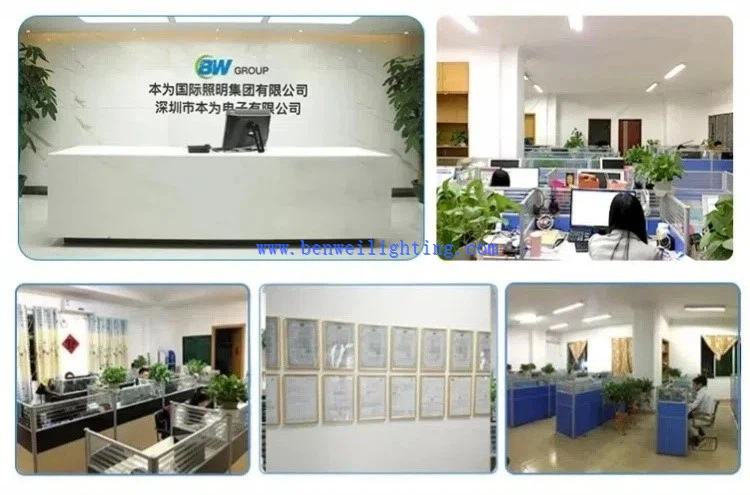
Since we have our own facilities, we are pleased to have complete control over the production process and the quality of our goods. We are committed to giving our clients the finest prices since we are manufacturers rather than just brokers. We encourage buyers to see our samples first since we are certain that the cost and calibre of our items are transparent. Our dedication to excellence and client happiness motivates us to consistently provide superior products.
Our address
3rd Floor, 5th Building, Hebei Industrial Park, Hualian Community, Longhua District, Shenzhen, China





