

Introduction: Why Wattage Selection Determines Lighting Project Success
The Misunderstanding of Blind High-Power Selection in the Industry
In the outdoor lighting industry, there is a prevalent wrong cognition that "the higher the power, the better the lighting effect". A large number of engineering purchasers blindly choose high-power LED flood lights regardless of actual lighting area, installation height, and standard illumination requirements, resulting in serious resource waste. Professional lighting technology clearly points out that wattage only represents the power consumption of the lamp, while the core factor that determines lighting quality is luminous efficacy, lumen output, and scene matching degree. High-quality LED flood lights equipped with 5054 high-brightness chips can achieve 110–130lm/W high luminous efficiency, which is 30%–50% higher than that of ordinary low-quality products. This means that medium-power high-efficiency products can completely replace low-efficiency high-power lamps, achieving higher brightness with lower power consumption.
Blind pursuit of high power will not only increase the one-time procurement cost of lamps and installation construction cost, but also bring long-term high electricity expenditure. For warehouses and yards that require 24-hour long-term lighting, unreasonable power matching will form a huge invisible cost waste throughout the product life cycle. Conversely, excessive low-power configuration cannot meet the national standard illumination uniformity and brightness requirements of industrial and sports lighting, bringing potential safety hazards to operation, patrol, and sports events.
Core Evaluation Dimensions of Professional Power Selection
Scientific LED flood light power selection is a systematic judgment based on multiple dimensional parameters, rather than single wattage judgment. Standard engineering power selection needs to comprehensively evaluate four core dimensions. First is the scene area and spatial height, including ground area, ceiling height of warehouse interior, and pole height of outdoor open space, which directly determines the light coverage demand of a single lamp. Second is the standard illumination requirement, different scenarios have clear national and industry standard lux values, which are the core basis for calculating matching lumen and wattage. Third is the environmental attenuation factor, outdoor open spaces are affected by ambient light, dust, and fog, while closed warehouses have light absorption characteristics of goods and walls, both requiring reasonable power margin reservation. Fourth is the fixture performance difference, high-efficiency chips and professional heat dissipation structures can maintain stable luminous flux attenuation, ensuring long-term lighting effect consistency.
Product Advantages Supporting Full-Range Power Matching
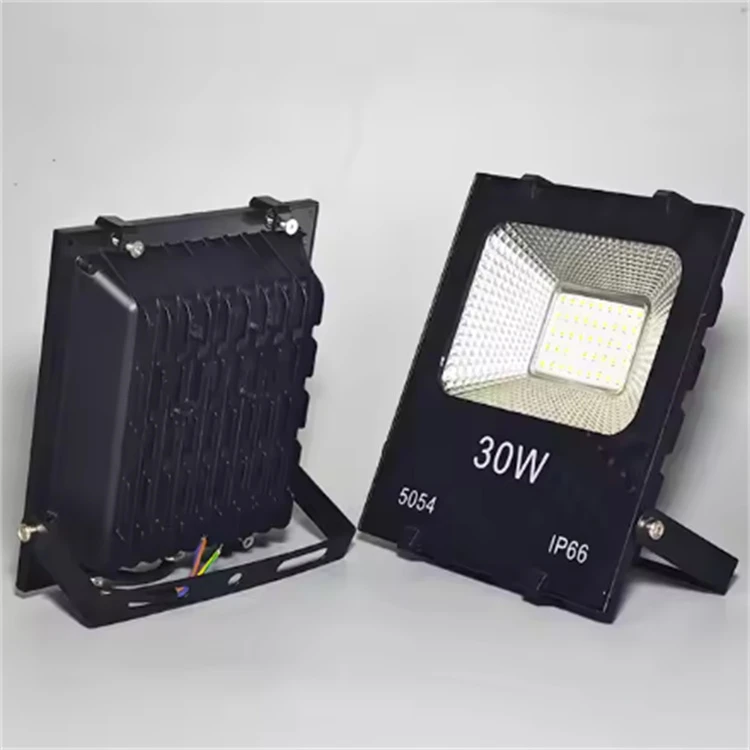
This series of LED flood lights covers a complete power range from 30W to 400W, fully covering all application scenarios of residential yards, commercial yards, industrial warehouses, and professional stadiums. All power configurations adopt consistent high-standard configurations, including 5054 high-density high-brightness LED chips, integrated die-cast aluminum heat sink, IP66 dustproof and waterproof protection grade, and constant-current drive power supply. Different from the reduced configuration of low-power products of other brands, our full-power series maintains ultra-high luminous efficiency, ultra-low light attenuation, and ultra-long service life, ensuring that each power model can achieve the best scene matching effect, providing standardized and reliable lighting solutions for different project scales.
Core Theoretical Basis for LED Flood Light Power Selection
The Essential Difference Between Wattage and Luminous Efficacy
Most end users confuse power wattage with brightness, which is the root cause of wrong selection. Wattage (W) refers to the electric power consumed by the lamp per hour, which is the energy consumption index; while lumen (lm) is the real brightness output index, and luminous efficacy (lm/W) is the core standard to measure lamp quality. Ordinary inferior LED flood lights on the market only have 70–90lm/W luminous efficacy, with serious light attenuation and low light conversion rate. In contrast, our products adopt optimized 5054 chip packaging technology and professional light distribution design, with luminous efficacy stably reaching 110–130lm/W. Under the same wattage, the actual brightness is 30% higher than that of ordinary products; under the same brightness demand, the required power is 20%–40% lower than that of traditional lamps.
This high-efficiency light conversion capability is the core advantage of precise power matching. It can avoid the traditional selection logic of "relying on high power to make up for low efficiency", realizing energy-saving lighting while meeting standard brightness, and creating long-term economic benefits for users.
Influence of Installation Height and Beam Angle on Power Demand
Installation height and beam angle are key variables that must be considered in power selection. The higher the installation height, the larger the light coverage area, and the higher the power demand for unit brightness; the narrower the beam angle, the more concentrated the light, suitable for high-point long-distance irradiation, while the wide beam angle is suitable for large-area uniform lighting. Warehouse lighting is mostly installed on high ceiling brackets with a height of 6–12 meters, requiring medium and high power to penetrate spatial height and ensure ground illumination uniformity. Yard lighting is mostly low-pole or wall-mounted installation with a height of 3–6 meters, suitable for medium and low power wide-angle lighting. Stadium lighting needs to balance high height and large coverage, requiring high-power high-lumen configuration to meet professional competition lighting standards.
All products in this series support flexible beam angle adjustment and multi-angle rotation installation, which can cooperate with different power configurations to adapt to different height and space environments, ensuring no dark areas, no glare, and uniform light distribution in the lighting area.
Light Attenuation Margin Reserve for Long-Term Operation
New lamps can reach the standard brightness when they are just put into use, but most lamps will have obvious brightness attenuation after 1–2 years of operation due to poor heat dissipation performance. If the power is selected exactly according to the new lamp brightness standard, the illumination will be insufficient after long-term use, failing to meet operational needs. Therefore, professional power selection must reserve 10%–20% brightness margin to cope with natural light attenuation in the product life cycle.
Our LED flood lights adopt integrated die-cast aluminum heat sink structure, which efficiently conducts and dissipates heat, controlling the chip operating temperature within a safe range. The light attenuation rate is less than 5% after 10,000 hours of operation, and the brightness retention rate is as high as 95%, far exceeding the industry average level. The ultra-low attenuation performance greatly reduces the power margin demand, enabling users to select the most appropriate power without excessive high-power reservation, realizing precise cost control.
Scenario-Based Power Selection Scheme: Warehouse Lighting
Lighting Characteristics and Standard Requirements of Warehouses
Industrial warehouses and logistics storage yards are typical closed or semi-enclosed large-space lighting scenarios, with the core lighting demands of uniform illumination, no dark areas, high safety, and long-term stable operation. Warehouse lighting needs to meet the illumination standard of 75–150lux for daily patrol and operation, and 200lux and above for picking, sorting, and fine operation areas. The internal space of the warehouse is high, with stacked goods absorbing light, resulting in limited light reflection. Moreover, warehouse lamps need to work continuously for 10–24 hours a day, requiring lamps with stable performance, low attenuation, and low energy consumption.
The common pain points of warehouse lighting are local dark areas, insufficient ground illumination, and excessive overall power consumption caused by unreasonable power and spacing matching. Low-power lamps cannot penetrate high space and goods stacking layers, resulting in blurred vision for staff operation; excessive high-power lamps cause serious light waste and increase daily electricity costs.
Precise Power Matching for Different Warehouse Types
For small and medium-sized daily storage warehouses with an area of less than 500 square meters and an installation height of 6–8 meters, 100W–150W LED flood lights are the optimal choice. This power model has moderate lumen output, which can fully cover the warehouse channel and operation area, meeting daily patrol and storage lighting needs, with low single lamp power consumption and significant energy-saving effect. Equipped with our high-efficiency 5054 chips, it can maintain uniform ground illumination, effectively solving the problem of local dark areas in small warehouses.
For large logistics warehouses and industrial storage workshops with an area of 500–2000 square meters and an installation height of 8–12 meters, 200W–300W high-power flood lights are recommended. The high lumen output of 20000–39000lm can penetrate high space and goods shielding, ensuring that the illumination of operation and picking areas reaches more than 150lux, meeting high-standard industrial operation needs. The integrated die-cast aluminum heat sink ensures long-term high-load operation without temperature rise and attenuation, adapting to 24-hour uninterrupted lighting work mode.
For super-large industrial warehouses and port storage areas with an area of more than 2000 square meters, 400W ultra-high-power LED flood lights are matched. The ultra-large luminous flux covers a super-wide range, reducing the number of installed lamps, simplifying circuit layout and later maintenance, and realizing low-cost and high-efficiency overall lighting of super-large spaces.
Unique Product Advantages for Warehouse Lighting
All power models of this series for warehouse lighting have IP66 high-level dustproof and waterproof performance, which can resist dust accumulation and moisture erosion in the warehouse, avoiding lamp failure caused by long-term dust deposition. The constant-current drive power supply has surge protection function, which can adapt to unstable voltage environment of industrial circuits and avoid stroboscopic and flicker phenomena. Ultra-low light attenuation ensures that the warehouse maintains stable standard illumination for many years, eliminating the frequent replacement and maintenance costs caused by brightness decline, and is the most cost-effective long-term lighting solution for industrial warehouses.
Scenario-Based Power Selection Scheme: Yard Lighting
Lighting Characteristics and Standard Requirements of Yards
Yard lighting includes residential private yards, commercial community yards, factory open yards, and parking lot yards, belonging to outdoor open-space lighting scenarios. The core demands of yard lighting are safety patrol, night illumination, landscape lighting, and anti-glare comfortable light. The standard illumination requirement of yards is 50–100lux, with low professional brightness demand, but high requirements for lamp stability, weather resistance, and energy saving. Yards are exposed to outdoor environment all year round, facing the test of high temperature, rain, snow, wind, and dust, requiring lamps with strong environmental adaptability.
Different from industrial and sports lighting, yard lighting pays more attention to uniformity and comfort. Excessively high power will cause strong glare, affect residents' rest and visual experience, and cause serious energy waste; excessively low power will lead to dim yard light, bringing hidden dangers to night walking and vehicle parking safety.
Precise Power Matching for Different Yard Scenarios
For small residential private yards, courtyard entrances, and villa outdoor areas with an area of less than 200 square meters, 30W–50W low-power LED flood lights are the best choice. The power consumption of a single lamp is extremely low, which can meet daily night lighting and safety patrol needs. The soft and uniform light has no strong glare, which does not interfere with daily life, and has beautiful appearance and strong practicability.
For medium-sized commercial yards, community public yards, and small parking lots with an area of 200–800 square meters, 80W–150W medium-power flood lights are recommended. This power section balances brightness and energy consumption, realizes full coverage of yard roads, parking spaces, and green areas, ensures clear night vision, improves public safety, and avoids energy waste caused by high-power lamps.
For large factory open yards, logistics transfer yards, and large public parking lots with an area of more than 800 square meters, 150W–200W medium and high-power flood lights are matched. High lumen output ensures no dead-angle lighting in large open spaces, meets the safety lighting needs of factory night operation and vehicle access, and the IP66 waterproof and dustproof grade can resist all outdoor harsh weather, ensuring stable operation all year round.
Unique Product Advantages for Yard Lighting
This series of yard-dedicated LED flood lights adopt humanized light distribution design, with soft light and moderate color temperature, effectively suppressing glare and improving night lighting comfort. The adjustable metal bracket supports arbitrary angle rotation, which can adapt to wall mounting, pole mounting, and ground mounting of different yards, with flexible installation and wide adaptability. The ultra-long 50000-hour service life reduces the frequency of outdoor lamp replacement, greatly saving later maintenance time and cost for users, and is a durable and energy-saving high-quality choice for yard long-term lighting.
Scenario-Based Power Selection Scheme: Stadium Lighting
Lighting Characteristics and Standard Requirements of Stadiums
Sports stadiums including basketball courts, badminton courts, football fields, and tennis courts are high-standard professional lighting scenarios with the highest requirements for brightness, uniformity, color rendering, and stability. Stadium lighting needs to meet different standard requirements according to entertainment training and official competition levels. Daily training lighting requires illumination above 200lux, and official competition lighting requires illumination above 500lux, with strict requirements for light uniformity, no stroboscopic, high color rendering, and no glare, to ensure athletes' visual judgment accuracy and audience viewing experience.
Stadiums have large open space, high installation poles, and long irradiation distance. The light needs to resist outdoor ambient light interference, and the lamp needs to work stably in long-term high-frequency switching and long-time operation state. Ordinary low-power and low-efficiency lamps are difficult to meet professional sports lighting standards, and uneven light distribution will affect sports effect and competition fairness.
Precise Power Matching for Different Stadium Grades
For community amateur sports courts, campus training courts, and entertainment sports venues, 200W–300W high-power flood lights are recommended. This power configuration can make the field illumination reach 200–300lux, meeting daily sports training and entertainment activity needs. High color rendering 5054 chips restore the true color of sports fields and equipment, no stroboscopic light ensures sports safety, and avoids visual fatigue during long-term sports.
For standard professional stadiums and commercial competition venues, 300W–400W ultra-high-power LED flood lights are the optimal solution. The ultra-high lumen output breaks through ambient light interference, making the field illumination stably reach more than 500lux, fully meeting official competition lighting standards. The professional light distribution design realizes uniform light coverage of the whole field, no dark corners, no local over-bright glare, ensuring the fairness and professionalism of the competition.
All stadium power models support multi-angle precise positioning installation, which can carry out targeted light distribution according to the field size and pole height, completely solving the problems of uneven lighting and insufficient brightness of traditional stadium lamps.
Unique Product Advantages for Stadium Lighting
This series of stadium-dedicated flood lights have ultra-high color rendering index (Ra>80), which can truly restore the color of the field, athletes' clothing, and sports equipment, improving the viewing experience and competition recognition. The high-frequency constant-current drive system realizes zero stroboscopic lighting, which is friendly to high-speed shooting and video recording, meeting the live broadcast and recording needs of professional competitions. The die-cast aluminum high-efficiency heat dissipation system ensures that high-power lamps do not overheat or attenuate during long-term high-intensity operation, maintaining stable professional lighting effect for a long time. IP66 all-weather protection enables the lamps to work stably in wind, rain, snow, and high temperature, with strong weather resistance and high reliability.
Comprehensive Cost-Benefit Analysis of Power Matching Selection
Energy-Saving Benefits of Precise Power Matching
Compared with traditional blind high-power selection, scientific and precise power matching can save 20%–40% of annual electricity cost on the premise of meeting lighting standards. Our LED flood lights have ultra-high luminous efficiency, which can replace traditional halogen lamps and ordinary low-efficiency LED lamps with lower power. For large warehouses and stadiums that operate for a long time, the annual energy-saving income is extremely considerable, and the long-term energy-saving benefit far exceeds the slight difference in initial procurement cost.
Maintenance Cost Reduction Brought by Low Attenuation Performance
Improper power matching will accelerate lamp aging and attenuation. Over-power lamps work in overload state for a long time, with fast temperature rise and serious light attenuation, requiring frequent replacement and maintenance. The precise power matching scheme matched with our ultra-low attenuation products can ensure that the lamps maintain stable performance for more than 5 years, almost no need for maintenance and replacement in the early and middle service cycle, greatly reducing labor cost and equipment replacement cost for users.
Project Value Improvement of Standardized Lighting
Reasonable power matching makes the lighting effect of warehouses, yards, and stadiums reach industry standard specifications, effectively improving operational safety, service quality, and professional grade of the venue. Standard warehouse lighting reduces operational safety hazards, standardized yard lighting improves public safety and environmental grade, and professional stadium lighting meets commercial operation and competition holding conditions, bringing higher commercial value and social benefits for users.
Conclusion
LED flood light power selection is not a simple wattage selection, but a professional engineering matching decision based on scene characteristics, spatial parameters, industry standards, and product performance. Blind pursuit of high power leads to cost waste, and excessive low power causes unqualified lighting effect and potential safety hazards. Through systematic scenario analysis, this paper sorts out the optimal power matching schemes of 30W–150W for yard lighting, 100W–400W for warehouse lighting, and 200W–400W for stadium lighting, covering all mainstream outdoor and industrial large-area lighting scenarios.
This series of high-performance LED flood lights rely on 5054 high-brightness chips, die-cast aluminum efficient heat dissipation system, IP66 all-weather protection, and ultra-low light attenuation advantages, making each power model have excellent performance consistency. It can perfectly adapt to the lighting demand characteristics of different scenarios, helping users complete accurate, efficient, and cost-effective lamp procurement. In commercial and engineering lighting projects, scientific power matching + high-quality lamp configuration is the core logic to realize long-term energy saving, stable operation, and cost reduction, and is the most reliable choice for warehouse, yard, and stadium lighting upgrades and new construction projects.
How To Cooperate With Us?
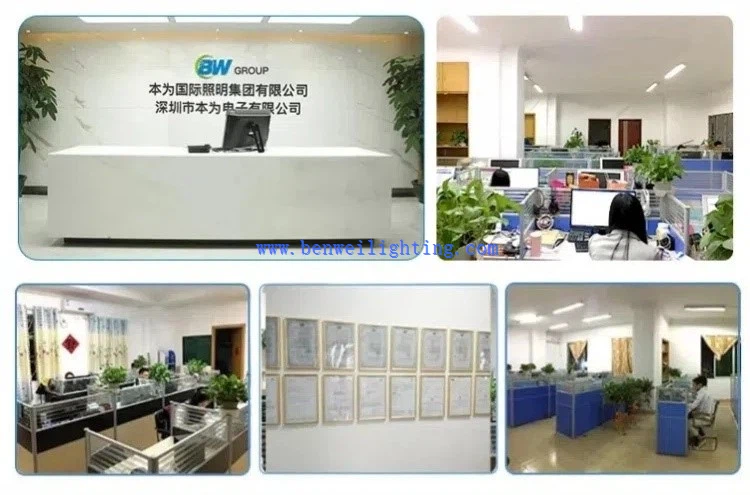
Since we have our own facilities, we are pleased to have complete control over the production process and the quality of our goods. We are committed to giving our clients the finest prices since we are manufacturers rather than just brokers. We encourage buyers to see our samples first since we are certain that the cost and calibre of our items are transparent. Our dedication to excellence and client happiness motivates us to consistently provide superior products.
Our address
3rd Floor, 5th Building, Hebei Industrial Park, Hualian Community, Longhua District, Shenzhen, China





