

Introduction: The Core Status of Housing Material in Industrial LED Lighting
Industry Misjudgment of UFO High Bay Light Performance
In the industrial lighting market, countless buyers fall into a single-dimensional purchasing misunderstanding, judging the quality of UFO LED high bay lights merely by brightness, power parameter, and low unit price. However, practical application feedback shows that most low-cost UFO high bay lights with plastic shells, thin iron shells, or spliced ordinary aluminum shells suffer from obvious performance degradation within 1 to 3 years of use, including severe light attenuation, frequent driver damage, shell deformation, and even water and dust intrusion leading to short circuit failure. In contrast, high-end UFO high bay lights equipped with integrated die-cast aluminum housing can maintain stable working performance for more than 8 years, with extremely low failure rate and luminous decay.
The essential gap between the two types of products does not lie in LED chips or drivers, but in the housing material and integrated molding process. For high-power LED industrial lighting fixtures that operate continuously for a long time, the housing is not only a simple protective shell, but also an integrated functional system integrating heat conduction, heat dissipation, mechanical support, and environmental isolation. The material characteristics and structural design of die-cast aluminum perfectly fit the harsh operating requirements of industrial scenarios, becoming the core pillar of stable and efficient operation of UFO high bay lights.
Basic Characteristics of Industrial Die-cast Aluminum Alloy
Premium UFO high bay lights universally adopt high-purity ADC12 die-cast aluminum alloy as the housing material, which is specially optimized for industrial lighting equipment. Compared with ordinary aluminum profiles, iron sheets, and engineering plastics, ADC12 die-cast aluminum has outstanding comprehensive advantages: moderate thermal conductivity, high structural density, excellent pressure resistance and corrosion resistance, and strong moldability. It can be integrally cast into complex radial fin structures and curved UFO outlines without splicing gaps. This material has a thermal conductivity of 96 W/m·K, which is nearly twice that of carbon steel and more than ten times that of ABS plastic, laying a solid material foundation for efficient thermal management.
Different from secondary processed assembled heat sinks, integrated die-cast aluminum housing forms an integrated seamless structure from the LED mounting base to the outer heat dissipation fins, realizing zero thermal resistance heat conduction. This unique material and process advantage is the fundamental reason why die-cast aluminum housing can comprehensively upgrade the performance of UFO high bay lights.
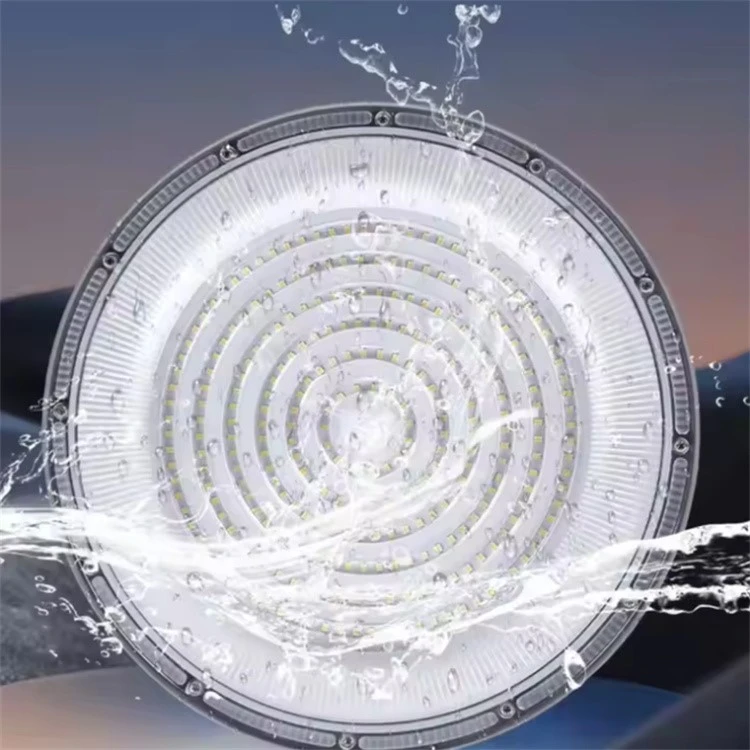
Thermal Performance Upgrade: Solve Core Pain Points of LED Light Attenuation
Zero-Resistance Integrated Heat Conduction Structure
The biggest performance defect of low-end UFO high bay lights is discontinuous heat conduction. Products with spliced shells or stamped aluminum structures have assembly gaps and contact thermal resistance between the light source board and the heat dissipation shell. When the LED chip generates heat during operation, the heat cannot be quickly and evenly transferred to the heat dissipation surface, resulting in local heat accumulation at the chip position and sharp rise of junction temperature.
The integrated die-cast aluminum housing abandons all spliced structures. The LED mounting bottom plate, heat conduction base, and radial heat dissipation fins are integrally die-cast at one time, forming a completely connected thermal conduction channel. The heat generated by the 2835 high-brightness LED chip is instantly absorbed by the aluminum base and evenly distributed to the entire housing and fin surface, eliminating local overheating dead ends. This zero-thermal-resistance conduction mode ensures that the heat generated by high-power operation is exported in real time, keeping the LED junction temperature within the optimal working range of 55°C to 65°C.
Radial Fin Structure Maximizes Convection Heat Dissipation Area
The UFO-shaped die-cast aluminum housing is scientifically designed with radial symmetrical fin arrays. Different from the flat and single heat dissipation structure of ordinary lamps, the curved UFO outline and staggered radial fins greatly expand the effective heat dissipation surface area by more than 80%. Based on the aerodynamic convection principle, the raised fin structure forms an independent air circulation channel around the lamp body. During operation, the hot air on the surface of the aluminum shell rises rapidly, and the low-temperature cold air supplements from the bottom and surroundings spontaneously, realizing efficient passive air convection heat dissipation without fan assistance.
This structural design completely adapts to the long-term continuous working state of industrial lamps. Even under full-load operation for 12 hours a day, the die-cast aluminum housing can maintain efficient heat dissipation efficiency, effectively inhibit lumen depreciation, and ensure that the lamp maintains more than 85% luminous flux after 30,000 hours of operation, far exceeding the L70 industry standard of ordinary lamps.
Avoid Thermal Aging of Internal Electronic Components
Excessive operating temperature is the main killer of LED drivers, capacitors, and circuit systems. Poor heat dissipation of low-end lamp housings will lead to long-term high-temperature accumulation inside the lamp body, accelerating the aging of electrolytic capacitors, causing unstable current output, and triggering frequent strobing and dead lights. The excellent thermal management capability of die-cast aluminum housing can stably control the internal working temperature of the lamp below 65°C, creating a constant-temperature stable working environment for internal electronic components.
Stable low-temperature operation effectively delays the aging speed of the drive power supply, ensures long-term constant-current and constant-voltage output, forms a benign working cycle for LED chips and circuits, and greatly extends the overall service life of the lamp. Compared with ordinary shell lamps whose internal temperature exceeds 90°C in high-load operation, die-cast aluminum housing products reduce the component aging rate by more than 60%.
Mechanical Performance Upgrade: Adapt to Harsh Industrial Working Conditions
High Structural Strength Resists Vibration and Impact
Industrial production workshops and logistics warehouses have complex and harsh working environments. Mechanical vibration generated by production equipment, accidental collision during cargo handling, and impact caused by installation and hoisting will cause irreversible damage to low-strength lamp shells. Plastic shells are prone to aging, cracking, and deformation, while thin iron shells are easy to rust and dent, affecting the internal structural stability of the lamp.
The die-cast aluminum housing has high structural density and integral molding toughness, with excellent impact resistance and vibration resistance. The seamless integrated structure does not loose or deform under long-term industrial vibration. The high-hardness aluminum shell can resist accidental slight collisions and extrusion, effectively protecting internal LED chips, light panels, and drive power supplies from mechanical damage. This reliable mechanical stability ensures that the lamp can operate safely and stably in high-vibration industrial scenarios for a long time.
Anti-Aging and Anti-Corrosion Surface Treatment
The surface of the die-cast aluminum housing adopts professional electrostatic powder coating and anodizing composite processes. The dense protective film formed on the surface can effectively resist industrial corrosive gases, humid air, and dust erosion. In humid workshops, chemical processing workshops, and open covered warehouses, ordinary lamp shells are prone to oxidation, rust, and material aging, leading to shell damage and reduced sealing performance.
The modified die-cast aluminum material has stable chemical properties, no rust, no fading, and no brittle aging after long-term exposure to air and humid environments. It maintains complete structural integrity and beautiful appearance throughout the whole service life, avoiding performance degradation and safety hazards caused by shell corrosion and damage.
Lightweight and High-Rigidity Structural Advantage
Different from heavy iron shells and bulky pure copper heat sinks, die-cast aluminum housing achieves the perfect balance of high rigidity and lightweight. The low-density aluminum alloy material reduces the overall weight of the lamp while ensuring structural strength, reducing the bearing pressure of the suspension mounting structure. It avoids the hidden dangers of falling lamps caused by excessive weight and aging of hanging parts, and also reduces the difficulty and safety risk of on-site installation and later maintenance.
This lightweight and high-strength design is especially suitable for high-ceiling installation scenarios such as large warehouses and stadiums, improving construction efficiency and long-term operational safety.
Protection Performance Upgrade: Realize IP66 Full-Scene Environmental Adaptation
Seamless Molding Improves Overall Sealing
The IP protection level of industrial lamps depends entirely on the structural sealing performance of the housing. Low-end spliced shell lamps have obvious assembly gaps, which cannot achieve high-level dustproof and waterproof effects. Fine industrial dust and water mist will penetrate into the lamp body along the gaps, adhering to the LED light source and circuit board, causing light attenuation, short circuit, and circuit burnout.
The integrated die-cast aluminum housing has no splicing gaps in the whole machine. Combined with high-quality silicone sealing rings and integrated pressing process, it realizes a fully enclosed lamp body structure, stably reaching the industry-leading IP66 dustproof and waterproof grade. It can completely block fine dust invasion and resist high-pressure water jet flushing, adapting to all kinds of harsh industrial environments.
Stable Housing Structure Prevents Sealing Failure
Ordinary plastic and thin-wall lamp shells are prone to thermal expansion and contraction under long-term high-temperature operation, resulting in shell deformation and gap expansion, which gradually fails the sealing performance. The die-cast aluminum housing has extremely low thermal expansion coefficient, stable structural size in high and low temperature alternating environments, no deformation and no gap expansion, and permanently maintains the original sealing effect.
This stable sealing performance ensures that the internal luminous system and circuit system are always in a dust-free and dry working environment, eliminating equipment failure caused by environmental erosion and greatly improving the fault-free continuous working time of the lamp.
Anti-Dust Heat Dissipation Structure Maintains Long-Term Performance
A major problem of open heat dissipation lamps is dust accumulation. Long-term dust coverage on the heat dissipation fins will block the air convection channel, reduce heat dissipation efficiency by more than 50%, and accelerate lamp aging. The optimized structure of die-cast aluminum UFO housing combines closed protection and open heat dissipation. The key heat dissipation area is exposed reasonably, and the overall structure is not easy to accumulate dust. Even if there is a small amount of dust, it can be cleaned quickly without affecting the internal heat conduction efficiency.
This design ensures that the heat dissipation and protection performance of the lamp remain consistent throughout the whole life cycle, avoiding performance attenuation caused by environmental factors.
Economic Performance Upgrade: Reduce Long-Term Operational Costs
Extend Service Life and Reduce Replacement Frequency
The comprehensive performance upgrade brought by die-cast aluminum housing enables the UFO high bay light to achieve a super long service life of 50,000+ hours. Compared with ordinary shell lamps that need to be replaced in 2–3 years, die-cast aluminum lamps can work stably for 8–10 years in industrial scenarios. It greatly reduces the frequency of lamp procurement and replacement, saves a lot of repeated procurement costs for enterprises, and avoids production delays and economic losses caused by frequent lamp failure and replacement construction.
Ultra-Low Light Attenuation Reduces Energy Consumption Loss
Ordinary lamps with poor heat dissipation will have serious light attenuation after long-term use. In order to ensure workshop brightness, enterprises often need to increase the number of lamps or replace lamps in advance, resulting in increased energy consumption and waste of resources. The excellent thermal management of die-cast aluminum housing ensures ultra-low lumen depreciation, maintains stable high brightness for a long time, does not require additional power consumption compensation, and effectively reduces daily lighting power consumption.
Data comparison shows that die-cast aluminum UFO high bay lights can save more than 60% of comprehensive lighting operation costs for enterprises in the whole life cycle, with extremely high return on investment.
Low Maintenance Rate Saves Labor Costs
High structural stability and environmental adaptability make die-cast aluminum UFO high bay lights almost maintenance-free in daily operation. There is no need for frequent dust cleaning, fault inspection, and component replacement, which greatly reduces the labor cost of enterprise facility maintenance. For large factories and logistics parks with a huge number of lighting fixtures, the long-term labor cost savings are extremely considerable.
Comparative Analysis: Die-Cast Aluminum Housing vs. Ordinary Housing Materials
Performance Comparison of Different Housing Materials
ABS plastic housing has low cost and light weight, but poor thermal conductivity, easy aging and cracking, low protection grade, and short service life, which is only suitable for temporary low-demand lighting scenarios. Thin iron sheet housing has high hardness but poor thermal dissipation, easy rust and deformation, and obvious light attenuation after long-term use. Spliced ordinary aluminum housing has improved thermal conductivity but discontinuous heat conduction, large thermal resistance, and unstable overall structure.
Only integrated die-cast aluminum housing achieves comprehensive breakthroughs in thermal conductivity, structural strength, environmental resistance, and sealing performance. It is the only housing material that can meet the long-term stable operation requirements of industrial high-power UFO high bay lights.
Actual Scenario Application Effect Comparison
In high-temperature, dusty, and humid industrial environments, the performance gap of different housings is fully amplified. Plastic shell lamps fail in large numbers within 2 years, iron shell lamps rust and attenuate seriously within 3 years, while die-cast aluminum shell lamps still maintain stable brightness and complete structure after 5 years of continuous use. The practical application effect fully verifies that die-cast aluminum housing is the core guarantee of long-term high performance of UFO high bay lights.
Professional Purchasing Suggestions: Focus on Housing Core Configuration
Avoid Low-Cost Housing Material Traps
Many low-priced UFO high bay lights on the market use fake die-cast aluminum, thin aluminum sheets, or aluminum-plastic composite structures to reduce costs. Such products are labeled with die-cast aluminum selling points, but have no integrated heat dissipation structure and zero-resistance heat conduction performance, with far lower actual service life and stability than genuine die-cast aluminum products. Buyers should focus on identifying integrated one-piece die-cast molding process and high-purity aluminum alloy materials, not just price and nominal parameters.
Key Inspection Standards for Premium Die-Cast Housing
High-quality die-cast aluminum housing must meet three core standards: first, integral one-piece die-cast molding without any splicing gaps; second, radial fin heat dissipation structure with large-area heat dissipation design; third, professional anti-corrosion and anti-aging surface treatment, matching IP66 high protection grade. These configurations directly determine the thermal performance, mechanical stability and service life of the lamp, and are the core indicators that must be prioritized in industrial lighting procurement.
Long-Term Value-Oriented Purchasing Logic
Although the initial procurement cost of die-cast aluminum UFO high bay lights is slightly higher than that of low-cost products, its ultra-long service life, ultra-low failure rate, and excellent energy-saving effect can create huge long-term economic value for enterprises. For industrial lighting projects that pursue stability, safety and cost reduction, die-cast aluminum housing is not an optional upgrade, but a standard mandatory configuration.
Conclusion
Die-cast aluminum housing is the core performance carrier of UFO LED high bay lights, which comprehensively upgrades the thermal management capability, mechanical stability, environmental protection adaptability and economic use value of industrial lamps through material advantages and structural innovation. The integrated zero-resistance heat conduction structure solves the industry pain point of LED light attenuation and high-temperature aging; the high-strength die-cast structure adapts to complex and harsh industrial working conditions; the seamless molding process realizes IP66 high-level protection; and the durable material characteristics greatly reduce the long-term operation and maintenance costs of enterprises.
For industrial and commercial lighting buyers, recognizing the core value of die-cast aluminum housing is the key to distinguishing high-quality products from inferior products. Choosing UFO high bay lights with genuine integrated die-cast aluminum housing is a scientific investment decision to ensure long-term stable lighting, reduce comprehensive costs, and avoid operational risks, which can maximize the service life and practical value of lighting equipment for industrial venues.
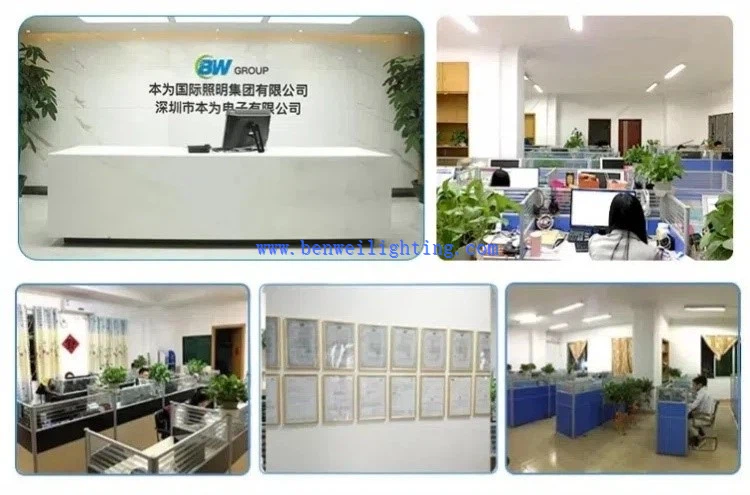
How To Cooperate With Us?
We are happy to have total control over the manufacturing process and the calibre of our products since we have our own facilities. Since we are producers rather than just brokers, we are dedicated to providing our customers with the best pricing. Since we are certain that the price and quality of our products are clear, we invite customers to see our samples first. Our commitment to quality and customer satisfaction drives us to continuously provide top-notch goods.
Our address
3rd Floor, 5th Building, Hebei Industrial Park, Hualian Community, Longhua District, Shenzhen, China





