

Light creates the ambiance people first notice when they enter a space. The ceiling-mounted LED recessed lights have well transcended their fundamental illuminating purpose. They shape the space's visual order and sensory experience through careful optical control and architectural integration.
Accurate optical system control
LED downlights' secondary optical design is key. Unlike diffuse light sources, LED chips distribute their light through a lens before shaping it with a reflector cup or frosted cover. This method controls light diffusion, illumination homogeneity, and edge clarity. Narrow beam angle light converges downward, creating a sharp visual focus; broad beam angle light diffuses gradually, producing homogeneous ambient illumination. These precise controls eliminate stray light and ensure that each beam of light has a clear functional orientation, illuminating the target region while maintaining visual harmony.
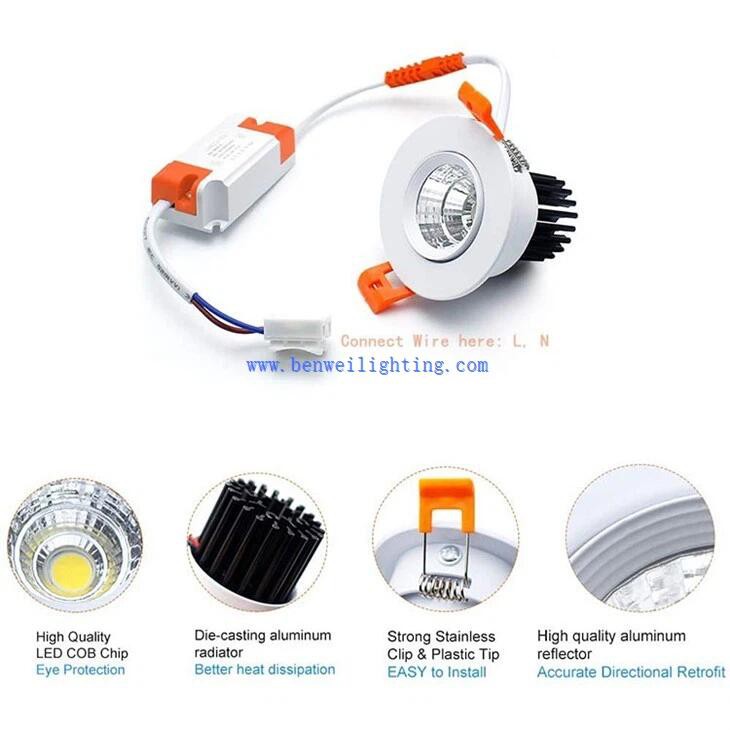
Light attenuation and heat dissipation
LED downlights' long-term stability depends on heat dissipation. In the lamp, thermal conductive silicone swiftly transfers LED chip heat to the aluminum baseplate, which exchanges heat with the air through specially engineered heat dissipation fins. A good heat dissipation system can keep chip junction temperatures below the critical point, which delays light attenuation. Light attenuation, the gradual loss of light source brightness, relies on operational temperature. A well-designed metal heat dissipation body assures instantaneous lamp brightness and good luminous flux maintenance after thousands of hours. Basic space illumination does not need to worry about brightness attenuation over many years.
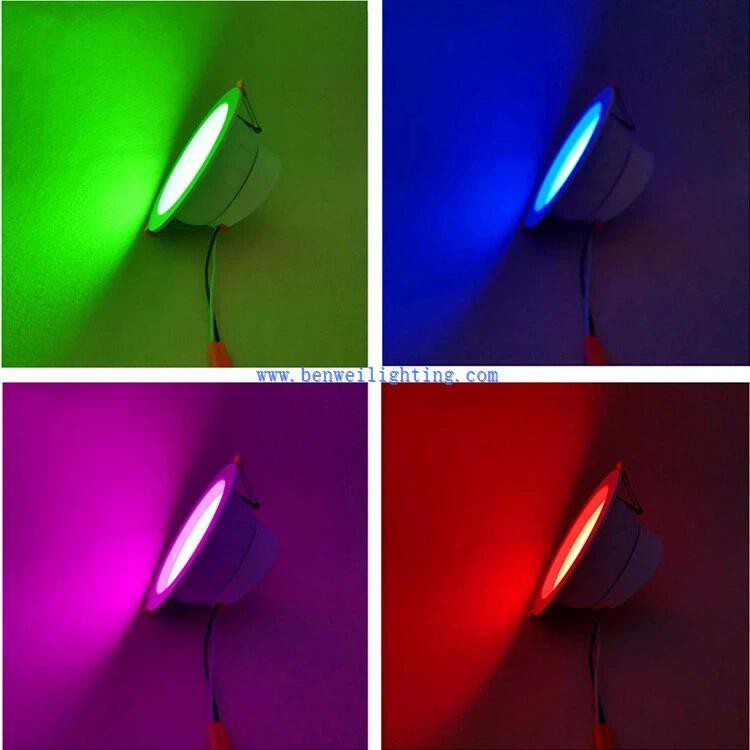
LED recessed lights hide the space. Precision optical distribution and heat dissipation design make light a structural aspect of architecture. They can direct traffic and highlight objects in commercial spaces and divide and layer spaces in homes. Space usefulness and beauty are unified when ceiling light falls orderly. The most effective lighting design is frequently one where the bulbs are not visible but people are entirely involved in the light environment they generate.
For more details about our offerings, please contact us at bwzm18@ledbenweilighting.com.
FAQ
Q: Do LED downlights generate a lot of heat? Is there a need to worry about heat dissipation issues?
A: Although LEDs are cold, their chips generate heat when emitting light. Highly efficient LED downlights use aluminum heat sinks to quickly conduct and dissipate heat, preserving light efficiency and delaying light degradation. Instead of bulb heat, choose products with superior heat dissipation. Insufficient heat dissipation can cause quick brightness loss and limited lifespan in low-quality LED downlights.
Q: Can LED recessed lights be dimmed?
A: Yes, many LED recessed lights do support dimming functionality. However, this is not always guaranteed. When purchasing, you must ensure that the product specifications clearly indicate "dimmable". At the same time, pay attention to its compatibility with existing dimmers. Traditional thyristor dimmers may not be compatible with some LED lights, causing flickering or noise. In such cases, it may be necessary to replace with a dimmer specifically designed for LEDs or use advanced/leading/lagging phase cutting dimming technology.





