It has been demonstrated that the wavelength of light has an impact on the poultry's behavior, welfare, and performance. Unlike mammals, birds have extra-retinal photoreceptors that sense photoperiod and synchronize their physiological processes with their environment in addition to retinal photoreceptors that are responsible for vision. The eye, pineal gland, and hypothalamus are the three primary organs where these photoreceptors are located.
Rods, cones, and double cones are the three types of photoreceptors found in the retina. Tetrachromatic cones in birds are responsible for color vision. These cones' photoreceptive pigments are most sensitive to violet (415 nm), blue (455 nm), green (508 nm), and red (571 nm). Serotonin and melatonin are secreted under the direction of the pineal gland, which becomes light sensitive for the first time at three days into development. These hormones play a role in the regulation of the circadian cycle, endocrine processes, body temperature, movement, and reproduction in poultry.
White light has been shown to be ineffective in suppressing serotonin and melatonin release if its intensity is less than 4 lux because it cannot pass through the skull and reach the pineal gland. Additionally, many light wavelengths directly enter the hypothalamus and have a variety of impacts. The skull and brain are directly penetrated by long wavelength light, which then reaches the hypothalamus. To effect the hypothalamus, short-wavelength light sources must be at greater intensity. Red wavelengths of the electromagnetic spectrum have been revealed to be perceptible by extra-retinal photoreceptors.
Due to variations in their retinas' photoreceptive pigment density and spectrum sensitivity, birds experience light in different ways. According to the light's spectrum power output and the bird's retina's spectral sensitivity, the perceived intensity is determined. At lesser intensities, red light is seen by birds as being brighter than blue light. Additionally, whereas light may excite the retina at low intensities, extra-retinal photoreceptors require light at greater intensities. This means that in order to excite hypothalamic photoreceptors, shorter wavelengths like blue or green light need to be at greater intensities than longer wavelengths like red light.
Birds' retinas are most sensitive to yellow and green wavelengths, yet being exposed to green light causes them to mature more slowly, produce fewer eggs, have lower levels of steroids, and express less GnRH-I mRNA. Therefore, it will prevent reproduction if just the retina is activated by green light. On the other hand, it has been shown that exposure to higher wavelengths increases egg production, as well as steroid and gonadotropin levels and neuropeptide mRNA expression.
In contrast to previous research, which revealed that laying hens trained under monochromatic red light produced more eggs than those reared under white, green, and blue light-emitting diode (LED) light, Borille et discovered that white light increased egg production more than red light did. Li et discovered that whereas birds raised in blue and green light produced the lightest eggs, those raised in red and white light laid the heaviest eggs. However, compared to birds raised under white and blue light, those raised under green light had stronger egg shells.
Light wavelength has also been shown to have an impact on behavior and stress. Birds have been seen to spend more time sitting or standing in the presence of short wavelengths (blue/green) and to move more actively in the presence of longer wavelengths (red/yellow). Birds raised under red/yellow light display tonic immobility for longer durations of time, showing that they were more frightened than the birds exposed to short wavelengths. It has been shown that green light cuts down on feeding time. Birds that were raised in red light exhibited reduced social recognition, according to D'Eath and Stone. In contrast to birds raised under white light or light with a high amount of blue light, Archer and Byrd found that birds raised under high levels of red light had decreased stress sensitivity as measured by corticosterone, composite asymmetry, and humoral.According to Svobodova et alfindings, .'s laying hens raised under red light had the lowest mortality rate of 12.65%, while hens raised under blue light had the highest mortality rate of 14.30%. This difference may indicate that red light-raised birds are less susceptible to stress than blue light-raised birds.
The goal of this study was to ascertain how the productivity, stress, and terror levels of laying hens were impacted by two different commercially available LED lights. Warm white LED fixtures were used for the first light, and white LED fixtures with monochromatic red light were used for the second. The use of red light was thought to boost output while reducing anxiety and stress reactions in the hens raised under these lights for the duration of the lay cycle.
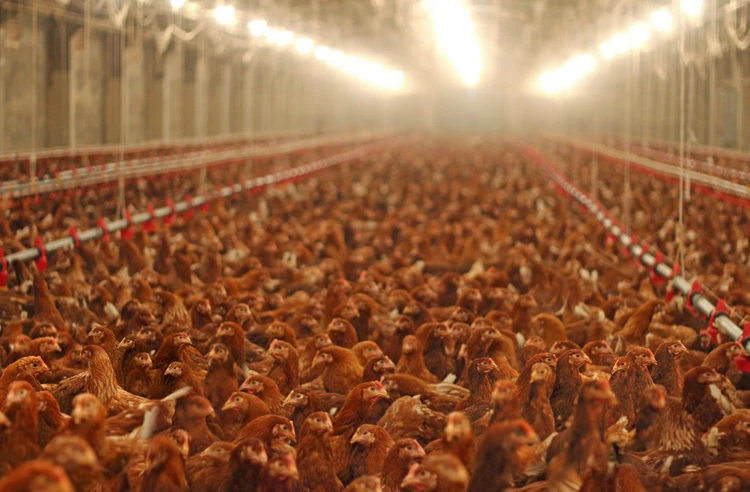
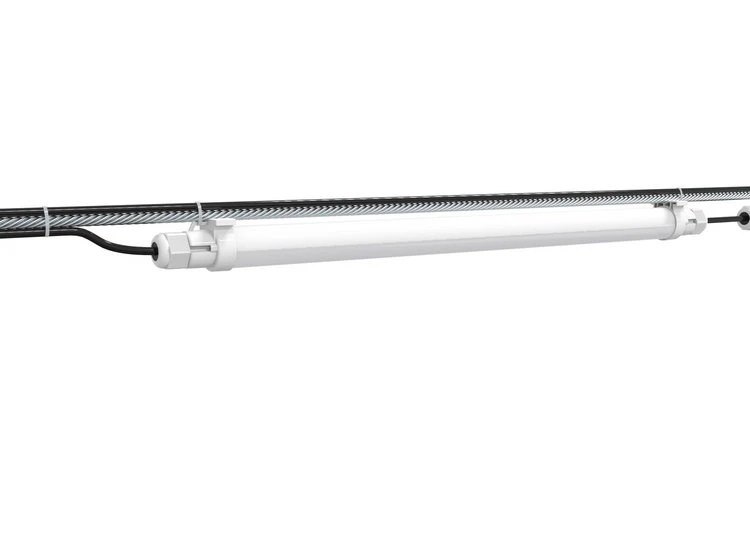
Benwei chicken coop lighting for egg production
|
Power |
Dimension(MM) |
LED Quantity(PCS) |
|
9W |
600*26mm |
Epistar 2835/48PCS |
|
13W |
900*26mm |
Epistar 2835/72PCS |
|
18W |
1200*26mm |
Epistar 2835/96PCS |
|
24W |
1500*26mm |
Epistar 2835/120PCS |
|
36W |
2400*26mm |
Epistar 2835/384PCS |