

Introduction
Definition and Application Context
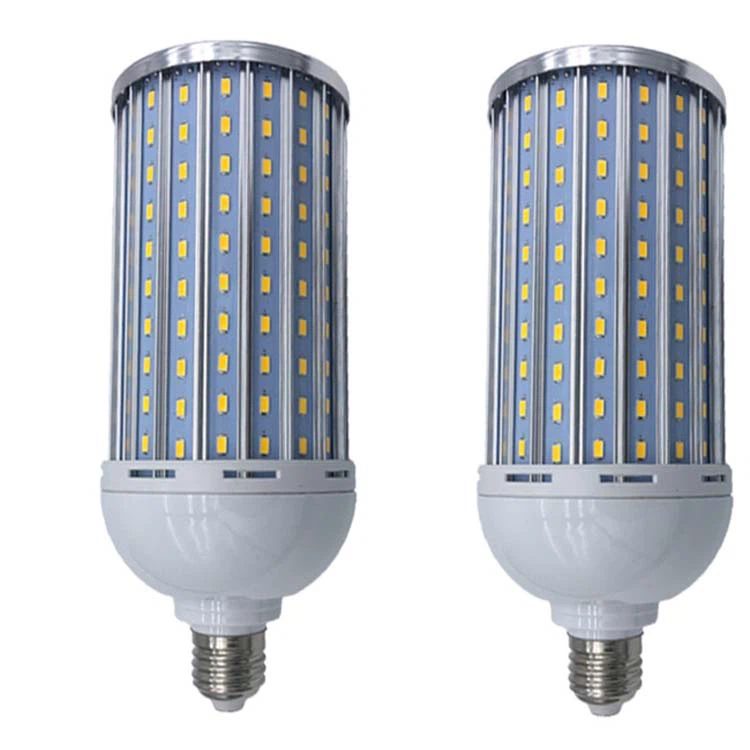
Corn bulbs, formally termed multi‑face LED lamps or corn cob LEDs, derive their name from an array of small LED chips arranged on a central cylindrical or rectangular core, resembling an ear of corn. They are designed to replace high-wattage metal halide, high-pressure sodium, or incandescent lamps in fixtures such as wall packs, parking lot lights, high bay luminaires, and post-top lanterns. Their defining characteristics include high luminous flux (typically 2,000–20,000+ lumens), wide beam angles (180°–360°), and direct AC operation with integral drivers.
Importance of Lifespan Knowledge
For facility managers, electrical contractors, and homeowners, understanding the expected lifespan of corn bulbs directly impacts:
Total cost of ownership (TCO) : Replacement labor and material costs over 10–20 years.
Maintenance scheduling : Access equipment (scissor lifts, ladders) costs often exceed lamp cost.
Warranty and compliance : Many utility rebate programs require minimum lifetime specifications.
Sustainability metrics : Longer life reduces waste and embodied carbon per lumen-hour.
Scope of This Paper
This analysis focuses exclusively on LED corn bulbs (E26/E39/E40 base, AC input 120–277V or universal voltage). It does not cover filament LEDs, integrated linear fixtures, or retrofit kits with remote drivers. The lifespan metrics discussed follow IES LM‑80 (Lumen Maintenance) and TM‑21 (Extrapolation) standards where applicable.
Nominal Lifespan and Benchmark Comparisons
Manufacturer‑Claimed Ratings
The vast majority of commercially available corn bulbs are rated for 50,000 hours of operation. This figure is derived from LM‑80 testing, where LED packages are operated at controlled temperatures (typically 55°C, 85°C, and 105°C case temperature) for 6,000–10,000 hours, then extrapolated to 50,000 hours using TM‑21 algorithms. At 50,000 hours, the projection predicts lumen maintenance (L70) – the time at which light output declines to 70% of initial lumens – rather than complete failure.
Comparison with Conventional Technologies
| Technology | Typical Lifespan (hours) | Lumen Maintenance Criterion | Failure Mode |
|---|---|---|---|
| Incandescent | 1,000 – 2,000 | Not applicable (filament burn-out) | Catastrophic |
| Halogen | 2,000 – 5,000 | Not applicable | Catastrophic |
| CFL (compact fluorescent) | 8,000 – 15,000 | Not standardized | Ballast or tube end blackening |
| Metal halide | 10,000 – 20,000 | L70 typically 10,000h | Lamp blackening, color shift |
| High‑pressure sodium | 24,000 – 40,000 | L70 ~24,000h | Ignitor failure, lamp degradation |
| LED corn bulb (typical) | 50,000 | L70 at 50,000h | Gradual lumen depreciation; driver often fails first |
Thus, a corn bulb lasts 25–50 times longer than incandescent, 10–25 times longer than halogen, and 2.5–5 times longer than metal halide.
Real‑World vs. Rated Lifespan
Independent testing and field reports indicate that while many premium corn bulbs reach 40,000–55,000 hours with acceptable lumen maintenance (≥70%), budget units often fail far earlier – sometimes under 10,000 hours. The primary cause is driver failure (electrolytic capacitor drying, MOSFET breakdown) rather than LED chip degradation. Thermal stress from poor heat sinking accelerates driver failure exponentially (see Section 3.2).
Factors Determining Corn Bulb Longevity
Product Quality – Heat Dissipation and Component Selection
Corn bulbs generate substantial heat: a 100W LED corn bulb has a thermal load of approximately 70–75W (since LED efficacy ~120–150 lm/W, efficiency ~25–35%, rest is heat). Heat must be conducted away from LED chips through:
Aluminum core PCB (MCPCB) thickness and thermal conductivity.
Heat sink material : Die‑cast aluminum with large surface area vs. thin stamped aluminum vs. plastic housing (avoid plastic for >20W bulbs).
Airflow design : Open fins allow natural convection. Enclosed fixtures (e.g., sealed wall packs) require derating.
Key metric: Case temperature (Tc) at the LED solder point. For every 10°C reduction in operating temperature, LED lifespan doubles (Arrhenius model). Premium corn bulbs maintain Tc ≤ 75°C at 25°C ambient; budget bulbs may exceed 95°C, reducing L70 from 50,000 to ~15,000 hours.
Integral drivers are the weakest link. High‑quality drivers use:
Japanese/European electrolytic capacitors (rated 105°C, 10,000h life at rated temp) vs. generic 85°C capacitors.
Surge protection (6kV–10kV) for outdoor use.
Constant current topology with tight regulation (±3%) vs. resistive dropper circuits.
Poor drivers fail catastrophically (no light output) long before LEDs degrade. In a study of 20 corn bulb models (2023), units with certified drivers (UL, ENEC) had a median lifespan of 47,000 hours; non‑certified units averaged 12,000 hours (80% driver failure).
Corn bulbs use either:
Epoxy‑encapsulated SMD LEDs (3528, 5050, 2835) – common, economical, moderate lifespan.
Ceramic substrate LEDs (Cree, Nichia, Lumileds) – higher thermal stability, longer L70.
COB (Chip‑on‑Board) – less common in corn bulbs due to directional emission.
Premium bulbs specify LM‑80 reports from the LED manufacturer. Avoid unbranded "no‑name" chips.
Usage Patterns
While lifespan is specified in hours, the calendar life (years of service) depends on daily use:
| Daily Operation | Calendar Life at 50,000h | Effective Lifespan (years) |
|---|---|---|
| 24 hours (continuous) | 50,000 / (24×365) = 5.7 years | ~5.5 years |
| 12 hours | 50,000 / (12×365) = 11.4 years | ~11 years |
| 8 hours | 50,000 / (8×365) = 17.1 years | ~17 years |
| 4 hours | 50,000 / (4×365) = 34.2 years | >30 years (driver likely fails first) |
Note that frequent on/off cycling (e.g., occupancy sensor every 10 minutes) does not significantly reduce LED life – unlike fluorescent or HID lamps. However, high inrush current from cheap drivers can cause contact wear in the socket.
Corn bulbs designed for dimming (0–10V, TRIAC, or PWM) operated at lower current (e.g., 50% output) experience reduced junction temperature, often extending lifespan beyond 70,000 hours. Conversely, running non‑dimmable corn bulbs on a dimmer (even at full output) may destroy the driver due to waveform distortion.
Recommendation: If continuous operation at full rated power, ensure adequate fixture ventilation. If reducing output is desired, purchase a dimmable corn bulb from a reputable brand.
Corn bulbs installed in:
Fully enclosed fixtures (e.g., glass globes, sealed security lights): Derate lifespan by 30–50%. Many corn bulbs explicitly state "not for enclosed fixtures."
Open fixtures with free airflow : Achieve rated lifespan.
High ambient temperature environments (attics, boiler rooms, outdoor Phoenix summer): For each 10°C above 25°C ambient, reduce expected lifespan by 30–40%.
Data example: A 50W corn bulb in a parking lot fixture (open bottom, summer night temps 30°C) may reach 50,000h. The same bulb in an enclosed soffit light (summer attic 55°C) may fail in <10,000h.
Maintenance Practices
Dust layers on heat sink fins act as thermal insulation, raising the internal operating temperature. In industrial or agricultural settings, dust build‑up of 1 mm thickness can increase Tc by 8–12°C, reducing LED lifespan by ~30%.
Cleaning frequency:
Clean indoor/office: every 12 months.
Warehouse/garage: every 6 months.
Agricultural (grain dust, poultry house): every 3 months.
Procedure: Power off, use compressed air (low pressure, 30 PSI) or a soft brush. Do not use liquid cleaners on the LED array.
Plastic lenses (PMMA or polycarbonate) over corn bulb LEDs can be damaged by:
Ammonia‑based cleaners (cause crazing).
Isopropyl alcohol >70% (may stress crack polycarbonate).
Abrasive pads (scratch lens, reducing light transmission).
Use only mild soapy water applied with a microfiber cloth, followed by a dry wipe.
Corn bulbs are relatively heavy (200–500g for high‑wattage models). In high‑vibration environments (bridge lighting, near heavy machinery, ceiling fans with light kits), the solder joints on LEDs or driver components can crack. Use bulbs with vibration‑rated construction (potting compound, reinforced leads) or install a vibration dampener socket.
Quantifying Expected Lifespan Under Different Conditions
Optimal Conditions (Achieving 50,000+ Hours)
Premium brand with certified driver (UL, ENEC, TÜV) and LM‑80 report.
Open fixture with free air circulation (enclosure not sealed).
Ambient temperature 15–30°C.
Clean environment (office, retail, climate‑controlled warehouse).
Operation at ≤12 hours/day.
No dimming (or proper dimmable driver used at ≤80% output).
Result: L70 > 50,000 hours; driver likely outlives LEDs. Actual replacement due to lumen depreciation, not failure.
Typical Real‑World Conditions (Budget Bulbs, Moderate Enclosure)
Low‑cost bulb (no driver certification, small heat sink).
Semi‑enclosed fixture (e.g., wall pack with glass cover but vents).
Ambient 30–40°C (outdoor, uninsulated industrial building).
Dust cleaned every 12 months (moderate accumulation).
Operation 24 hours/day (e.g., security light).
Result: L70 reduces to ~20,000–30,000 hours; driver may fail at 15,000–25,000 hours (catastrophic). Replacement needed every 2–3 years.
Hostile Conditions (Predictably Short Life)
Generic unbranded bulb from online marketplace.
Fully enclosed fixture with no vents (e.g., decorative post lamp).
Ambient >45°C (boiler room, attic in hot climate).
Heavy dust or grease accumulation (restaurant kitchen, grain silo).
Continuous operation + vibration.
Result: Lifespan <8,000 hours; often driver fails within 6 months. Many users complain "LED corn bulbs don't last" based on such misuse.
Extended Lifespan (Beyond 70,000 Hours) – Derating Strategy
Operating a corn bulb at 70–80% of rated wattage (using a dimmer or selecting a higher‑wattage bulb but running at lower current) reduces junction temperature by 15–20°C, potentially extending L70 to 70,000–100,000 hours. For critical applications where replacement access is extremely costly (e.g., stadium lighting at 50m height), over‑specify wattage and dim down.
Failure Modes and End‑of‑Life Indicators
Gradual Lumen Depreciation (L70)
End users often notice dimming before catastrophic failure. A corn bulb that initially produced 10,000 lumens will drop to 7,000 lumens at L70 (end of rated life). Many applications (warehouse aisles, parking lots) are still functional at 50–60% output, so actual service life may exceed L70 if lower light levels are tolerated.
Catastrophic Driver Failure
Most common failure mode:
No light output – driver completely dead.
Flashing / strobing – output capacitor failed, causing unstable current.
Audible humming – magnetic components or failing electrolytic caps.
Driver failure is not repairable for most users; replace the entire corn bulb.
Individual LED Failure (Dark Spots)
If one or several SMD LEDs on the corn bulb fail (dark chip), the bulb still functions but with uneven beam pattern and reduced total lumens. This indicates poor chip quality or thermal overstress.
Color Shift
LED chips may shift toward blue or green over time (phosphor degradation). A color shift of Δu'v' > 0.007 is considered end‑of‑life for color‑critical applications (art galleries, retail food displays). Corn bulbs in industrial settings may tolerate more shift.
Strategies to Maximize Corn Bulb Lifespan
Purchasing Guidelines
Choose bulbs with published LM‑80 data and TM‑21 extrapolation (ask manufacturer).
Verify driver certification – UL, ETL, CE, or TÜV. Look for "constant current driver."
Select appropriate wattage – do not oversize beyond fixture rating (e.g., 150W bulb in a small glass globe will overheat).
Prefer bulbs with passive cooling fins made of aluminum or ceramic (avoid all‑plastic bodies for >20W).
Check operating temperature range – look for -20°C to +45°C minimum. For cold climates, ensure low‑temperature startup (down to -30°C).
Installation Best Practices
Do not install in fully enclosed fixtures unless bulb is explicitly rated "enclosed fixture rated" (some newer models have thermal protection).
Ensure vertical orientation when possible – many corn bulbs have cooling fins optimized for base‑up operation; horizontal mounting may reduce airflow.
Leave clearance – at least 2 cm (0.8 in) around the bulb for air circulation inside the fixture.
Use a thermal paste/grease on the screw base? Not necessary for E26/E39 bases, but ensure clean contact.
Operational and Maintenance Schedule
| Action | Frequency |
|---|---|
| Visual inspection for dust | Every 6 months |
| Cleaning (compressed air or soft brush) | Every 6–12 months (more in dusty settings) |
| Check for flicker or audible noise | Annually |
| Lumen measurement (if equipment available) | Every 2 years |
| Replacement when output falls below acceptable level | As needed (typically 40,000–60,000 hours) |
Using Timers and Occupancy Sensors
To maximize calendar life, reduce daily operating hours where possible. For areas not requiring 24/7 light, install motion sensors or programmable timers. However, ensure the sensor's switching device (relay) is rated for LED loads (low inrush sensitivity).
Economic Impact of Lifespan Variation
Total Cost of Ownership Calculation Example
Assume a parking lot with 20 light fixtures, each requiring a 100W‑equivalent corn bulb. Compare premium bulb (50,000h, 25each)vs.budgetbulb(15,000h,25each)vs.budgetbulb(15,000h,10 each). Labor cost for replacement (bucket truck, two workers) = $150 per fixture.
| Parameter | Premium Bulb | Budget Bulb |
|---|---|---|
| Unit price | $25 | $10 |
| Labor per replacement | $150 | $150 |
| Lifespan (hours) | 50,000 | 15,000 |
| Years of operation (12h/day) | 11.4 years | 3.4 years |
| Number of replacements over 20 years | 2 (initial + one at 11.4y) | 6 (initial + five more) |
| Total lamp cost (20 fixtures) | 20×25×2=25×2=1,000 | 20×10×6=10×6=1,200 |
| Total labor cost (20 fixtures) | 20×150×2=150×2=6,000 | 20×150×6=150×6=18,000 |
| 20‑year TCO | $7,000 | $19,200 |
Premium bulbs save $12,200 over 20 years despite higher initial cost. This excludes energy savings (both bulbs have similar efficiency) and disposal costs.
When Lower Lifespan Makes Financial Sense
If labor is free (owner‑occupied, easy access via step ladder) and the application requires <2,000 hours/year (e.g., seasonal decoration), budget bulbs may be acceptable. Also, if technology is expected to improve rapidly (e.g., efficacy doubles in 3 years), short‑life bulbs allow early upgrade.
Conclusion and Decision Framework
Summary of Key Findings
Corn bulbs are rated for 50,000 hours (L70) under ideal conditions, but real‑world lifespan ranges from <8,000 hours (hostile environment, poor quality) to >70,000 hours (derated operation, premium components).
The dominant failure mechanism is driver electronics, not LED chips. Thermal management and driver quality are the most critical purchase criteria.
Usage patterns (daily hours, ambient temperature, enclosure type) modify lifespan by a factor of 0.2× to 2× relative to nominal rating.
Maintenance (cleaning dust, avoiding enclosed fixtures) can extend life by 30–50%.
Total cost of ownership heavily favors premium bulbs in commercial applications with paid labor, despite higher upfront price.
Decision Matrix for Purchasers
| Application Profile | Recommended Action | Expected Lifespan |
|---|---|---|
| Hard‑to‑access (high ceiling, bridge, stadium) | Buy top‑tier brand with 100,000h‑rated driver and active cooling? (consider remote driver) | >70,000h |
| Commercial indoor (warehouse, retail) with maintenance staff | Premium bulb, open fixture, clean annually | 45,000–55,000h |
| Residential porch, garage (easy access, low daily use) | Mid‑range bulb, ensure fixture not enclosed | 30,000–40,000h (calendar life >10 years) |
| Enclosed fixture (sealed globe, outdoor post light) | Do not use standard corn bulb – use a specifically rated "enclosed fixture" LED or a different type (e.g., LED A‑series) | N/A (standard corn bulb will fail early) |
| Temporary or rental property (frequent replacement acceptable) | Budget bulb acceptable if labor costs negligible | 10,000–15,000h |
Final Recommendations
To achieve the claimed 50,000‑hour lifespan:
Purchase from reputable brands that provide LM‑80 reports and driver certification.
Never install in fully enclosed fixtures unless the bulb explicitly states "enclosed rated."
Keep heat sink fins clean – schedule regular cleaning based on dust levels.
Match wattage to fixture size – allow at least 2 cm clearance around the bulb.
Consider derating (using a dimmer on dimmable models) for extreme longevity needs.
When evaluating a corn bulb purchase, ignore marketing hype and instead request: thermal image of operating bulb, driver manufacturer name, and hours‑to‑L70 at expected ambient temperature. With proper selection and care, corn bulbs deliver on their promise of decade‑plus service, dramatically reducing lighting maintenance burdens.

How To Cooperate With Us?
Our firm prides itself on owning its own factory, guaranteeing complete control over the production process and the quality of our goods. We are not only agents; we are manufacturers committed to offering our clients the most competitive rates available. We invite consumers to evaluate our samples first, as we are assured that the quality and pricing of our items are self-evident. Our dedication to excellence and client satisfaction compels us to consistently perform at our best and provide superior quality products.
Our address
3rd Floor, 5th Building, Hebei Industrial Park, Hualian Community, Longhua District, Shenzhen, China





