

The progressive replacement of conventional fluorescent lighting systems with light‑emitting diode (LED) tube lights has been driven primarily by superior energy efficiency and luminous performance. Among the most critical performance metrics for lighting specifiers and end‑users is operational lifespan. While marketing claims often highlight LED longevity, a rigorous quantitative comparison against traditional fluorescent tubes is necessary for informed decision‑making in both commercial and residential applications. This paper provides a systematic evaluation of the expected service life of LED tube lights relative to standard fluorescent tubes, examining underlying failure mechanisms, influencing factors, and practical implications for replacement cycles.

Definitions and Measurement Standards
Lifetime Metrics for Lighting Systems
The lighting industry employs standardized metrics to characterize useful life. For general illumination, the most widely adopted parameter is L70, defined as the operating time at which the luminous flux has degraded to 70% of its initial output. For fluorescent lamps, additional metrics such as ballast factor and end‑of‑life (EOL) failure (catastrophic loss of emission) are also relevant. Throughout this analysis, "lifespan" refers to the median rated hours under typical operating conditions, as specified by manufacturers following IES LM‑80 (for LEDs) or ANSI C78 (for fluorescent lamps).
Testing Conditions
All comparative data assume standard reference conditions:
Ambient temperature: 25 °C ± 2 °C
Operating cycle: 3 hours on, 20 minutes off (typical for industrial testing)
Nominal line voltage ± 5%
Open‑air fixture with passive ventilation
Deviations from these conditions alter absolute lifetimes, but the relative ranking between technologies remains consistent.
Lifespan of LED Tube Lights
Average Rated Life
High‑quality LED tube lights are rated for 50,000 hours to L70 under standard conditions. This translates into approximately 17.1 years of service when operated 8 hours per day, or 11.4 years at 12 hours per day. Premium commercial grades (e.g., UL‑Classified or DLC Premium) may achieve 70,000 to 100,000 hours at L70, though such products command higher upfront costs.
Failure Mechanisms in LED Tubes
LED tube lights contain no filaments, no mercury vapor, and no thermionic electrodes. Their longevity is governed by three primary degradation pathways:
The phosphor coating that converts blue LED emission to white light experiences gradual loss of quantum efficiency due to heat. Even with efficient heat sinking, junction temperatures of 85 °C can reduce L70 from 50,000 to 35,000 hours. Proper fixture ventilation is critical.
The integral LED driver uses electrolytic capacitors, whose electrolyte dries out over time. Capacitor life follows Arrhenius kinetics: every 10 °C reduction in driver temperature doubles its lifespan. A well‑designed driver with 105 °C rated capacitors can achieve 50,000 hours, whereas low‑quality drivers often fail at 15,000–20,000 hours (the "driver‑limited" failure mode).
Repeated thermal cycling (on/off switching) induces mechanical stress on solder connections. LED tubes rated for 50,000 on‑off cycles are typical; exceeding this accelerates joint cracking. Unlike fluorescent lamps, LED tubes are not significantly degraded by frequent switching – a key advantage.
Effect of Operating Temperature
LED tube lifespan is highly temperature‑sensitive. For every 10 °C rise in ambient temperature beyond 35 °C, L70 decreases by approximately 30–40%. Conversely, operation in refrigerated environments (0 °C to 10 °C) can extend L70 beyond 80,000 hours because driver capacitor and phosphor degradation slow dramatically.
Lifespan of Traditional Fluorescent Tubes
Average Rated Life
Standard T8 or T12 fluorescent tubes (linear, 4‑ft) are typically rated for 20,000 hours under 3‑hour operating cycles. Extended‑life types (e.g., "long life" or "XL" series) may reach 30,000–36,000 hours, but these are less common. At 8 hours daily operation, 20,000 hours equates to 6.8 years – less than half the LED baseline.
Failure Mechanisms in Fluorescent Tubes
Fluorescent lamps rely on heated tungsten electrodes coated with emissive material (typically barium, strontium, and calcium oxides). Each start sputters a minute amount of this coating; after approximately 8,000–12,000 starts, the coating is exhausted, causing rectification and end‑of‑life flickering. In continuous operation (long cycles), the same emissive material gradually evaporates, reducing lumen output.
Over time, mercury is absorbed by the glass, phosphor, and electrodes. When mercury pressure drops below optimal (∼6 mbar), the lamp's ultraviolet output declines, reducing visible light. This is a major contributor to lumen depreciation before catastrophic failure.
Fluorescent phosphors degrade under prolonged UV bombardment. Typical lumen maintenance is 70–80% at 50% of rated life, compared to LED tubes that maintain 90–95% at the same point.
Impact of Switching Frequency
Fluorescent tube lifespan is inversely proportional to the number of starts. A lamp rated for 20,000 hours at 3‑hour cycles may last only 10,000 hours when switched every 15 minutes (occupancy sensor applications). Conversely, continuous operation (24/7) can extend life to 40,000+ hours because electrode wear is minimized. LED tubes, having no fragile electrodes, are unaffected by switching frequency – a decisive advantage in motion‑sensor or daylight‑harvesting installations.
Comparative Summary and Practical Implications
Quantitative Lifespan Comparison
| Technology | Typical Rated Life (hours) | 8 h/day Service Life (years) | L70 at 40,000 h | Switching Sensitivity |
|---|---|---|---|---|
| LED tube (standard) | 50,000 | 17.1 | 85–90% | Negligible |
| LED tube (premium) | 70,000–100,000 | 24.0–34.2 | >90% | Negligible |
| Fluorescent T8 (standard) | 20,000 | 6.8 | 50–60% (lamp often failed) | High |
| Fluorescent T8 (extended life) | 30,000–36,000 | 10.3–12.3 | 60–70% | High |
Total Cost of Ownership Impact
Although LED tubes have higher initial purchase price (typically 2–3× a fluorescent tube), the extended lifespan reduces replacement labor and material costs. In commercial settings with ceiling heights >4 m (e.g., warehouses), each lamp replacement requires a lift truck and two technicians. Extending relamping intervals from 6 years to 17 years generates substantial operational savings.
Sustainability Considerations
Longer lifespan directly reduces waste volume. A single LED tube replaces two to three fluorescent tubes over a 20‑year building lifecycle, lowering landfill burden and upstream manufacturing emissions. Additionally, LED tubes contain no mercury, eliminating hazardous waste disposal requirements associated with fluorescent lamps.
Conclusion
LED tube lights offer a lifespan of approximately 50,000 hours under standard operating conditions – 2.5 times longer than traditional fluorescent tubes (∼20,000 hours). This superiority arises from the absence of fragile filaments, emissive electrode coatings, and mercury‑based degradation mechanisms. LED tubes also demonstrate minimal sensitivity to switching frequency, making them ideal for occupancy‑sensed or daylight‑controlled environments. However, actual LED longevity is contingent upon driver quality and thermal management; poorly designed LED tubes may fail earlier than premium fluorescents. Therefore, lighting specifiers should select LED tubes from reputable manufacturers with published LM‑80 reports and thermal validation. When properly implemented, LED tube lights deliver a service life exceeding 15 years under typical duty cycles, representing a durable, cost‑effective, and environmentally preferable alternative to conventional fluorescent technology.
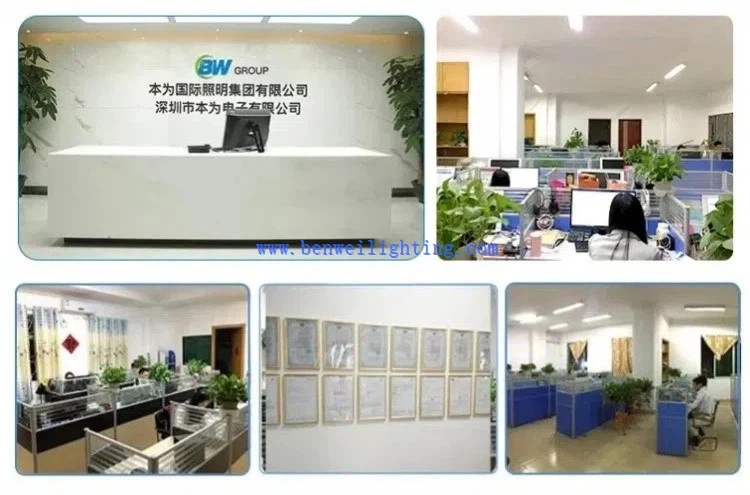
How To Cooperate With Us?
Our firm prides itself on owning its own factory, guaranteeing complete control over the production process and the quality of our goods. We are not only agents; we are manufacturers committed to offering our clients the most competitive rates available. We invite consumers to evaluate our samples first, as we are assured that the quality and pricing of our items are self-evident. Our dedication to excellence and client satisfaction compels us to consistently perform at our best and provide superior quality products.
Our address
3rd Floor, 5th Building, Hebei Industrial Park, Hualian Community, Longhua District, Shenzhen, China





