

If you're searching for a quick response, you can install one downlight per square metre, spacing them out by one metre, and placing them half a metre away from the walls. You would typically receive the desired results—correct, bright, and even illumination. But, the real issue here is how many downlights should be placed per square metre. and does not take other factors into consideration.
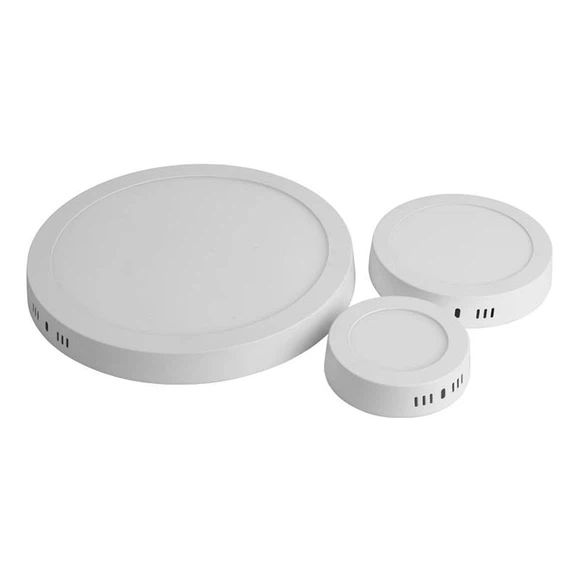
For most installations, the one downlight per square metre formula often yields enough lux levels. This technique has been successfully utilised for many years by several installers and builders who have customised it for various purposes and room shapes. Nevertheless, LED downlighting technology has overtaken halogen; nowadays, LED downlighters can provide light that is far brighter than both 50W GU10 mains voltage and 50W MR16 low voltage halogens. You may stretch out your downlights more and utilise stronger downlights with larger beam angles. Installing fewer downlights is an alternative to clustering several of them together. This has a nicer appearance and will help you save money by reducing the need to purchase additional downlights and installation fees.
For instance, if you have a powerful LED downlight like the Collingwood H2 Pro, which has a broad 55 degree beam angle with a light output of 550-850 lumens. They might be placed at a distance of 1.5 metres and 0.75 metres from the walls, or how about 2 metres and 1 metre? In living rooms and bedrooms, you can definitely get away with the 2 metre spacings, particularly if you have a broader beam angle. The wattage switch on this specific downlight ranges from 5W at 550 lumens to 7W at 850 lumens, and it also features a switch for the colour temperature.
Yet, diverse uses for spaces need various light levels (lux). For instance, a greater lux level in a kitchen might be preferable so that you can see what you're doing more clearly. We advise 300 lux on average for kitchens. In contrast, you may just need 150 lux in a lounge when you're only watching TV.
For whatever reason that is unclear, there are no standards imposed by the industry for lighting levels in residences. Only commercial buildings are required to have certain lux levels; for instance, an office should have a minimum of 500 lux. Whatever else you read in publications or on the internet is only a matter of opinion.
Many Factors to Consider
We provide a lighting design service to eliminate guesswork and increase accuracy because there are many factors to take into account when designing lighting, from simple ones like the brightness (lumen output) of the downlight you want to install to more complicated ones like uniformity, maintenance, and reflectance factors. The cost for our lighting design service is £20 + VAT per room. To request our service, send us an email with the specifics of your project, including the size of the room, any plans or drawings, and any other data you may have. After that, we may provide a payment link. We charge £20 plus VAT per room, not per building. Please contact us for a quote if your home is big and has plenty of rooms. Although certain room types may be completed quickly and easily, others need much more time from us due to their complicated forms, many cabinets, and furniture additions.
With our lighting design tools and a specialised Relux or Dialux lighting designer, we can then provide you your very own customised lighting plan. Please get in contact with him, whether you have a little toilet or a whole home; he's desperate for employment. We can also set up site inspections, energy-saving recommendations, and cost-of-ownership calculations if you own a commercial property. We often work with a manufacturer of commercial lighting, such as Ansell Lighting, Aurora Lighting, or Collingwood Lighting, who specialise in site visits, to do this.
We are delighted to provide suggestions for the top downlights to use and to inform you of the benefits of doing so in order to comply with the most recent Building Regulations.
We have 5 golden guidelines to take into account if you only need a little more direction and don't want a lighting design:
What kind of space are you lighting? It's not necessary to light every space at the same lux level. Lumens per square metre are used to measure lux. Kitchens need 300 average lux or more. Bedrooms only need an average of 100 lux whereas living areas and bathrooms need 150 lux.
Pick a downlight - Since each room is unique, it is better to decide on the sort of downlight you want first before calculating how many you'll need for each room.
what beam inclination? Several beam angles are available for certain downlights. Wider beam angles allow downlights to be placed further apart, but since the beam is less focussed, it is less bright.
Uniformity is important since it serves no purpose to have extremely brilliant patches in certain parts of a room and dark spots in others. Make sure the lighting is pleasant and even across the space.
Grid pattern, square grid downlights make a square space seem nicer. Having nine downlights in a 3x3 grid in a space that is 3x3 metres (9M2) may look nice, but your ceiling will be crowded with downlights. Even if a 2x2 grid can have a dim spot in the centre, placing one downlight there won't look good. This is why having a lighting plan may be quite helpful since you can compare various grid arrangements with various downlights before making a purchase or drilling holes.





