

High mast lighting towers are a critical component of many public and private outdoor spaces. These tall structures provide ample lighting for large areas, making them ideal for sporting venues, highways, parking lots, and more. Standing tall with elevated lamp arrays and stable supporting structures, high mast lighting towers are designed to deliver wide-range, uniform, and high-brightness illumination that ordinary street lamps cannot achieve. They are widely deployed in large outdoor scenarios that require all-round lighting coverage, including professional sports stadiums, outdoor sports fields, urban arterial highways, toll stations, large public parking lots, logistics parks, industrial yards, airport aprons and municipal square landscapes. As indispensable outdoor infrastructure, they guarantee night traffic safety, normal operation of public venues, nighttime activity safety of citizens, and orderly production and operation of industrial and logistics sites. But like any piece of infrastructure, high mast lighting towers require regular maintenance to ensure they function properly and remain safe for public use. Long-term exposure to outdoor open environments makes these towers continuously affected by wind, rain, temperature changes and other external factors, and their structural parts, electrical systems and lighting components are prone to aging, corrosion and damage. Without regular and standardized maintenance, minor faults will gradually evolve into equipment failure, lighting failure, and even structural safety hazards, bringing huge hidden dangers to public safety and property. The question is, how often should these towers be maintained? This is a core concern for municipal management departments, property managers, industrial park operators and engineering maintenance teams. A scientific and reasonable maintenance cycle can not only ensure the stable operation of high mast lighting towers, but also effectively reduce operation and maintenance costs and extend the service life of equipment.
The frequency of maintenance for high mast lighting towers largely depends on several factors. One of the most critical is the environment in which the tower is located. The outdoor operating environment is the primary factor affecting the aging speed and damage degree of high mast lighting towers, and different geographical and climatic conditions will directly determine the wear rate of tower bodies, electrical circuits and lamps. If the tower is situated in a harsh or corrosive environment, such as a coastal area or an industrial facility, it may require more frequent maintenance than a tower located in a more benign climate. Coastal areas are characterized by high humidity and high salt fog content in the air, and salt particles will continuously adhere to the tower body, lamp holders and electrical interfaces, causing electrochemical corrosion on metal structures, accelerating the rust and peeling of anti-corrosion coatings, and easily leading to circuit short circuits and poor contact. Industrial facilities such as chemical parks, steel plants and manufacturing workshops often contain corrosive gas, dust and industrial waste in the air, which will continuously erode the tower structure and internal electrical components, greatly improving the failure probability of equipment. In contrast, towers located in inland plain areas with mild climate, low humidity and clean air suffer from slower equipment aging and less environmental erosion, so the maintenance cycle can be appropriately extended. In general, however, most high mast lighting towers will require some form of maintenance at least once or twice a year. This annual regular maintenance is the basic guarantee for the stable operation of conventional high mast lighting equipment, covering daily inspection, component cleaning, fault investigation and routine testing, which can effectively eliminate most potential safety hazards and ensure the basic lighting performance of the towers throughout the year.
An essential component of high mast lighting tower maintenance is ensuring that the tower's electrical system is functioning correctly. The electrical system is the core power supply and control unit of high mast lighting towers, including power distribution boxes, internal wiring, connecting cables, lamp bases, ballasts, controllers and other key components. These precision electrical parts are extremely vulnerable to the influence of outdoor natural environments and are the most prone to failure in the whole set of equipment. Electrical wiring, cables, and fixtures can be damaged by exposure to the elements, and wiring can become loose or corroded over time. Long-term wind blowing will cause the cable to swing repeatedly, resulting in internal wire fatigue and breakage; rainwater penetration and humid air will cause wiring joints to oxidize and corrode, leading to poor power supply contact; high temperature in summer and low temperature freezing in winter will accelerate the aging and cracking of cable insulation layers, which may trigger electric leakage, short circuit and other dangerous faults. Inspecting and testing the electrical system should be a regular part of the maintenance schedule. In the maintenance process, personnel need to systematically check the tightness of all wiring terminals, test the insulation performance of cables, detect the operating voltage and current of the power distribution system, and verify the sensitivity of overload and leakage protection devices. Additionally, any damaged or worn electrical components should be repaired or replaced immediately to prevent potentially dangerous situations. Timely replacement of aging wires, damaged lamp bases and failed electrical accessories can effectively avoid electrical faults such as lighting flicker, partial lamp failure, electric leakage and even equipment burnout, and prevent safety accidents such as electric shock and fire caused by electrical system failure.
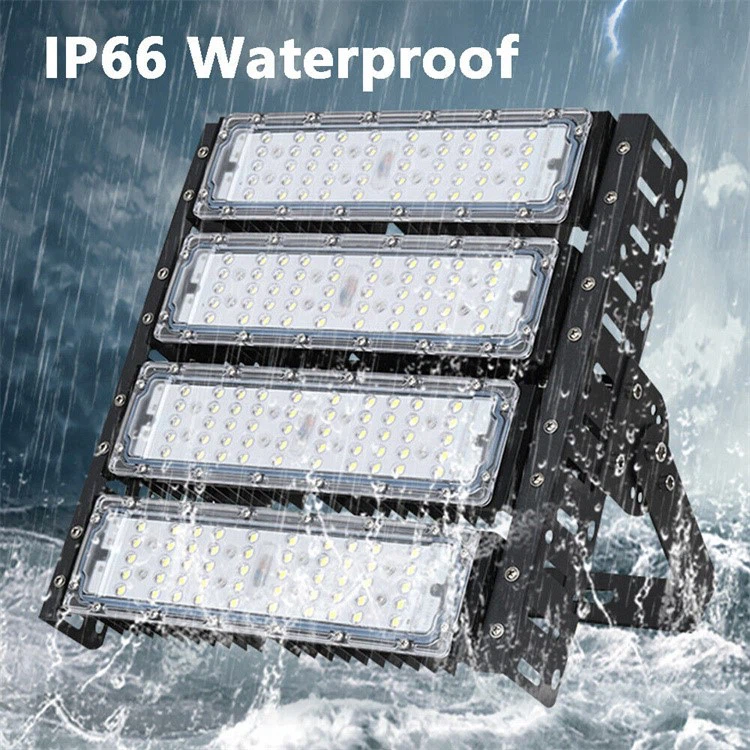
Another significant factor that can impact the frequency of maintenance is the type of lighting system used within the tower. With the continuous upgrading of lighting technology, high mast lighting towers are equipped with different types of light sources, and the structural characteristics, aging cycle and failure forms of different light sources vary greatly, which directly affects the formulation of maintenance cycles and maintenance plans. High-intensity discharge (HID) lamps, for example, require routine cleaning and replacement. HID lamps include metal halide lamps, high-pressure sodium lamps and other traditional light sources, which have the characteristics of large heat generation, short service life and easy attenuation of luminous flux. In the long-term outdoor working environment, the lamp housing of HID lamps is easy to accumulate dust, fallen leaves and dirt, which affects the lighting brightness and heat dissipation effect, and long-term use will lead to light decay, bulb blackening and lighting failure. Therefore, such lamps need regular surface cleaning, luminous flux detection and bulb replacement maintenance. On the contrary, light-emitting diode (LED) lights may only need occasional cleaning or inspection. LED lighting is a new energy-saving and environmentally friendly light source widely used in modern high mast lighting towers, with the advantages of long service life, low heat generation, stable performance and strong anti-attenuation ability. LED lamps have fewer vulnerable parts, stable internal circuit structure and strong adaptability to outdoor temperature changes, so there is no need for frequent replacement of light sources. Daily maintenance only needs regular surface dust cleaning and circuit operation inspection to ensure normal heat dissipation and lighting performance. Understanding the specific requirements of the lighting system used in the tower is critical for developing an effective maintenance plan. Only by matching the maintenance frequency and maintenance items according to the light source type can we not only ensure the lighting effect, but also avoid unnecessary maintenance costs and improve the overall operation and maintenance efficiency.
High mast lighting towers are also susceptible to damage from external factors, such as impact from vehicles or severe weather conditions. As outdoor elevated fixed facilities, high mast lighting towers are exposed to various uncertain external risks all year round. In highway and parking lot scenarios, passing vehicles may accidentally collide with the tower base, causing deformation and displacement of local structures; in open outdoor environments, extreme weather such as strong winds, thunderstorms, heavy rain, hail and typhoons will cause strong impact on the tower body. Strong wind will cause the tower to swing violently, resulting in loose internal structures and falling lamps; hail will hit the lamp housing and tower body, causing surface damage and lamp breakage; thunderstorms may easily induce lightning stroke faults, damaging electrical systems. These external damages are often sudden and hidden, and minor structural damage is not easy to find in daily observation. Regular inspections can help detect any damage to the tower early, allowing necessary repairs to be made before the damage becomes more severe. During the inspection process, maintenance personnel need to focus on checking whether the tower body is deformed, tilted or cracked, whether the foundation bolt fixation is firm, whether the lamp bracket is loose or fallen off, and whether the lightning protection device is intact and effective. During inspections, the tower's structural integrity should also be evaluated. The structural stability of the tower body is the basis for safe operation. Slight structural damage, if not repaired in time, will gradually expand under the action of wind and load, and eventually lead to structural instability, tower inclination and even collapse, causing serious safety accidents and economic losses.
Finally, the expertise and training of maintenance personnel can also impact the frequency of maintenance needed. The professionalism of maintenance personnel is an important human factor that affects the quality and cycle of equipment maintenance. High mast lighting tower maintenance is a professional technical work involving structural safety detection, electrical testing, light source maintenance and lightning protection detection, which requires personnel to have professional knowledge and operational skills. Trained maintenance professionals have systematic equipment cognition and rich on-site maintenance experience, and can accurately observe subtle changes in equipment operation during routine inspections. They may be able to identify potential issues during routine inspections and address them before they become larger problems. For example, professional maintenance personnel can judge the aging degree of cables through circuit operation data, find hidden structural risks through tiny cracks on the tower surface, and predict the service life of lamps through luminous flux changes, so as to eliminate potential faults in advance. In addition, the outdoor high-altitude operation of high mast lighting towers has high safety risks, and standardized operation is essential. Additionally, trained personnel will be familiar with the latest safety recommendations and best practices for maintaining high mast lighting towers. They can abide by industry safety specifications and standardized maintenance processes, avoid secondary damage to equipment caused by irregular operation, ensure the safety and standardization of maintenance work, and effectively reduce the frequency of equipment failure caused by non-standard maintenance, so as to optimize the overall maintenance cycle.
In conclusion, high mast lighting towers should undergo regular maintenance to ensure they function correctly and remain safe for public use. As important outdoor public infrastructure, the operating state of high mast lighting towers is related to public travel safety, venue operation safety and urban environmental safety, and regular maintenance is an indispensable key link in equipment operation and management. The frequency of maintenance will depend on factors such as the environment, the type of lighting system used, and the expertise of maintenance personnel. Harsh corrosive environments accelerate equipment aging and require shortened maintenance cycles; different light source types match different maintenance frequencies; and the professionalism of maintenance personnel directly affects the accuracy of fault detection and the rationality of maintenance cycles. Inspecting and testing the electrical system, evaluating the tower's structural integrity, and addressing any damage early are all crucial components of an effective maintenance plan. A complete and scientific maintenance system needs to take multiple factors into account, formulate targeted maintenance cycles and maintenance items, and adhere to the combination of regular inspection, daily maintenance and timely repair. With proper maintenance, high mast lighting towers can continue to provide reliable, safe lighting for many years. Standardized and regular maintenance can not only maximize the lighting performance of high mast lighting towers, ensure stable and safe operation in all weather conditions, but also greatly extend the overall service life of equipment, reduce long-term operation and maintenance costs, and create safe and reliable night lighting conditions for public spaces, industrial venues and traffic roads.

How To Cooperate With Us?
We are happy that we have total control over the manufacturing process and the quality of our products since we have our own facilities. Since we are producers rather than just brokers, we are dedicated to providing our customers with the best pricing. Since we are certain that the price and quality of our products are transparent, we advise customers to examine our samples first. Our commitment to quality and customer satisfaction drives us to continuously provide top-notch goods.
Our address
3rd Floor, 5th Building, Hebei Industrial Park, Hualian Community, Longhua District, Shenzhen, China





