

Introduction
The Evolving Role of Lighting in Sports Venues
Historically, sports lighting was designed solely to meet minimum broadcast lux levels. Today, lighting is recognised as a critical component of the fan engagement toolkit and a determinant of athlete well‑being. From professional stadiums to community gymnasiums, the quality of lighting directly influences ticket sales, viewer retention, injury rates, and even game outcomes.
Scope of This Analysis
This paper examines five key mechanisms through which sports lighting delivers value:
Creation of an exhilarating atmosphere (fan immersion)
Promotion of athlete focus and visual comfort
Reduction of player injury risk
Enhancement of spectator viewing quality
Reduction of energy and maintenance costs
Each mechanism is analysed using lighting engineering principles, referencing standards such as IES RP‑6 (Sports Lighting) and EN 12193.
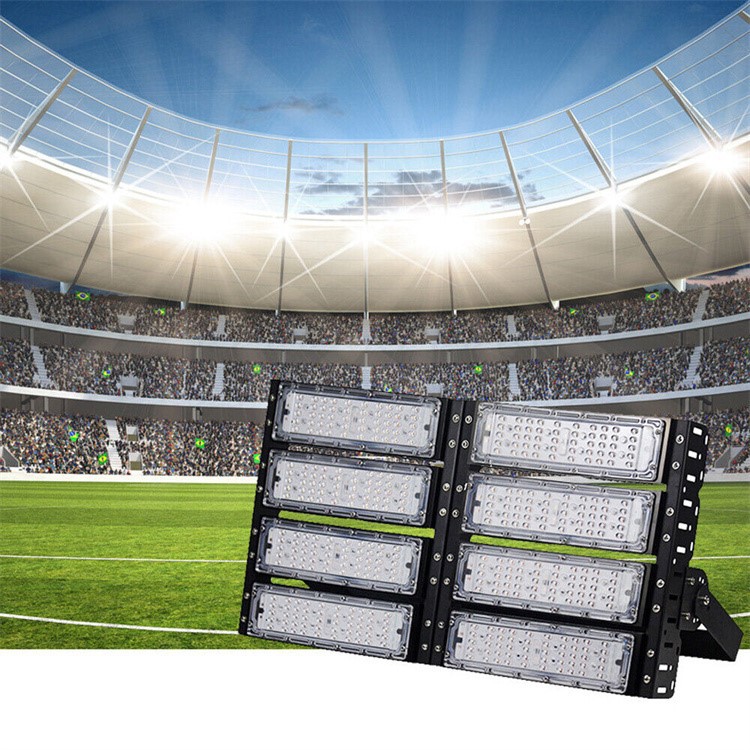
Creating an Exhilarating Atmosphere: Lighting as a Show Element
Dynamic Lighting and Emotional Resonance
Static white light no longer suffices. Modern LED sports lighting systems incorporate RGBW (red‑green‑blue‑white) capabilities, allowing venues to orchestrate pre‑game shows, goal celebrations, time‑out animations, and post‑victory light displays. Synchronised with stadium audio and video boards, colour‑changing sequences elevate heart rates and social media sharing. For example, the Super Bowl halftime show uses thousands of individually controllable LED fixtures to create a "light canvas" that responds to music – a spectacle that keeps fans talking for weeks.
Stroboscopic Effects and Choreographed Sequences
Strobe patterns (e.g., rapid white flashes during penalty shootouts or basketball free‑throws) increase perceived tension and excitement. When applied correctly (frequencies <15 Hz to avoid epileptic risk), strobing can amplify crowd roar. Advanced control systems (DMX, DALI, or wireless) allow lighting directors to program sequences that match game events in real time, turning the arena into an interactive theatre.
Colour Temperature Tuning for Mood Setting
Colour temperature (CCT) affects perceived energy. For a high‑intensity basketball match, a cool 5000 K–6000 K creates a crisp, adrenaline‑boosting environment. For a ceremonial or halftime show, warm 3000 K adds intimacy. Tunable‑white LEDs enable instant CCT switching without changing fixtures – a feature impossible with legacy metal halide.
Promoting Athlete Focus: Visual Ergonomics and Glare Control
The Physiology of Visual Performance in Sports
Athletes depend on dynamic visual acuity (DVA) – the ability to resolve moving objects. Poor lighting introduces two enemies:
Glare (disability or discomfort) – reduces contrast sensitivity.
Flicker (below 100 Hz) – causes stroboscopic effects, making fast‑moving balls appear as multiple images.
High‑quality LED sports lighting with constant current drivers (<1% flicker) and carefully positioned luminaires eliminates these issues.
Uniformity and Shadow Elimination
Field or court illuminance uniformity (U1 = E_min / E_max, U2 = E_min / E_avg) must meet IES standards:
Class I (broadcast): U2 ≥ 0.7, vertical illuminance ≥ 1000 lux.
Class III (club/recreational): U2 ≥ 0.5, vertical illuminance ≥ 300 lux.
Modern sports LED fixtures use asymmetric optics and multiple aiming angles to produce seamless illumination without harsh shadows under players' eyes, chins, or moving limbs. This allows a tennis player to track a 200 km/h serve without squinting or head‑turning.
Colour Rendering for Quick Object Identification
CRI (Colour Rendering Index) and the newer TM‑30 metric measure how accurately colours appear. For sports, CRI ≥ 80 is mandatory; top‑tier venues require CRI ≥ 90 together with R9 (saturated red) > 50. High colour fidelity helps players distinguish team jerseys, ball seams, and court markings instantly, reducing reaction time. A white cricket ball against a grassy field becomes far more visible under CRI 90 than under CRI 70.
Improving Player Safety: Eliminating Lighting‑Related Hazards
Accident Prevention Through Uniform Vertical Illuminance
Many sports injuries arise not from collisions but from misjudged steps or unseen obstacles. Poor lighting creates "dark zones" at floor level where a player might twist an ankle on a misplaced water bottle or uneven turf. Vertical illuminance (Ev) – light falling on a vertical plane (e.g., a player's body) – is often overlooked. Sports lighting standards now specify minimum Ev (e.g., 500 lux for training, 750 lux for competition). High‑quality LED floodlights with precise beam control ensure that every square metre of the pitch receives adequate vertical light, making patches of low traction or debris clearly visible.
Reducing Glare‑Induced Blind Spots
Glare from poorly shielded lights can temporarily blind a player – for example, a goalkeeper facing a setting sun or a badminton player looking up at an exposed luminaire. Modern sports LED fixtures incorporate micro‑louver optics, anti‑glare visors, and asymmetric beam distributions that put light on the field, not into players' eyes. The Unified Glare Rating (UGR) for sports lighting should be ≤ 22 for indoor courts and ≤ 25 for outdoor stadiums.
Flicker Safety and Stroboscopic Effects
Flicker at twice the mains frequency (100 Hz or 120 Hz) can cause optical illusions: a rotating wheel appears stationary or a ball's trajectory seems curved. For fast‑action sports (hockey, table tennis), even residual flicker can lead to mistimed swings. LED drivers with flicker‑free (≤1% flicker index) and high‑frequency PWM (≥30 kHz) eliminate this risk, protecting players from visual misperception.
Boosting Spectator Experience: Visibility and Comfort in the Stands
Horizontal vs. Vertical Illuminance for Viewers
Spectators primarily view the playing surface from an oblique angle. Therefore, vertical illuminance measured at the stands is as important as horizontal illuminance on the field. Poor vertical light makes players' faces dark silhouettes. Premium sports lighting systems aim for vertical illuminance ≥ 400 lux at key camera positions and ≥ 200 lux in general seating areas, ensuring that fans can see player facial expressions, jersey numbers, and ball movement clearly.
Glare for Spectators – A Forgotten Metric
While players need low glare, spectators are even more sensitive to direct luminaire glare, especially in indoor arenas with low‑mounted fixtures. Using indirect lighting components (upward‑directed LED bounce) or fully shielded direct‑downlight luminaires reduces visual discomfort. The result: fans can watch the entire game without squinting or looking away.
High‑Definition Broadcast and Slow‑Motion Replay
Modern sports LED lighting provides flicker‑free illumination that synchronises with high‑speed cameras (up to 1000 fps). This allows broadcasters to produce crystal‑clear slow‑motion replays without banding or rolling bars. For venues hosting televised events, a minimum of 1500 lux vertical at the field of play is required for 4K/8K broadcasts. Energy‑efficient LEDs achieve this without overheating the players or requiring massive generator banks.
Energy and Maintenance Savings: Economic and Environmental Benefits
Quantified Energy Reduction of LED Sports Lighting
Legacy sports lighting (metal halide, high‑pressure sodium) typically consumes 40–60 W/m². Modern LED systems achieve the same or higher lux levels with 15–25 W/m² – a 60–70% energy saving. For a 50,000 m² stadium, that translates to a reduction from 2.5 MW to 1 MW, saving over 1 MWh per game night. Annually (100 events), that is 100 MWh, equivalent to 35 tonnes of CO₂.
Extended Lifespan and Reduced Maintenance
Metal halide lamps last 6,000–15,000 hours; ballasts need replacement every 20,000 h. Properly designed LED sports luminaires have an L70 rating of 50,000–100,000 hours (10–20 years of typical use). The elimination of lamp changes on high‑mast poles (which require cranes and traffic closures) saves tens of thousands of dollars per event. Additionally, LED fixtures are vibration‑resistant (IK08/IK10) and weather‑sealed (IP65/IP66), reducing failure rates.
Smart Controls for Further Optimisation
Modern sports lighting systems integrate with daylight harvesting sensors, occupancy sensors, and scheduling software. During daylight training sessions, lights dim automatically. After midnight, only security lighting (e.g., 5% output) is active. For multi‑purpose arenas (basketball, concerts, exhibitions), pre‑programmed scenes (e.g., 1500 lux for game, 300 lux for cleaning, full RGB for concert) reduce electricity waste.
Practical Recommendations for Arena Owners
Key Specifications to Demand in a Tender
| Parameter | Recommended Value for Professional Sports |
|---|---|
| Horizontal illuminance (main camera) | ≥ 1500 lux |
| Vertical illuminance | ≥ 1000 lux |
| Uniformity (U2) | ≥ 0.7 |
| Colour temperature | 5000 K – 6000 K (tunable optional) |
| CRI / TM‑30 | CRI ≥ 90, R9 ≥ 50 |
| Glare (UGR) | ≤ 22 indoor, ≤ 25 outdoor |
| Flicker index | ≤ 1% (100 Hz – 1000 Hz) |
| IP rating | IP65 min, IP66 for outdoor |
| L70 lifetime | ≥ 50,000 h at 35°C ambient |
Investment Justification
Although LED sports lighting has higher upfront cost (typically 0.8–1.5perinstalledlux‑m2vs.0.8–1.5perinstalledlux‑m2vs.0.5–0.8 for metal halide), the total cost of ownership (TCO) over 10 years is 40–50% lower due to energy and maintenance savings. Additionally, enhanced fan experience leads to higher ticket sales, merchandise revenue, and sponsorship fees. Many utility companies offer rebates of $0.10–0.30 per kWh saved.
Conclusion
Sports lighting is no longer a background utility – it is a strategic asset. Properly engineered LED‑based systems achieve the rare goal of simultaneously elevating fan excitement (through dynamic colour, strobe effects, and high‑contrast visibility) and boosting athlete performance (via glare control, shadow elimination, flicker‑free illumination, and safety). The energy efficiency and long lifespan of modern LEDs further reduce operational burdens, making the upgrade financially prudent. As stadiums and arenas compete for audiences and broadcast rights, investing in state‑of‑the‑art sports lighting is not an option – it is a necessity. Whether you manage a local gym or a World Cup stadium, the right light transforms every game into an unforgettable spectacle and every play into a safe, precise performance.

How To Cooperate With Us?
Our firm prides itself on owning its own factory, guaranteeing complete control over the production process and the quality of our goods. We are not only agents; we are manufacturers committed to offering our clients the most competitive rates available. We invite consumers to evaluate our samples first, as we are assured that the quality and pricing of our items are self-evident. Our dedication to excellence and client satisfaction compels us to consistently perform at our best and provide superior quality products.
Our address
3rd Floor, 5th Building, Hebei Industrial Park, Hualian Community, Longhua District, Shenzhen, China





