

LED downlights (sometimes called recessed or can lights) are a popular alternative for contemporary homes, businesses, and commercial areas. They produce clean, unobtrusive light while being very energy efficient. One of the most crucial elements to comprehend is the beam angle, which is the distribution of light emitted by the fixture. Adjusting it may significantly alter the lighting effect, ranging from intense spotlights to wide ambient coverage.
In this blog article, we'll discuss what beam angle is, why it's important, how to alter it, and practical recommendations for achieving the greatest results in your environment.
What is the Beam Angle in LED Downlights?
The beam angle is the angle at which light is emitted from the fixture, which is usually measured in degrees. It influences whether the light spreads broadly or narrowly.
Narrow beam (15°-30°) produces a tight, focused spotlight effect. Ideal for emphasising artwork, countertops, and architectural elements. Ideal for high ceilings.
Medium beam (30°-60°): A flexible choice for job and general illumination, such as in kitchens or reading spaces.
Wide beam (60° to 120°+): Provides uniform, diffuse illumination for ambient lighting in living rooms, corridors, and wider open areas.
A narrower beam maintains greater intensity over distance while covering less area. A broader beam covers more land, but may look less bright.
Why change the beam angle?
Fixed beam angles are suitable for many applications, while adjustable ones provide flexibility:
Adapt to room changes (such as shifting furniture or paintings).
Optimise for varying ceiling heights.
Layer lighting: Use small beams for highlights and wider beams for fill.
Increase energy efficiency by focusing light precisely where it is needed.
Methods to Adjust Beam Angle on LED Downlights
Not every LED downlight is adjustable. Here are some popular approaches:
1. Interchangeable Lenses or Optics (The Most Popular DIY Method)
Many current LED downlights include replaceable or interchangeable lenses and reflectors.
How To Do It
Turn off the power and let the light to cool.
Gently pull down the trim ring (outside ornamental ring), which is usually clipped in.
Access the inner lens (look for indications such as 15°, 45°, and 60°).
Rotate or exchange the lens to your preferred setting/position.
Snap the trim back until it snaps firmly.
No tools are normally required. Some versions feature various lenses in the package.
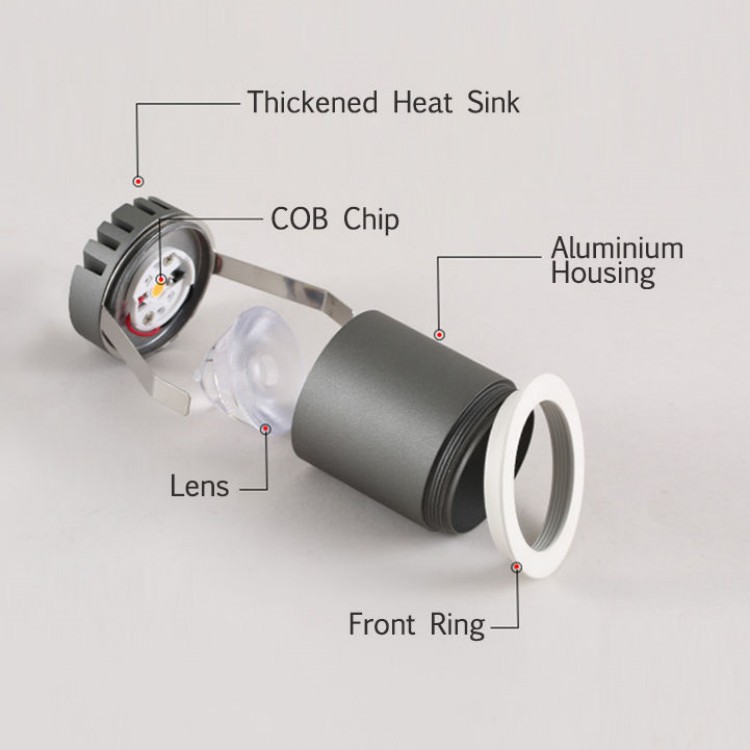
Zoom or Continuously Adjustable Mechanisms
Premium fixtures have inbuilt zoom lenses that allow you to twist or slide to adjust the angle on the fly (for example, from 24° to 60°).
Gimbal or tilt-adjustable downlights
These do not affect the beam spread, but do enable you to target the complete light module. Ideal for steep ceilings or directed accent lighting. Screwdrivers, fingers, or built-in pivots are often used for adjustments (up to 45° tilt in many versions).
Choose the right fixture from the start
If retrofitting, consider for models with several beam angle choices or completely adjustable designs. Look for specs that specify the allowable angles (15°, 24°, 36°, 60°, etc.).
Safety Note: Always turn off the electricity at the breaker. If you are uncertain about electrical work, ask a certified electrician.
Choosing the Suitable Beam Angle for Your Space
Living Rooms and General Areas: 60°-90° for even coverage.
Kitchen and task areas: 30°-45° for concentrated work surfaces.
Art/Accent Lighting: 15° to 30°.
High ceilings (>9-10 ft): Use narrower beams to maintain intensity.
To determine appropriate location, use the spacing requirement, which is generally mentioned in product specifications.
Maximum spacing equals Spacing Criterion x Ceiling Height.
Pro Tip for Best Results
Layer your lighting: Use different beam angles to provide depth and drama.
Test before final installation: Many customisable types allow you to edit after installation.
Consider colour temperature and beam angle (warmer in living spaces, colder in jobs).
Check compatibility. Make sure the fixture matches your recessed housing size (often 4", 5", or 6").
Maintenance: To ensure best performance, dust lenses on a regular basis.





