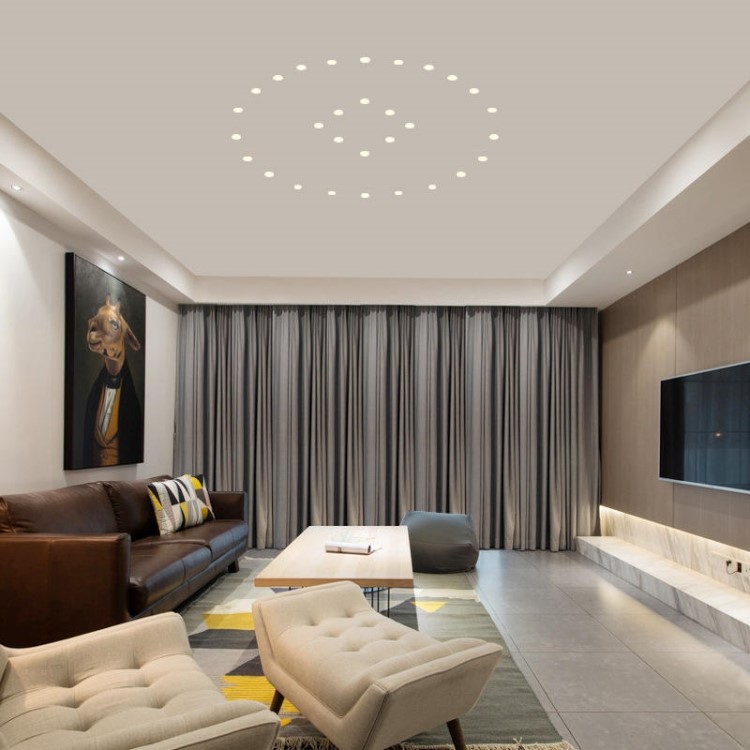
Choosing the appropriate beam angle for LED downlights is critical for providing a pleasant and practical lighting environment in any room. The appropriate beam angle influences light distribution, ambiance, and lighting efficacy. Here's a guide to help you choose the best angle for your purposes.
What is the Beam Angle?
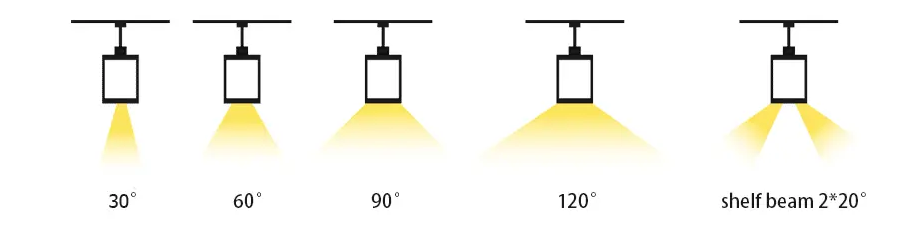
The beam angle, stated in degrees, is the width or narrowness with which light spreads from its source. Narrow beam angles direct light to particular locations, whilst larger angles disperse it more uniformly.
Examples of Beam Angles and Their Applications
Narrow Beam Angle (15°-25°).
A narrow beam produces concentrated, strong light, which is great for highlighting details such as artwork or architectural elements. It's ideal for creating a dramatic impression in situations that need focused illumination.
Medium Beam Angle: (30°-60°)
Medium angles provide a mix of concentrated and scattered light. They are ideal for kitchens, dining areas, and reading nooks, providing enough light while maintaining a cosy atmosphere.
Wide beam angle (60°+)
A broad angle diffuses light across a greater area, making it perfect for general illumination. It works well in living rooms, corridors, and open workspaces, providing a friendly and comfortable environment.
Factors to Consider When Selecting a Beam Angle
Room Size and Layout
Wider beam angles offer even lighting in bigger places, but medium or narrow beams are more effective in smaller areas.
Ceiling Height
High ceilings need narrow or medium angles to properly direct light downward. Lower ceilings work well with broad angles to provide homogeneous illumination.
Purpose of Lighting
Consider the principal purpose. Medium or narrow angles are beneficial in task-oriented settings, but broad angles provide a gentle, uniform glow in general illumination.
How To Make The Right Choice
For highlighting, employ narrow angles (15°-25°) with concentrated illumination.
For job areas: Medium angles (30°-60°) are ideal for kitchens, baths, and workplaces.
For ambient lighting, wide angles (60° or more) give pleasant illumination in bigger places.
Choosing the proper beam angle for LED downlights may completely alter your room, improving both utility and aesthetics. You may make a decision that emphasises the appearance and utility of your house or business by taking into account aspects such as room size, ceiling height, and lighting purpose.