

Introduction: The Hazards and Pain Points of Uneven Indoor Lighting
Practical Hazards Caused by Uneven Lighting
In contemporary architectural lighting design, uniformity is one of the primary evaluation criteria for lighting quality. Whether it is commercial retail spaces, hotel lobbies and guest rooms, art galleries, office buildings, or high-end residential interiors, uneven lighting will trigger a series of negative chain reactions. In commercial scenarios such as clothing stores, jewelry shops, and exhibition halls, uneven light distribution will lead to inconsistent brightness of displayed products, local shadow occlusion, and distorted color restoration, greatly reducing the display grade of goods and works, and directly affecting customers' viewing experience and purchase intention. In office and living spaces, long-term exposure to environments with alternating strong and weak light will easily cause visual fatigue, eye soreness, dizziness, and other discomforts, and even induce myopia and asthenopia in severe cases, which violates the basic ergonomic lighting principles.
In addition, uneven lighting will destroy the overall spatial layering and aesthetic unity of interior decoration. Carefully designed interior styles and spatial structures will lose their decorative value due to chaotic light and shadow effects, resulting in a serious waste of decoration costs. For engineering contractors, uneven lighting after project completion often leads to customer complaints, project rectification, increased construction costs, and even damage to corporate reputation. Therefore, solving the problem of uneven lighting is an essential link to improve the quality of lighting engineering and meet high-standard spatial lighting needs.
Common Dilemmas in Traditional Lighting Solutions
For a long time, most indoor lighting projects rely on traditional fixed-angle recessed downlights, panel lights, and ordinary LED spotlights for overall lighting and accent lighting. However, these traditional lighting products have inherent defects in structural design and optical performance, which are the fundamental reasons for difficult-to-eliminate uneven lighting. First of all, traditional fixed-angle lamps have a single light-emitting angle and cannot adjust the light direction according to the actual spatial structure and lighting focus. It is impossible to perform targeted supplementary lighting for dark areas and reduce excessive local brightness, resulting in obvious light and shadow stratification and uneven brightness in the space.
Secondly, the optical design of traditional lamps is relatively backward, with low light source concentration, serious light scattering, and inconsistent light output uniformity. Some products have central overexposure and peripheral dimness, forming a typical "bright center, dark edge" lighting effect. Moreover, the heat dissipation performance of traditional ordinary LED lamps is poor. Long-term operation leads to rapid light decay of the light source, inconsistent brightness attenuation of different lamps in the same space, and gradual aggravation of lighting unevenness in the later stage of use. In addition, traditional lamps have single color rendering performance and unstable color temperature consistency, which will cause local color deviation in the space, further worsening the uneven visual perception of lighting. Faced with the above dilemmas, the industry urgently needs a professional, adjustable, high-uniformity lighting product to replace traditional solutions and completely solve the problem of uneven lighting.

Core Causes of Uneven Lighting in Indoor Spaces
Defects in Lamp Optical Design
Beam angle is the core optical parameter that determines the light coverage range and uniformity. Most traditional lighting products only provide a single fixed beam angle, which cannot adapt to the diverse lighting needs of complex indoor spaces. In actual engineering applications, if the beam angle is too small, the light coverage area is narrow, forming independent bright spots, and a large number of dark areas will appear between lamp positions; if the beam angle is too large, the light is scattered in a wide range, the central brightness is insufficient, and the local key lighting areas lack focus. At the same time, unreasonable beam angle matching will lead to overlapping light superposition in some areas and blank lighting in others, forming obvious uneven brightness distribution, which is the most direct cause of uneven lighting.
The quality of the light source directly determines the basic uniformity of light output. Low-end ordinary LED lamp beads have problems such as inconsistent chip luminous efficiency, uneven phosphor coating, and poor light-emitting consistency. In the working state, the luminous brightness of different lamp beads in the same lamp is different, and the light output presents irregular spot and shadow phenomena. In addition, inferior optical lenses and reflectors have low light transmittance and poor light-gathering performance, which cannot uniformly refract and reflect the light source, resulting in chaotic light output direction, serious light loss, and inconsistent brightness in different irradiation areas, further amplifying the problem of uneven lighting.
Limitations of Fixed Lamp Structure
Most traditional recessed downlights and spotlights adopt a fixed integrated structure, and the light-emitting direction cannot be adjusted after installation. In actual indoor spaces, due to the influence of ceiling height, spatial structure, furniture placement, and decorative modeling, the fixed vertical light-emitting mode cannot cover all lighting areas. For example, the wall corner areas, the side of decorative paintings, and the display areas of goods are easily out of the vertical light irradiation range, forming permanent dark areas. At the same time, partial areas will be directly irradiated by vertical light, resulting in excessive brightness and glare, forming a strong contrast of light and dark, and seriously destroying the uniformity of overall lighting.
Affected by on-site construction conditions, manual installation errors are inevitable in the installation process of fixed lamps. Slight deviations in the embedding position, horizontal angle, and embedding depth of each lamp will lead to differences in light irradiation distance and angle. Fixed lamps cannot be adjusted after installation, and small installation errors will be continuously amplified in the lighting effect, resulting in inconsistent lighting effects of different lamps in the same space, forming local uneven brightness and affecting the overall lighting uniformity.
Late Performance Attenuation of Lighting Products
Light decay is an inevitable performance attenuation problem in the long-term operation of LED lamps. Traditional low-quality lamps adopt simple heat dissipation structures, which cannot effectively export the heat generated by the light source and driver during operation. Long-term high-temperature operation will accelerate the aging of LED chips, resulting in rapid light decay. More importantly, the heat dissipation efficiency of different lamps is inconsistent, and the light decay rate of each lamp in the same space varies greatly. After a period of use, some lamps have obvious dimming, while others maintain high brightness, resulting in increasingly prominent uneven lighting differences in the space.
Traditional lamp lenses and reflectors are mostly made of low-cost ordinary plastic materials, which are prone to aging, yellowing, and deformation after long-term exposure to light and heat. The aging lens will reduce light transmittance and cause uneven light refraction; the deformed reflector will change the light reflection angle, resulting in scattered light and irregular light output. The aging degree of optical components of different lamps is different, which further leads to inconsistent lighting effects in the whole space and forms long-term uneven lighting problems that are difficult to solve.
Technical Advantages of Adjustable Gimbal LED COB Recessed Spotlight for Solving Uneven Lighting
Multi-Directional Adjustable Gimbal Structure: Eliminate Fixed Lighting Dead Zones
The core structural advantage of this adjustable gimbal LED COB recessed spotlight is the innovative gimbal rotatable light head design, which breaks through the limitation of fixed vertical light emission of traditional lamps. The lamp head supports 30° free rotation in multiple directions, which can flexibly adjust the light irradiation angle according to the on-site spatial structure, ceiling height, and lighting focus needs. For dark areas such as wall corners, decorative wall surfaces, and display areas that are difficult to cover by vertical light, the light direction can be accurately adjusted for targeted supplementary lighting; for areas with excessive local brightness and glare, the light angle can be appropriately deviated to reduce direct irradiation, balance the overall spatial brightness, and completely eliminate lighting dead zones and local over-bright problems caused by fixed angles.
Different from traditional fixed lamps that require high installation accuracy and scene matching, the gimbal adjustable structure of this product can effectively compensate for installation errors and spatial structural differences. Even if there are slight deviations in the embedding position and angle during on-site construction, the later angle adjustment can be used to correct the light irradiation range to ensure that the lighting effect of each lamp is consistent. It can perfectly adapt to complex indoor scenes such as irregular ceilings, partial raised ceilings, and asymmetric spatial layouts, realizing full coverage and uniform distribution of indoor light and thoroughly solving the uneven lighting problems caused by installation errors and spatial structural limitations.
Diversified Precision Optical Matching: Achieve Full-Space Uniform Light Output
In view of the uneven lighting problem caused by single beam angle of traditional lamps, this product provides a wealth of beam angle options, including lens versions of 15°, 24°, 38° and reflector versions of 20°, 40°, 60°, covering all mainstream lighting angles from narrow beam spotlighting to wide area floodlighting. Designers and constructors can select the most appropriate beam angle according to the spatial area, ceiling height, and lighting functional needs. Narrow beam angles are used for key accent lighting of decorative paintings, exhibits, and core display areas to ensure concentrated and uniform local light; wide beam angles are used for overall ambient lighting to realize large-area uniform light coverage. The flexible matching of multiple beam angles realizes hierarchical and standardized lighting, avoiding uneven brightness caused by unreasonable angle matching.
This spotlight adopts high-precision imported optical lenses and high-reflection aluminum reflectors, with ultra-high light transmittance and uniform light refraction and reflection performance. Compared with ordinary plastic optical components, it effectively avoids light scattering, spot distortion, and local light loss. The built-in high-quality Cree and Bridgelux COB light sources have ultra-high luminous consistency, uniform chip light emission, no dark spots or flicker, and stable color temperature. The overall optical system realizes uniform light output from the center to the edge of the irradiation area, completely eliminating the "bright center, dark edge" phenomenon of traditional lamps, and greatly improving the overall uniformity of spatial lighting.
High-Stability Heat Dissipation System: Avoid Late Uneven Lighting Caused by Performance Attenuation
The product adopts an integrated thickened fin-type die-cast aluminum heat dissipation shell, with an optimized air convection structure design. The high thermal conductivity of aluminum material can quickly export the heat generated by the COB light source and constant current driver during operation, and realize rapid heat dissipation through the fin gap air convection. Compared with the thin iron shell and simple heat dissipation structure of traditional lamps, this heat dissipation system reduces the working temperature of the lamp body by more than 30%, effectively avoiding chip aging and light decay caused by high-temperature operation.
Relying on the efficient heat dissipation system, the lamp achieves ultra-low light decay performance, with a luminous flux loss of less than 3% within 10,000 hours of continuous operation, and the L70 rated service life is as long as 50,000 hours. It ensures that all lamps in the space maintain basically consistent luminous brightness and light output effect in the whole life cycle, avoids the uneven lighting problem caused by differential light decay of different lamps in the later stage of use, and realizes long-term stable and uniform indoor lighting effect.
High Standard Comprehensive Performance: Auxiliary Optimization of Uniform Lighting Effect
The product supports CRI90 and CRI95 high color rendering options, which can accurately restore the true color of objects, avoid local color deviation and color distortion caused by low color rendering of traditional lamps, and realize uniform and consistent color presentation in the whole space. Whether it is commercial product display, art exhibition, or indoor decorative color performance, it can maintain natural and uniform color layering, further optimize the overall lighting texture, and solve the visual unevenness problem caused by color difference.
Built-in high-quality constant current driver, with over-current, over-voltage, and short-circuit protection functions, ensures stable and flicker-free lamp operation. It supports Triac dimming, 0-10V dimming, and DALI digital dimming modes, which can realize stepless adjustable brightness. In actual use, the overall brightness of the space can be finely adjusted according to environmental changes to balance the light and dark difference of local areas, further optimize the uniformity of spatial lighting, and meet the high-standard uniform lighting needs of different scenarios.
Practical Application Scenarios and Effect Verification
Commercial Retail Lighting
In clothing stores, jewelry stores, and cosmetic retail spaces, uniform and accurate accent lighting is the key to improving product display grade. Traditional fixed spotlights are prone to dark areas in the display area and inconsistent product lighting brightness. After adopting this adjustable gimbal COB spotlight, the light angle and beam range can be adjusted according to the display cabinet layout and product placement. The narrow beam angle is used for key lighting of core products, and the wide beam angle is used for auxiliary lighting of the overall display area. The multi-angle adjustment completely eliminates display dead zones, realizes uniform brightness and consistent color presentation of all products in the store, significantly improves the display effect, and effectively boosts customer conversion rate.
Hotel and Hospitality Lighting
Hotel guest rooms, corridors, and lobbies require soft, uniform, and layered lighting to create a comfortable and high-end accommodation atmosphere. Traditional lamps have uneven light distribution, local glare, and obvious late light decay, which affect the guest experience. This product realizes flexible light angle adjustment through the gimbal structure, which can avoid direct glare to the human eye, make the indoor light soft and uniform, and eliminate dark corners of the room. The ultra-low light decay performance ensures that the lighting effect of the hotel remains uniform and stable for a long time, avoids frequent lamp replacement and lighting effect attenuation, and reduces the operation and maintenance cost of the hotel while maintaining high-standard lighting quality.
Art Gallery and Exhibition Hall Lighting
Art works and exhibition exhibits have extremely high requirements for lighting uniformity, color restoration, and light accuracy. Uneven lighting will lead to distorted presentation of work details and layered colors. This high-CRI adjustable COB spotlight can accurately adjust the light irradiation position and angle according to the size, position, and style of art works, match the appropriate beam angle, realize uniform and no-dead-angle lighting of the works, restore the most real color and texture of the exhibits, and perfectly meet the professional lighting standards of galleries and exhibition halls.
High-End Residential and Office Lighting
In residential living rooms, study rooms, and office spaces, uniform lighting is directly related to visual comfort and work efficiency. Traditional lighting is prone to local over-brightness and peripheral dimness, leading to visual fatigue. The adjustable gimbal spotlight can balance the overall spatial brightness through angle adjustment, realize uniform light distribution in the working and activity area, no glare, no dark areas, soft and comfortable light, effectively improve the indoor lighting environment, and meet the long-term high-quality lighting needs of residence and office scenarios.
Conclusion
Uneven lighting is a comprehensive lighting quality problem caused by the superposition of traditional lamp structural limitations, backward optical design, and poor heat dissipation performance, which has been plaguing the development of high-quality architectural lighting engineering. The adjustable gimbal LED COB recessed spotlight completely breaks through the various defects of traditional lighting products through its core advantages of multi-directional adjustable gimbal structure, diversified precision optical matching, efficient and stable heat dissipation system, and high-standard comprehensive performance. It can fundamentally eliminate lighting dead zones, local glare, brightness difference, color deviation, and late performance attenuation uneven lighting problems, and realize full-scene, full-cycle uniform and high-quality indoor lighting.
With the continuous upgrading of global architectural lighting standards and the increasing demand for high-precision and high-uniformity lighting in commercial and high-end civil scenarios, this adjustable COB gimbal spotlight will become the mainstream optimal solution to solve uneven lighting problems. It provides reliable product support and technical guarantee for lighting designers and engineering contractors to create standardized, comfortable, and high-grade spatial lighting effects, and has extremely high market application value and industry promotion significance.
How To Cooperate With Us?
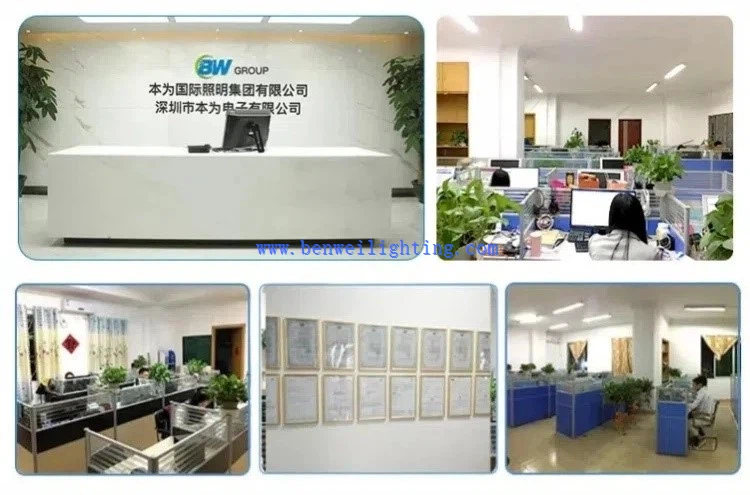
We are happy that we have total control over the manufacturing process and the quality of our products since we have our own facilities. Since we are producers rather than just brokers, we are dedicated to providing our customers with the best pricing. Since we are certain that the price and quality of our products are transparent, we advise customers to examine our samples first. Our commitment to quality and customer satisfaction drives us to continuously provide top-notch goods.
Our address
3rd Floor, 5th Building, Hebei Industrial Park, Hualian Community, Longhua District, Shenzhen, China





