

Introduction to Light Attenuation of Outdoor LED Flood Lights
Definition and Technical Standard of LED Light Attenuation
LED light attenuation refers to the phenomenon that the luminous flux and brightness of LED lighting products gradually decrease with the extension of service time under continuous working conditions. It is a core index to measure the long-term stability and service life of LED lamps. In the global lighting industry, the internationally recognized standard for qualified LED lamps is that the lumen depreciation rate shall not exceed 30% after 30,000 hours of continuous operation, and high-quality industrial-grade LED flood lights require a lumen retention rate of more than 80% after 50,000 hours of use. Unlike traditional halogen lamps and fluorescent lamps that are prone to sudden burnout and failure, LED flood lights fail gradually due to light attenuation. When the brightness drops below 70% of the initial luminous flux, the lamps will lose their practical lighting value and need to be replaced.
For outdoor LED flood lights used in open-air environments, light attenuation is the primary factor restricting their service life and increasing user maintenance costs. In commercial scenarios such as parking lots, stadiums, warehouse lighting, and billboard lighting, long-term stable high-brightness lighting is required. Excessive light attenuation will lead to insufficient on-site illumination, blind lighting areas, and reduced safety and aesthetics of the lighting system, bringing potential risks to industrial production, public traffic and residential security.
Unique Causes of Light Attenuation for Outdoor Flood Lights
Indoor LED lamps are mainly affected by chip aging and internal circuit loss, while outdoor LED flood lights face superposed attenuation factors from internal component loss and external harsh environments. First of all, long-term outdoor high-temperature exposure will accelerate the aging of LED chips and fluorescent powder, resulting in reduced light conversion efficiency. Secondly, outdoor humidity, rainwater and dust invasion will cause slight oxidation and corrosion of internal circuits and lamp beads, increasing operating loss. In addition, long-term ultraviolet radiation will age the lamp surface and reflective materials, reducing light transmittance and reflection efficiency. These comprehensive factors make the light attenuation rate of ordinary outdoor LED flood lights 20%-40% higher than that of indoor lamps, which is also the core technical problem that major lighting manufacturers need to solve urgently.
Practical Significance of Reducing Light Attenuation
Reducing light attenuation of outdoor LED flood lights has dual economic and practical value. For commercial and industrial users, low light attenuation means longer service life of lamps, fewer replacement times, and greatly reduced later maintenance and equipment renewal costs. For engineering projects, stable luminous flux output ensures the long-term compliance of lighting effects with design standards, avoiding project rework and adjustment losses caused by brightness attenuation. At the same time, low-decay LED flood lights can maintain high light efficiency for a long time, reduce invalid energy consumption, and achieve more efficient energy-saving and environmental protection effects, which is in line with the global low-carbon and energy-saving lighting development trend.

Core Factors Causing Light Attenuation of Outdoor LED Flood Lights
Light Source Chip and Packaging Material Aging
The LED chip is the core light-emitting component of the flood light, and its material performance directly determines the light attenuation speed. Low-quality low-cost LED chips have uneven crystal lattice and poor thermal stability. Under long-term electrified operation, thermal electron migration will occur inside the chip, resulting in increased internal resistance, reduced electro-optical conversion efficiency, and continuous decline in luminous flux. In contrast, high-grade integrated SMD LED chips adopt high-purity semiconductor materials and precision cutting technology, with stable internal structure and extremely low thermal attenuation rate, which is the basic guarantee for low light decay of lamps.
The surface of LED chips is covered with fluorescent powder and packaging colloid, which are key materials for converting monochromatic light into white light. Outdoor flood lights are exposed to strong ultraviolet radiation and high temperature for a long time. Ordinary fluorescent powder will undergo thermal quenching and ultraviolet aging, resulting in reduced luminous activity and color shift of light source. At the same time, ordinary packaging colloid will yellow and harden after long-term high-temperature baking, reducing light transmittance and blocking light output, which directly leads to the decrease of overall lamp brightness and forms obvious light attenuation.
Insufficient Heat Dissipation Performance
Heat accumulation is the biggest killer of LED flood lights and the primary cause of rapid light attenuation. The electro-optical conversion efficiency of LED chips is about 80%, and the remaining 20% of electric energy will be converted into heat energy. If the heat cannot be dissipated in time, the internal temperature of the lamp will rise sharply. When the long-term operating temperature of the chip exceeds 85°C, the aging speed of the chip and packaging materials will increase exponentially, and the light attenuation rate will rise rapidly. In high-temperature outdoor environments in summer, the surface temperature of ordinary flood lights can even exceed 100°C, resulting in irreversible damage to the light source and permanent brightness loss.
Most low-end outdoor flood lights adopt simple iron shell or thin aluminum shell design, with small heat dissipation area, single heat dissipation mode, and no professional heat sink structure. The heat generated by the chip can only be dissipated by natural air convection, resulting in serious heat accumulation inside the lamp. In addition, some products have poor fitting tightness between the light source board and the heat dissipation shell, with gaps leading to low heat conduction efficiency, which makes the local temperature of the chip too high and accelerates regional light attenuation, resulting in uneven overall lighting of the lamp.
Instability of Driving Power System
LED chips are sensitive to current and voltage fluctuations. Ordinary flood light driving power supplies lack constant current and voltage stabilization functions. In outdoor power supply environments with unstable voltage, surge current and voltage impact will occur frequently. Frequent unstable current impact will cause fatigue damage to the chip PN junction, reduce the luminous stability, and gradually produce light attenuation. Long-term overcurrent operation will also lead to accelerated aging of the chip, resulting in rapid brightness decline.
High-quality LED flood light driving power supplies are equipped with over-current, over-voltage, short-circuit and over-temperature protection mechanisms, while low-cost products often omit these core protection designs. In thunderstorm weather, voltage surge and circuit short circuit caused by moisture invasion will cause instantaneous impact on the light source. Although it will not cause lamp burnout in a short time, it will cause cumulative damage to the chip, continuously reducing luminous efficiency and forming long-term slow light attenuation.
Shell Protection and Environmental Adaptability Defects
Outdoor environments are full of dust, rainwater, fog and moisture. Flood lights with protection grades below IP65 cannot completely block the invasion of external water vapor and dust. Fine dust will adhere to the surface of the light source and reflective plate after entering the lamp body, blocking light output and reducing luminous efficiency. Long-term moisture invasion will cause oxidation and rust of internal circuit boards and lamp beads, increase circuit loss, and accelerate the aging and attenuation of the light source.
Ordinary plastic shell and ordinary spray aluminum shell flood lights have poor ultraviolet resistance and anti-corrosion ability. Long-term outdoor sun exposure will cause shell aging, deformation and yellowing of the light-transmitting surface, reducing light transmittance. In coastal high-salt and humid environments and dusty construction sites, the shell is prone to corrosion and oxidation, which damages the internal sealing structure, further aggravates the impact of external environment on internal components, and accelerates light attenuation.
Improper Installation and Daily Maintenance
In addition to product inherent quality problems, improper manual operation is also an important cause of accelerated light attenuation. Unreasonable installation angle leads to poor heat dissipation air circulation; too tight installation fixation causes shell deformation and internal component extrusion damage; long-term exposure without regular dust cleaning makes dust accumulate on the lamp surface and internal reflective structure, affecting light output. In addition, irregular power supply use and long-term 24-hour uninterrupted overload operation will also accelerate lamp aging and light attenuation.
Professional Technical Solutions to Reduce LED Flood Light Light Attenuation
Optimize Light Source Configuration and Packaging Technology
Select industrial-grade high-purity SMD integrated LED chips as the core light source, which has the advantages of high electro-optical conversion efficiency, low thermal resistance and strong anti-aging ability. Compared with ordinary low-power chips, high-grade chips have more stable internal crystal structure, lower heat generation during operation, and can maintain efficient light output for a long time. The luminous efficiency of the chip is as high as 130LM/W, which not only ensures high brightness lighting, but also effectively reduces the heat generation of the light source from the source, fundamentally slowing down thermal attenuation.
Use high weather resistance fluorescent powder and high-transmittance anti-yellowing packaging colloid. The optimized fluorescent powder has strong ultraviolet resistance and thermal stability, and will not produce luminous attenuation and color shift under long-term high temperature and strong light radiation. The upgraded packaging colloid has high temperature resistance, anti-aging and anti-yellowing properties, maintaining 98% light transmittance for a long time, avoiding light loss caused by colloid aging and yellowing, and effectively reducing the light attenuation rate of the light source.
Upgrade Heat Dissipation System Structure Design
Adopt high-purity die-cast aluminum alloy one-piece forming shell, which has excellent thermal conductivity, far better than iron shell and ordinary thin aluminum shell. The integral forming structure realizes seamless fitting between the light source board and the heat dissipation shell, eliminating heat conduction gaps and greatly improving heat conduction efficiency. The aluminum alloy material has strong thermal stability, will not deform or age at high temperature, and can continuously and stably export the heat generated by the light source.
Design dense vertical fin heat sink structure on the back of the lamp body, which greatly expands the heat dissipation area compared with the flat heat dissipation structure. The vertical fin structure forms an automatic air convection channel. The hot air inside the lamp rises and is discharged quickly, and the cold air supplements continuously, realizing efficient air cooling heat dissipation. This structure can effectively control the long-term operating temperature of the chip below 70°C, avoid high-temperature aging damage, and reduce the light attenuation rate to the minimum.
Optimize Constant Current Driving and Protection System
Equip with high-precision intelligent constant current driving power supply, which can automatically adjust the current and voltage according to the external power supply fluctuation and lamp operating state. It maintains stable power output in the voltage fluctuation range of 85V-265V, avoids current surge and voltage impact on the LED chip, ensures the chip works in a stable and safe state for a long time, reduces operating fatigue loss, and effectively delays light attenuation.
The built-in driving power supply integrates over-current, over-voltage, short-circuit, over-temperature and lightning protection functions. When the circuit is abnormal or the temperature is too high, the power supply will automatically cut off the power for protection, avoiding cumulative damage to the light source caused by abnormal working conditions. The lightning protection design can resist outdoor thunderstorm surge impact, ensure the long-term stable operation of the lamp in complex power supply environments, and reduce abnormal light attenuation caused by circuit faults.
Improve Shell Protection and Environmental Adaptability
Adopt IP65 international high-standard waterproof and dustproof grade, with multi-layer sealing rubber ring and integral pressing sealing process. The fully sealed lamp body structure can completely block dust, rainwater, fog and moisture from invading the interior, keep the internal circuit and light source components in a dry and dust-free working environment, avoid component oxidation and light loss caused by environmental erosion, and eliminate environmental-induced light attenuation.
The lamp shell is treated with high-grade electrostatic anti-corrosion spray and anti-UV coating. The surface coating has strong weather resistance, can resist long-term sun ultraviolet radiation, prevent shell aging and light-transmitting surface yellowing, and maintain stable light transmittance. At the same time, it has excellent anti-rust and anti-corrosion performance, adapting to harsh environments such as coastal salt fog and dusty construction sites, ensuring the long-term structural stability of the lamp and avoiding secondary light attenuation caused by shell damage.
Standardize Installation and Scientific Daily Maintenance
During installation, reasonably adjust the lamp angle to ensure the heat dissipation fin structure is in a vertical convection state, avoid angle shielding affecting air circulation and heat dissipation effect. Fix the bracket firmly to prevent long-term wind vibration from causing internal component displacement and damage. Reserve a reasonable heat dissipation space around the lamp, avoid closed installation environment leading to heat accumulation, and create a good operating environment for the lamp.
Regularly clean the dust and dirt on the lamp surface and reflective plate every 3-6 months to avoid dust accumulation blocking light output and reducing luminous efficiency. Regularly check the sealing performance of the lamp body and the stability of the power circuit, timely replace aging sealing parts and repair loose circuits. Avoid long-term uninterrupted overload operation, properly arrange lamp working time according to actual lighting needs, and reduce long-term continuous loss of the light source.
Product Practical Verification: Low Attenuation Performance of High-Performance IP65 LED Flood Lights
Product Core Low-Decay Configuration Advantages
The high-performance outdoor LED flood light launched by our brand integrates all the above low-attenuation optimization technologies, and has industry-leading low light decay and long-life performance. In terms of light source, it adopts high-stability SMD integrated chips and anti-yellowing high-transmittance packaging materials, with ultra-low initial attenuation loss. In terms of heat dissipation, it matches die-cast aluminum integral shell and dense fin convection heat dissipation structure, with efficient and stable heat dissipation capacity. The whole machine is equipped with intelligent constant current drive and full safety protection system, with IP65 high-standard sealing protection and anti-aging shell treatment, which can effectively resist all kinds of outdoor environmental interference and realize long-term low-attenuation operation.
Professional Aging Test Data Verification
After professional laboratory 50,000 hours of continuous aging test, the lumen depreciation rate of this LED flood light is less than 20%, which is far lower than the industry standard of 30%. After 30,000 hours of continuous operation, the luminous flux retention rate is still more than 85%, realizing ultra-low light attenuation. In contrast, the lumen depreciation rate of ordinary flood lights of the same type can reach 35%-45% after 30,000 hours of use, with serious brightness attenuation and poor long-term stability.
Through high-temperature aging test (80°C constant temperature for 1000 hours), humid and hot cycle test (temperature 60°C, humidity 90% for 1000 hours) and ultraviolet radiation aging test, the product has no obvious brightness attenuation and color shift, and the internal components are intact. It can maintain stable low-attenuation working state in high temperature, high humidity, strong ultraviolet and dusty harsh outdoor environments, which fully verifies the reliability of its low-decay technical scheme.
Practical Application Benefits of Low Attenuation Performance
In actual outdoor engineering applications, this low-attenuation LED flood light can maintain stable high-brightness lighting for a long time, avoiding the problems of insufficient illumination and uneven lighting caused by light decay. Its ultra-long service life of 50,000 hours greatly reduces the frequency of lamp replacement, saves a lot of maintenance labor costs and equipment renewal costs for users. At the same time, the high light efficiency and low attenuation characteristics ensure long-term energy-saving operation, reducing the overall power consumption of the lighting system, and bringing significant economic benefits and environmental value for commercial parks, industrial warehouses, stadiums, construction sites and other scenarios.
Conclusion
Light attenuation is an inevitable technical problem in the service process of outdoor LED flood lights, but its attenuation speed and degree can be effectively controlled through scientific product optimization, standardized installation and professional maintenance. The core causes of light attenuation include light source aging, heat accumulation loss, unstable driving system, insufficient environmental protection ability and improper manual maintenance. To reduce light attenuation fundamentally, it is necessary to start from multiple dimensions such as core light source configuration, heat dissipation structure design, power protection system, shell protection performance and later use management.
High-performance IP65 LED flood lights with optimized low-attenuation technology can effectively solve the pain point of rapid light decay of traditional outdoor lamps, realize long-term stable and efficient lighting, and reduce the whole life cycle cost of lighting equipment. For global outdoor lighting purchasers and users, selecting LED flood lights with professional low-attenuation design, standardizing installation and maintenance operations are the key measures to improve lamp service life, optimize lighting effect and reduce operating costs. With the continuous upgrading of lighting technology, low-decay, long-life and high-stability outdoor LED flood lights will become the mainstream choice of global commercial and industrial outdoor lighting, and promote the high-quality development of the outdoor lighting industry.
How To Cooperate With Us?
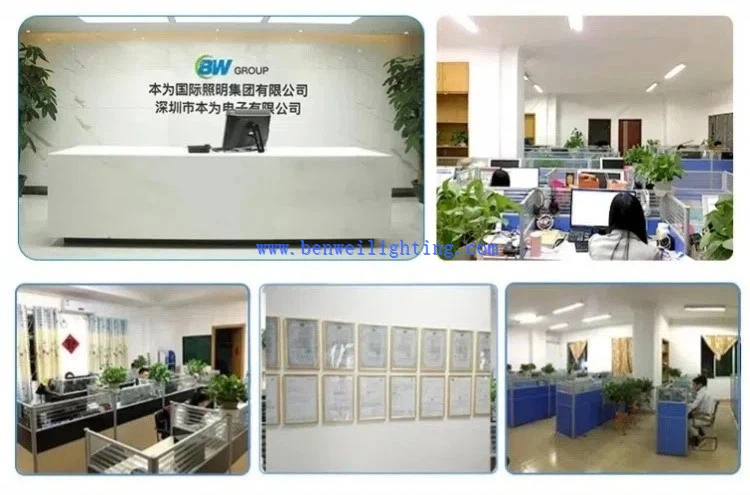
We are happy that we have total control over the manufacturing process and the quality of our products since we have our own facilities. Since we are producers rather than just brokers, we are dedicated to providing our customers with the best pricing. Since we are certain that the price and quality of our products are transparent, we advise customers to examine our samples first. Our commitment to quality and customer satisfaction drives us to continuously provide top-notch goods.
Our address
3rd Floor, 5th Building, Hebei Industrial Park, Hualian Community, Longhua District, Shenzhen, China





