

If you've ever stood in front of a shelf full of LED strip lights, feeling overwhelmed by the endless options-different colors, voltages, brightness levels, and waterproof ratings-you're not alone. LED strip lights are one of the most versatile lighting solutions available, perfect for everything from cozy home ambiance to commercial display highlights. But picking the wrong one can lead to dim lighting, short lifespan, or even safety hazards. In this guide, we'll break down the key factors you need to consider to choose the right LED strip lights for your specific needs, no technical expertise required.
Determine Your Lighting Purpose
The first step in choosing LED strip lights is figuring out what you'll use them for-this will guide almost every other decision. Are you looking to add soft ambient lighting to your bedroom, bright task lighting under kitchen cabinets, or eye-catching decorative lighting for a commercial display? For example, ambient lighting (like behind a TV or along ceiling coves) doesn't need to be overly bright, while task lighting (under cabinets, workstations) requires higher brightness to reduce eye strain. Outdoor lighting, on the other hand, needs to be durable and waterproof. Knowing your purpose eliminates half the guesswork.
Choose the Right Color and Color Temperature
LED strip lights come in two main color categories: single-color and color-changing, and choosing between them depends on your use case. Single-color strips are ideal for functional or minimalist spaces-they come in warm white, cool white, or neutral white, each with a specific color temperature (measured in Kelvin, K).
Warm white (2700K-3000K) has a soft, yellowish glow, perfect for bedrooms, living rooms, and restaurants where you want a cozy, inviting atmosphere. Cool white (5000K-6500K) is bright and crisp, great for kitchens, offices, and commercial spaces where clarity and productivity matter. Neutral white (4000K) falls in between, suitable for spaces like hallways or bathrooms that need balanced lighting.
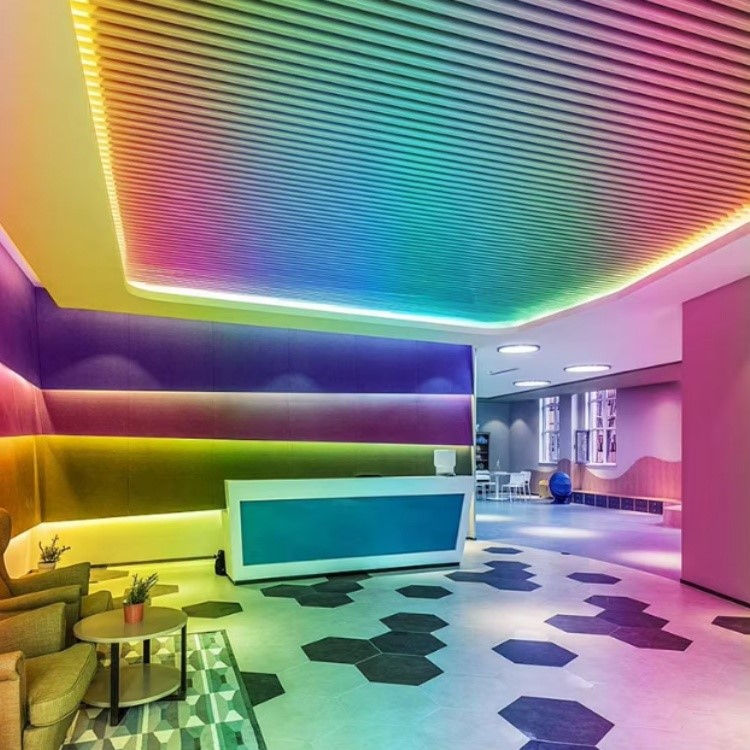
If you want versatility, color-changing strips (RGB, RGBW, or RGB CCT) are the way to go. RGB strips mix red, green, and blue to create millions of colors, while RGBW adds a pure white LED for brighter, more natural white light. RGB CCT strips offer both color-changing and adjustable white temperature, making them perfect for parties, mood lighting, or spaces that need to switch between functional and decorative lighting.
Pay Attention to Brightness and Density
Brightness is measured in lumens (lm), and density refers to the number of LED chips per meter-both directly affect how much light the strip produces. For most home ambient lighting, 200-400 lumens per meter is enough. Task lighting or commercial displays may need 500+ lumens per meter for adequate brightness.
Density (LEDs per meter) typically ranges from 30 to 120 LEDs/m. Low-density strips (30-60 LEDs/m) are affordable and work for basic decoration, but they may have visible light dots. High-density strips (90-120 LEDs/m) or COB (Chip-on-Board) strips provide uniform, dot-free light, which is ideal for high-end decoration or areas where you don't want to see individual LEDs. COB strips, in particular, offer a smooth, continuous glow that's perfect for accent lighting or premium spaces.
Select the Appropriate Voltage
LED strip lights run on low-voltage DC power, with the two most common options being 12V and 24V. 12V strips are more common for small projects-like under-cabinet lighting or TV backlighting-they're affordable, easy to install, and compatible with most basic controllers. However, they have a shorter maximum run length (usually 5-10 meters) before voltage drop occurs, which can cause dimmer light at the end of the strip.
24V strips are better for longer runs (10-20 meters) or higher brightness needs, as they experience less voltage drop. They're also more energy-efficient and durable, making them a better choice for commercial projects or large home installations (like whole-room lighting). Remember: you'll need a matching power supply (driver) for your voltage-never connect a 12V strip to a 24V driver, as it will burn out the LEDs.
Check the Waterproof Rating (IP Rating)
IP (Ingress Protection) rating tells you how well the LED strip is protected against dust and water-critical if you're using it outdoors or in damp areas. The rating consists of two numbers: the first is dust protection (1-6), the second is water protection (1-8).
For indoor use in dry areas (bedrooms, living rooms), an IP20 rating is sufficient (no waterproofing, just basic dust protection). For damp areas (bathrooms, kitchens, near sinks), choose IP65 (waterproof against splashes). For outdoor use (gardens, patios, swimming pools) or areas prone to heavy water exposure, go for IP67 (submersible up to 1 meter) or IP68 (fully submersible for long periods). Using a non-waterproof strip in a damp area will lead to short circuits and premature failure.
Consider Control Options
How you control your LED strip lights affects convenience and versatility. Basic single-color strips can be controlled with a simple on/off switch or a dimmer switch (if dimmable). Color-changing strips require a controller-options include:
Remote control: Simple and affordable, perfect for basic color and brightness adjustments.
Smart control: Connect via Wi-Fi or Bluetooth to control the strip with your phone, voice assistants (Alexa, Google Home), or even sync it with music. Great for smart homes or commercial spaces where you want to adjust lighting remotely.
DMX control: For large commercial installations (like retail stores or event venues), DMX controllers allow you to sync multiple strips and create complex lighting scenes.
Evaluate Quality and Lifespan
Not all LED strips are created equal-cheaper options may save you money upfront but will fail quickly. Look for strips with high-quality components: aluminum-backed PCBs (better heat dissipation), high-quality LED chips (2835, 5050, or 5630 chips are reliable), and built-in current-limiting resistors to prevent overheating. Heat dissipation is key-poor heat management reduces lifespan and can cause the strip to dim over time.
A good LED strip should have a lifespan of 50,000+ hours (that's over 5 years of daily use). Also, check for certifications like CE or RoHS to ensure safety and compliance with industry standards. Avoid strips with generic adhesive-look for 3M VHB adhesive, which is strong and long-lasting, especially in warm environments.
Summary
Choosing the right LED strip lights boils down to 7 key steps: defining your lighting purpose, selecting the right color/color temperature, checking brightness and density, picking the correct voltage, verifying the IP rating, choosing a control method, and evaluating quality. By focusing on these factors, you'll avoid common mistakes and find a strip that fits your space, budget, and needs. Whether you're upgrading your home lighting or setting up a commercial display, the right LED strip will enhance your space with efficient, long-lasting light.
Still unsure which LED strip lights are right for your project? Our team of lighting experts is here to help. Whether you need advice on choosing the perfect brightness, selecting a waterproof option for outdoor use, or finding a smart control solution, we've got you covered. Contact us today with your project details, and we'll recommend the ideal LED strip lights tailored to your needs-let's bring your lighting vision to life!
www.benweilighting.com/professional-lighting/led-strip-lights/rgb-smd-5050-led-stirp-light.html
Our address
No. 5-3 Niujiao Road, Yanchuan Community, Yanluo Subdistrict, Bao'an District, Shenzhen
bwzm18@ledbenweilighting.com






