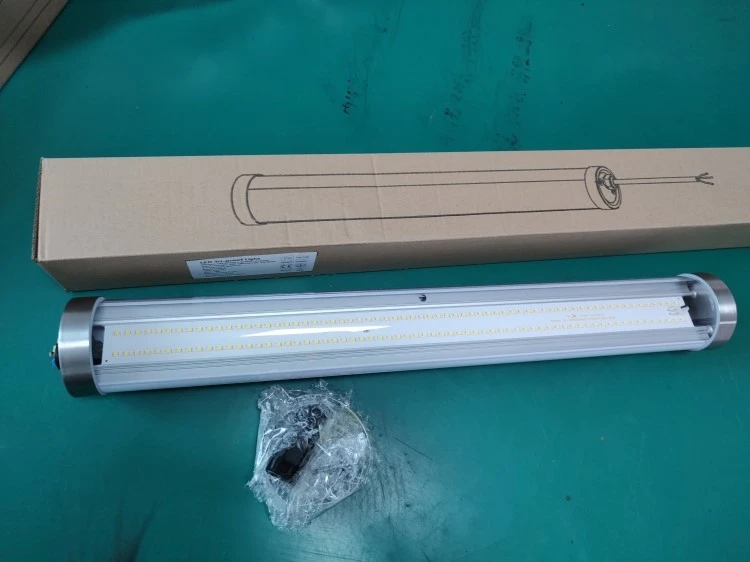
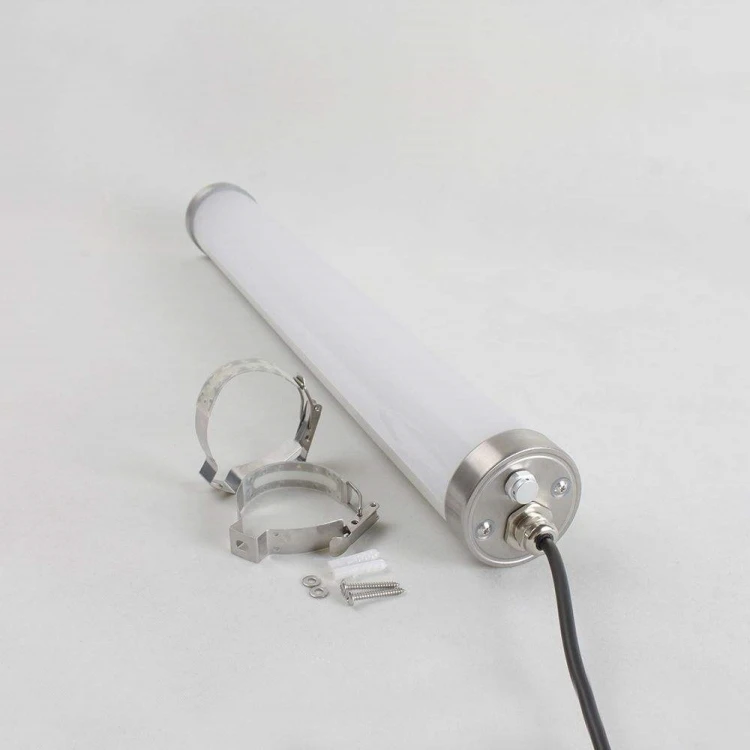
Hi there! As a provider of tri-proof lights, I have personally seen how important it is to choose the appropriate ones for your requirements. Tri-proof lights are very adaptable and may be utilised in a variety of locations, including commercial kitchens, outdoor spaces, and industrial warehouses. It may be somewhat difficult to determine which solutions are the greatest match, however, since there are so many available. I'll go over the main things to think about while selecting tri-proof lights in this blog article.
Recognise Your Lighting Requirements
You must first understand what you are lighting up. Consider the area's dimensions, the kinds of activities that will take place there, and the real amount of light you need. For instance, compared to a tiny storage closet, a large industrial warehouse where employees are doing intricate activities would need far more light.
If you're upgrading outdated lights, you may use a light meter to gauge the current light levels. Alternatively, you may consult lighting regulations for various sorts of venues if it's a new installation. You may determine the appropriate quantity of light for your particular circumstance by using some excellent criteria provided by the Illuminating Engineering Society (IES).
Take the surroundings into account
Although they are all intended to be waterproof, dustproof, and corrosion-resistant, not all tri-proof lamps are made equally. The surroundings in which the lights will be put must be considered.
Moisture: You should choose lights with a high Ingress Protection (IP) rating if the location is prone to moisture, such as a car wash or a swimming pool area. For damp settings, an IP rating of at least IP65 is advised. This indicates that the lights can tolerate low-pressure water jets coming from any direction and are totally shielded from dust.
Dust and Dirt: You also need a high IP rating in dusty areas like construction sites or grain silos. An IP66-rated lamp is even more effective at keeping dust out and can withstand strong water jets.
Corrosion: Look for lights built of corrosion-resistant materials if the location contains corrosive elements, such as a chemical industry or a seaside area with saltwater in the air. Stainless steel or powder-coated aluminium, which can withstand strong chemicals and seawater, are used to make certain tri-proof lamps.
Assess the Quality of the Light
The overall appearance of the area, safety, and productivity may all be significantly impacted by the quality of the light. The following are some factors to think about while evaluating light quality:
Colour Temperature: Kelvins (K) are used to measure colour temperature. Warm, yellowish light produced by lower colour temperatures (between 2700K and 3000K) is ideal for establishing a welcoming ambiance, such as in a restaurant or lounge. The cool, bluish-white light produced by higher colour temperatures (5000K to 6500K) is more suited for task lighting in spaces like offices and workshops.
The Colour Rendering Index (CRI) gauges how well a light source captures colour in comparison to natural light. A CRI of 90 or more is great, while a CRI of 80 or higher is regarded as good. You'll want lights with a high CRI in places like art galleries and retail establishments where colour accuracy is crucial.
Uniformity: The light should be dispersed equally across the space. Shadows and blurry vision may result from poorly dispersed light. Seek for lights that are intended to give consistent lighting and have a broad beam angle.
Examine the Energy Efficiency
Energy expenses may mount up rapidly, particularly if you're lighting a big space. Therefore, selecting energy-efficient tri-proof lights is crucial.
LED Technology: These days, LED tri-proof lights are the best option. Compared to conventional fluorescent or incandescent lights, they use a lot less energy. Additionally, since LEDs last longer, you'll ultimately save money on new bulbs.
The efficiency with which a light source transforms electrical energy into light is measured in lumens per watt (LPW). The light's energy efficiency increases with its LPW. To save your energy costs, look for tri-proof lights with a high LPW rating.
Examine the longevity and durability
Replacing your lights every few months is not something you want to do. Therefore, make sure the tri-proof lights you choose are long-lasting and robust.
Build Quality: Seek for lights with a robust design. The housing should be constructed from sturdy materials that are resistant to vibrations and impacts. Additionally, certain lights offer shock-resistant characteristics, which are excellent in industrial settings.
Lifespan: The typical lifespan of a tri-proof LED light is between 50,000 and 100,000 hours. This implies that you won't need to replace the lights for a very long time.