

Introduction: The Challenge of Illuminating Large Poultry Facilities
In the context of modern agriculture, the scale of the operation dictates the complexity of the infrastructure. Lighting a large chicken coop is not merely about providing adequate brightness; it is about ensuring uniform light distribution across vast distances without compromising electrical integrity or biosecurity.
The Biological and Operational Mandates for Large Coops
In a large broiler or layer house, the flock relies entirely on artificial light to regulate their circadian rhythms, locate feed and water, and stimulate reproductive cycles. Uneven lighting in a large facility creates "dark zones" where birds congregate, leading to crowding, localized heat stress, and smothering. Operationally, the lighting system must be robust enough to withstand the sheer volume of dust, ammonia, and humidity generated by thousands of birds, while remaining energy-efficient enough to keep operating costs viable.
The Inefficiencies of Traditional Wiring (Star Topology)
Historically, large coops utilized a star-topology wiring method, where every individual light fixture required a separate cable run back to a central power source or junction box. In a structure spanning hundreds of feet, this approach is riddled with inefficiencies. It requires an immense amount of copper cabling, conduit, and labor. Furthermore, it creates a chaotic ceiling environment filled with exposed junction boxes and dangling wires-all of which are difficult to clean and highly susceptible to moisture ingress and corrosion.
The Paradigm Shift: The Daisy-Chain Architecture
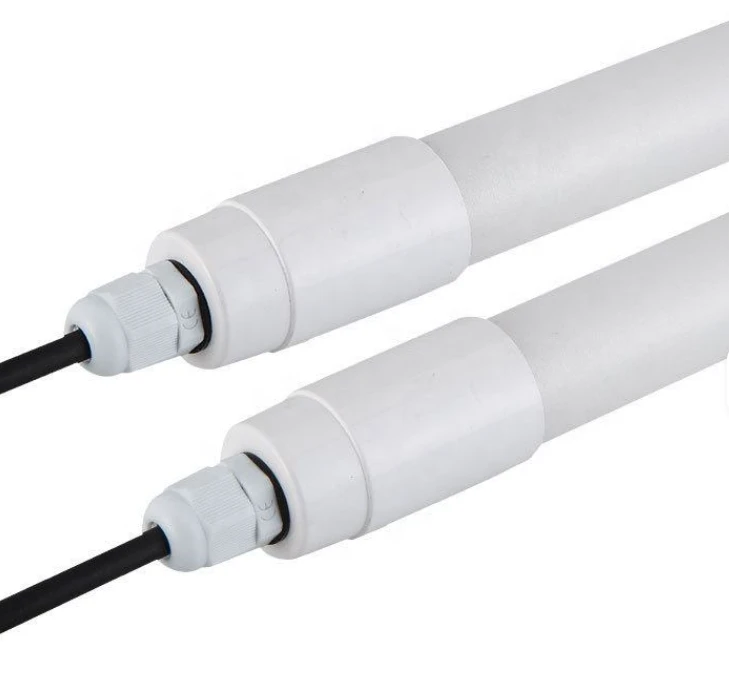
To overcome these limitations, modern poultry engineering has embraced the daisy-chain architecture. This is made possible by the double-end wire design, where lights are equipped with male and female waterproof connectors at opposite ends. By connecting lights sequentially-end-to-end-a single power drop can illuminate an entire row. This guide details how to leverage this architecture to create a highly efficient, uniform, and biosecure lighting system for large-scale operations.
Core Principles for Large-Scale Coop Illumination
Before executing the installation, it is critical to understand the scientific and environmental principles that dictate success in a large poultry house.
Uniformity and Light Distribution (The Lux Requirement)
In large coops, achieving an even spread of light is paramount. If the light is too intense in the center and too dim at the edges, birds will overcrowd the center, leading to stunted growth on the periphery and higher mortality rates.
The Importance of the High-Efficiency PC Diffusion Cover
To achieve this uniformity, the chosen LED tubes must feature a High-Efficiency PC (Polycarbonate) diffusion cover. In large facilities, the distance between the light and the floor is greater. Unshielded LED chips would create harsh glare and sharp, distinct shadows. The PC diffuser scatters the light, transforming it into a soft, broad wash of illumination that reaches all corners of the barn evenly. This allows farmers to maintain precise lux levels (e.g., 10-20 lux for layers) across the entire usable floor space.
Electrical Integrity Over Long Distances
When daisy-chaining multiple lights together in a large facility, the voltage must remain stable across the entire length of the chain.
The Role of the Isolated Driver
As the chain extends, the risk of voltage drop increases, which can cause flickering or failure. This is where the isolated driver becomes indispensable. An isolated driver utilizes a transformer to cleanly separate the high-voltage AC mains from the low-voltage DC output. This provides unparalleled stability, ensuring that the last light on a 50-meter daisy-chain receives the exact same clean, flicker-free power as the first. Flicker-free lighting is vital for large flocks, as it prevents stress-induced aggression and cannibalism, which can spread rapidly in densely populated houses.
Environmental Resilience at Scale
Large coops generate immense volumes of ammonia and moisture. The daisy-chain system must be completely sealed to prevent the chain from acting as a conduit for moisture into the electrical components.
The Waterproof Base and Silicone Gland
At the starting point of the chain, where the main power cable enters the first light, the connection must be flawless. The system must utilize a waterproof base featuring a threaded cable gland. This gland compresses a silicone seal against the incoming cable, preventing moisture from entering the tube. Because the entire chain relies on this first connection, its structural integrity is non-negotiable.
The Optimal Technology: Double-End Wired Daisy-Chain LED Lights
The ultimate solution for lighting a large coop is a specifically engineered daisy-chain LED tube. This product is purpose-built to solve the exact logistical and environmental problems faced by large-scale poultry producers.
Anatomy of the Double-End Wire Design
Unlike standard LED tubes, which have a power cord on one end and a dead cap on the other, these agricultural-grade lights feature double-end wires.
Male and Female Waterproof Connectors
Each end of the tube is equipped with a rugged power cable terminating in a molded waterproof connector-one male, one female. These connectors feature internal O-rings. When you plug the male end of one light into the female end of the next, it creates a seamless, watertight electrical union. This allows the lights to connect with each other directly, forming a continuous line of illumination.
Optimizing the High-Lumen LED PCB for Large Spaces
In a massive coop, every lumen counts.
Thermal Management and Output
The internal structure of these lights relies on a High Lumen LED PCB mounted on an aluminum substrate. This architecture ensures "good dissipation," rapidly transferring heat away from the delicate LED chips. In a daisy-chain, where lights are running continuously for hours, this thermal management is critical. It prevents the phosphors from degrading, ensuring the light maintains its high lumen output and high CRI (Color Rendering Index) for over 50,000 hours. High CRI ensures birds can easily identify feed particles, leading to uniform feed intake across the massive flock.
Minimizing Installation Costs and Labor
The economic case for the double-end daisy-chain design in large coops is overwhelming.
Drastic Reduction in Materials and Labor
By eliminating the need for individual power drops, farmers save thousands of dollars on copper cable, PVC conduit, and electrical junction boxes. Installation time is reduced by more than half, as crews simply hang the tubes and click them together. This results in a remarkably clean, streamlined ceiling that is far easier to clean and sanitize between flocks.
Step-by-Step Implementation Guide: How to Light Up a Large Coop
Executing the installation requires careful planning. Follow this systematic approach to ensure maximum efficiency and biosecurity.
Phase 1: Planning and Calculation
Proper planning prevents poor performance. Before hanging a single light, the layout must be calculated.
Determining the Number of Lights and Spacing
Calculate the total square footage of the coop. Based on the required lux levels for the specific poultry type (broiler vs. layer), determine the spacing between the daisy-chained rows. Rows should be suspended parallel to the feed lines. Ensure the distance between rows is uniform to guarantee even light distribution across the entire floor.
Assessing Power Drops
Determine how many lights can be safely daisy-chained on a single circuit. While the isolated drivers provide excellent stability, always calculate the total wattage of the chain against the capacity of the main power supply. Typically, it is advisable to run a separate power drop for every 4 to 6 lights to ensure optimal performance and safety.
Phase 2: Physical Installation and Daisy-Chaining
The physical installation leverages the unique design of the product.
Mounting the Fixtures
Suspend the lights securely from the ceiling structure using appropriate hangers or clips. Ensure the lights are oriented correctly. Because these are double-end wired, there is no "top" or "bottom" in terms of light direction (thanks to the 360-degree PC diffusion cover), but the cable routing should be clean.
Executing the Waterproof Connection
Begin at the power source. Feed the main power cable into the waterproof base of the first light, tightening the silicone gland securely with a wrench to ensure a watertight seal.
Next, take the female connector from the first light and firmly insert the male connector from the second light. Push until you hear or feel a secure click, ensuring the internal O-ring is fully engaged. Continue this process down the entire row. The Double End Wires will naturally link the system together without any exposed slack.
Phase 3: Testing and Sealing Verification
Once the physical layout is complete, the system must be tested.
Electrical Testing and Flicker Check
Power on the system. Walk the entire length of the coop. Check for any flickering or dead spots. The isolated drivers should ensure a perfectly steady, flicker-free light output from the first bulb to the last.
Verifying Waterproof Integrity
Before the next flock is introduced, inspect every connection point. Ensure the threaded glands at the power drops are tight and the male/female connectors are fully seated. Because the system is designed for high-pressure sanitation, this visual verification ensures that the entire chain is impervious to washdowns.
Maximizing ROI and Flock Health
The installation of a daisy-chain LED system is a strategic financial investment that yields immediate and long-term returns.
Biosecurity and Sanitation Efficiency
Because the entire chain is waterproof and free of exposed junction boxes, the farmer can use high-pressure hoses and disinfectants directly on the lighting system between flocks. This eliminates a major vector for disease and significantly reduces the labor hours required for cleaning.
Energy Savings and Longevity
The high-efficiency isolated drivers and high-lumen PCBs consume a fraction of the energy required by legacy systems. A large coop with hundreds of lights will see a drastic reduction in its monthly electricity bill. Furthermore, with a lifespan of up to 50,000 hours, the lights will operate for years without needing replacement, eliminating the high cost of purchasing and installing new bulbs in a hostile environment.
Enhanced Poultry Yield
The ultimate ROI comes from the birds. The uniform light distribution from the PC diffuser and the stress-free, flicker-free environment created by the isolated drivers promote optimal feed conversion ratios (FCR). Broilers grow faster and more uniformly; layers produce more eggs with better shell quality. The clean, organized ceiling also improves ventilation efficiency, leading to a healthier, more productive flock.
Conclusion: The Definitive Lighting Solution for Large-Scale Agriculture
Lighting a large chicken coop requires a solution that is as robust and expansive as the facility itself. Traditional wiring methods are costly, labor-intensive, and hazardous in the corrosive environment of a poultry house.
The advanced double-end wired, daisy-chain LED tube is definitively the best choice for modern agricultural operations. By integrating a waterproof base with a silicone gland for environmental invulnerability; waterproof male and female connectors for seamless series connectivity; an isolated driver for stable, flicker-free performance; and a high-lumen, high-CRI PCB with a PC diffusion cover for optimal illumination, this system addresses every critical need of a large-scale poultry facility.
Investing in this technology is not merely a purchase of lighting equipment; it is the implementation of a comprehensive infrastructure upgrade. It simplifies installation, drastically cuts operational costs, ensures absolute biosecurity, and provides the precise biological environment required to maximize the genetic potential of the flock. For the modern poultry producer, it is the only viable path to illuminating the future of sustainable agriculture.
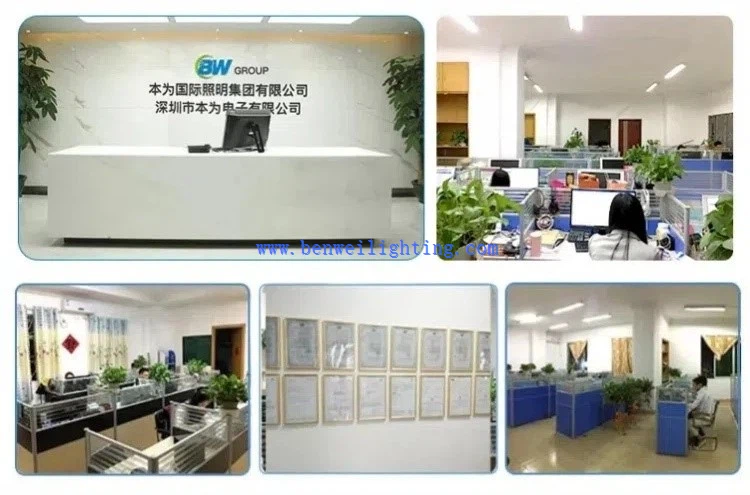
Shenzhen Benwei Lighting Technology Co., Ltd
Shenzhen Benwei Lighting Technology Co., Ltd is a well-known company that designs, develops, makes, and sells high-tech goods, including LED lighting products. The plant where we work opened in 2010 and is in Shenzhen.
Our address
3rd Floor, 5th Building, Hebei Industrial Park, Hualian Community, Longhua District, Shenzhen, China





