

Clients interested in hydroponics or vertical farming projects often ask the same question in their inquiries: "Can your grow tubes actually be used for leafy greens? What about microgreens or herb walls?"
The answer isn't a simple "yes" or "no." A grow tube is essentially an enclosed cultivation channel with pre-cut planting holes; nutrient solution flows or circulates inside, while the plant roots hang within the tube to absorb water and nutrients. This structure is naturally well-suited for some crops, but a poor fit for others. Below, we break it down by crop type to help you make informed decisions during the selection and procurement process.
Basic Operating Principle of Grow Tubes
Grow tubes are typically circular or square conduits featuring planting holes along the top. Net pots are placed into these holes, containing a growing medium-such as rock wool, coco coir, or sponge-to anchor the plants. Nutrient solution enters from one end, either forming a thin film along the bottom (the Nutrient Film Technique, or NFT) or trickling down from the top in vertical tower configurations, allowing the roots to come into direct contact with the circulating nutrient solution.
Compared to traditional open cultivation troughs, this system offers three distinct advantages:
Enclosed and Light-Proof: The interior remains dark, which inhibits algae growth and reduces the evaporation of the nutrient solution.
High Yield per Unit Area: Tubes can be arranged in multiple horizontal layers or installed vertically, resulting in significantly higher space utilization than flat-bed cultivation.
Low Water Consumption: The nutrient solution is recirculated, leading to much lower water usage compared to soil-based farming.
It is important to note that this system is predicated on the concept that "each individual plant has a designated planting site and its own dedicated root space." The assessments in the following sections are primarily based on this principle.
Leafy Greens: The Ideal Application
Leafy greens-such as lettuce, arugula, bok choy, kale, and spinach-are the most well-established crops for grow tube systems. The reasons are practical:
Their root systems are shallow and dense, making them well-suited for the thin-film or drip-irrigation nutrient delivery methods used in these tubes.
They have short growth cycles, typically ready for harvest in 30 to 45 days, which ensures high turnover for the cultivation system and a faster return on investment. Standardizing plant spacing-by setting precise intervals between planting holes-ensures uniform crop growth, which simplifies subsequent management.
For commercial leafy green production, consider the following general guidelines:
For lettuce and various types of bok choy (small Chinese cabbages), hole spacing is typically 15 to 25 cm.
For small-leaf varieties like arugula or spinach, the spacing can be reduced to 10 to 15 cm.
In NFT (Nutrient Film Technique) systems, the pipes should be set at a slope of 1% to 3% to ensure smooth water flow without washing away or damaging the roots.
If your target market includes home balcony gardening, supermarket displays, or small-scale commercial vegetable production, the combination of leafy greens and planting pipes offers the lowest level of risk.
Microgreens: Why They Are Generally Not Recommended
Microgreens-such as pea shoots, radish sprouts, or sunflower shoots-are typically sown at high densities and harvested within 7 to 14 days, with their root systems eventually covering the entire tray.
This approach conflicts with the "fixed planting hole" design of cultivation pipes:
Incompatibility with fixed spacing: Microgreens rely on high-density sowing; a pipe cannot accommodate enough individual planting holes. Attempting to add more holes would actually result in a much lower yield compared to using trays.
Root-induced clogging: Dense root masses can become intertwined, obstructing water flow.
Difficult cleaning and crop rotation: After harvest, residual roots remain inside the pipes, requiring a thorough cleanup between every crop cycle.
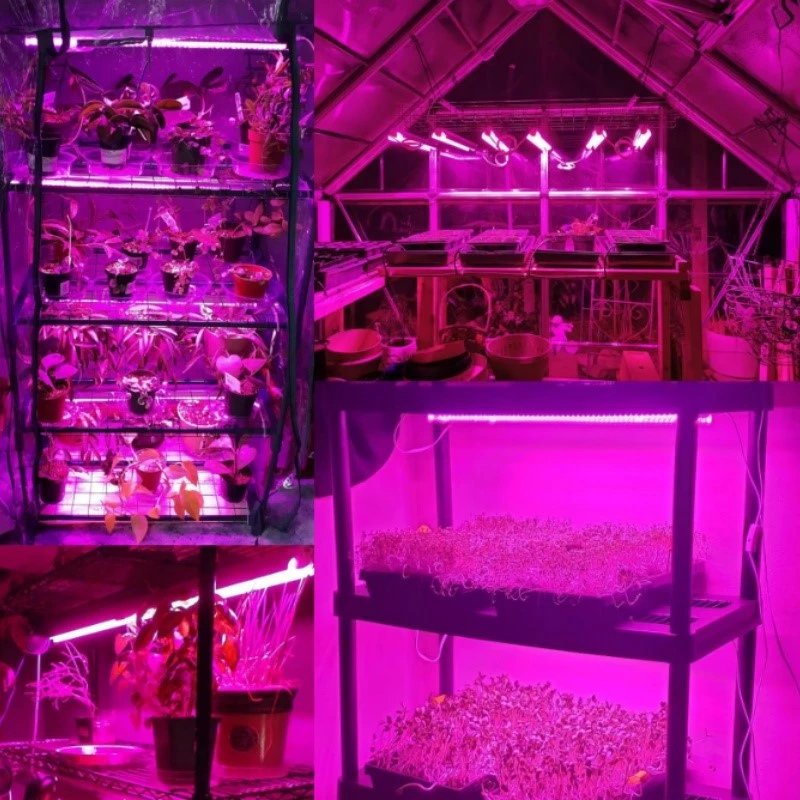
Therefore, if a client's primary focus is microgreens, a better solution would be using shallow trays on shelving units. Planting pipes should be viewed as a supplementary production line for leafy greens, rather than a primary system for microgreens.
There are rare exceptions-such as "mini pipe towers" used for small-scale demonstrations of the germination process-but these are intended for display purposes and are not suitable for mass production.
Herb Walls: A Second Strong Application for Planting Pipes
Herbs are another category that performs exceptionally well in planting pipes, especially when installed as a vertical "herb wall":
Varieties such as basil, mint, cilantro, parsley, and thyme all thrive in pipe-based cultivation systems. When installed vertically, these systems occupy minimal wall space while accommodating dozens of plants-offering both aesthetic appeal and practical utility-which makes them highly popular in restaurants, hotels, and retail stores.
Herbs are multi-harvest crops; they continue to grow after their leaves are picked, meaning the cultivation pipes can be used for a longer duration compared to those used for single-harvest leafy greens.
Two factors are frequently overlooked when selecting a vertical herb wall system:
Plants like mint and basil grow rapidly and develop extensive root systems; if the space within the planting holes is too small, their growth will be stunted. It is advisable to use net cups with larger diameters and pipes with larger cross-sections.
The uniformity of nutrient solution distribution across the vertical wall must be verified beforehand. If the top-level drip irrigation system is poorly designed, plants on the lower levels may suffer from water deficiency.
Key Parameters to Consider During Selection
Regardless of the crop being grown, the following factors significantly impact the effectiveness of the cultivation pipes:
Material: Use food-grade PVC or PP, ideally with a UV-resistant formulation to prevent the material from aging or becoming brittle when used outdoors or in greenhouses.
Pipe Diameter and Cross-section: Square pipes or wide-mouthed round pipes are commonly used for leafy greens, while herbs and large-leaf varieties require more internal space.
Hole Diameter and Spacing: The ability to customize these specifications based on your specific crops is a key indicator of a supplier's flexibility.
Color: A white exterior helps reflect light and lower the temperature inside the pipes, while the interior should be opaque (light-proof).
Accessories: The availability and compatibility of components-such as end caps, connectors, mounting brackets, and net cups-directly affect installation efficiency and future maintenance.
Common Pitfalls
Using the same type of pipe for all crops: Leafy greens, herbs, and fruiting vegetables have different root structures and water requirements; a "one-size-fits-all" approach to hole spacing and pipe diameter often means the system is not optimal for any of them.
Neglecting to clean the system: Failure to clean the pipes over time leads to the accumulation of biofilms and salts, which disrupts the flow of the nutrient solution. It is recommended to rinse the system after every harvest and perform periodic disinfection.
Improper slope or flow rate: If the slope is too steep, the roots may not have sufficient contact with the nutrients; if the slope is too shallow, water may pool inside the pipes, leading to oxygen deprivation in the roots. Distinguish between display-oriented hydroponic towers and those designed for commercial production: there are significant differences in production capacity and durability between mini home-use towers and commercial-grade systems-be sure to clarify this when selecting your equipment.
Summary
Returning to the initial question, the suitability of hydroponic growing tubes for these three types of crops can be summarized as follows:
Leafy greens: Highly suitable; this is the most well-established application for hydroponic growing tubes.
Herb walls: Suitable; they offer distinct advantages, especially in vertical installations and scenarios involving multiple harvests.
Microgreens: Generally not recommended; tray-based cultivation is a more practical approach.
Looking for a customized solution or detailed product information?
If you are planning a production line for leafy greens, an herb wall project, or would like to compare different specifications of hydroponic growing tubes, please feel free to contact us directly. Simply let us know which crops you intend to grow, your expected yield, and the installation environment (indoors, in a greenhouse, or on a wall). Our team will recommend the appropriate tube type, hole spacing, and supporting system to meet your specific needs-we can also provide samples and price quotes.
Our address
No. 5-3 Niujiao Road, Yanchuan Community, Yanluo Subdistrict, Bao'an District, Shenzhen
bwzm18@ledbenweilighting.com






