

Introduction: The Hostile Micro-Environment of Poultry Coops
In the pursuit of maximum agricultural yield, the environment within a poultry house must be meticulously controlled. However, this controlled environment is inherently detrimental to standard electrical equipment. Understanding the physical and chemical realities of a chicken coop is the first step in recognizing why specialized lighting is mandatory.
The Physiological Demands of Poultry
Lighting governs the avian endocrine system, directly influencing feed conversion, growth rates, and egg production. Chickens require consistent, evenly distributed, and spectrally accurate light to stimulate the hypothalamus and pituitary gland. However, the biological welfare of the flock is only half the equation; the physical delivery of that light must withstand the rigors of the agricultural setting. A failure in lighting infrastructure inevitably leads to a failure in biological performance.
The Chemical Assault: Humidity and Ammonia
A chicken coop is a perpetually damp environment. The natural respiration of the flock, combined with the evaporation from water lines and wet manure, drives relative humidity levels to 70-80% or higher. More critically, the microbial decomposition of uric acid in the litter releases ammonia (NH3), a highly corrosive and toxic gas. When ammonia dissolves into the ambient moisture, it forms ammonium hydroxide, a potent electrolyte that rapidly oxidizes metal components. Standard light fixtures, which rely on basic rubber gaskets and exposed metal pins, are rapidly compromised. The vapor infiltrates the fixture, corroding the internal printed circuit boards (PCBs) and causing catastrophic short circuits or fire hazards.
The Biosecurity Imperative
Disease prevention is the cornerstone of modern farming. Between flocks, coops must undergo rigorous sanitization, which frequently involves high-pressure washing with chemical disinfectants. If lighting fixtures are not completely waterproof, they cannot be safely sprayed. This forces farmers to work around the fixtures, leaving them as unsterilized vectors for pathogens. Therefore, a truly waterproof lighting system is essential for maintaining complete biosecurity and preventing cross-contamination.
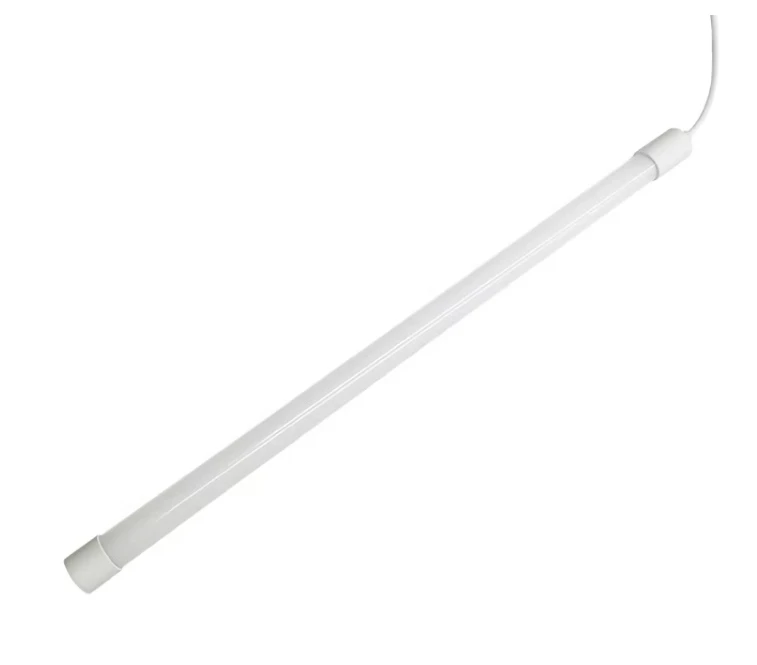
Deconstructing the "Waterproof" Claim: The Anatomy of a True Agricultural LED
While many commercial LEDs claim to be water-resistant, true agricultural-grade waterproofing requires advanced engineering. The optimal tube light must be designed from the ground up to prevent ingress.
The Critical Role of the Waterproof Base
The most vulnerable point of any tube light is the end-cap where the power cable enters. Cheaply manufactured lights often rely on a simple plastic cap or a flimsy rubber stopper, which quickly degrades under chemical stress.
Silicone Gland Technology
The gold standard for agricultural lighting is a specialized waterproof base featuring a heavy-duty, threaded cable gland. When screwed tight, this mechanism physically compresses a medical-grade silicone seal tightly around the power cord. This creates an airtight, watertight mechanical barrier. It completely prevents moisture and ammonia vapor from wicking into the internal electronics, allowing the light to operate safely in 100% humidity environments and withstand direct, high-pressure washdowns.
Seamless Integration with the Tube
To eliminate all micro-gaps that could harbor bacteria or allow vapor ingress, the end-cap must be securely sealed to the main polycarbonate (PC) tube. Advanced manufacturing processes often utilize ultrasonic welding or industrial-grade adhesives, ensuring the fixture is a monolithic, impenetrable unit.
The Double-End Waterproof Connector System
In large poultry houses, multiple lights are typically required to cover the length of the barn. The connections between these lights are major failure points if not properly sealed.
Molded Male and Female Plugs
The optimal solution is the Double End Wires design, which features power cables extending from both ends of the tube. These cables terminate in high-grade, molded male and female waterproof connectors.
Eliminating Exposed Junction Boxes
When connected, these plugs form a seamless, watertight seal with internal O-rings. This plug-and-play system completely eliminates the need for external junction boxes and loose wiring. This is a massive advantage in a wet environment, as exposed junction boxes are notorious for accumulating condensation and corroding, leading to electrical hazards.
Beyond Waterproofing: The Advanced Engineering Required for Poultry
Waterproofing is the baseline requirement, but the "best" lights for a chicken coop must also deliver stable, biologically optimized illumination. This requires superior internal electronics.
The Isolated Driver: Safety and Flicker-Free Performance
The driver is the heart of the LED system, converting AC power to the DC power required by the LEDs.
Mitigating Electrical Hazards
Many budget LED tubes utilize non-isolated drivers, which have no physical barrier between the high-voltage mains and the low-voltage output. In a damp, corrosive environment like a coop, this poses a severe shock hazard. Premium agricultural lights feature an isolated driver. This engineering design uses a transformer to physically separate the high-voltage input from the low-voltage output, ensuring absolute safety for the flock and the farmer, even if the external tube is damaged.
The Biological Necessity of Flicker-Free Light
An isolated driver delivers a highly stable, smooth current, completely eliminating the stroboscopic flicker inherent in cheaper LEDs and legacy fluorescent tubes. Flicker-free light is scientifically proven to reduce avian stress, lower aggressive behaviors like feather-pecking, and promote natural, healthy resting patterns. This directly leads to better feed conversion and reduced mortality.
High-Lumen LED PCB and Thermal Management
LEDs generate significant heat at the diode junction. If this heat is not dissipated, the phosphors degrade, and the light output diminishes rapidly.
Aluminum-Backed PCBs
The optimal waterproof tube utilizes a High Lumen LED PCB built on an aluminum substrate. This architecture ensures "good dissipation," rapidly conducting heat away from the LED chips and into the surrounding environment. This prevents lumen depreciation and ensures the light maintains its intense brightness and high Color Rendering Index (CRI) over 30,000 to 50,000 operational hours. High CRI is vital, as it allows the birds to accurately perceive the colors of their feed, encouraging uniform foraging.
Optical Excellence: The High-Efficiency PC Diffusion Cover
The way light is distributed across the coop floor is critical for flock welfare.
Uniform Light Distribution
Direct, unshielded LED light produces harsh glare and sharp shadows, which can cause birds to congregate in specific areas, leading to crowding and smothering. The optimal solution is a High Efficiency PC (Polycarbonate) diffusion cover. This specialized frosted tube scatters the light rays, transforming the directional output into a soft, uniform luminous environment. This mimics natural daylight, encouraging birds to utilize the entire floor space evenly, improving litter condition and overall flock health.
Operational and Economic Advantages: The Business Case
For the modern farmer, the decision to install waterproof LED tube lights is driven by a compelling economic return on investment (ROI).
Drastic Reductions in Maintenance and Labor Costs
Traditional lighting systems require constant maintenance in a coop. Bulbs burn out, fixtures corrode, and wiring shorts out. Because these waterproof LED tubes are completely sealed and feature isolated drivers, they are virtually maintenance-free. The ability to pressure-wash them directly saves hours of labor during the sanitation process. With a lifespan exceeding 50,000 hours, the cost of replacement bulbs and the labor required to install them is effectively eliminated.
The Efficiency of Daisy-Chaining
The Double End Wires design is a masterstroke of operational efficiency. By allowing multiple tubes to be connected end-to-end in a continuous series, a single power drop can illuminate an entire row of the barn.
Material and Installation Savings
This plug-and-play capability drastically reduces the amount of external wiring and conduit required. Farmers save significantly on copper cabling and electrical hardware, while also reducing the time required for installation.
A Cleaner, Safer Environment
Eliminating dangling wires and exposed junction boxes creates a cleaner, more organized ceiling space. This reduces dust accumulation, makes cleaning easier, and significantly lowers the risk of electrical fires.
Maximizing Flock Health and Yield
Ultimately, the engineering of the light serves the biological output of the bird. The flicker-free operation, high CRI, and uniform light distribution directly stimulate feed intake and normalize digestive processes.
Enhanced Feed Conversion Ratios (FCR)
When birds are less stressed and can easily locate feed, their FCR improves. This translates to faster growth cycles and higher meat yields for broiler operations.
Optimized Egg Production
In layer houses, the stable, consistent photoperiod provided by isolated drivers ensures optimal hormone release, maximizing peak egg production, improving shell quality, and extending the productive lifespan of the hens.
Conclusion: The Definitive Upgrade for Poultry Operations
In conclusion, the physical and chemical realities of a chicken coop render standard electrical fixtures obsolete. The combination of extreme humidity, corrosive ammonia, and rigorous sanitation protocols demands a lighting solution that is fundamentally engineered for survival.
Waterproof LED tube lights are not a luxury; they are a must-have for the modern poultry farm. The featured product, with its waterproof base and silicone gland, its double-end waterproof connectors, its isolated driver, and its high-efficiency PC diffusion cover, represents the pinnacle of agricultural lighting technology.
By investing in this advanced system, farmers are not merely buying light bulbs; they are investing in biosecurity, animal welfare, operational efficiency, and long-term profitability. It is the definitive solution to protect the flock, streamline sanitation, and maximize the genetic potential of the birds. For any forward-thinking poultry producer, upgrading to these waterproof LED tube lights is the most critical infrastructure decision they can make.
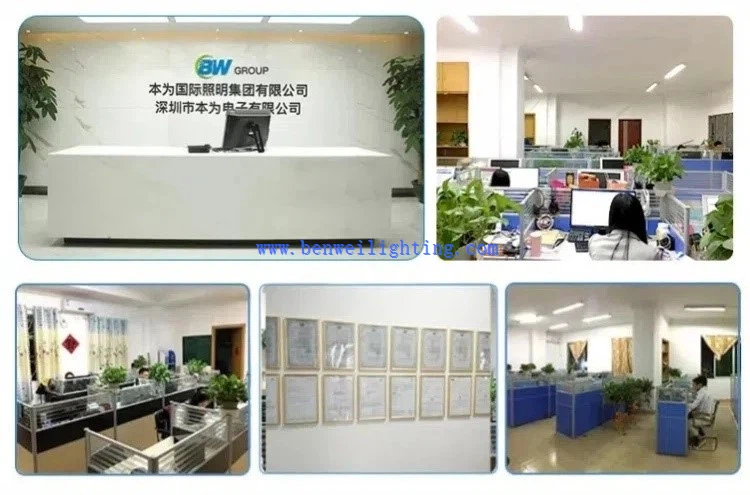
Shenzhen Benwei Lighting Technology Co., Ltd
Shenzhen Benwei Lighting Technology Co., Ltd is a well-known company that designs, develops, makes, and sells high-tech goods, including LED lighting products. The plant where we work opened in 2010 and is in Shenzhen.
Our address
3rd Floor, 5th Building, Hebei Industrial Park, Hualian Community, Longhua District, Shenzhen, China





