

Introduction: The Hidden Costs of Modern Lighting
The Maintenance Crisis in Industrial Lighting
Industrial and commercial facilities, from massive warehouses to outdoor street lighting networks, share a common, silent financial drain: lighting maintenance. Traditional lighting solutions, including Metal Halide, High-Pressure Sodium, and early-generation LEDs, suffer from inevitable lumen depreciation. As the light output fades, facilities are forced to either endure unsafe, dimly lit environments or bear the exorbitant costs of scissor lifts, electricians, and replacement parts. The labor cost of changing a single high-bay bulb often exceeds the cost of the bulb itself.
The Promise of a Permanent Solution
When we ask, "Is this the last light bulb you'll ever need?" we are not engaging in hyperbole; we are addressing a fundamental shift in product engineering. The 360° IP64 Corn Bulb is designed specifically to eliminate the cycle of premature failure. By addressing the core enemies of LED longevity-heat, moisture, and electrical instability-this bulb redefines the total cost of ownership (TCO). This paper will systematically dissect the technological innovations of this product, proving why it stands as the ultimate lighting retrofit.
Optical Superiority and Core Performance Metrics
Uncompromised Brightness: The 130lm/W Threshold
At the heart of this lighting solution is an unwavering commitment to luminous efficacy. Achieving an impressive 130 lumens per watt (lm/w), this bulb operates at the pinnacle of modern lighting efficiency.
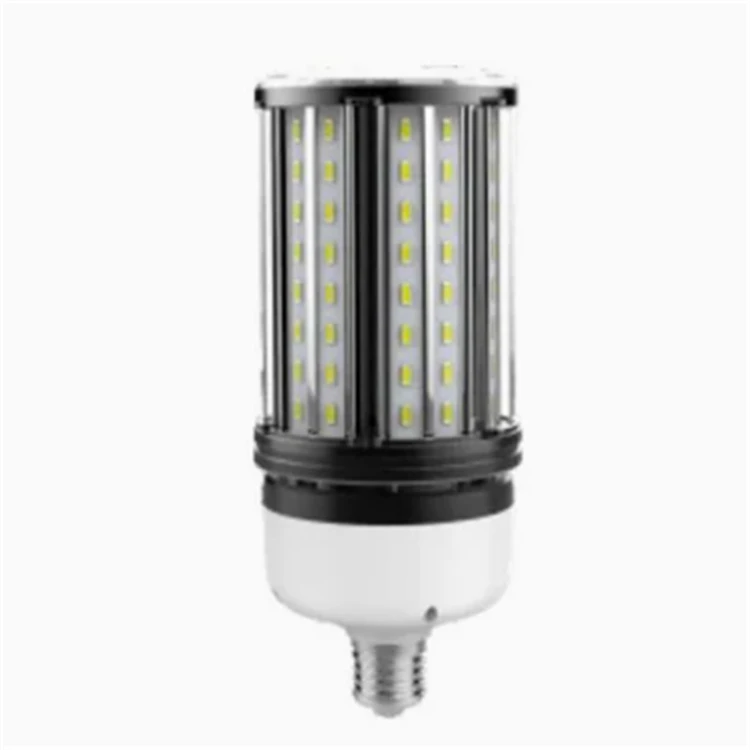
The exceptional brightness is driven by premium 5630 LED Lamp Beads (LG). The 5630 form factor (5.6mm x 3.0mm) is renowned in the industry for its high thermal conductivity and ability to handle higher drive currents while maintaining a compact footprint. By utilizing LG chips, the bulb guarantees a highly consistent color temperature, superior color rendering, and a ruggedized architecture.
To put 130lm/w into perspective, legacy halogen and CFL bulbs typically achieve 15-20lm/w and 50-70lm/w, respectively. Upgrading to 130lm/w means that for every watt of electricity consumed, the user receives more than double the light output of standard LEDs. In a large-scale warehouse setting with hundreds of fixtures, this efficacy directly translates to thousands of dollars saved annually on utility bills.
360-Degree Omnidirectional Illumination
Unlike traditional directional LEDs or retrofits that rely on reflectors to bounce light downwards (resulting in significant lumen loss), this Corn Bulb is engineered for true 360-degree omnidirectional lighting.
The cylindrical arrangement of the LED strips ensures that light is projected uniformly in all directions. This is particularly critical for post-top streetlights, parking garage fixtures, and decorative outdoor lighting where traditional bulbs create severe dark spots. The omnidirectional nature of this bulb ensures complete, wraparound environmental illumination, enhancing safety and visibility.
Brightness at installation is only half the battle. The true measure of an LED's worth is its Lumen Depreciation-how much light it loses over time. This bulb is proudly certified by LM80.
LM80 is the Illuminating Engineering Society's (IES) approved method for measuring lumen maintenance of LED packages. It involves testing the LEDs for a minimum of 6,000 hours at extreme temperatures to project their long-term light output. An LM80 certification guarantees that the 5630 LED chips used in this bulb will retain the vast majority of their initial brightness after tens of thousands of hours of operation, directly contributing to its status as the "last bulb you'll ever need."
Engineering Resilience: Thermal Management and Environmental Protection
The Science of Heat Dissipation
Heat is the mortal enemy of electronic components. In LEDs, excessive heat leads to catastrophic junction temperatures, which cause rapid color shifting and premature driver failure. The 360° IP64 Corn Bulb incorporates a multi-layered thermal defense system.
One of the most significant innovations highlighted in the product design is "Photoelectric separation."
In standard LED bulbs, the driver (the electronic circuit that converts AC to DC) is often placed directly adjacent to or integrated with the LED board. This means the heat generated by the LEDs compounds with the heat generated by the driver, creating a thermal choke point that rapidly degrades the internal capacitors.
This bulb physically separates the lamp body (housing the LEDs) from the driver. By isolating the heat sources, each component operates at a significantly lower temperature. This architectural decision alone can double the operational lifespan of the bulb compared to conventional designs.
The physical construction of the bulb is a testament to industrial-grade engineering.
Aluminum Material: The main body is constructed from high-grade aluminum, an excellent conductor of heat. It acts as a massive heat sink, drawing thermal energy away from the delicate LED chips and dispersing it into the ambient air.
Diversion Grooves and Small Holes: The top cap features a series of precisely machined diversion grooves and small ventilation holes. These are not merely aesthetic; they serve a critical dual purpose. First, they facilitate rapid heat dissipation through convection. Second, in outdoor environments, they are designed to quickly direct water flow and prevent water pooling, which is a common cause of seal degradation and electrical shorting.
Central Cooling Fan: As seen in the top-down imagery, the array features a central fan mechanism. This active cooling component forces hot air out and draws cooler air in, creating a dynamic thermal cycle that prevents heat buildup, even in enclosed fixtures.
The Fully Sealed Driver
To further ensure the "last bulb" claim, the driver is fully sealed with thermal paste.
Most high-output bulbs cannot be used in fully enclosed fixtures (like sealed glass globes) because trapped heat causes them to burn out within months. This bulb is explicitly designed for totally enclosed fixtures. The thermal paste acts as a liquid heat sink, filling microscopic air gaps and conducting heat away from the sensitive driver components directly to the outer casing.
Premium Componentry: The Rubycon Capacitors
A chain is only as strong as its weakest link. In LED drivers, the electrolytic capacitors are typically the first components to fail. This product utilizes premium Rubycon capacitors.
Rubycon is a renowned Japanese manufacturer of high-end electronic components. Their capacitors are famous for their incredibly low Equivalent Series Resistance (ESR), high ripple current ratings, and long operational life. By using Rubycon capacitors, the manufacturer guarantees stable power delivery to the LEDs, eliminating flicker and ensuring that the driver can withstand voltage fluctuations in harsh industrial power grids.
Environmental Sealing: The IP64 Rating and Extreme Temperature Operation
Decoding IP64: Dustproof and Water-Resistant
The "IP" in IP64 stands for Ingress Protection. This rating is critical for determining where a bulb can be safely deployed.
The first digit "6" indicates the highest level of protection against solid particles. It signifies that the bulb is completely dustproof. No dust can enter the casing, which is vital for agricultural facilities, sawmills, or cement factories where airborne particulates would otherwise destroy electronics.
The second digit "4" means the bulb is protected against water splashing from any direction. Combined with the diversion grooves on the top cap, this makes the bulb perfectly suited for outdoor use in parking lots, under canopies, or in open-air industrial complexes where rain and humidity are constant threats.
Operating in Extreme Climates
Industrial environments are rarely climate-controlled. This bulb is engineered to operate flawlessly in environments ranging from the freezing cold to blistering heat.
The working temperature range of -40°C to 65°C (-40°F to 149°F) is extraordinary.
At -40°C, standard LEDs often suffer from severe voltage drops or complete failure to ignite due to capacitor freezing. The Rubycon capacitors and the sealed driver ensure instantaneous, flicker-free startup even in Arctic conditions.
Conversely, at 65°C (which is often the ambient temperature inside a non-ventilated warehouse ceiling), the thermal management system (aluminum body, photoelectric separation, and central fan) prevents the LEDs from exceeding their maximum junction temperature. This guarantees stable performance without thermal throttling or permanent damage.
Dimensional Specifications and Application Scenarios
Form Factor and Compatibility
Understanding the physical dimensions is crucial for retrofitting existing fixtures.
Length: 268mm
Diameter: 140mm
Base: Standard E39 or E40 screw base.
The 268mm length is designed to maximize the surface area for LED mounting and heat dissipation while still fitting into standard high-bay and streetlight housings. The 140mm diameter provides a robust footprint that accommodates the 360-degree LED arrays and the central cooling mechanism without interfering with the fixture's outer housing.
Ideal Applications for the 360° IP64 Corn Bulb
This bulb is not a one-size-fits-all residential lamp; it is a dedicated commercial and industrial workhorse.
In massive logistics centers, the 130lm/w output provides crystal-clear visibility, reducing picking errors and improving worker safety. The 360-degree light ensures aisles are evenly lit from floor to ceiling.
The IP64 rating and 360-degree illumination make it the ideal retrofit for cobra head streetlights and parking lot poles. It casts a wide, even net of light that eliminates hazardous dark spots for pedestrians and drivers.
Cold storage warehouses, foundries, and agricultural barns will benefit immensely from the extreme temperature resilience and dustproof construction of this bulb.
Conclusion: The Ultimate Return on Investment
Calculating the Total Cost of Ownership (TCO)
When evaluating lighting, the initial purchase price is merely the tip of the iceberg. The true cost is calculated by combining the purchase price, energy consumption, and maintenance labor over the lifespan of the fixture.
Replacing a 150W Metal Halide bulb with a 50W equivalent LED Corn Bulb instantly slashes energy consumption by two-thirds. At 130lm/w, this bulb guarantees that no energy is wasted as heat, maximizing the return on every kilowatt-hour purchased.
The question "Is this the last light bulb you'll ever need?" is answered by the elimination of maintenance. With LM80 certification, photoelectric separation, Rubycon capacitors, and a fully sealed driver, the failure points of traditional bulbs have been systematically engineered out. Once installed, facility managers can forget about them for years, freeing up maintenance budgets and resources.
The Final Verdict
This 360° IP64 Corn Bulb is a masterclass in modern lighting engineering. It combines the raw power of 130lm/w 5630 LG chips with the indestructible resilience of IP64 sealing, premium Rubycon electronics, and a groundbreaking thermal management system.
For B2B buyers, facility managers, and engineers looking to future-proof their infrastructure, this is not just a light bulb; it is a strategic asset. It is an investment that promises to slash operational costs, eliminate maintenance headaches, and provide flawless illumination in the most demanding environments on Earth. Stop the cycle of endless replacements. Upgrade to the ultimate lighting solution today and experience the last bulb you will ever need.

How To Cooperate With Us?
We are happy to have total control over the manufacturing process and the calibre of our products since we have our own facilities. Since we are producers rather than just brokers, we are dedicated to providing our customers with the best pricing. Since we are certain that the price and quality of our products are clear, we invite customers to see our samples first. Our commitment to quality and customer satisfaction drives us to continuously provide top-notch goods.
Our address
3rd Floor, 5th Building, Hebei Industrial Park, Hualian Community, Longhua District, Shenzhen, China





