

Introduction: Why Technical Parameters Determine Industrial Lighting Investment Value
Differences Between Industrial LED Flood Lights and Civil Lighting Products
Civil LED lighting products are mainly designed for short-term, intermittent use in indoor environments with stable temperature, low dust, and no severe vibration. Their core design priorities are low cost and basic lighting functions. In contrast, industrial LED flood lights face extremely harsh application scenarios: long-term 12–24 hour uninterrupted operation, high-temperature heat accumulation in factory workshops, dust and particle accumulation in production areas, humid and rainy outdoor yards, and mechanical vibration caused by production equipment operation. These harsh conditions put forward stringent requirements on the structural stability, heat dissipation efficiency, environmental adaptability, and luminous durability of flood lights. Ordinary civil-grade LED flood lights with simplified parameters cannot meet industrial operation standards and will quickly experience brightness attenuation, circuit failure, and structural damage after short-term industrial use, which cannot support long-term stable lighting operation.
Procurement Misjudgment Caused by Ignoring Core Technical Parameters
In industrial lighting procurement, the most common mistake is equating high power with high cost performance and low price with cost saving. Many low-priced industrial flood lights on the market use inferior chips, simplified heat dissipation structures, and low-standard protection configurations. Although their power parameters and nominal brightness are similar to high-quality industrial lamps, their actual service life and stability are far lower than industrial standards. Purchasers who only focus on surface parameters will face a series of subsequent losses: rapid light decay leads to substandard lighting brightness and affects production efficiency; poor waterproof and dustproof performance causes frequent short-circuit failures; backward heat dissipation design leads to chip aging and premature lamp scrapping; unstable driving systems cause stroboscopic light and potential safety hazards. These hidden losses far exceed the initial procurement price difference, resulting in a typical "low initial cost, high full-cycle cost" dilemma.
Core Value of Standardized Parameter Evaluation Procurement
Professional technical parameter evaluation is the core basis for screening high-quality industrial LED flood lights and realizing refined lighting cost control. Comprehensive inspection of luminous performance, structural design, protection grade, driving performance, and life attenuation parameters can accurately distinguish industrial-grade qualified products from inferior modified products. Scientific parameter matching can ensure that the flood light maintains stable luminous efficiency, low failure rate, and ultra-long service life in harsh industrial environments, fundamentally reduce later maintenance and replacement costs, save long-term electricity energy consumption, and avoid production losses and safety risks caused by lighting equipment failure. For industrial enterprises and engineering projects, parameter-oriented procurement is the key to improving lighting system stability and maximizing long-term investment returns.
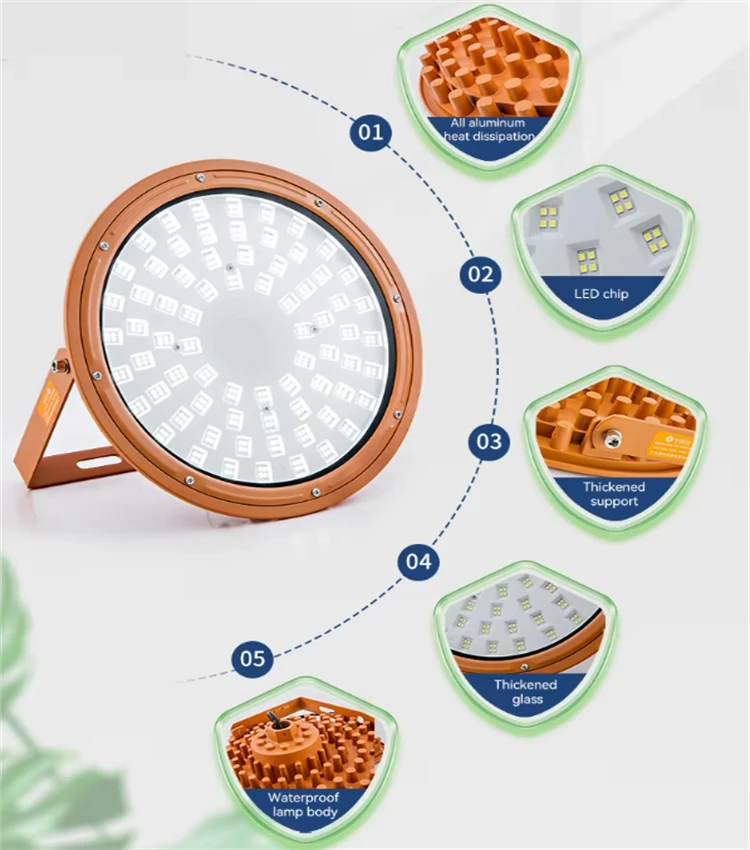
Core Luminous Performance Parameters (Determine Lighting Quality and Energy Efficiency)
Luminous Efficacy and Actual Lumen Output
Luminous efficacy (lm/W) is the most intuitive parameter to measure the energy efficiency of industrial LED flood lights, referring to the luminous flux output per watt of power consumption, which directly determines the long-term power consumption cost of factory lighting. Inferior industrial flood lights usually have a nominal luminous efficacy of 80–90lm/W, while high-quality industrial-grade UFO LED flood lights adopt high-performance imported SMD LED chips, with a luminous efficacy of up to 100–120lm/W. Under the same power condition, the actual lumen output is 20%–30% higher than ordinary products, realizing higher brightness output with lower power consumption. It is worth noting that purchasers must distinguish nominal lumen and actual effective lumen. Many inferior products falsely mark lumen parameters, and their effective luminous flux will drop sharply after short-term heating operation, while high-quality products maintain stable lumen output under long-term high-load operation, ensuring consistent lighting efficiency throughout the service cycle.
Color Rendering Index (Ra) and Color Temperature Consistency
Color rendering index (Ra) reflects the ability of the light source to restore the true color of objects, which is particularly critical for precision processing workshops, product inspection areas, and logistics sorting warehouses. Industrial production scenarios require accurate color judgment and detail identification, and low Ra light sources will cause color distortion, increase product defective rates, and reduce work accuracy. Qualified industrial flood lights must have a color rendering index of Ra≥80, which can truly restore the color of processing parts and goods, meeting industrial operation and inspection standards. In terms of color temperature, industrial lighting is dominated by 5000K–6500K neutral white light, which simulates natural daylight, effectively alleviates visual fatigue of long-term workers, and improves work efficiency. High-quality products realize unified color temperature calibration of the whole lamp batch, avoiding color difference and light inconsistency caused by batch production, ensuring uniform lighting effect in the whole factory area.
Stroboscopic Performance and Luminous Uniformity
Stroboscopic is a hidden safety hazard easily ignored in industrial lighting procurement. Ordinary low-quality LED flood lights adopt unstable constant-current drive solutions, resulting in low-frequency stroboscopic invisible to the naked eye. Long-term work under stroboscopic light will lead to worker eye fatigue, dizziness, and reduced concentration, and will also interfere with the shooting and recognition of industrial cameras and automated equipment, affecting the normal operation of intelligent production lines. High-quality industrial flood lights are equipped with high-frequency constant-current isolation drive chips, realizing zero stroboscopic luminous output, which is eye-friendly and suitable for long-shift industrial work scenarios. In addition, the optical lens design directly determines luminous uniformity. Professional flood lights adopt high-transmittance uniform light lens and multi-angle light distribution design, effectively eliminate local bright spots and dark areas, realize large-area uniform lighting coverage, and completely solve the problem of lighting blind spots in factory workshops and yards.
Heat Dissipation and Structural Technical Parameters (Determine Service Life and Stability)
Heat Dissipation Structure and Thermal Resistance Parameters
Light decay and service life of LED lamps are mainly determined by heat dissipation performance. The core reason for rapid light decay of inferior industrial flood lights is excessive thermal resistance and poor heat dissipation, which leads to long-term overheating of LED chips and accelerated aging of luminous materials. High-quality industrial UFO LED flood lights adopt an integral fin-type die-cast aluminum alloy heat dissipation structure. The large-area convex fin heat sink increases the heat dissipation contact area by more than 60% compared with ordinary flat heat dissipation shells, realizing rapid conduction and diffusion of chip operating heat. The product strictly controls the overall thermal resistance within the industrial standard low range, ensuring that the core working temperature of the lamp body is always kept below 60℃ during long-term full-load operation. Low thermal resistance design avoids luminous efficiency attenuation and chip burnout caused by heat accumulation, greatly delaying light decay speed and extending the effective service life of the lamp.
Shell Material and Mechanical Resistance Parameters
Industrial lighting equipment needs to resist accidental collision, mechanical vibration, and external impact in complex production environments, so shell material parameters are key indicators of structural durability. Inferior flood lights use thin iron shells or low-purity aluminum shells, which are easy to deform, rust, and crack. High-quality industrial flood lights adopt high-purity thickened die-cast aluminum alloy shells, with high hardness, strong compression resistance and impact resistance, and will not be deformed or damaged under conventional mechanical impact and vibration. The surface is treated with high-temperature anti-rust and anti-oxidation coating, which can resist moisture corrosion and weathering erosion for a long time. The front lens adopts thickened tempered safety glass, which has high light transmittance, scratch resistance, and explosion-proof performance, avoiding lens breakage and light transmittance reduction caused by external impact, and adapting to harsh industrial on-site use conditions.
Installation Structure and Angle Adjustment Parameters
Excellent structural design needs to match flexible and stable installation parameters to meet the diversified layout needs of industrial scenarios. This industrial flood light is equipped with a thickened stainless steel U-shaped adjustable bracket, supporting 180° free rotation and angle positioning. Compared with fixed installation structures of ordinary lamps, it can flexibly adjust the lighting angle according to factory workshop height, equipment layout, and yard space, completely eliminate lighting blind spots, and improve the effective utilization rate of light sources. The bracket adopts anti-loosening bolt fixing technology, which can maintain stable positioning after long-term high-altitude installation, and will not shift or loosen due to wind vibration and equipment operation vibration. The universal installation structure supports wall mounting, beam mounting, and vertical support mounting, with strong scene adaptability, meeting the installation and lighting needs of all indoor and outdoor industrial areas.
Protection Grade and Environmental Adaptability Parameters (Determine Fault Resistance and Weather Resistance)
IP Waterproof and Dustproof Grade Parameters
IP protection grade is the core parameter to measure the environmental adaptability of industrial flood lights and the primary standard to distinguish industrial-grade and commercial-grade lighting products. Most ordinary commercial flood lights only have IP54 protection, which cannot resist dust accumulation and rainwater splashing, and are prone to water and dust ingress in industrial environments, resulting in circuit short circuit and lamp failure. High-quality industrial UFO flood lights adopt an integral fully sealed structural design, reaching IP66 high-standard industrial protection grade. The first digit 6 means completely dust-tight, no dust can invade the lamp body, avoiding heat dissipation blockage and circuit failure caused by long-term dust accumulation; the second digit 6 means resistant to powerful water jet impact, which can adapt to rainy days, watering cleaning, and humid outdoor environments, ensuring stable operation in all weather conditions. IP66 high protection grade fundamentally reduces environmental-induced failure rate and greatly reduces later maintenance frequency.
Working Temperature Adaptation Range
Industrial sites have drastic seasonal temperature changes and abnormal local temperatures. Factory workshops will generate high temperature during equipment operation, while outdoor yards will face low-temperature freezing weather in winter. Ordinary low-quality LED flood lights have a narrow working temperature range, and will fail to start, flicker, or burn out in extreme high and low temperatures. High-quality industrial flood lights have a wide temperature adaptation range of -20℃ to +60℃, which can maintain stable luminous performance and normal circuit operation in extreme cold and high-temperature environments. The internal driving components and chips are screened by high and low temperature aging tests, with strong temperature resistance and environmental stability, adapting to the complex and changeable temperature conditions of industrial production all year round.
Anti-corrosion and Anti-surge Protection Parameters
Humid factories, coastal industrial zones, and chemical workshops have corrosive air and unstable power grids, which put forward anti-corrosion and anti-surge requirements for lighting equipment. In terms of anti-corrosion, the aluminum alloy shell of high-quality industrial flood lights adopts multi-layer anti-rust and anti-oxidation treatment, which can resist moisture oxidation and weak chemical corrosion, avoiding shell rust and structural aging. In terms of power protection, the product is equipped with 4KV high surge protection function, which can resist instantaneous voltage surge and power grid fluctuation in industrial power supply systems, prevent driving burnout caused by unstable voltage, and effectively solve the problem of easy damage of lamps caused by industrial power grid fluctuations. These professional protection parameters ensure long-term stable operation of lamps in high-risk industrial environments.
Driving System and Safety Certification Parameters (Determine Operational Safety and Stability)
Drive Power Supply Working Parameters
The drive power supply is the heart of the LED flood light, and its working parameters directly determine the long-term operational stability of the equipment. Ordinary inferior lamps adopt non-isolated low-cost drives, which have poor voltage resistance and unstable current output, and are easy to burn out after long-term operation. Industrial-grade flood lights adopt high-quality isolated constant-current drive power supply, with a wide voltage adaptation range of AC85–265V, which can adapt to unstable industrial grid voltage and avoid lamp flicker and failure caused by voltage fluctuation. The constant-current output accuracy is controlled within ±3%, ensuring stable chip working current, avoiding current impact-induced chip aging. At the same time, the drive integrates over-current, over-voltage, over-temperature, and short-circuit multiple protection mechanisms, which can automatically cut off the power in case of circuit abnormalities to protect the lamp body core components, greatly improving the safety and stability of equipment operation.
Safety Certification and Standard Compliance Parameters
Formal industrial lighting products must pass international and industrial safety certification standards, which are important credentials to verify product quality and safety. High-quality industrial LED flood lights comply with CE, RoHS and other international certification standards, meeting EU industrial electrical safety and environmental protection requirements, with safe and reliable product materials and circuit design, no harmful substances, no electromagnetic radiation, in line with modern factory green lighting standards. All electrical parameters are strictly implemented in accordance with industrial lighting specifications, with standardized production processes and strict quality inspection. Products with complete certification parameters have stable quality, no potential safety hazards, and can meet the safety inspection standards of industrial production sites, avoiding safety risks and rectification losses caused by unqualified equipment.
Aging Test and Quality Stability Parameters
Aging test parameters reflect the actual stability of products after long-term operation. Before leaving the factory, high-quality industrial flood lights undergo 72-hour continuous high-load aging tests and extreme temperature cycle tests. After long-term aging screening, unstable components and defective products are eliminated, ensuring that each finished lamp has consistent performance. Ordinary inferior products omit the aging test link, and a large number of hidden defective products flow into the market, resulting in high failure rate after installation. Products with professional aging test parameters can maintain stable performance in long-term industrial operation, with extremely low failure rate and consistent batch quality, which is convenient for unified management and maintenance of factory lighting systems.
Life Attenuation and Full-Cycle Cost Performance Parameters (Determine Long-Term Investment Return)
Rated Service Life and Lumen Maintenance Rate
Rated service life and lumen maintenance rate are the core parameters to measure the long-term cost performance of industrial flood lights. The rated service life of high-quality industrial UFO LED flood lights reaches 50,000 hours, far exceeding the 20,000–30,000 hours of ordinary LED flood lights and 10,000–15,000 hours of traditional metal halide lamps. Calculated by 12-hour daily industrial operation, the effective service cycle is up to 8–10 years. More importantly, the product has excellent low light decay performance, with a lumen maintenance rate of more than 70% after 50,000 hours of operation, and the annual light decay rate is controlled within 3%. In contrast, ordinary inferior lamps have a light decay rate of up to 15%–20% per year, and their brightness is severely attenuated after 1–2 years of use, failing to meet lighting standards. Ultra-long life and ultra-low attenuation parameters fundamentally reduce equipment replacement frequency.
Full-Cycle Energy Consumption Parameters
Energy consumption parameters determine the daily operating cost of factory lighting. High luminous efficacy and low power consumption design enable industrial-grade flood lights to save 40%–60% of electricity compared with traditional industrial lamps under the same brightness. For large factories with long-term uninterrupted lighting, the annual electricity saving benefit is extremely considerable. Different from inferior products with high nominal power and low actual efficiency, high-quality products realize true energy-saving operation through excellent chip and heat dissipation parameters, without virtual power phenomenon. The stable luminous efficiency ensures that the energy-saving effect does not decline with the extension of service time, realizing long-term stable energy saving and consumption reduction, and reducing the daily operational energy cost of enterprises.
Maintenance Cost and Failure Rate Parameters
Excellent comprehensive technical parameters bring ultra-low failure rate and maintenance cost advantages. High-standard heat dissipation, protection, driving and structural parameters make the overall failure rate of the product lower than 0.5% per year, almost eliminating frequent fault maintenance and emergency replacement work. Factories can save a lot of labor costs for lighting inspection and maintenance, and reduce the inventory cost of spare parts. Although the one-time procurement cost of high-parameter industrial flood lights is slightly higher than that of inferior products, the full-cycle comprehensive cost (equipment replacement cost, electricity cost, maintenance cost, loss caused by failure) is reduced by more than 70%, with extremely high long-term cost performance.
Professional Procurement Matching Strategies Based on Technical Parameters
Scenario-Based Parameter Matching Principle
Different industrial scenarios have differentiated parameter requirements for flood lights. For ordinary indoor warehouses and workshops, it is necessary to focus on luminous efficacy, color rendering index and stroboscopic parameters to ensure high-quality and energy-saving lighting; for humid, dusty outdoor yards and construction sites, IP66 protection grade, anti-corrosion and temperature resistance parameters should be prioritized; for 24-hour uninterrupted automated production workshops, service life, light decay and driving stability parameters are the core evaluation indicators. Purchasers should not blindly pursue high power, but match professional parameters according to actual scenario needs to avoid parameter redundancy or performance insufficiency, realizing the optimal balance between lighting effect and cost.
Eliminate False Standard Parameters and Inferior Products
In the procurement process, it is necessary to accurately identify false parameter marking behaviors of inferior products. Many low-priced products falsely mark luminous efficacy, service life and protection grade, with nominal parameters consistent with industrial-grade products but actual performance far below standard. Purchasers should verify product certification reports, aging test data and actual parameter test results, focusing on inspecting practical parameters such as actual lumen output after heating, real IP protection performance, and long-term light decay data, rather than only referring to nominal parameters on the product surface. Screening products with true and reliable technical parameters is the key to avoid procurement risks.
Focus on Full-Cycle Parameter Stability Rather Than Initial Performance
The biggest advantage of industrial-grade LED flood lights is long-term parameter stability. Inferior products have good initial lighting effect, but their parameters decline rapidly after short-term use, with sharp brightness attenuation and increased failure rate. High-quality industrial products maintain stable luminous performance, structural performance and safety parameters throughout the service cycle. Procurement evaluation should focus on long-term parameter stability data, prioritize products with complete aging test reports and long-term performance guarantee, and take full-cycle cost performance and stability as the core procurement standards, so as to realize long-term trouble-free operation of industrial lighting systems.
Conclusion
The procurement of industrial LED flood lights is a systematic work based on comprehensive evaluation of technical parameters, and single power and price judgment cannot define product quality and value. Core technical parameters including luminous performance, heat dissipation structure, protection grade, driving safety, life attenuation and full-cycle cost performance jointly determine the lighting quality, operational stability and long-term investment return of industrial lighting equipment. High-quality industrial-grade UFO LED flood lights rely on superior full-parameter configuration, solving various performance defects of ordinary inferior products in industrial application scenarios. It has ultra-high luminous efficiency and stable lighting quality in the early stage, ultra-low light decay and failure rate in the middle and later stages, and ultra-long service life and low maintenance cost in the whole cycle. For industrial purchasers, mastering professional parameter evaluation standards can effectively avoid procurement pitfalls, screen high-quality industrial lighting products, reduce comprehensive operational costs, and provide stable, efficient and cost-effective long-term lighting guarantees for factory production and operation.
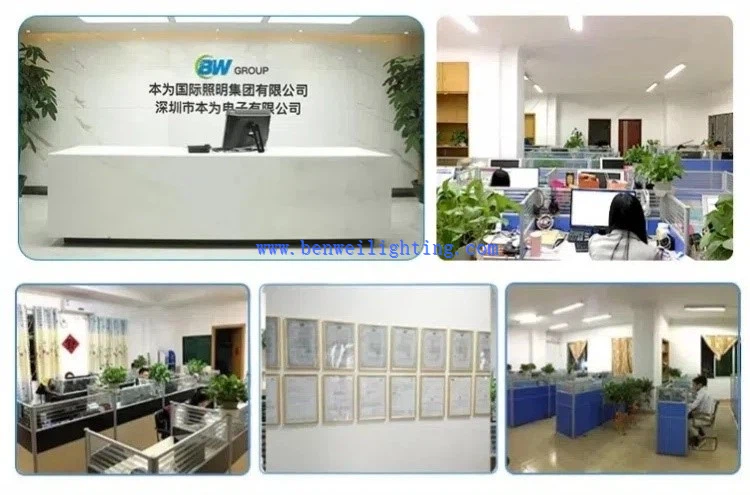
How To Cooperate With Us?
We are happy to have total control over the manufacturing process and the calibre of our products since we have our own facilities. Since we are producers rather than just brokers, we are dedicated to providing our customers with the best pricing. Since we are certain that the price and quality of our products are clear, we invite customers to see our samples first. Our commitment to quality and customer satisfaction drives us to continuously provide top-notch goods.
Our address
3rd Floor, 5th Building, Hebei Industrial Park, Hualian Community, Longhua District, Shenzhen, China





