

LED lights are the main part of the third wave of semiconductor lighting technology. They make photoelectric conversion more efficient by using the solid-state illumination principle. Compared to regular incandescent light bulbs, they can change over 85% of the energy they use into light, last more than 25,000 hours, and their spectral properties can be carefully managed. This guide carefully goes over the technical benefits and selection tips for LED lighting in building settings.
Engineering show of the benefits of new technology
The main thing that makes LED lighting technology competitive is shown in the four-dimensional performance matrix: When it comes to energy efficiency, a normal 8W LED module can produce 800lm of light, which is 75% more energy-efficient than a 60W incandescent bulb. It also costs 83% less to run for 10,000 hours. Accelerated aging tests show that the lamps can keep up with the L70 light reduction standard for 35,000 hours at a junction temperature of -85°C, which is 3.2 times longer than fluorescent lamps. RoHS 3.0 certifies that the product is safe for the environment by getting rid of harmful materials like mercury and lead. It also cuts the carbon footprint by 82%. The shell is made of a PC-ABS composite material, and the inside is sealed with epoxy glue. It has passed IK08 impact resistance and IP54 security standards, and it can work in temperatures ranging from -25°F to +50°F.

Your Choice Details about the technology
System for Measuring Light Instead of using watts as a measure of power, use lumens (lm) as the main indicator: The working lighting in the office should be at least 500lm/m², and the living room should have at least 300–400lm/m² of general lighting. About Science Sorting by Color Temperature This is what the CIE 1931 standard says: 2700K to 3000K warm white light is good for rest areas; 4000K neutral white light makes it easier to see in the office; and 5000K to 6500K cold white light makes it easier to tell colors apart in industry settings. Technology to Control Beams To get centered lighting, narrow-angle beams (15° to 30°) are used. For even lighting, wide-angle beams (120°) are used. Compatibility with Electrical It's important to make sure that dimmers work with E26, B22, and GU10 bases, and a clever drive system with 0-10V and PWM protocol is suggested.
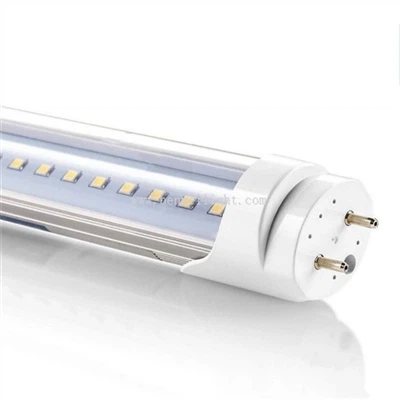
Instructions for installation engineering and thermal management
Managing thermodynamics is the key to making things last longer: To keep the LED junction temperature below 85℃, closed-type luminaires must have heat-dissipation fins with a thermal resistance of less than 8℃/W. As part of optical care, the lens surface needs to be cleaned every three months so that dust doesn't make light less effective by 23%. The three-zone lighting concept guides the planning of the space: A wide-angle LED array is used for basic lighting, a 30°-focused module is used for job lighting, and narrow-angle beams are used to improve the visual focus on the key lighting.
About our company
Shenzhen Benwei Lighting Technology Co., Ltd is a well-known company that designs, develops, makes, and sells high-tech goods, including LED lighting products. The plant where we work opened in 2010 and is in Shenzhen.
Our address
3rd Floor, 5th Building, Hebei Industrial Park, Hualian Community, Longhua District, Shenzhen, China

Contact us today for wholesale price! Free specification PDF & installation video provided.





