

Introduction: The Hidden Cost of Everyday Lighting
Lighting is the quietest line item on a commercial or household electricity bill - and, for most buyers, the least examined one. A 600×600 mm recessed ceiling panel running eight to ten hours a day, across a whole building, does not announce its cost in any single month. Yet over a five-year operating life, the arithmetic of conventional lighting versus modern high-efficiency LED becomes startling.
This article examines one specific product category - the flat LED panel light (600×600 mm / 60×60 cm recessed or surface-mounted) - and one specific engineering choice at its core: the high-brightness LED chip. Our central argument is not a marketing slogan but a physics-and-accounting claim: when a panel light is built around an efficient, long-lived LED chip, it can genuinely halve the electricity you pay for lighting - and keep saving for years after a conventional fixture has been thrown away.
We will walk through the technical mechanism (why high-brightness chips consume less per lumen), the economics (what "half the bill" actually means in kWh and currency), the longevity argument (why lifetime is an efficiency metric, not a durability footnote), and the purchasing criteria you should apply before you commit to a single fixture.
What Makes an LED Panel Light Efficient
The Core Component: The High-Brightness LED Chip
Every LED panel light is, at heart, a light engine. Inside the slim frame sit LED chips - small semiconductor diodes that convert electricity into light. The single most decisive variable in a panel's efficiency is how many lumens each watt of input electricity produces, a ratio called luminous efficacy, expressed in lumens per watt (lm/W).
A high-brightness LED chip is not merely "brighter." It is a chip engineered for a high conversion efficiency - the proportion of electrical energy turned into visible light rather than wasted as heat. Low-grade chips may deliver 80–100 lm/W; quality high-brightness chips commonly reach 120–160 lm/W or beyond. The practical consequence is simple: to produce the same luminous flux, a high-efficacy fixture draws measurably fewer watts.
This is the exact mechanism behind the "half the bill" claim. If two panels both output 4,000 lumens, one at 100 lm/W draws 40 W, while one at 160 lm/W draws only 25 W. Over thousands of operating hours, that difference compounds into a very real monetary gap.
The Optical System: Getting the Light Out
The chip is only half the story. A high-brightness chip trapped behind a poor optical system wastes its output. In a well-engineered panel, the light path runs through four engineered layers, each with a job to do:
Reflective paper (reflector) at the back, bouncing otherwise-lost light forward;
Light guide plate, which distributes the point sources of the chip array into a uniform, even field;
Diffuser panel, softening the output into glare-free, comfortable light;
Thermal aluminum bezel/frame, which is not decorative - it is the thermal management channel that keeps the chips cool and therefore efficient and long-lived.
The efficiency claim rests on both pillars: an efficient chip and an optical system that does not squander it. A panel that is bright on paper but loses 30% of its light inside the housing is not actually efficient - it is a fixture that burns power to heat itself.
Why Efficacy, Not Wattage, Is the Number to Compare
Many buyers compare fixtures by wattage ("which one is lower watts?") or by brightness alone. Both are traps. The correct comparison is lumens per watt - the amount of useful light you get for each unit of power. Two 36 W panels are not equivalent if one produces 4,500 lumens and the other 3,200. The higher-efficacy fixture delivers more light for the same money, or the same light for less money.
When you evaluate a panel, ask for three figures and keep them together:
表格
| Specification | What it tells you |
|---|---|
| Luminous flux (lm) | Total light output - how bright the space will be |
| Power draw (W) | Actual energy consumption |
| Efficacy (lm/W) | Efficiency - lumens per watt; the real value metric |
A panel that lists a high wattage alongside a high lumen figure is not automatically wasteful; a panel that lists a low wattage with a low lumen figure is not automatically efficient. Efficacy is the figure that protects your electricity budget.
The Economics: Where "Half the Bill" Comes From
A Worked Calculation for One Fixture
Let us put concrete numbers on the claim. Consider a single 600×600 mm panel installed in a space that runs 10 hours per day, 300 days per year - a realistic duty cycle for a commercial office, warehouse, or retail space.
Scenario A - a conventional low-efficiency fixture (e.g., older fluorescent or low-grade LED):
Power draw: 48 W (typical of many legacy replacements)
Annual energy: 48 W × 10 h × 300 days = 144,000 Wh = 144 kWh
Scenario B - a high-brightness LED panel at higher efficacy:
Power draw: 24–28 W to deliver equivalent light
Annual energy: ~27 W × 10 h × 300 days = 81,000 Wh = 81 kWh
The saving per fixture is roughly 60 kWh per year. At a commercial electricity rate of, say, $0.15/kWh, that is approximately **$9–11 saved per fixture per year**. Now multiply by the reality of a building: a single open-plan office or a modest retail store typically holds 40–200 such panels.
50 fixtures × 60 kWh = 3,000 kWh/year → ~$450/year
150 fixtures × 60 kWh = 9,000 kWh/year → ~$1,350/year
Across a five-year operating period, one medium-sized installation saves thousands of dollars - enough to pay for the fixtures themselves several times over. This is not a marginal optimization; it is a capital-recovery calculation. The "half the bill" headline is, for lighting-heavy spaces, a literal, reproducible figure.
Scaling Up: Facilities, Warehouses, and Retail Chains
The arithmetic becomes dramatically more attractive in large facilities, which is precisely the segment where LED panels earn their keep. Consider three archetypes:
Office buildings - ceiling grids packed with panels running through business hours; energy is one of the largest controllable operating costs.
Warehouses and logistics centers - large ceiling areas, long runtimes, and, often, overnight shifts; a high-efficacy panel pays back fast.
Retail and supermarket chains - hundreds of stores, each with dozens of fixtures; even a few watts saved per fixture scales to enterprise-level budget relief.
For these buyers, the decision is rarely "will I save money" - it is "how quickly does the upgrade pay for itself, and how much will it save over the fixture's lifetime." A high-brightness chip answers both: lower draw from day one, and a longer life that postpones replacement cost.
The Payback Period
The payback math is favorable enough that energy-efficiency programs and utility rebates in many regions explicitly subsidize high-efficacy lighting. A fixture that costs a small premium over a low-grade alternative often recovers that premium in 6–18 months of normal operation, purely through energy savings - after which every saved dollar is profit. When you compound the energy saving with the longer lifetime (Section 4), the total cost of ownership (TCO) of a quality panel falls well below that of a cheaper fixture that consumes more and dies sooner.
Long Lifespan: The Efficiency Metric Most Buyers Overlook
Lifetime Is an Energy Story
A long lifespan is usually marketed as a convenience - "fewer replacements." In energy terms, it is far more important than that. Here is why:
Every replacement fixture must itself be manufactured, shipped, and installed - each step carrying embodied energy and cost.
Every premature failure forces a labor call-out, a purchase, and downtime, all of which are real money.
A fixture that fails early resets your energy-savings clock; you have paid for efficiency that you did not get to enjoy.
Quality high-brightness LED panels are commonly rated for 30,000–50,000+ hours of operation. At 10 hours per day, that is 8–14 years of service. Over that period, a conventional alternative might be replaced two or three times - each replacement resetting the efficiency advantage and adding labor cost.
Thermal Management: Why the Frame Matters
LED chips degrade with heat. The hotter a chip runs, the faster its light output drops (lumen depreciation) and the sooner it fails. This is why the thermal aluminum bezel in a well-built panel is not cosmetic. It draws heat away from the chip array, keeping operating temperatures lower and stable.
The practical implication for buyers: a fixture with a thick, well-constructed heat-sinking frame is not "heavier for no reason" - it is engineered for longevity. A cheap panel with minimal thermal design may appear identical at purchase but will dim and fail far sooner. Longevity is designed in, not claimed on a sticker.
Total Cost of Ownership
When you combine high efficacy (lower energy) with long life (fewer replacements), the two claims converge into a single figure: total cost of ownership over the fixture's life. The honest way to compare two panels is not purchase price but TCO:
TCO = purchase price + (power draw × hours × rate) + replacement cost over lifetime
In this equation, a higher-priced but higher-efficacy, longer-lived panel routinely beats a cheap one. The cheap panel wins at the register and loses at the meter. For a professional buyer - facility manager, contractor, procurement lead, or store owner - the purchase decision should be made on TCO, not sticker price.
The Practical Benefits: Comfort, Uniformity, and Longevity in Use
Even, Glare-Free Light
Efficiency is not the only benefit of a well-engineered optical system. The light-guide-plus-diffuser design produces soft, even, uniform illumination - free of the hotspots, flicker, and harsh shadows that cheap direct-lit panels show. For offices, classrooms, and clinics, this uniformity reduces eye strain and improves visual comfort over a full workday.
Color Temperature Flexibility
Quality panels offer selectable color temperatures - commonly 3,500K (warm), 4,000K (neutral), and 5,000K (cool daylight) - so the same fixture family can serve different environments:
Warm (3,500K) - lounges, restaurants, hospitality spaces where calm is desired;
Neutral (4,000K) - offices, classrooms, and general workspaces balancing comfort and clarity;
Cool (5,000K) - warehouses, workshops, and precision tasks needing crisp, alert light.
The "various color temperature options" are not a feature list for its own sake; they let a single product line standardize an entire building's lighting while tuning each zone to its function.
Practical Durability for Wet and Harsh Areas
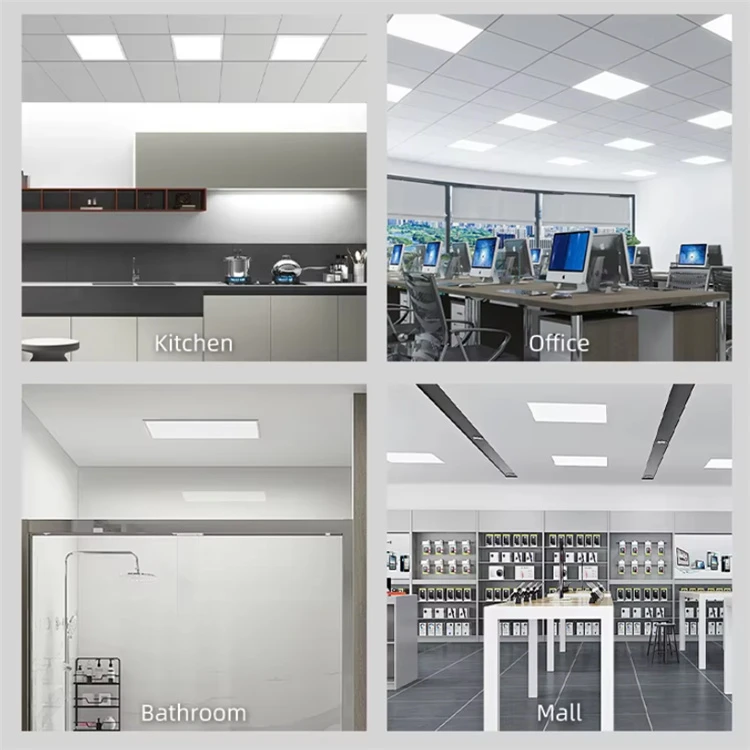
Beyond efficiency, many LED panels are built with waterproof, mist-proof, easy-to-clean designs - sealed housings that prevent water spray entry, resist moisture and dust, facilitate daily cleaning, and even help block insect entry. This makes them suitable not only for offices and living rooms but for bathrooms, kitchens, and commercial environments where hygiene and durability matter. A sealed panel that is easy to wipe down and does not accumulate grime keeps both its appearance and its light output over years of service.
What to Look For: A Purchasing Checklist
If you are a contractor, facility manager, importer, distributor, or end buyer, use this checklist to separate a genuinely efficient panel from a superficially cheap one.
Technical Specifications to Demand
Luminous efficacy (lm/W) - the higher, the better; demand a specific figure, not a vague "energy saving" claim.
Rated lifetime (hours) - 30,000–50,000+ hours signals quality engineering.
Lumen output (lm) and power draw (W) - always together, so you can verify efficacy yourself.
Color temperature options - warm, neutral, and cool availability for application flexibility.
Build-Quality Signals
Thermal construction - a substantial heat-sinking frame indicates attention to longevity.
Optical components - diffuser, light guide, and reflective layers present and layered properly.
Certification marks - look for recognized compliance marks (e.g., CE) and ask for the supporting documentation.
Sealing - for wet/harsh areas, verify waterproof/mist-proof construction.
The Decision Rule
Buy on total cost of ownership, not sticker price. A fixture that draws 10–20 fewer watts and lasts twice as long pays for itself within the first year or two of operation, and then saves money every month thereafter. For lighting-heavy facilities, high-brightness, high-efficacy LED panels are not an expense - they are one of the few purchases that directly reduce your recurring operating costs.
Conclusion: Let the Meter Do the Talking
The claim at the heart of this article - that high-brightness LED chips can cut your lighting bill in half - is not hyperbole. It is the logical consequence of two well-established facts:
High-efficacy chips convert more electricity into useful light and less into waste heat, so you draw fewer watts for the same brightness.
Long-lived fixtures stay efficient longer, so you keep the savings for years instead of resetting the clock with premature replacements.
Together, they change lighting from a fixed cost into a managed, reducible operating expense. For a single panel the saving is modest; for a building, a warehouse, or a retail chain, it is the difference between a line item that grows and a line item that pays you back.
When you evaluate your next lighting order, do not ask "how cheap is this fixture?" Ask instead: "How many lumens per watt does it deliver, how long will it last, and what will the meter show in five years?" The answers to those three questions - not the sticker - determine whether lighting helps or hurts your budget.
Choose high-brightness, high-efficacy LED panels. Let the meter do the talking - it will confirm the savings in every statement.
How To Cooperate With Us?
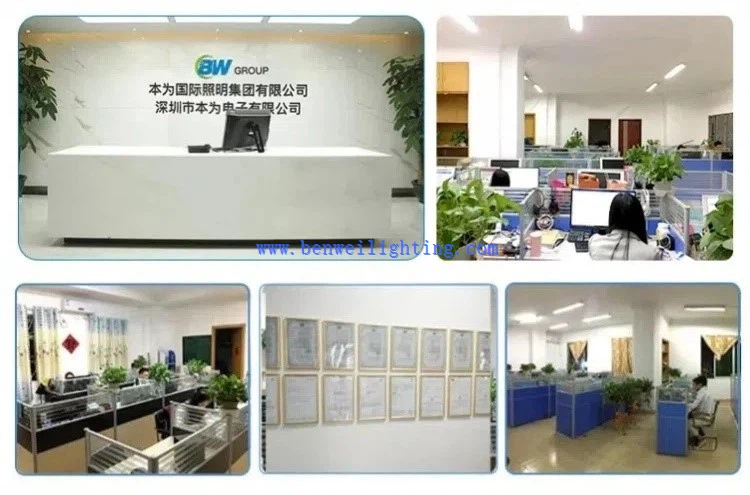
We are happy to have total control over the manufacturing process and the calibre of our products since we have our own facilities. Since we are producers rather than just brokers, we are dedicated to providing our customers with the best pricing. Since we are certain that the price and quality of our products are clear, we invite customers to see our samples first. Our commitment to quality and customer satisfaction drives us to continuously provide top-notch goods.
Our address
3rd Floor, 5th Building, Hebei Industrial Park, Hualian Community, Longhua District, Shenzhen, China





