

Lighting systems are an essential but sometimes disregarded part of operating costs in the current business climate, when cost containment and operational efficiency are top goals for companies of all kinds. Compact fluorescent lamps (CFLs), incandescent bulbs, and high-intensity discharge (HID) bulbs are examples of traditional lighting systems that have long plagued companies with intrinsic flaws: excessive energy consumption, frequent replacement requirements, uneven illumination, and high maintenance costs. In addition to depleting financial resources, these problems jeopardise worker productivity, workplace safety, and general operational effectiveness. LED corn bulb retrofits have become a game-changing option as companies look for economical and ecological alternatives. They provide a special blend of lower operating costs, improved illumination quality, and long-term durability. This blog provides a thorough guide for businesses looking to upgrade their lighting systems and maximise their financial and operational gains by examining the ultimate return on investment (ROI) of LED corn bulb retrofits, delving into how these innovative bulbs achieve lower costs and brighter spaces, outlining their correct usage scenarios and methods, and describing their core components.
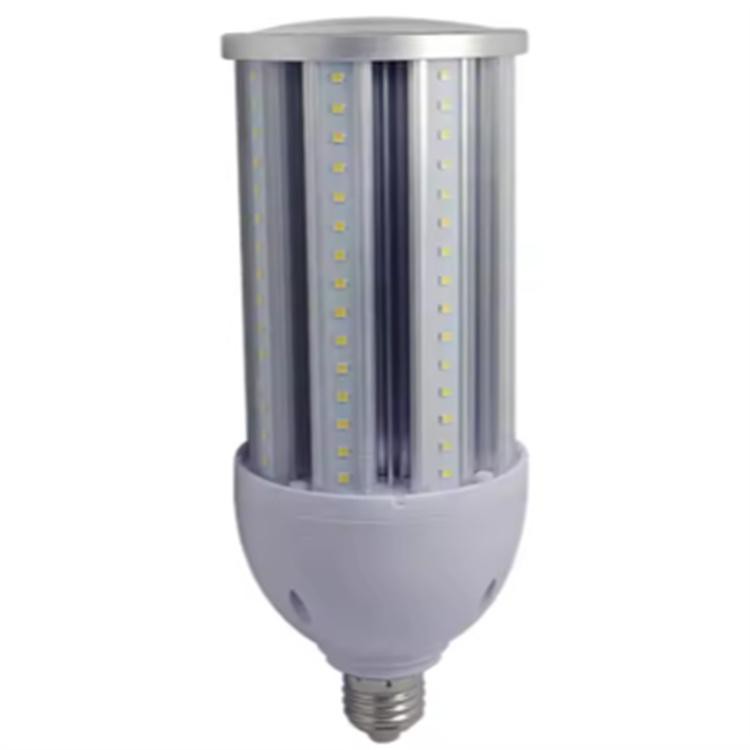
The Ultimate ROI of LED Corn Bulb Retrofits
LED corn bulb retrofits stand out as one of the most profitable facility management projects. ROI is the main statistic used by firms to assess the value of any investment. LED corn bulb retrofits provide a multifaceted ROI that builds up over time, eventually paying for themselves and producing steady savings for years, in contrast to typical lighting improvements that demand high upfront expenditures with little long-term benefits. Three primary factors determine the final return on investment (ROI) of these retrofits: direct energy cost reductions, lower maintenance and replacement costs, and indirect operational enhancements that provide extra value.
First, the most immediate and quantifiable aspect of ROI is direct energy cost reductions. LED corn bulbs are designed to be very energy-efficient, using up to 70% less power than CFLs and up to 85% less than conventional HID lights. For instance, a 100W LED corn bulb may use 75% less energy per bulb than a 400W HID light while providing the same or greater brightness. Depending on local energy costs, this may result in monthly power savings of hundreds of dollars for a medium-sized warehouse with fifty lighting fixtures. These savings add up exponentially throughout the LED corn bulbs' normal lifetime of 50,000+ hours, much exceeding the retrofit's initial cost.
Second, lower replacement and maintenance expenses increase ROI even further. With an average lifetime of 10,000–15,000 hours, traditional HID bulbs need three to five replacements over the course of an LED corn bulb. This results in the expense of buying new bulbs as well as the labour expenses of replacing them, particularly in difficult-to-reach places like warehouses, high ceilings, and outdoor fixtures where staff and specialised equipment (such ladders and lifts) are needed. With a lifetime of 50,000+ hours (corresponding to 5–6 years of continuous usage at 8 hours per day), LED corn bulbs remove this burden and reduce replacement frequency to once per decade or more. For establishments like warehouses, factories, and retail shops that depend on reliable illumination for everyday operations, this significantly reduces maintenance labour costs and minimises downtime caused by burned-out bulbs.
Third, by improving customer satisfaction, safety, and productivity, indirect operational gains add to the final ROI. Employee attention and productivity are enhanced by brighter, more consistent lighting; research has shown that well-lit workplaces may boost worker productivity by as much as 15%. High-quality lighting draws people and increases revenue in retail settings by more effectively highlighting merchandise. Uniform 360° lighting improves workplace safety and removes dark areas in industrial environments, which lowers liability costs and workers' compensation claims. Although more difficult to assess, these indirect advantages significantly increase the ROI of LED corn bulb retrofits over time, making them a strategic investment as opposed to a simple cost-cutting strategy.
How LED Corn Bulbs Achieve Lower Costs and Brighter Spaces
Because of its creative design, cutting-edge technology, and premium components-all of which are designed to maximise efficiency, performance, and durability-LED maize bulbs may provide cheaper prices and brighter rooms. LED corn bulbs minimise energy waste and save operating costs by converting approximately 90% of electrical energy into light, as contrast to conventional bulbs that waste energy as heat. Simultaneously, its distinctive corn-shaped design and cutting-edge LED chip technology provide consistent, high-intensity light that makes any area brighter and more useful.
As previously mentioned, the bulbs' extended lifetime and energy efficiency are the main advantages in terms of decreased expenses. Nevertheless, their worth is further increased by other cost-saving features. For example, LED corn bulbs don't need costly fixture upgrades during retrofits since they work with the majority of current lighting fixtures (E26/E27/E39/E40 bases). Businesses may replace their lighting systems without having to make large capital expenditures because to this plug-and-play compatibility, which lowers upfront retrofit expenses. Furthermore, unlike HID lights, which take several minutes to attain maximum brightness, LED corn bulbs need no warm-up time. By eliminating the need to wait for bulbs to warm up, this rapid lighting significantly lowers energy expenses.
LED corn bulbs perform better than conventional lighting options in three important areas: light quality, illumination angle, and luminous efficacy. When installed with top Seoul SMD chips, LED corn bulbs have an industry-leading 150lm/w (lumen per watt) luminous efficacy, which is much greater than HID bulbs (usually 80–100lm/w) and CFLs (70–90lm/w). In other words, LED corn bulbs use less energy to create greater light, making areas brighter without using more electricity.
With LED chips organised in a spiral pattern around a central core, these bulbs' corn-shaped construction allows for 360° omnidirectional lighting, removing dark areas and guaranteeing even light dispersion across the room. Both directed LED bulbs and conventional HID bulbs often result in uneven illumination with bright patches and shadows that impair vision. The 360° lighting of LED corn bulbs, on the other hand, guarantees that every nook and cranny of a room, warehouse or outdoor space is uniformly lighted, resulting in a more cheerful and cosy setting. Additionally, LED corn bulbs provide flicker-free light with a high colour rendering index (CRI 80), which is essential for industrial, retail, and office situations where colour accuracy is crucial.
The Main Components of LED Corn Bulbs
LED corn bulbs' excellent performance, longevity, and efficiency may be directly linked to their premium core components, each of which has been meticulously chosen and designed to function in unison. These parts are designed to endure challenging conditions, reduce energy waste, and guarantee long-term dependability-essential elements that support the bulbs' cheap price and good return on investment. LED chips, a heat dissipation system, an LED driver, a housing, and a base are the primary parts of LED corn bulbs.
First, the LED chips, which are in charge of turning electrical energy into light, constitute the "heart" of the lightbulb. One of three premium chip options-original Samsung 5630 SMD chips (imported from Korea), Seoul SMD chips, or Epistar 2835 SMD chips-is used in premium LED corn bulbs. Samsung 5630 SMD chips include an additional center pad for better heat dissipation, guaranteeing extended lifetime and steady performance. With the greatest luminous effectiveness (150lm/w), Seoul SMD chips provide optimal brightness while using the least amount of energy. Epistar 2835 SMD chips are perfect for companies on a tight budget since they provide a good mix of performance and affordability. To provide the best possible lighting quality, all three chip configurations are designed to create consistent, flicker-free light with a high CRI.
Second, the performance and longevity of the lightbulb depend heavily on the heat dissipation mechanism. LEDs generate a little amount of heat, which may harm the chips and shorten the bulb's life if it is not properly dispersed. The premium 6063 aircraft aluminium finned radiator used in LED corn bulbs dissipates heat three times quicker than those of conventional aluminium radiators. The bulb maintains a steady, low temperature even after prolonged usage because to the finned design's increased surface area for heat transmission. To further improve heat resistance and safety, the bulb's casing is constructed of PBT flame-retardant material, which can tolerate temperatures as high as 300°C.
Third, the "brain" of the lightbulb is the LED driver, which controls the voltage and current applied to the LED chips. High-end LED corn bulbs have a power factor (PF) >0.95, a separately designed isolated constant-current LED driver, and premium RUBYCON capacitors. The LED chips are shielded against overvoltage, overcurrent, and overheating-common problems that reduce the lifetime of subpar LED bulbs-by the constant-current architecture, which guarantees steady voltage output. The bulbs may be used both inside and outdoors because of their separated construction, which also improves safety by avoiding electrical leaks. Because of the bulb's high power factor, energy waste is minimised and electricity costs are decreased.
Fourth, the LED corn bulb's housing is made to be durable and protective. The housing, which has an IP65 certification and is made of PBT flame-retardant material, is waterproof, dustproof, impact-resistant, and heat-resistant. Because of this, the bulb may be used in severe settings including factories, warehouses, and outdoor areas where dust, dampness, and physical impact are frequent occurrences. Additionally, the housing has a small, streamlined form that blends in well with the majority of current fixtures, making retrofitting simple.
Lastly, the LED corn bulb's base is compatible with the majority of current lighting fixtures since it is available in E26/E27/E39/E40 standard screw bases. Because plug-and-play compatibility removes the need for expert installation or wiring adjustments, refit costs and complexity are decreased. Because the base is composed of high-conductivity metal, dependable performance and steady electrical contact are guaranteed.
Correct Usage Scenarios and Methods
To maximize the performance, lifespan, and ROI of LED corn bulb retrofits, it is critical to use the bulbs in the correct scenarios and follow proper usage methods. LED corn bulbs are designed to be versatile, suitable for a wide range of indoor and outdoor applications, but their performance is optimized when used in environments that match their design specifications. Additionally, proper installation and maintenance ensure that the bulbs deliver consistent performance and long lifespan.
Correct Usage Scenarios
LED corn bulbs are ideal for a variety of commercial, industrial, residential, and agricultural scenarios, thanks to their durability, energy efficiency, and 360° illumination. The key usage scenarios include:
Commercial and Industrial Spaces: Warehouses, factories, workshops, parking garages, retail stores, supermarkets, offices, and gyms. These spaces require bright, uniform lighting to ensure employee productivity, safety, and customer satisfaction. LED corn bulbs' high brightness, uniform illumination, and long lifespan make them ideal for large-scale commercial and industrial facilities, where frequent bulb replacement is costly and time-consuming.
Outdoor Spaces: Street lights, post lamps, parking lots, stadiums, building exteriors, and security lights. The IP65 waterproof and dustproof rating of LED corn bulbs ensures that they can withstand rain, snow, dust, and humidity, making them suitable for outdoor use in all weather conditions. Their bright, uniform illumination enhances safety and visibility in outdoor spaces, reducing the risk of accidents and theft.
Residential Spaces: Garages, basements, attics, porches, backyards, and barns. These spaces often require durable, low-maintenance lighting, and LED corn bulbs' long lifespan and energy efficiency eliminate the need for frequent bulb replacement-especially in hard-to-reach areas such as high ceilings and attics.
Agricultural Spaces: Greenhouses, stables, poultry farms, and construction sites. LED corn bulbs' rugged design withstands dust, moisture, and vibration, making them ideal for demanding agricultural and construction environments. In greenhouses, the high CRI of LED corn bulbs ensures that plants receive natural-looking light, promoting healthy growth.
Correct Usage Methods
Using LED corn bulbs is simple and straightforward, thanks to their plug-and-play design, but following these proper usage methods will ensure optimal performance and lifespan:
Installation: Before installing the LED corn bulb, ensure that the power supply is turned off to avoid electrical shock. Unscrew the old bulb from the fixture and screw the LED corn bulb into the socket-no wiring modifications or professional installation is required. Ensure that the bulb is screwed tightly to ensure stable electrical contact. For outdoor fixtures, ensure that the fixture is compatible with the bulb's IP65 rating and that the socket is properly sealed to prevent moisture ingress.
Dimming Compatibility: Most LED corn bulbs are compatible with standard dimmers, but it is important to check the bulb's specifications to confirm dimming support. Using an incompatible dimmer can cause flickering, reduced lifespan, or damage to the bulb. If dimming is required, use a dimmer specifically designed for LED bulbs to ensure optimal performance.
Temperature Considerations: While LED corn bulbs are heat-resistant, they should not be installed in enclosed fixtures that restrict heat dissipation. Enclosed fixtures can trap heat, leading to overheating and reduced lifespan. If installing in an enclosed fixture, ensure that the fixture is well-ventilated to allow heat to escape.
Maintenance: LED corn bulbs require minimal maintenance, but regular cleaning can help maintain their brightness. Use a dry, soft cloth to wipe the surface of the bulb periodically, removing dust and dirt that can block light output. Avoid using harsh chemicals or water to clean the bulb, as this can damage the housing and internal components.
Replacement: While LED corn bulbs have a long lifespan, they will eventually need to be replaced. When the bulb's brightness decreases significantly or it stops working, turn off the power supply, unscrew the old bulb, and replace it with a new LED corn bulb of the same wattage and base type.
In conclusion, LED corn bulb retrofits offer businesses an unparalleled combination of lower costs, brighter spaces, and long-term ROI. By leveraging advanced technology, high-quality components, and versatile design, these bulbs transform lighting systems from a recurring expense into a strategic investment. Whether you are looking to reduce energy bills, minimize maintenance costs, enhance workplace safety and productivity, or improve customer experience, LED corn bulb retrofits deliver measurable results that justify the upfront investment and generate consistent savings for years to come. Upgrade your lighting system today and experience the ultimate ROI of LED corn bulb retrofits.
How To Cooperate With Us?
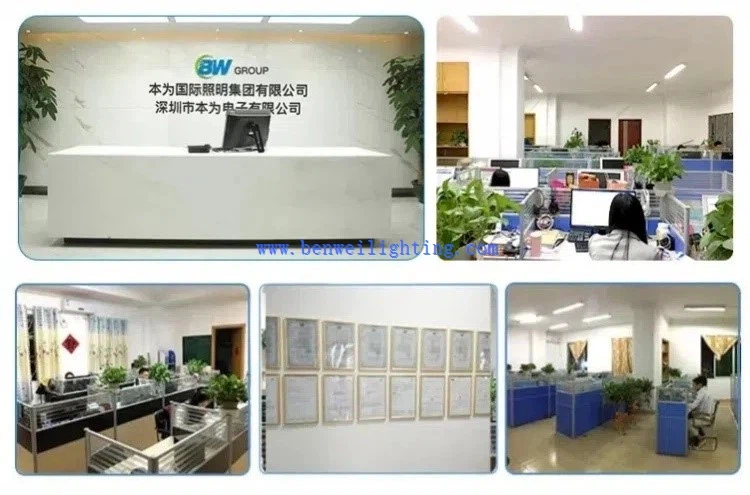
Our firm prides itself on owning its own factory, guaranteeing complete control over the production process and the quality of our goods. We are not only agents; we are manufacturers committed to offering our clients the most competitive rates available. We invite consumers to evaluate our samples first, as we are assured that the quality and pricing of our items are self-evident. Our dedication to excellence and client satisfaction compels us to consistently perform at our best and provide superior quality products.
Our address
3rd Floor, 5th Building, Hebei Industrial Park, Hualian Community, Longhua District, Shenzhen, China





