

In planning lighting for a space, many individuals adopt a fragmented, two-step methodology to ascertain their lighting requirements. The initial step generally involves assessing the requisite light intensity, often prompting inquiries such as, "what is the necessary lumen output?" contingent upon the activities conducted in the area and individual preferences. After assessing the brightness requirements, the subsequent step typically concerns the quality of light: "Which color temperature should I select?" or "Is a high CRI light bulb necessary?"
Although numerous individuals consider the aspects of quantity and quality independently, research indicates a robust correlation between brightness and color temperature in creating aesthetically pleasing or comfortable lighting environments.
What is the precise relationship, and how can one ascertain that the lighting installation delivers not only optimal brightness levels but also appropriate brightness levels for a specific color temperature? Continue reading to discover!
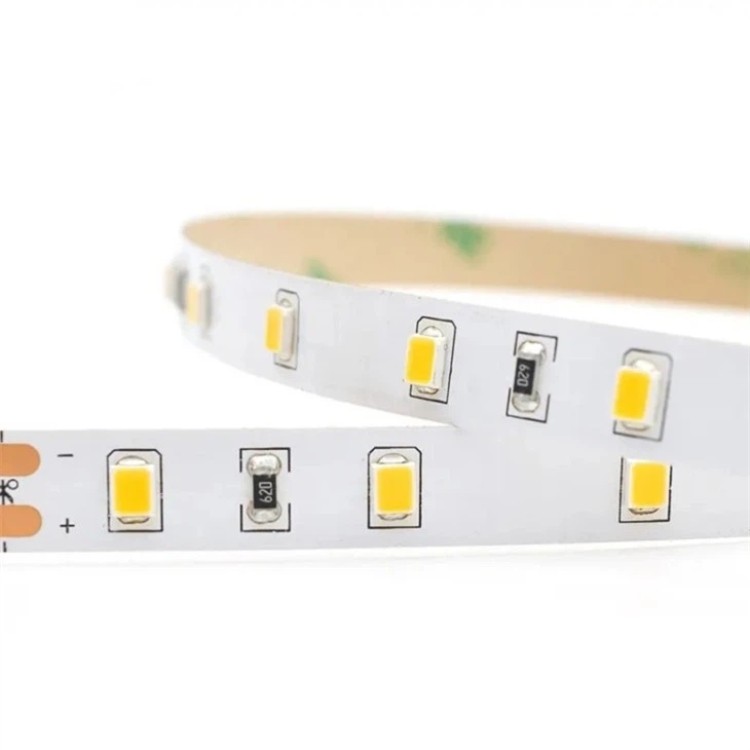
What distinguishes illuminance from color temperature?
Prior to addressing the fundamental inquiry regarding the relationship between illuminance (lux) and color temperature (degrees Kelvin), we will elucidate the definitions of these two terms and their distinctions, as they are unexpectedly interconnected and may lead to some confusion.
Illuminance, quantified in lux, indicates the amount of light that strikes a specific surface. The term "brightness" pertains primarily to illuminance, as the quantity of light reflected from objects dictates the adequacy of lighting for activities such as reading, cooking, or creating art.
It is important to note that illuminance differs from lumen output (e.g., 800 lumens) or incandescent wattage equivalent (e.g., 60 watts), which are frequently referenced metrics pertaining to a bulb's light emission. Illuminance is quantified at a specific location, such as a tabletop surface, and can be influenced by factors such as the distance from and the orientation of the light bulb. Lumen output, conversely, pertains specifically to the light bulb. Merely knowing the lumen output is insufficient to determine if the brightness is adequate; additional information regarding the room's dimensions is also necessary.
Color temperature, quantified in degrees Kelvin (K), indicates the perceived color of the light source. Values near 2700K are typically characterized as "warmer," emulating the soft, warm glow of incandescent lighting, whereas values exceeding 4000K are deemed "cooler," resembling the sharper color tones of natural daylight.
It is important to remember that higher color temperature light sources may be inaccurately described as "brighter" than warmer color temperature light sources, despite having identical lumen output. This is entirely comprehensible and even instinctive, as incandescent bulbs demonstrate a dimming curve that reveals a distinct, positive correlation between brightness and color temperature. As the bulb is dimmed, the color temperature progressively decreases from 2700K to 2000K and lower.
From a technical perspective in lighting science, brightness and color temperature are two distinct attributes that individually characterize quantity and quality, respectively. In contrast to incandescent bulbs, LED bulbs exhibit a complete independence between brightness and color temperature in their specifications. In this instance, both bulb families exhibit identical brightness levels, yet offer varying color temperature options; thus, these two specifications should be recognized as distinct concepts.
What is the correlation between illuminance and color temperature?
Theoretical and empirical studies indicate that low brightness environments are typically more pleasing at low color temperatures, whereas high brightness environments are generally more enjoyable at elevated color temperatures.
This relationship is referred to as the Kruithof curve, named after the Dutch physicist Arie Anders Kruithof who investigated this phenomenon.
A crucial consideration is that when designing lighting installations with a higher color temperature, it is essential to ensure adequate brightness throughout the area; otherwise, the lighting may be perceived as unnatural or unappealing.
An illuminance level of 200 lux (20 footcandles) is an adequate brightness for a kitchen or living room installation at 3000K. Conversely, if one were to prefer a higher color temperature, such as 5000K or above, an illuminance level of 200 lux would manifest as unnaturally blue, lackluster, and disagreeable.
Conversely, excessive illuminance levels for a specific color temperature may cause objects to appear unnaturally red.
What are the recommended minimum illuminance levels for each color temperature?
Drawing from the findings of the Kruithof studies, we have compiled preliminary guidelines for common color temperature points and their corresponding recommended illuminance levels. Bear in mind that these are merely approximate estimations, and your individual preferences may also influence the outcome.
2400K: 40 to 80 lux
2700K: 80 to 250 lux
3000K: 100 to 400 lux
4000K: 200 to 10,000 lux
5000K: 300 lux or greater
6500K: 450 lux or greater
The identical information is presented in footcandles:
2400K: 4 to 8 footcandles
2700K: 8 to 25 footcandles
3000K: 10 to 40 footcandles
4000K: 20 - 1,000 footcandles
5000K: 30 footcandles or greater
6500K: 45 footcandles or greater

Shenzhen Benwei Lighting Technology Co., Ltd was established in 2010. It is a national high-tech enterprise integrating design, R&D, production and sales of indoor and outdoor lighting products and also can do OEM ,ODM .For more details about our offerings, please contact us at bwzm18@ledbenweilighting.com





